
When you step into a restroom, you rarely think about how you initiate the flush—whether by turning a lever or pressing a button. But behind this simple action lies a design decision with implications for reliability, water efficiency, user experience, and maintenance. Toilet handles and buttons are more than aesthetic choices; they represent different engineering philosophies and usage patterns. So, which one actually performs better, and does the difference truly impact your daily life?
The answer isn’t as straightforward as it seems. While both mechanisms serve the same basic function, their long-term performance, ease of use, and integration with modern plumbing systems vary significantly. This article examines the practical realities of toilet handles versus buttons, backed by real-world insights, expert opinions, and functional comparisons.
How Handle and Button Flushes Work
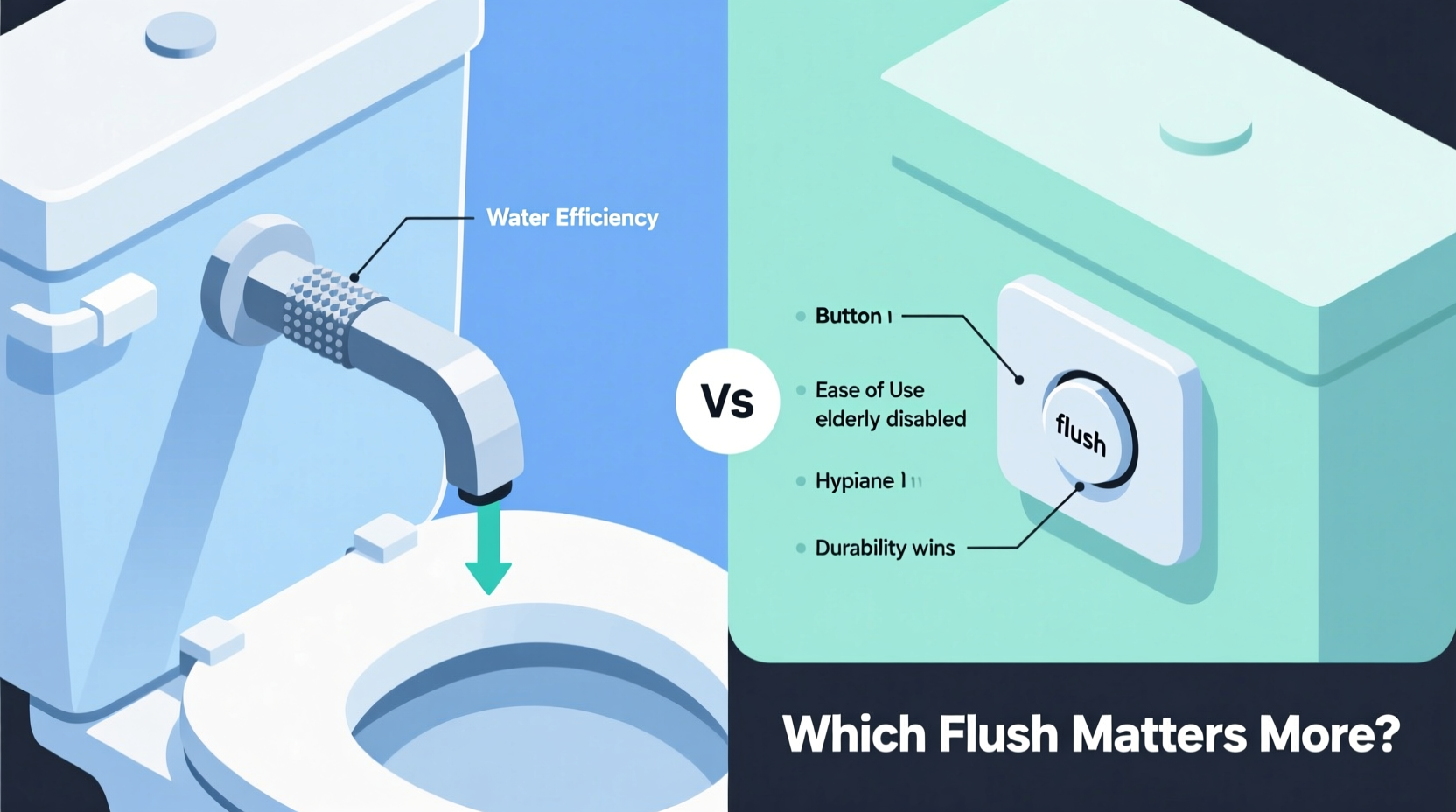
To understand the differences, it’s essential to know how each system operates mechanically.
A traditional toilet handle is connected via a lift chain or rod to the flapper inside the tank. When you push the handle, it lifts the flapper, releasing water into the bowl. Once the tank empties to a certain level, the flapper reseats, and the fill valve refills the tank. It's a direct, mechanical linkage with minimal moving parts.
In contrast, a button flush—commonly found on dual-flush toilets—is typically mounted on the top or front of the tank lid or integrated into a wall-mounted cistern. Pressing the button triggers a mechanism that opens the flush valve. Dual-flush models offer two options: a partial flush (usually 0.8–1.1 gallons) for liquid waste and a full flush (1.6 gallons or less) for solids. The internal mechanism can be either direct mechanical or, in higher-end models, pneumatic or electronic.
Performance Comparison: Reliability and Water Efficiency
One of the most significant advantages of button flushes, especially dual-flush models, is water conservation. According to the U.S. Environmental Protection Agency (EPA), dual-flush toilets can save up to 67% more water per household compared to older single-flush models.
| Feature | Toilet Handle | Toilet Button |
|---|---|---|
| Water Usage | Fixed volume (typically 1.6 gal) | Adjustable (0.8–1.6 gal) |
| Mechanical Simplicity | High – few parts, easy to fix | Variable – some models complex |
| Durability | Generally high | Depends on build quality |
| Hygiene | Finger contact required | Less surface area, often easier to clean |
| Installation Flexibility | Standard tanks only | Compatible with wall-mounted units |
Handles are known for their durability and ease of repair. Most homeowners can replace a worn flapper or adjust a chain without tools. Buttons, particularly those on concealed cisterns, may require professional servicing if internal components fail. However, high-quality button systems from brands like Geberit or TOTO are engineered for longevity and precision.
“Dual-flush button systems represent a meaningful advancement in residential water conservation. When paired with proper installation, they offer both efficiency and user control.” — Dr. Alan Prescott, Plumbing Systems Engineer, University of Illinois
User Experience and Accessibility
Ergonomics play a crucial role in determining which system feels “better” in practice. Handles require a firm downward pull, which some users—particularly children or individuals with limited hand strength—may find difficult. In contrast, buttons usually require less force and are often positioned at the top of the tank, making them easier to locate and operate.
For universal design and ADA compliance, button flushes have an edge. Wall-mounted toilets with top-mounted flush plates are increasingly common in accessible bathrooms because they free up floor space and position the flush mechanism within easy reach.
However, there’s a trade-off: button systems, especially dual-flush ones, introduce decision fatigue. Users must choose between flush volumes, and incorrect selection leads to double flushing, negating water savings. Handles eliminate choice—every flush is the same—which can be simpler for households with mixed users.
Real Example: A Family Home Retrofit
The Miller family in Portland replaced their aging two-handle toilets with modern dual-flush button models during a bathroom renovation. Initially excited about water savings, they noticed inconsistent flushing performance. After investigation, they realized family members were frequently using the half-flush for solid waste, requiring a second flush. Over six months, their water usage dropped by only 12%, far below the expected 30–40%.
After posting a small reminder sign above the toilet (“Full flush for solids”), usage patterns improved. Within three months, their water bill decreased by 27%. The lesson? User behavior matters as much as the technology itself.
Maintenance and Long-Term Costs
Handles win on simplicity. When a handle becomes loose, corroded, or sticky, replacement parts cost under $10 and take minutes to install. Most hardware stores carry universal kits compatible with major brands.
Button mechanisms, especially in concealed cisterns, are more complex. Accessing the system often requires removing a flush plate or panel, and replacement cartridges can cost $50 or more. Some electronic button systems even rely on batteries or low-voltage wiring, adding another layer of potential failure.
- Handle issues: Loose lever, chain tangling, flapper wear
- Button issues: Sticking buttons, weak flush due to valve seal degradation, electronic sensor failure
That said, well-maintained button systems in commercial or high-end residential settings can last 10–15 years without issue. The key is using reputable brands and scheduling preventive checks.
Step-by-Step: Choosing the Right System for Your Needs
- Assess your household’s needs: Do you have elderly users, young children, or mobility concerns? Buttons may offer better accessibility.
- Check water efficiency goals: If reducing utility bills and environmental impact is a priority, opt for a dual-flush button model with WaterSense certification.
- Consider installation type: Planning a wall-mounted toilet? You’ll need a button flush with a concealed cistern.
- Evaluate maintenance comfort: Are you comfortable accessing hidden components, or do you prefer simple, visible repairs?
- Budget for long-term ownership: Factor in potential service calls for button systems versus DIY-friendly handles.
FAQ
Can I replace a toilet handle with a button flush?
Yes, but it depends on the tank design. Standard tanks can sometimes accept aftermarket button kits, but true dual-flush functionality usually requires replacing the entire flush valve system. For a full upgrade, consider a new toilet or a retrofit kit from brands like Fluidmaster.
Are button flushes more hygienic?
Potentially. Buttons often have smaller surface areas and are easier to wipe clean. Touchless electronic buttons eliminate contact altogether, though they come at a higher cost and complexity. Handles, with their levers and crevices, can trap grime if not cleaned regularly.
Do handle toilets leak more than button models?
No—leaks are typically caused by internal components like flappers or fill valves, not the external actuator. Both systems are equally prone to leaks if seals degrade. Regular inspection (every 6–12 months) prevents most issues.
Conclusion: Does It Really Matter?
In most homes, the choice between a toilet handle and a button flush comes down to priorities. If you value simplicity, ease of repair, and consistent performance, a handle remains a reliable workhorse. If water conservation, modern aesthetics, and accessibility are important, a well-designed button flush—especially dual-flush—delivers tangible benefits.
The truth is, neither option is universally “better.” What matters most is proper installation, quality components, and user awareness. A poorly maintained button toilet will underperform, just as a corroded handle can cause constant running. Focus on the entire system, not just the trigger.




 浙公网安备
33010002000092号
浙公网安备
33010002000092号 浙B2-20120091-4
Comments
No comments yet. Why don't you start the discussion?