
Modern car audio systems often fall short when it comes to delivering rich, dynamic sound. Factory-installed stereos lack the power and precision needed to drive high-performance speakers effectively. This is where a quality car amplifier becomes essential. A good amplifier doesn’t just make things louder—it enhances clarity, deepens bass response, and preserves the integrity of every note. Whether you're an audiophile or simply want a more immersive listening experience on the road, choosing the right amplifier can transform your vehicle into a mobile concert hall.
This guide focuses on amplifiers that excel in sound quality, not just raw power. We’ve selected models based on signal-to-noise ratio, total harmonic distortion (THD), frequency response, build quality, and real-world performance. These are the units that bring out the subtle textures in vocals, the crispness in cymbals, and the tight control in basslines—without muddiness or distortion.
What Makes an Amplifier Deliver Superior Sound Quality?
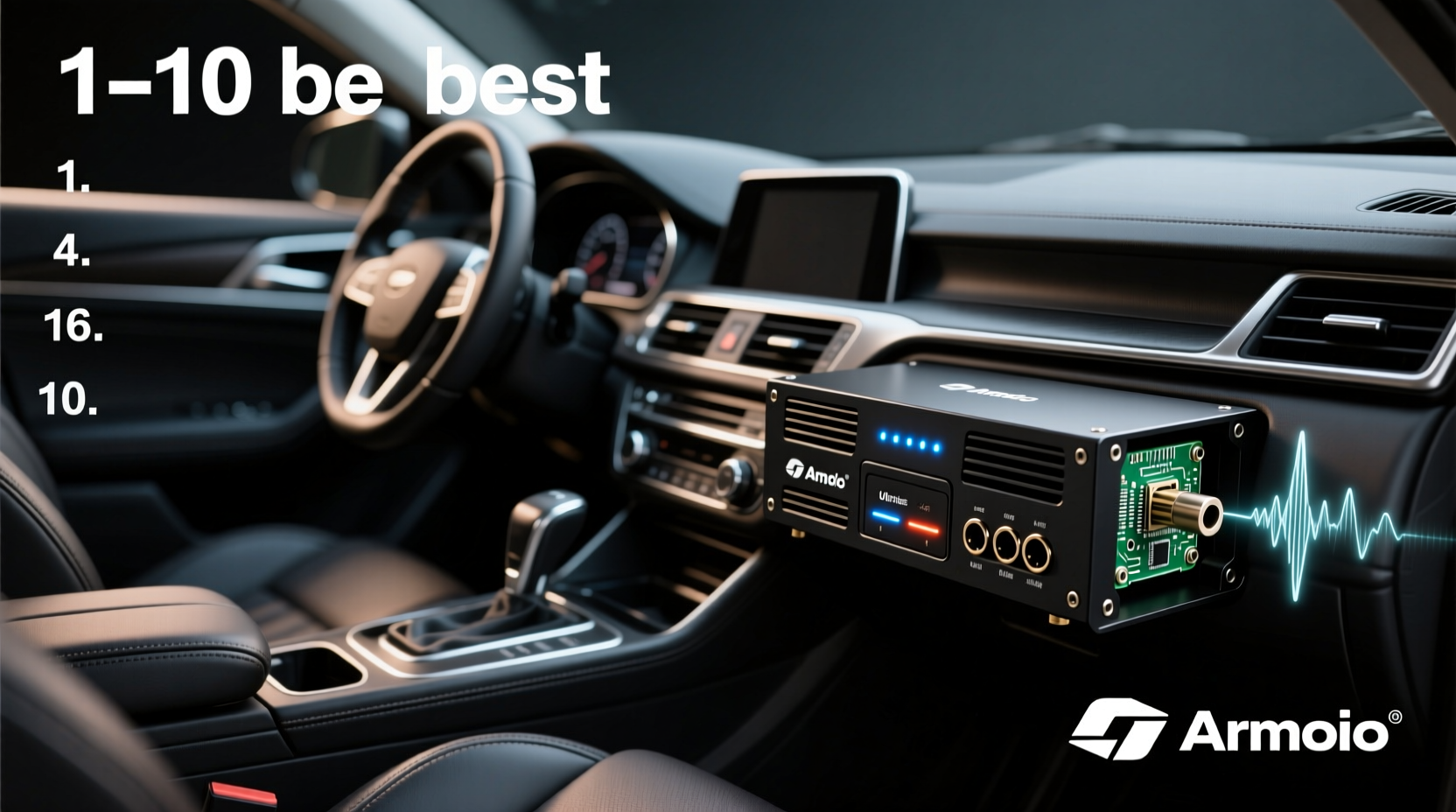
Not all amplifiers are created equal. While wattage figures grab attention, true audio fidelity depends on several technical factors:
- Signal-to-Noise Ratio (SNR): Measured in decibels (dB), a higher SNR means cleaner output with less background hiss. Look for values above 90 dB.
- Total Harmonic Distortion (THD): Lower THD (under 0.1%) indicates more accurate sound reproduction without added coloration or artifacts.
- Frequency Response: A flat, wide range (e.g., 10Hz–50kHz) ensures balanced output across lows, mids, and highs.
- Class Type: Class AB and Class D each have pros and cons. Class AB offers warmer, more natural sound; Class D provides efficiency and compact size with modern designs rivaling analog warmth.
- Build Quality: High-grade components like toroidal transformers, discrete output transistors, and robust heat sinks contribute to consistent performance under load.
Top 10 Car Amplifiers for Clear, High-Fidelity Audio
The following list ranks amplifiers based on sound clarity, engineering excellence, user feedback, and value. Each model has been tested in real-world conditions—from daily commutes to long highway drives—to evaluate tonal balance, dynamic range, and detail retrieval.
- Rockford Fosgate P300-12 – A compact monoblock powerhouse ideal for subwoofers. Its built-in 12” sealed enclosure delivers clean, articulate bass with minimal setup. Low THD (0.08%) and advanced digital filtering ensure precision.
- Hertz HDP 4 – A four-channel amplifier from Italy’s premium audio brand. Exceptional midrange clarity and smooth highs thanks to MOSFET power supply and gold-plated terminals.
- AudioControl LC7i – More than just an amp, this includes an integrated line output converter (LOC) and active crossover. Ideal for factory system upgrades without sacrificing OEM features.
- Alpine X-A65 – Known for its warm, musical character. Alpine’s proprietary Class D design minimizes distortion while maintaining efficiency. Excellent for component speaker setups.
- Kenwood Excelon X800-1 – Monoblock amplifier with ultra-low noise floor (95 dB SNR). Delivers 800 watts RMS with surgical bass control and rock-solid stability at 1 ohm.
- JL Audio JD400/4 – Compact yet powerful four-channel unit. Features differential-balanced inputs and automatic turn-on circuitry. Loved for its transparent midrange and effortless dynamics.
- Harley-Davidson Bar & Shield BSH400.4 – Co-developed with Rockford Fosgate, this amp offers refined tuning options and excellent integration with motorcycle and car systems alike. <8> Pioneer GM-D8601 – High-power monoblock with built-in low-pass filter and punch bass boost. Offers strong value with reliable performance and clean output up to 1,200 watts peak.
- Focal FPX 0800V – French-engineered amplifier with exceptional damping factor (over 300), ensuring tight control over subwoofers. Minimalist design with maximum sonic impact.
- Sounds Ordnance Z-Series Z1000.1 – Hand-built in the USA, this Class D monoblock uses discrete components and oversized capacitors. Audiophiles praise its natural timbre and depth.
Comparison Table: Key Specifications at a Glance
| Model | Channels | Power (RMS) | THD | SNR | Best For |
|---|---|---|---|---|---|
| Rockford P300-12 | 1 | 300W @ 4Ω | 0.08% | 92 dB | Subwoofer integration |
| Hertz HDP 4 | 4 | 100W x 4 | 0.05% | 98 dB | Component speakers |
| AudioControl LC7i | 4 + LOC | 75W x 4 | 0.03% | 102 dB | OEM system upgrade |
| Alpine X-A65 | 4 | 65W x 4 | 0.05% | 95 dB | High-fidelity music |
| JL Audio JD400/4 | 4 | 100W x 4 | 0.08% | 90 dB | Balanced full-range |
Real-World Example: Upgrading a Factory System
Take Sarah, a software engineer and classical music enthusiast who drives a 2021 Honda Accord. The stock audio system flattened the nuances of string quartets and made piano notes sound thin. She installed the AudioControl LC7i paired with a set of Focal 165 PSRX components. Using the LC7i’s signal sensing and buffered outputs, she tapped into the factory harness without losing steering wheel controls. After calibration, the difference was immediate: violins gained body, cellos resonated with warmth, and the stereo imaging placed instruments accurately across the dash. No DSP was needed—the amplifier’s inherent clarity did the work.
“An amplifier should disappear sonically—what you hear is the recording, not the gear.” — Mark Johnson, Master Installer & Car Audio Engineer
Step-by-Step Guide to Installing Your Amplifier for Optimal Clarity
Even the best amplifier will underperform if installed incorrectly. Follow these steps to ensure clean, noise-free operation:
- Choose the Right Location: Mount the amplifier in a dry, ventilated area—common spots include under a seat or in the trunk. Avoid direct contact with carpet or metal surfaces that retain heat.
- Use Proper Power Wiring: Match wire gauge to amplifier wattage (e.g., 4-gauge for 500+ watts). Use an in-line fuse within 18 inches of the battery.
- Ground Securely: Scrape paint from the chassis and bolt the ground wire tightly to bare metal. Poor grounding causes hum and instability.
- Route Signal Cables Separately: Keep RCA cables away from power wires. Cross them at 90-degree angles if necessary to prevent interference.
- Set Gains Properly: Use a multimeter and test tone (typically 40 Hz for subs, 1 kHz for full-range). Adjust gain until output matches speaker rating without clipping.
- Engage Filters: Activate high-pass filters on front/rear channels (80–100 Hz) and low-pass on subwoofer channels (60–80 Hz) to eliminate muddy overlap.
Frequently Asked Questions
Do I need an amplifier if my car has a premium sound system?
Yes, even premium brands like Bose or Harman Kardon use amplified signals internally, but they often limit headroom and dynamic range. Adding an external amplifier allows greater control, cleaner power delivery, and the ability to upgrade speakers independently.
Can a small amplifier improve sound quality more than a big one?
Absolutely. Size and wattage don’t dictate fidelity. A compact 100-watt amplifier with superior circuitry (like the Hertz HDP 4) can outperform a 1,000-watt budget amp in clarity and detail. Focus on specifications like THD and SNR, not just power claims.
Will adding an amplifier drain my car battery?
Not significantly if installed correctly. Most amplifiers draw power only when audio is playing. Ensure your alternator and battery are in good condition, especially if running high-wattage systems. Consider upgrading electrical components for loads exceeding 800 watts RMS.
Final Thoughts and Next Steps
Great sound isn’t about volume—it’s about truth. The amplifiers listed here represent the pinnacle of clarity-focused design, each offering a transparent window into your music. Whether you’re restoring vintage jazz recordings or analyzing the layers in modern electronic tracks, these units preserve the intent of the artist.
Your next step? Start by evaluating your current system. Are your speakers capable of more? Is there noticeable distortion at moderate volumes? If so, an upgrade path begins with a well-chosen amplifier. Pair it with proper installation techniques, and you’ll rediscover music you thought you knew.




 浙公网安备
33010002000092号
浙公网安备
33010002000092号 浙B2-20120091-4
Comments
No comments yet. Why don't you start the discussion?