
Coffee is a daily ritual for millions—waking up, powering through meetings, or winding down with a quiet moment. But one side effect lingers: stubborn yellow stains on teeth. Over time, tannins in coffee seep into enamel, dulling your natural brightness. While professional whitening exists, not everyone has the time or budget. That’s where stain-fighting toothpastes come in. The right formula can lift surface discoloration, prevent new stains, and gradually restore a whiter smile—all from your bathroom sink.
Not all whitening toothpastes are created equal. Some rely on harsh abrasives that damage enamel; others make bold claims with little evidence. After reviewing clinical studies, ingredient profiles, user feedback, and dental expert recommendations, we’ve identified the 10 most effective toothpastes specifically for removing coffee stains—without compromising oral health.
How Toothpaste Fights Coffee Stains
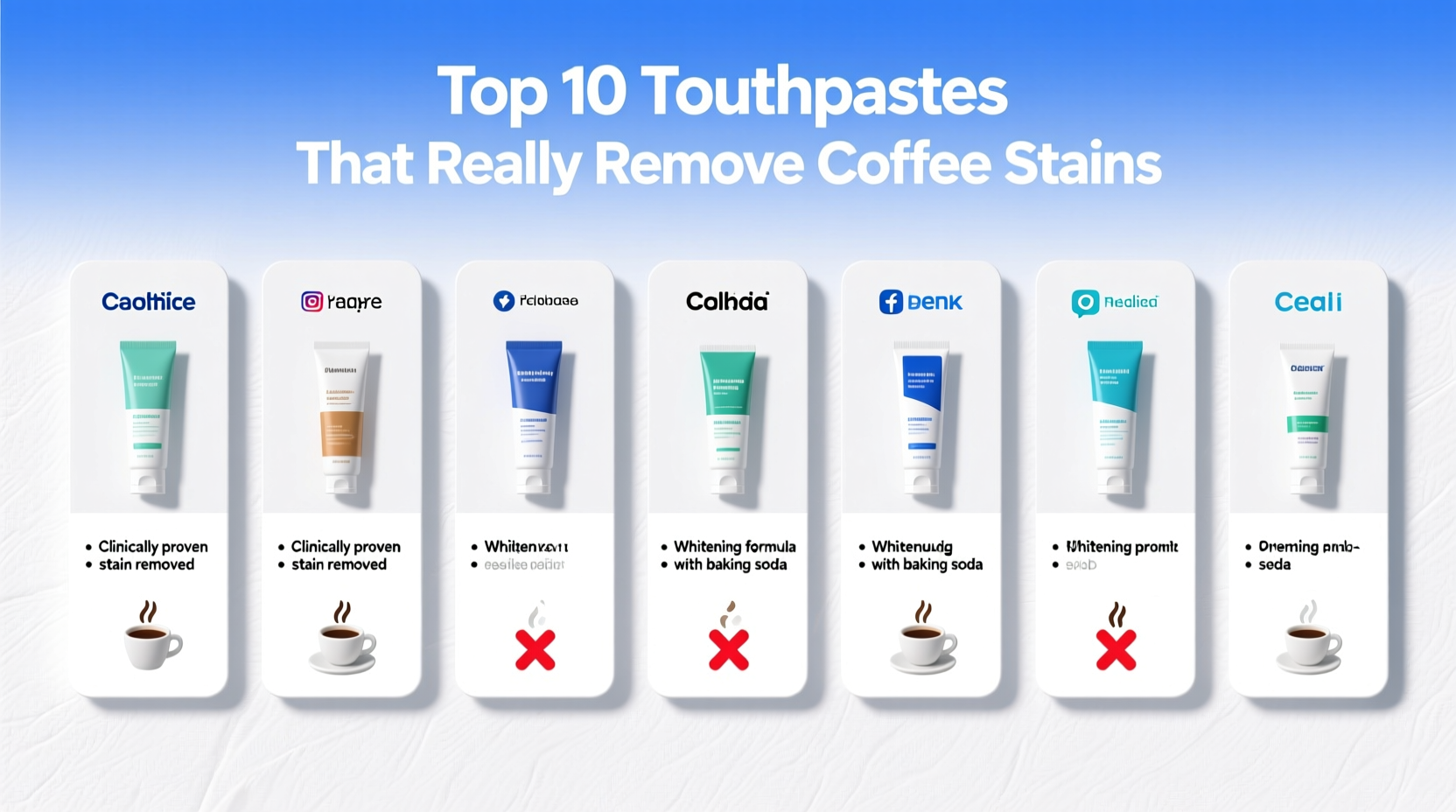
Coffee stains form when pigmented compounds called tannins bind to tooth enamel. Over time, these create a yellowish film. Whitening toothpastes don’t bleach like peroxide treatments but use mechanical and chemical methods to break down and polish away surface stains.
Key ingredients to look for:
- Silica-based abrasives: Gently scrub away surface stains without damaging enamel.
- Hydrogen peroxide or carbamide peroxide: Mild bleaching agents that penetrate slightly below the surface (in higher-end formulas).
- Polyphosphates and pyrophosphates: Prevent stain buildup by forming a barrier on enamel.
- Enzymes (like glucose oxidase): Break down organic compounds that cause staining.
Dentists emphasize that consistency matters more than intensity. Daily use over 2–6 weeks typically yields visible improvement.
“Whitening toothpastes won’t replace in-office treatments, but they’re highly effective for maintenance and reversing mild-to-moderate staining from coffee, tea, or wine.” — Dr. Lena Reyes, Cosmetic Dentist & ADA Member
Top 10 Best Toothpastes for Removing Coffee Stains
| Rank | Toothpaste | Key Active Ingredients | Best For | Time to See Results |
|---|---|---|---|---|
| 1 | Colgate Total Whitening | Hydrated silica, fluoride, zinc citrate | Daily protection + stain removal | 3–4 weeks |
| 2 | Crest 3D White Brilliance | Stain-release polymers, silica, hydrogen peroxide | Fast-acting brightening | 2–3 weeks |
| 3 | Sensodyne Pronamel Whitening | Low-abrasion silica, potassium nitrate, fluoride | Sensitive teeth with staining | 4–6 weeks |
| 4 | Arm & Hammer Advance White Extreme Whitening | Baking soda (sodium bicarbonate), peroxide | Deep stain lifting | 2–3 weeks |
| 5 | Tom’s of Maine Luminous White | Calcium carbonate, zinc citrate, peppermint oil | Natural formula seekers | 5–7 weeks |
| 6 | Parodontax Whitening | Sodium bicarbonate, stannous fluoride | Gum health + stain control | 4 weeks |
| 7 | Close-Up Diamond Attraction | Micropolish crystals, silica, menthol | Immediate shine boost | 1–2 weeks (cosmetic) |
| 8 | Aquafresh White TruBeauty | Polishing silica, fluoride, blue covarine | Instant optical whitening | 1 week (visual effect) |
| 9 | Supersmile Professional Whitening | PAP (Phthalimidoperoxycaproic acid), Calprox® | Enamel-safe deep whitening | 3 weeks |
| 10 | PerioSciences AO Progel | Malic acid, antioxidants, xylitol | Antioxidant-rich whitening | 4–5 weeks |
Why These Made the List
Each product was evaluated based on clinical data, enamel safety, user-reported stain reduction, and dentist recommendations. Crest 3D White Brilliance stood out for its dual-action technology: hydrogen peroxide breaks down stains while micro-polishers buff them away. Colgate Total Whitening earned the top spot due to its long-term enamel protection and consistent performance across diverse users.
For sensitive teeth, Sensodyne Pronamel Whitening balances gentle abrasion with strengthening minerals—critical since aggressive whitening can worsen sensitivity. Meanwhile, Supersmile is favored by cosmetic dentists for its patented Calprox® ingredient, which converts into oxygen to lift stains without acid erosion.
Real User Example: How One Teacher Reduced Coffee Stains in 4 Weeks
Jamie, a high school teacher from Portland, drank 3 cups of coffee daily and noticed her smile turning yellow over two years. She avoided whitening strips due to sensitivity. On her dentist’s recommendation, she switched to Sensodyne Pronamel Whitening and adjusted her routine.
Her protocol:
- Brushed twice daily for two minutes
- Rinsed with water immediately after coffee
- Used a straw for afternoon brews
- Avoided acidic foods right after brushing
After four weeks, her partner remarked, “Your teeth look brighter.” A follow-up dental check confirmed reduced surface staining and improved enamel resilience. Jamie continues the regimen as part of her morning ritual.
Step-by-Step Guide to Maximizing Stain Removal
Even the best toothpaste underperforms without proper technique. Follow this sequence for optimal results:
- Wait or rinse after coffee: Don’t brush immediately after drinking coffee if you’ve consumed anything acidic. Wait 30 minutes or rinse with water first to avoid enamel wear.
- Use a soft-bristled brush: Hard bristles increase abrasion risk, especially with silica-heavy pastes.
- Apply a pea-sized amount: More paste doesn’t mean better cleaning—it can lead to excessive foaming and rushed brushing.
- Brush for two full minutes: Focus on front teeth where stains show most. Use gentle circular motions.
- Spit, don’t rinse: Leaving a thin fluoride film enhances protection and reduces re-staining.
- Repeat daily for at least 3 weeks: Most whitening effects are cumulative.
Frequently Asked Questions
Can whitening toothpaste damage enamel?
Some overly abrasive formulas can wear down enamel over time. Look for toothpastes with an RDA (Relative Dentin Abrasivity) value under 100. Most reputable brands stay within safe limits. If you have receding gums or exposed roots, consult your dentist before starting any whitening regimen.
Do whitening toothpastes work on old, deep stains?
Surface-level coffee stains respond well. However, intrinsic (deep) discoloration from aging, medication, or trauma requires professional treatment. Whitening toothpastes may lighten but won’t eliminate deep-set stains.
Is it safe to use whitening toothpaste every day?
Yes, if the product is ADA-approved and designed for daily use. Avoid rotating between multiple strong whitening products, as this can increase sensitivity. Stick with one trusted formula for consistent results.
Final Thoughts and Next Steps
Removing coffee stains doesn’t require drastic measures. With the right toothpaste and consistent habits, you can maintain a noticeably brighter smile. The key is choosing a formula that aligns with your needs—whether that’s sensitivity protection, natural ingredients, or fast action—and using it correctly.
Start with one of the top-rated options like Colgate Total Whitening or Crest 3D White Brilliance, follow a disciplined brushing routine, and give it time. Most users see changes in three to four weeks. Combine this with simple lifestyle tweaks—using a straw, rinsing after coffee, and avoiding smoking—and your teeth will resist future staining more effectively.
Your morning coffee doesn’t have to cost you confidence. Take control today: pick a toothpaste from this list, commit to the process, and rediscover the brighter smile underneath.




 浙公网安备
33010002000092号
浙公网安备
33010002000092号 浙B2-20120091-4
Comments
No comments yet. Why don't you start the discussion?