
When it comes to choosing a washing machine, the debate between top-loading and front-loading models often centers on efficiency, capacity, and long-term reliability. However, two critical factors that significantly impact both performance and user experience are cleaning effectiveness and susceptibility to mold. These concerns affect not only how well your clothes come out but also the hygiene and longevity of the appliance itself. Understanding the differences between these two types of washers—how they clean, where moisture accumulates, and how easily mold develops—is essential for making an informed decision.
Cleaning Performance: How Each Machine Gets Clothes Clean
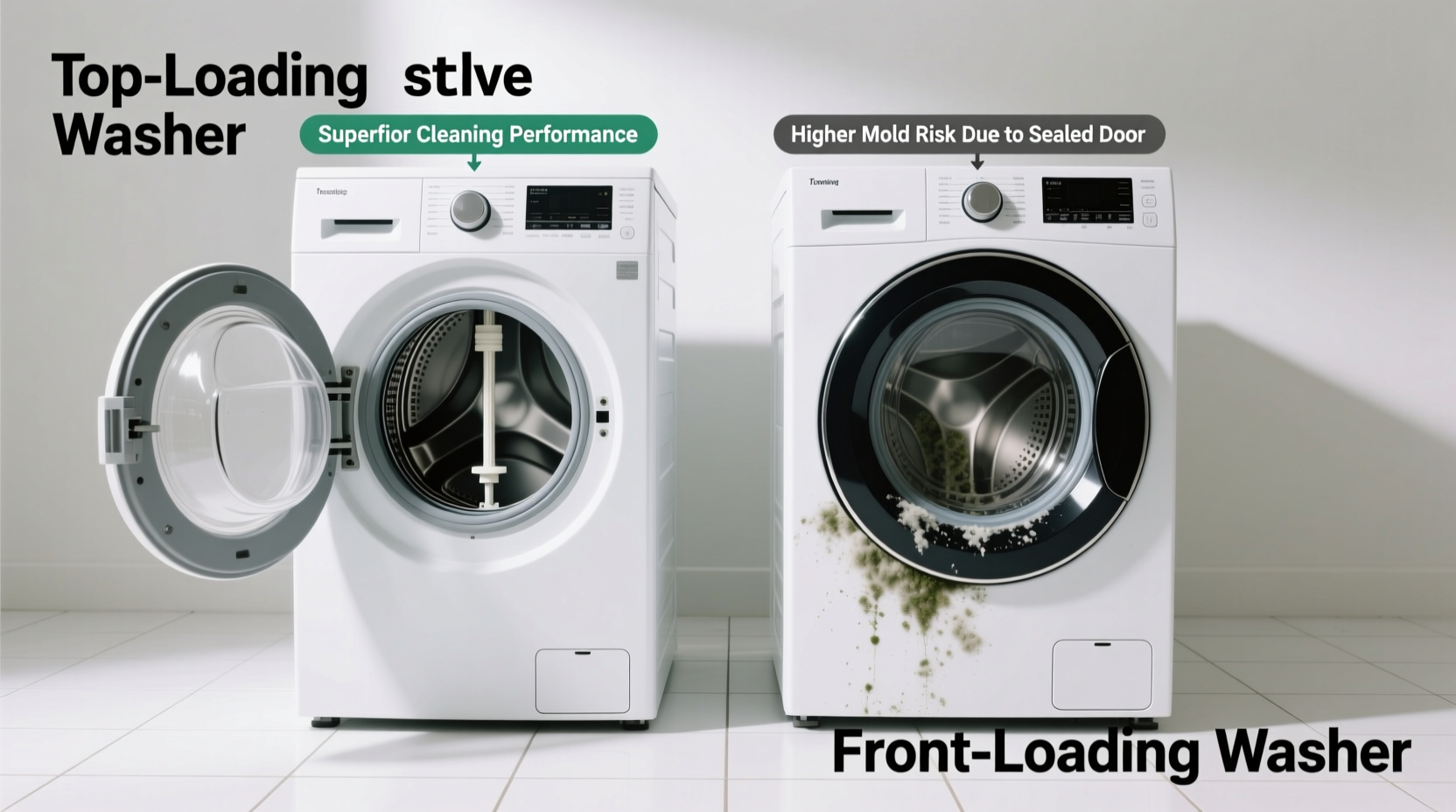
The fundamental difference in cleaning performance between top-loading and front-loading washers lies in their mechanical action and water usage.
Front-loading washers use a tumbling motion. The drum rotates horizontally, lifting clothes and dropping them into a small pool of water at the bottom. This method relies less on water volume and more on mechanical agitation. Because the clothes fall through water rather than being submerged, less water is needed, which increases detergent efficiency and allows for deeper penetration of cleaning agents into fabric fibers.
According to the U.S. Department of Energy, front-loaders typically remove stains 30% more effectively than top-loaders under standardized testing conditions. They also spin at higher RPMs during the final cycle, extracting more water and reducing drying time—a factor that indirectly contributes to cleaner laundry by minimizing dampness that can lead to musty odors.
Top-loading washers, especially traditional agitator models, submerge clothes in water and rely on a central post (the agitator) to twist and churn fabrics. While this method can be effective on heavily soiled garments, it tends to be harsher on fabrics and uses significantly more water. High-efficiency (HE) top-loaders without agitators use impellers instead, offering improved performance over older models, though still generally lagging behind front-loaders in stain removal and fabric care.
Mold and Mildew: Why It Happens and Where
Mold and mildew growth in washing machines is not just unsightly—it can transfer odors and allergens to clothing. The root cause is trapped moisture combined with organic residue from detergents, softeners, and body soils.
Front-loading washers are notoriously prone to mold around the rubber door gasket. This seal creates a watertight closure during operation but also traps water, lint, and soap scum in its folds. If the door is closed immediately after a cycle, humidity remains high inside the drum, creating an ideal breeding ground for mold. The problem is compounded when liquid fabric softener or bleach is used incorrectly, as residues build up in crevices.
Top-loading washers are less susceptible to internal mold because the lid opens vertically, allowing air circulation after each use. However, they are not immune. Mold can form in the outer tub, particularly in HE models with tightly sealed lids designed to maintain pressure. Residue buildup in dispensers or under the agitator can also foster microbial growth if not cleaned regularly.
“Front-loaders offer superior cleaning, but their design demands consistent maintenance. Neglect the gasket and dispenser, and you’ll pay for it in odor and performance.” — Dr. Linda Park, Appliance Hygiene Researcher, National Home Efficiency Lab
Comparative Analysis: Key Differences at a Glance
| Feature | Front-Loading Washer | Top-Loading Washer |
|---|---|---|
| Cleaning Efficiency | High – superior stain removal due to tumbling action | Moderate – effective but less consistent on tough stains |
| Water Usage | Low – uses 20–25 gallons per load | High – traditional models use 30–40 gallons; HE models ~25 |
| Energy Efficiency | Higher – less water to heat, faster spin cycles | Lower – especially agitator models |
| Mold Risk | High – especially in door gasket and dispenser | Low to moderate – mainly in dispensers or hidden areas |
| Maintenance Needs | High – requires regular wiping, cleaning, airing | Low – minimal daily upkeep needed |
| Fabric Care | Better – gentler on fabrics due to reduced tangling | Varies – agitators can be rough; impeller models gentler |
| Accessibility | Lower – requires bending to load/unload | Higher – easier access at waist level |
Preventing Mold: A Step-by-Step Maintenance Routine
Regardless of washer type, proactive maintenance is key to preventing mold and maintaining peak performance. Here’s a practical routine tailored to each model:
- After every wash (all models): Leave the lid or door open for at least 30 minutes to allow airflow and evaporation. This simple step drastically reduces humidity buildup.
- Weekly wipe-down (front-loaders): Use a microfiber cloth dampened with vinegar or a diluted bleach solution (1:10 with water) to clean the rubber door gasket. Pay special attention to the folds where water collects.
- Monthly deep clean: Run an empty hot water cycle with either 2 cups of white vinegar or 1 cup of bleach (never mix). Add ½ cup of baking soda for extra deodorizing power. This clears biofilm and dissolves residue in hoses and drums.
- Clean dispensers monthly: Remove detergent and fabric softener trays and soak in warm, soapy water. Scrub with an old toothbrush to remove buildup.
- Avoid liquid fabric softener (especially in front-loaders): These leave oily residues that trap moisture. Use dryer balls or wool pellets instead.
- Use high-efficiency (HE) detergent only: Regular detergents create excess suds that don’t rinse well, leading to residue and odor.
Real-World Scenario: The Johnson Family’s Experience
The Johnsons upgraded to a front-loading washer five years ago, drawn by promises of lower utility bills and better cleaning. Initially thrilled, they noticed a persistent musty smell after six months. Despite using premium detergent and running regular loads, the odor worsened. Clothes began coming out smelling damp, even when dry.
After consulting a technician, they discovered thick black mold colonies in the door gasket and drain pump housing. The issue stemmed from closing the door immediately after cycles and using liquid fabric softener weekly. The technician advised switching to wool dryer balls, running monthly vinegar cycles, and leaving the door ajar. Within three weeks, the smell disappeared. Now, they follow a strict maintenance schedule and report no further issues—proving that while front-loaders demand more diligence, proper care eliminates most problems.
Checklist: Choosing the Right Washer for Your Lifestyle
Use this checklist to evaluate which type suits your priorities:
- ✅ Do you prioritize deep cleaning and energy savings? → Consider front-loader
- ✅ Are you willing to perform monthly maintenance and wipe seals? → Front-loader viable
- ✅ Do you have back or mobility issues? → Top-loader offers easier access
- ✅ Is laundry done late at night and left in the machine? → Top-loader less likely to develop odor
- ✅ Do you frequently wash bulky items like comforters? → Front-loaders usually offer larger capacities
- ✅ Are children or elderly users involved? → Top-loader may be simpler to operate
- ✅ Is space limited? → Front-loaders can be stacked with dryers
FAQ: Common Questions About Washers and Mold
Can I eliminate mold permanently from my front-loading washer?
No appliance is immune to mold if moisture and organic matter remain. However, consistent cleaning, proper ventilation, and avoiding residue-causing products can prevent recurrence. With diligent care, mold can be controlled indefinitely.
Do top-loading washers clean as well as front-loading ones?
Modern high-efficiency top-loaders without agitators come close, but independent tests show front-loaders still outperform them in stain removal, especially on greasy or set-in soils. Agitator models are effective but harder on fabrics and less efficient overall.
Is it safe to use bleach in my washing machine for mold prevention?
Yes, when used correctly. Run a bleach-only cycle monthly in a well-ventilated area. Never mix bleach with vinegar or ammonia—this creates toxic fumes. Always consult your manufacturer’s manual, as some stainless steel drums may be sensitive to frequent bleach use.
Conclusion: Balancing Performance and Practicality
The choice between a top-loading and front-loading washer ultimately hinges on balancing cleaning performance against maintenance commitment. Front-loaders deliver superior stain removal, water efficiency, and fabric care—but only if you’re prepared to manage their vulnerability to mold. Their design requires vigilance: wiping seals, running cleaning cycles, and ensuring proper ventilation. For households willing to invest this effort, the payoff in cleanliness and cost savings is substantial.
Top-loading machines, especially newer HE models, offer a compelling alternative. They clean well, require less maintenance, and are more accessible. While they use more water and may not tackle the toughest stains as effectively, their resistance to mold and ease of use make them ideal for busy families or those who prefer low-maintenance appliances.




 浙公网安备
33010002000092号
浙公网安备
33010002000092号 浙B2-20120091-4
Comments
No comments yet. Why don't you start the discussion?