
Every morning, millions of people sling a bag over their shoulder and head out the door. Whether it’s a sleek tote or a rugged backpack, the choice seems simple—until shoulder pain creeps in by midday. For commuters, this isn’t just about style; it’s about long-term physical well-being. Carrying heavy loads improperly can lead to chronic discomfort, posture issues, and even nerve compression. The debate between tote bags and backpacks isn’t trivial—it’s a health decision disguised as a fashion one.
While totes offer elegance and quick access, they often place all weight on one shoulder. Backpacks distribute load more evenly but may lack sophistication or convenience. Understanding the biomechanics behind each design reveals why some choices do more harm than good—and how small adjustments can make a big difference in protecting your body over time.
The Anatomy of Shoulder Strain
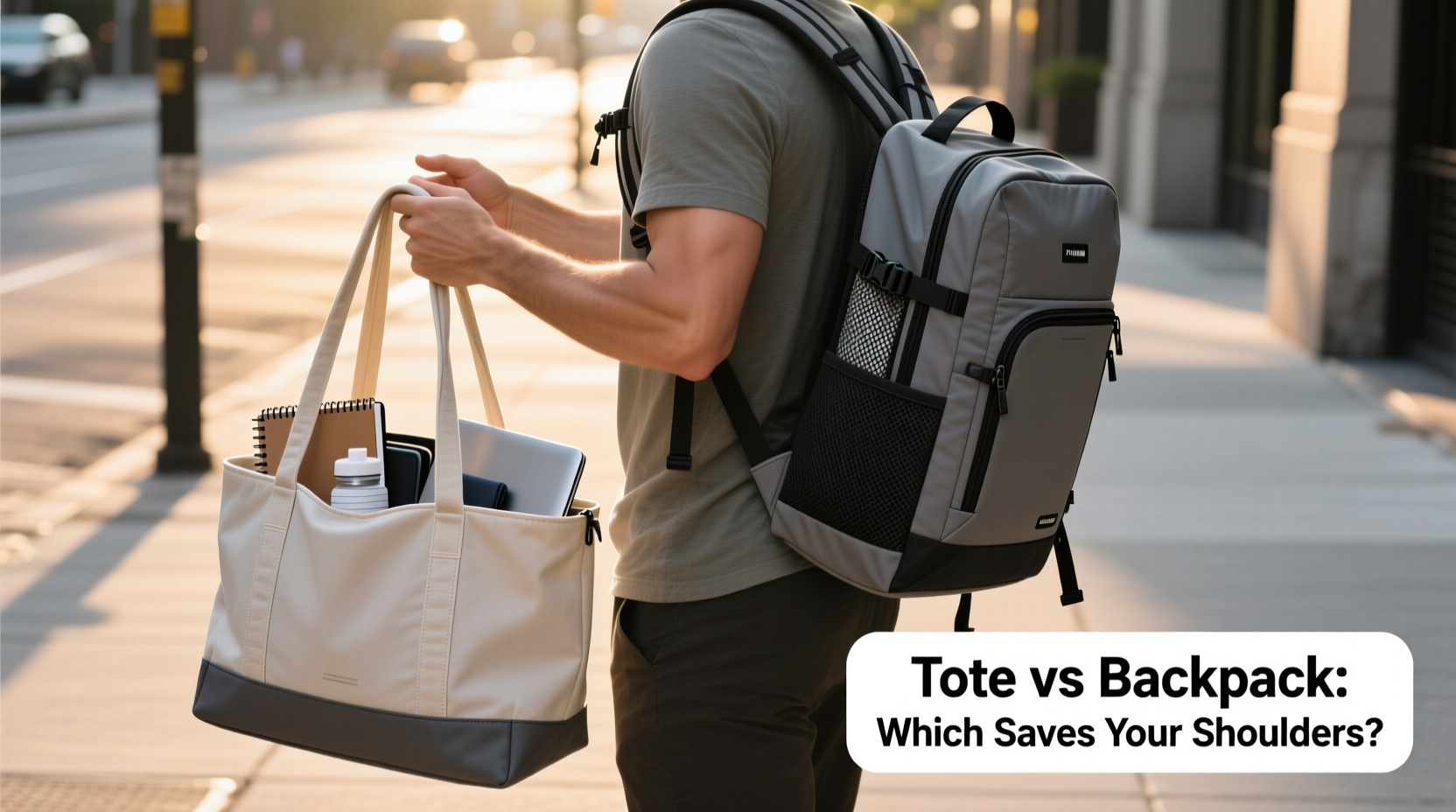
Shoulder pain from carrying bags typically starts with poor weight distribution. When a single strap digs into one shoulder, it forces the body to compensate. The spine tilts slightly toward the weighted side, the neck leans the opposite way, and muscles along the trapezius (the broad muscle connecting neck to shoulders) tighten up. Over time, this imbalance leads to muscular fatigue, joint stress, and postural distortion.
According to Dr. Lena Torres, a physical therapist specializing in ergonomic injuries, “Carrying asymmetrical loads regularly—even as light as 5 to 7 pounds—can create cumulative strain. We see patients with shoulder impingement, thoracic outlet syndrome, and cervical spine misalignment directly linked to improper bag use.”
The risk increases when users consistently favor one side, fail to adjust straps properly, or overload their bags with laptops, books, gym clothes, and accessories. This is especially true for urban commuters who walk significant distances or navigate stairs without elevators.
“Carrying asymmetrical loads regularly—even as light as 5 to 7 pounds—can create cumulative strain.” — Dr. Lena Torres, Physical Therapist
Tote Bags: Style at a Cost?
Tote bags have become synonymous with modern professionalism. Their open-top design allows easy access, and their structured silhouette fits perfectly under a coat or beside a desk. But beneath the polished exterior lies a functional flaw: unilateral load bearing.
Most tote bags feature two short handles or a single long shoulder strap, both of which concentrate weight on one shoulder. Even double-handled versions are rarely carried that way in practice—one hand holds coffee, the other keys, so the bag ends up slung over one side.
This uneven pressure compresses nerves and blood vessels running through the brachial plexus—a network near the base of the neck. Compression here can cause numbness, tingling in the arm, or weakness in grip strength. Additionally, the constant downward pull triggers muscle spasms in the upper back and neck.
When Totes Work—and When They Don’t
Tote bags can be practical for short commutes (<10 minutes), light loads (wallet, phone, small notebook), or situations requiring frequent access (e.g., retail workers, event hosts). However, once laptops, water bottles, or extra layers enter the mix, the total weight often exceeds safe limits.
A typical 13-inch laptop weighs around 3 pounds, a water bottle adds 1.5, and everyday items like notebooks and chargers push totals past 6–8 pounds. That’s equivalent to carrying a full bag of sugar on one shoulder for hours. No matter how padded the strap, sustained pressure will eventually trigger discomfort.
Backpacks: Built for Balance
Backpacks, by design, promote symmetrical weight distribution. When worn correctly—with both straps over the shoulders and the load centered close to the back—they align with the body’s natural center of gravity. This reduces torque on the spine and minimizes muscular effort needed to stabilize posture.
Modern ergonomic backpacks go further: contoured shoulder straps, chest or sternum straps, lumbar support panels, and breathable mesh backing all contribute to improved comfort. Some models even include load-lifting frames similar to hiking packs, transferring weight from shoulders to hips via a waist belt.
Studies published in the *Journal of Applied Ergonomics* show that wearing a properly fitted backpack reduces spinal deviation by up to 60% compared to single-strap bags. Moreover, dual-shoulder carry decreases peak muscle activation in the trapezius by nearly half.
Why Not All Backpacks Are Equal
Not every backpack delivers these benefits. Poorly designed models—especially those with thin straps, no padding, or excessive volume—can still cause problems. An overloaded backpack pulls the wearer backward, prompting an unnatural forward lean that stresses the lower back. Similarly, using only one strap defeats the purpose entirely, turning the backpack into a de facto tote.
The key is fit and function: the bottom of the pack should sit no lower than two inches below the waist, the top should not rise above the shoulders, and the bulk of the weight should rest between the shoulder blades.
Head-to-Head Comparison: Tote Bag vs Backpack
| Feature | Tote Bag | Backpack |
|---|---|---|
| Weight Distribution | Uneven, concentrated on one shoulder | Even, across both shoulders and back |
| Postural Impact | Causes lateral tilt, neck strain | Minimal spinal deviation when worn properly |
| Load Capacity | Limited; stability decreases with weight | High; designed for heavier, balanced loads |
| Access Convenience | Excellent; open top, easy reach | Moderate; depends on compartment layout |
| Ease of Movement | Poor on stairs or crowded transit | Good; hands-free, stable during motion |
| Fashion Flexibility | High; easily matches professional attire | Variable; some designs look casual or sporty |
| Recommended Max Weight | 5–7 lbs (carried briefly) | 15–20 lbs (with proper fit) |
Real-World Scenario: A Week in the Life of Two Commuters
Consider Sarah and James, both city-based professionals with identical 45-minute commutes involving walking, subway rides, and office work.
Sarah uses a leather tote daily. She carries her laptop, tablet, lunch container, water bottle, and makeup pouch—totaling about 9 pounds. By Wednesday, she notices tightness in her right shoulder. By Friday, she experiences radiating pain down her arm and headaches after prolonged sitting. Her doctor diagnoses early signs of thoracic outlet syndrome, likely aggravated by her bag habit.
James opts for a minimalist backpack with padded straps and a laptop sleeve. His load is similar in weight, but because the backpack distributes it evenly, he reports no discomfort. He adjusts the sternum strap in the morning and occasionally shifts position while standing on the train. After two weeks, he switches to a model with a waist belt and finds even greater relief during longer walks.
Their stories aren’t outliers. They reflect a growing trend: professionals reevaluating their daily gear based on physical feedback rather than aesthetics alone.
Smart Strategies for Pain-Free Commuting
You don’t need to abandon your favorite tote or switch to a hiking-style backpack to protect your shoulders. With thoughtful habits and minor upgrades, you can maintain both comfort and style.
Step-by-Step Guide to Safer Bag Use
- Assess Your Daily Load: Weigh your bag fully packed. Anything over 10% of your body weight (e.g., 12 lbs for a 120-lb person) is too heavy for a tote.
- Choose the Right Bag Type: For loads over 7 lbs, opt for a backpack. For lighter loads, consider crossbody bags with wide, adjustable straps as a middle ground.
- Wear It Correctly: Backpacks should sit snug against the back, not sagging low. Straps should allow the bag to rest between the shoulders and waist.
- Use All Available Supports: Engage sternum and waist straps when available. These reduce shoulder strain by stabilizing the load.
- Switch Sides Frequently: If using a single-strap bag, change shoulders every 10–15 minutes to prevent muscle imbalance.
- Edit Your Contents: Remove non-essentials. Carry only what you need that day—duplicate items at home and work if necessary.
- Strengthen Supporting Muscles: Incorporate exercises like rows, shoulder retractions, and core work to improve tolerance for carrying loads.
Checklist: Shoulder-Friendly Commute Habits
- ☑️ Bag weight is under 10% of my body weight
- ☑️ Backpack straps are adjusted and snug
- ☑️ Using sternum or waist strap if available
- ☑️ Alternating tote shoulder every few blocks
- ☑️ Removing unnecessary items (extra charger, snacks, books)
- ☑️ Taking breaks to stretch shoulders during transit
- ☑️ Considering rolling luggage or messenger bags for very heavy loads
FAQ: Common Questions About Commuter Bags and Shoulder Health
Can a crossbody bag be better than a tote?
Yes. Crossbody bags distribute weight diagonally across the torso, reducing direct pressure on one shoulder. Look for models with wide, padded straps and the ability to sit close to the body. Avoid overly long straps that let the bag swing freely, as momentum increases strain.
Is it ever okay to carry a tote every day?
Only if the load is light (under 5 lbs) and you’re mindful of usage. Rotate with a backpack, limit carry time, and avoid overstuffing. Consider keeping heavier items (like laptops) in a secure location at work instead of transporting them daily.
What features should I look for in an ergonomic backpack?
Prioritize padded, contoured shoulder straps; a chest strap; a breathable back panel; and compartments that keep weight centered. Look for materials that balance durability and lightweight construction. Brands like Osprey, Aer, and Fjällräven offer commuter-focused designs with proven ergonomics.
Conclusion: Choose Comfort Without Compromise
The choice between a tote bag and a backpack isn’t just about appearance—it’s about how you want to feel at the end of your day. Shoulder pain shouldn’t be an accepted cost of productivity. While totes offer undeniable style appeal, they come with biomechanical trade-offs that accumulate over time. Backpacks, especially modern ergonomic ones, provide a smarter solution for daily commuting, supporting posture, reducing strain, and enabling freer movement.
You don’t have to sacrifice professionalism to protect your body. Sleek, minimalist backpacks now blend seamlessly into corporate environments. Alternatively, combining bag types—using a tote for client meetings and a backpack for transit—offers flexibility without risk.




 浙公网安备
33010002000092号
浙公网安备
33010002000092号 浙B2-20120091-4
Comments
No comments yet. Why don't you start the discussion?