
Every step matters—especially when it comes to choosing the right footwear for your workouts. Whether you're hitting the gym, pounding the pavement, or transitioning from cardio to strength circuits, your shoes play a crucial role in performance, comfort, and injury prevention. Yet many people unknowingly wear the wrong type of shoe for their activity, thinking all athletic footwear is interchangeable. The truth? Training shoes and running shoes are engineered for fundamentally different movements. Wearing one where the other belongs can compromise stability, reduce efficiency, and increase the risk of strain or long-term joint damage.
This isn’t about brand loyalty or aesthetics—it’s about biomechanics. Understanding the distinctions between these two categories empowers you to make smarter choices, extend the life of your footwear, and protect your body over time.
The Fundamental Differences: Purpose and Design
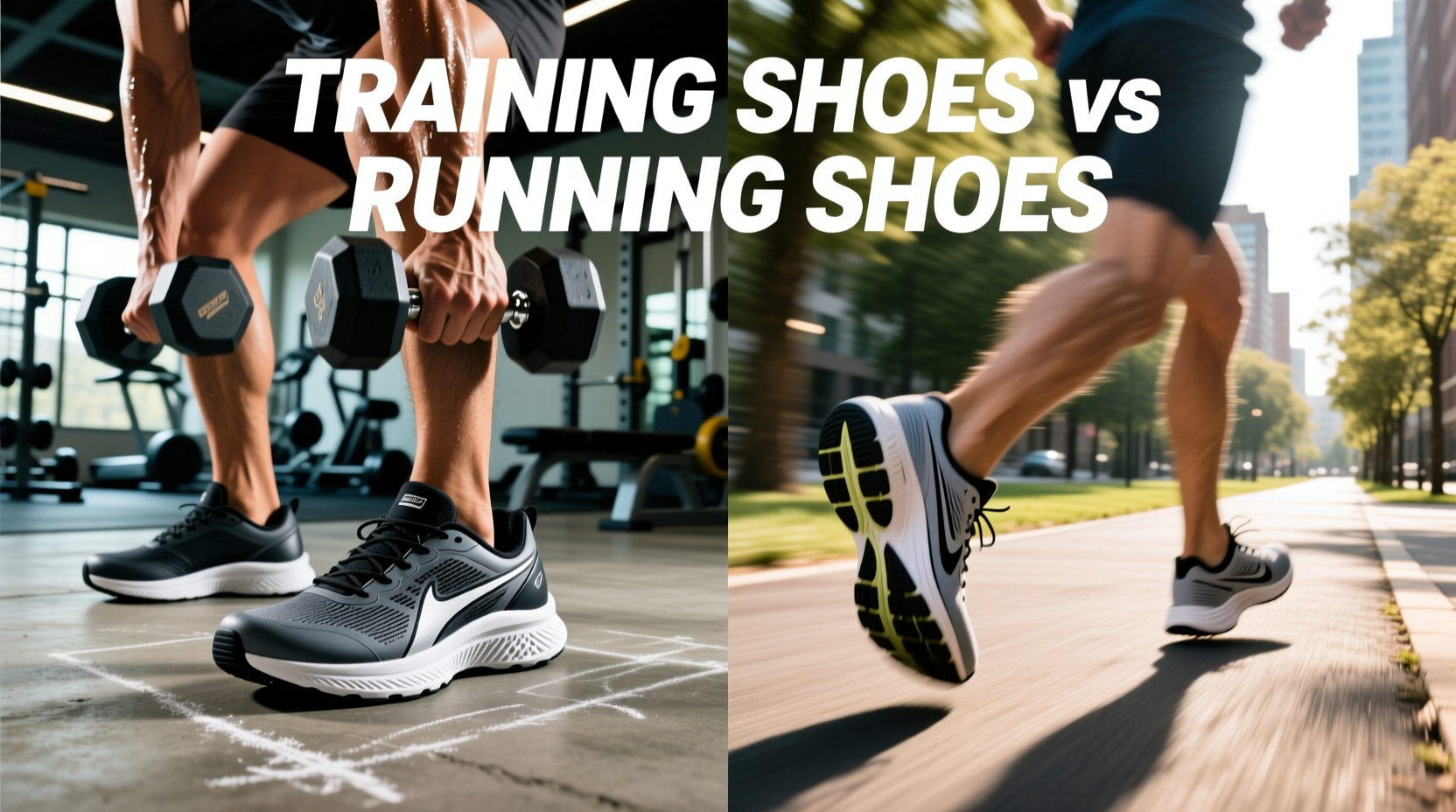
At first glance, training and running shoes may look similar. Both are lightweight, breathable, and designed for physical activity. But their internal structure, cushioning layout, and outsole design reflect very different priorities.
Running shoes are built for forward motion. Every component supports a repetitive heel-to-toe gait cycle. They feature:
- Heel-to-toe drop (typically 8–12mm) to aid stride efficiency
- Maximal midsole cushioning under the heel and forefoot
- Flexible soles that encourage natural foot roll during impact
- Narrower, more streamlined fit to reduce foot movement inside the shoe
In contrast, training shoes are built for multidirectional movement. Gym workouts involve lateral lunges, jumps, squats, and quick directional changes. Their design prioritizes:
- Flat, stable outsoles for balance during weightlifting
- Firm midsoles with less compression to maintain ground feel
- Broad base and reinforced sidewalls for lateral support
- Durable uppers resistant to abrasion from ropes or equipment
“Using running shoes for cross-training is like driving a sports car off-road. It might work briefly, but you’re sacrificing control and risking damage.” — Dr. Lena Patel, Sports Biomechanist at Movement Science Lab, Chicago
What Happens When You Wear the Wrong Shoes?
Mismatched footwear doesn’t just feel awkward—it alters how your body moves. Here’s what can go wrong:
Wearing Running Shoes for Training
Running shoes compress heavily on impact, which is great for absorbing pavement shock. But during squats or lateral drills, that soft cushioning causes instability. Your foot sinks into the midsole, making it harder to maintain balance. This forces your ankle and knee joints to compensate, increasing stress on ligaments and tendons.
Wearing Training Shoes for Running
Training shoes are stiff and flat—ideal for lifting, but problematic for long-distance running. Without adequate heel cushioning, each stride transfers more impact to your shins, knees, and lower back. Over time, this increases the risk of stress fractures, plantar fasciitis, and joint inflammation.
A 2022 study published in the *Journal of Sports Science & Medicine* found that runners who wore non-running-specific shoes for more than 10 miles per week reported significantly higher rates of shin splints and Achilles pain compared to those using proper running footwear.
How to Choose the Right Shoe: A Practical Guide
Ask yourself: What’s the primary movement pattern of my workout?
If your session involves continuous forward motion—jogging, treadmill intervals, outdoor runs—go with running shoes. If it includes strength training, HIIT, agility drills, or group fitness classes like CrossFit or boot camp, opt for training shoes.
Step-by-Step Decision Process
- Assess your weekly routine: List your top three activities by frequency.
- Categorize each activity: Is it primarily linear (running, cycling warm-up) or multidirectional (weights, plyometrics)?
- Prioritize based on volume: Spend on the shoe type you use most often.
- Test the fit: In training shoes, ensure no heel slip during side steps. In running shoes, check for snug midfoot lockdown and toe room.
- Replace regularly: Running shoes lose cushioning after 300–500 miles; training shoes show wear on the outer sole edges after 6–9 months of regular use.
Comparison Table: Key Features at a Glance
| Feature | Running Shoes | Training Shoes |
|---|---|---|
| Primary Use | Forward-motion running, jogging | Gym workouts, weightlifting, HIIT |
| Cushioning Level | High, especially in heel | Low to moderate, firm |
| Sole Flexibility | Flexible along the length | Limited flexibility, stiff forefoot |
| Lateral Support | Minimal | Reinforced sidewalls, wide base |
| Heel-to-Toe Drop | 8–12mm (common) | 4–8mm (closer to zero) |
| Durability Focus | Midsole foam longevity | Outsole rubber, upper abrasion resistance |
Real-World Example: Sarah’s Fitness Wake-Up Call
Sarah, a 34-year-old marketing manager, joined a 6-week HIIT program to improve her endurance and strength. She invested in high-end running shoes, assuming “the best” would cover all bases. Within three weeks, she developed persistent knee pain during lateral lunges and struggled to maintain balance during single-leg deadlifts.
After visiting a physiotherapist, she learned her running shoes were compressing unevenly during side-to-side movements, causing her knees to drift inward. Switching to cross-training shoes with a stable platform resolved the instability. Her form improved, pain decreased, and she completed the program without further issues.
Sarah’s experience is common. Many fitness newcomers assume one versatile shoe suffices. But specialization enhances safety and performance.
Checklist: Are You Wearing the Right Shoes?
- ✅ Do your shoes allow smooth heel-to-toe transition if you run frequently?
- ✅ Can you perform a lateral shuffle without feeling wobbly or unstable?
- ✅ Is the sole showing even wear, or are there unusual pressure marks on the sides?
- ✅ Does your foot slide forward during downhill runs or backward during uphill climbs?
- ✅ Have you exceeded 300 miles in your running shoes or noticed flattened cushioning?
- ✅ Can you lift heavy weights without your heel sinking or arch collapsing?
If you answered “no” to more than two questions, it’s time to reassess your footwear.
Frequently Asked Questions
Can I use running shoes at the gym occasionally?
For light circuits or short gym sessions, yes—but not for heavy lifting or dynamic movements. Occasional use won’t cause immediate harm, but repeated mismatched use accelerates wear and increases injury risk over time.
Are minimalist or barefoot-style shoes suitable for both?
Some minimalist shoes blur the line, offering low drop and flexibility. However, true minimalist designs lack the cushioning needed for long runs and the lateral rigidity required for safe lifting. They require a gradual adaptation period and aren’t ideal for beginners or high-impact routines.
How do I know when to replace my shoes?
Track mileage for running shoes (replace every 300–500 miles). For training shoes, inspect the outsole for asymmetric wear, especially on the outer edges. Also, if you notice new aches after workouts or visible creasing in the midsole, replacement is due.
Final Thoughts: Invest in Your Foundation
Your feet are the foundation of every movement you make. Just as you wouldn’t use a kitchen knife to fix a car, don’t rely on one type of athletic shoe for every workout. Choosing between training shoes and running shoes isn’t about preference—it’s about respecting the mechanics of your body and the demands of your activity.
Whether you're building endurance, gaining strength, or balancing both, the right footwear supports your goals safely and efficiently. Take the time to evaluate your routine, try on options with purpose, and replace worn-out pairs proactively.




 浙公网安备
33010002000092号
浙公网安备
33010002000092号 浙B2-20120091-4
Comments
No comments yet. Why don't you start the discussion?