
Living well isn’t about grand gestures or sudden overhauls. It’s built on consistent, intentional choices that compound over time. While the idea of transformation can feel overwhelming, real change begins with small, sustainable actions. This guide explores proven strategies grounded in psychology, neuroscience, and behavioral science to help you elevate your daily experience—not just survive, but thrive.
Master Your Morning Routine
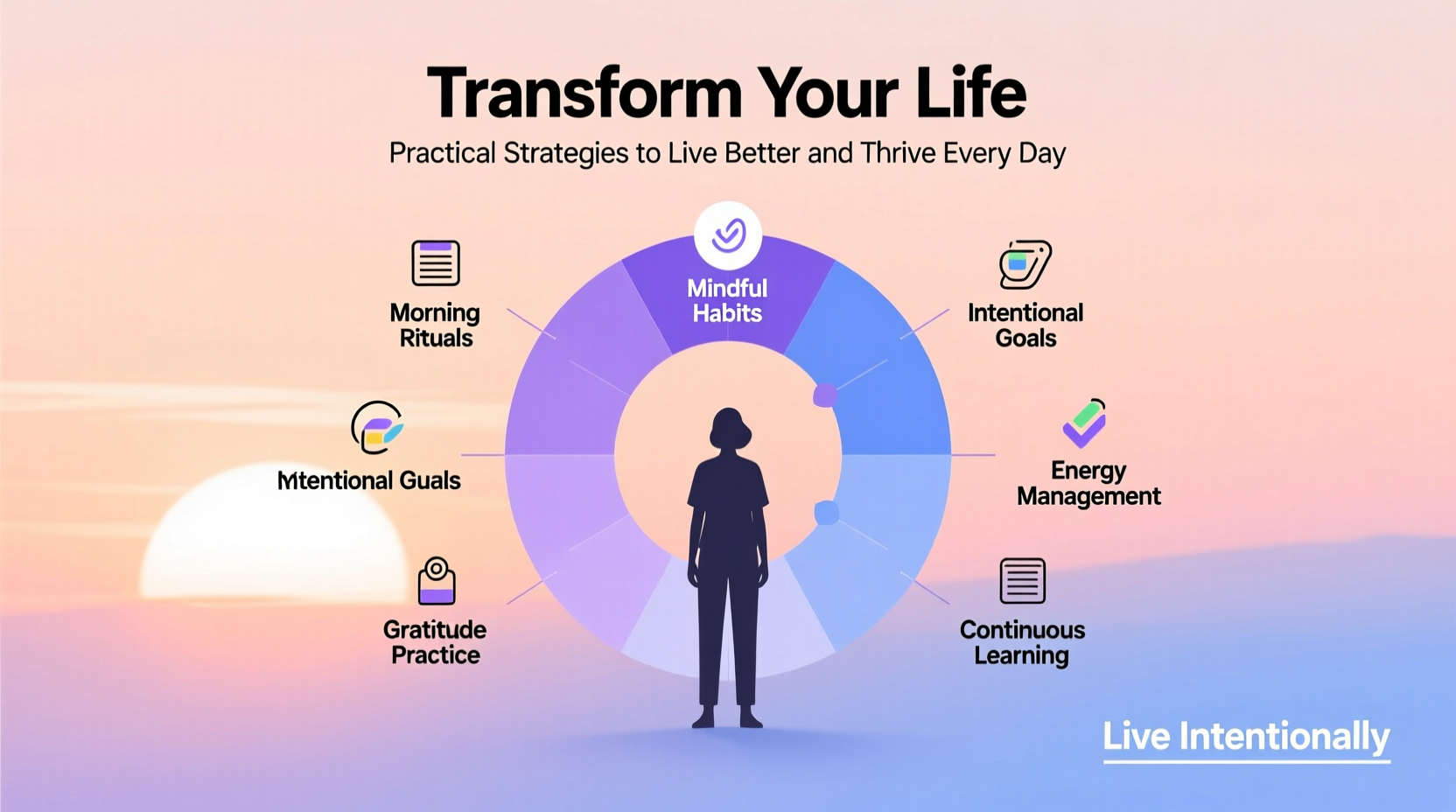
The first 90 minutes after waking set the tone for your entire day. A purposeful morning routine can boost mental clarity, emotional resilience, and productivity. Instead of reaching for your phone, consider starting your day with intention.
- Spend 5–10 minutes in stillness or light stretching.
- Hydrate with a glass of water to kickstart metabolism.
- Write down three things you’re grateful for to activate positive neural pathways.
- Avoid checking emails or social media for at least 30 minutes.
Research from the American Psychological Association shows that people who follow structured morning rituals report higher levels of control and lower stress throughout the day.
Design Your Environment for Success
Your surroundings shape your behavior more than motivation ever will. If your workspace is cluttered, distractions are within reach, or healthy food isn’t visible, you’re fighting an uphill battle. The key is to make good choices easy and bad ones harder.
| Area | Do | Avoid |
|---|---|---|
| Workspace | Keep only essential tools; use noise-canceling headphones | Leaving phone on desk; multitasking across tabs |
| Kitchen | Place fruit in a bowl; store snacks in opaque containers | Keeping junk food at eye level |
| Bedroom | Use blackout curtains; charge phone outside the room | Watching TV in bed; using bright lights before sleep |
“Environment is the invisible hand that shapes behavior.” — Dr. BJ Fogg, founder of the Behavior Design Lab at Stanford University
By redesigning your physical space, you reduce decision fatigue and increase the likelihood of making empowering choices automatically.
Build Resilience Through Daily Micro-Habits
Transformation doesn’t require massive effort—it requires consistency. Tiny habits, when repeated daily, rewire your brain and build momentum. Start with one micro-habit tied to an existing behavior.
- After brushing your teeth, do two minutes of deep breathing.
- After pouring your morning coffee, write one sentence in a journal.
- After sitting down at your desk, take three mindful breaths before opening your laptop.
These “habit stacking” techniques, popularized by James Clear in *Atomic Habits*, leverage neural triggers to embed new behaviors effortlessly. Over time, these micro-actions evolve into foundational pillars of well-being.
Real Example: How Sarah Reclaimed Her Energy in 6 Weeks
Sarah, a 38-year-old project manager, felt constantly drained despite working fewer hours than before. She was sleeping poorly, snacking late at night, and reacting impulsively to stress. After learning about habit design, she made three changes:
- She began each morning with 10 minutes of sunlight exposure and hydration.
- She replaced her afternoon candy bar with almonds and an apple.
- She implemented a “no screens after 9 PM” rule and read fiction instead.
Within six weeks, her sleep improved from 5.5 to 7 hours per night. Her energy stabilized, and she reported feeling “more like herself” than she had in years. Small shifts created outsized results because they were sustainable and aligned with her values.
Optimize Your Mental and Emotional Health
Thriving isn’t just about productivity—it’s about inner balance. Emotional regulation, self-awareness, and meaningful connection are core components of a rich life. Consider integrating these practices:
- Daily reflection: Spend 5 minutes asking, “What went well today?” and “What could I improve?”
- Boundary setting: Say no to commitments that drain you without clear purpose.
- Social nourishment: Schedule one meaningful conversation per week—even a 15-minute call with a friend boosts mood.
“You don’t have to be positive all the time. But you can practice responding to challenges with greater awareness.” — Dr. Susan David, Harvard psychologist and author of *Emotional Agility*
Mental fitness, like physical fitness, requires regular training. Mindfulness apps, journaling, or even scheduled “worry time” (a designated 10-minute window to process concerns) can prevent rumination from hijacking your day.
Step-by-Step Guide to a Thriving Week
Follow this seven-day framework to integrate transformative habits gradually:
- Day 1: Audit your current routines. Note when you feel energized vs. drained.
- Day 2: Choose one micro-habit (e.g., drink water upon waking).
- Day 3: Tidy one area of your home or workspace to reduce visual stress.
- Day 4: Practice gratitude—list three specific things you appreciated today.
- Day 5: Have a screen-free evening. Replace scrolling with reading or conversation.
- Day 6: Move intentionally—walk, stretch, or dance for 20 minutes.
- Day 7: Reflect: What shifted? What felt easier? Plan one improvement for next week.
Checklist: Your Weekly Thriving Foundation
- ✅ Wake up at a consistent time (+/- 30 minutes)
- ✅ Drink water within 10 minutes of waking
- ✅ Complete one focused work session (25–50 mins, no distractions)
- ✅ Eat at least two meals with whole, unprocessed ingredients
- ✅ Engage in 20+ minutes of movement
- ✅ Spend 10 minutes reflecting or journaling
- ✅ Connect meaningfully with one person
- ✅ Be off screens 60 minutes before bed
FAQ
How long does it take to see results from these strategies?
Many people notice subtle improvements in mood and focus within 3–7 days. Lasting transformation typically becomes evident after 30–60 days of consistent practice. The key is not perfection, but persistence.
What if I miss a day or fall off track?
Slips are normal. Research shows that people who view setbacks as part of the process are more likely to succeed long-term. Simply return to your next small action—don’t wait for a “perfect” restart.
Can these strategies work with a busy schedule?
Absolutely. In fact, high performers often rely on them most. The strategies here are designed to fit into real life—most take less than five minutes. Efficiency comes from consistency, not time spent.
Conclusion
Transforming your life isn’t about chasing perfection. It’s about choosing progress—day after day, decision after decision. When you align your habits with your values, optimize your environment, and treat yourself with compassion, thriving becomes not just possible, but natural. You already have everything you need to begin. The next step isn’t big. It’s simply the next right one.




 浙公网安备
33010002000092号
浙公网安备
33010002000092号 浙B2-20120091-4
Comments
No comments yet. Why don't you start the discussion?