
Choosing the right heel for extended wear isn’t just about style—it’s a matter of physical comfort, foot health, and practical endurance. Among today’s most popular options, transparent heels and block heels have emerged as fashion favorites, each with its own aesthetic appeal and functional trade-offs. Transparent heels offer a modern, airy look that elongates the leg, while block heels provide stability and structure. But when it comes to walking comfortably from morning meetings to evening events, which one truly wins?
This article breaks down the biomechanics, design elements, and real-world usability of both styles. By examining weight distribution, arch support, sole materials, and user experiences, we’ll determine which heel type is genuinely more walkable over long periods—and why.
The Anatomy of Heel Comfort
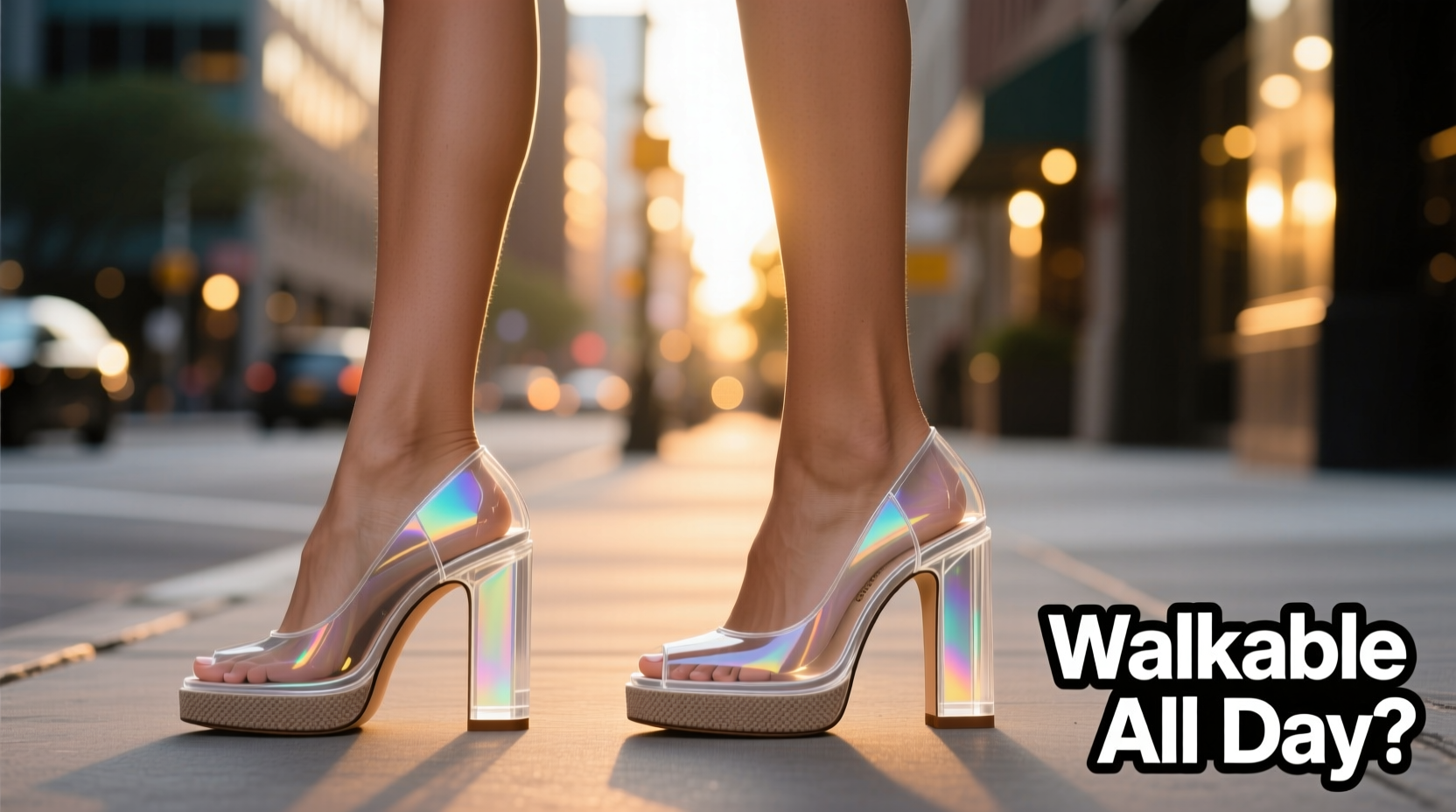
Before comparing transparent and block heels, it's essential to understand what makes a heel comfortable for all-day wear. Three key factors influence walkability:
- Weight Distribution: How evenly the heel disperses body weight across the foot.
- Heel Base Width: Wider bases reduce pressure on the ball of the foot and improve balance.
- Arch Support & Cushioning: Adequate insole padding and midfoot support reduce fatigue and prevent strain.
A well-designed shoe balances these elements to minimize stress on joints and muscles. While aesthetics often dominate heel selection, overlooking ergonomics can lead to blisters, lower back pain, or even long-term foot issues like plantar fasciitis.
Understanding Transparent Heels
Transparent heels—often made from lucite, acrylic, or PVC—are celebrated for their minimalist, futuristic appearance. The see-through material creates the illusion of a floating foot, making legs appear longer and footwear less visually heavy. They’ve become staples on runways and red carpets, championed by designers like Alexander McQueen and Manolo Blahnik.
Despite their visual lightness, however, transparent heels are not always physically light. Acrylic-based heels can be dense and rigid, transferring more impact directly to the foot. Additionally, many transparent styles prioritize form over function, featuring narrow stilettos or minimal insole cushioning.
Pros of Transparent Heels
- Stylish and fashion-forward; pairs well with sheer or monochrome outfits.
- Creates an elongating effect on the leg line.
- Versatile across formal and semi-casual settings.
Cons of Transparent Heels
- Limited breathability due to non-porous materials.
- Often lack internal padding or arch support.
- Rigid construction reduces shock absorption.
- Narrow heel base increases instability on uneven surfaces.
“Transparent heels are a triumph of design over durability. They’re stunning, but rarely engineered for marathon wear.” — Lena Torres, Footwear Ergonomist at The Institute of Shoe Design
Decoding Block Heels: Stability Meets Style
Block heels, characterized by a wide, solid heel column (typically rectangular or slightly tapered), have surged in popularity due to their reputation for comfort. Unlike stilettos, which concentrate force on a small point, block heels distribute weight across a broader area, reducing pressure on the metatarsal bones.
Modern block heels come in various heights—from low 2-inch office-friendly versions to dramatic 5-inch statement makers—without sacrificing structural integrity. Many feature contoured footbeds, rubberized outsoles, and ergonomic curves that follow the natural shape of the foot.
Pros of Block Heels
- Superior stability and balance, especially on cobblestones or grass.
- Better shock absorption due to larger surface contact.
- Available with built-in arch support and memory foam insoles.
- Easier to walk in quickly, requiring less “breaking in” time.
Cons of Block Heels
- Can appear bulkier or less elegant than slender heels.
- Some budget models use heavy materials, increasing overall shoe weight.
- Fashion-forward designs may still compromise on sole flexibility.
Direct Comparison: Walkability Face-Off
To evaluate true all-day wearability, let’s compare transparent and block heels across five critical categories.
| Feature | Transparent Heels | Block Heels |
|---|---|---|
| Weight Distribution | Poor – concentrated pressure on heel and ball of foot | Excellent – broad base spreads load evenly |
| Balance & Stability | Fair to Poor – narrow base increases wobble risk | Excellent – low center of gravity enhances control |
| Shock Absorption | Poor – rigid materials transmit impact | Good to Excellent – often paired with cushioned soles |
| Arch Support | Limited – frequently flat insoles | Commonly included – especially in premium brands |
| All-Day Wear Verdict | Not recommended beyond 3–4 hours without discomfort | Suitable for 8+ hours with proper fit and break-in |
The data clearly favors block heels when endurance is the priority. Even high-fashion block heel designs from brands like Sam Edelman and Naturalizer incorporate orthopedic principles into their construction, making them suitable for professionals, travelers, and event-goers alike.
Real-World Case Study: A Day in the Life of a Wedding Planner
Consider Maria, a professional wedding planner based in Chicago, who regularly works 12-hour days overseeing ceremonies, venue transitions, and guest logistics. Last summer, she wore a pair of transparent lucite stilettos to a lakeside wedding. Though the shoes matched her champagne dress perfectly, she reported severe foot fatigue by hour four, developed a blister near her Achilles, and had to switch to flats by mid-reception.
The following weekend, she opted for 3-inch taupe block heels with padded insoles. Despite walking across grass, gravel, and tile floors, she completed her shift without pain. “I barely noticed I was wearing heels,” she said. “The difference wasn’t just comfort—it was functionality.”
Maria’s experience reflects a broader trend: professionals who rely on mobility throughout the day increasingly favor block heels, even when style expectations are high.
How to Maximize Comfort in Any Heel
Even the best-designed shoes require smart usage strategies. Whether you choose transparent or block heels, these steps can enhance walkability and reduce strain.
- Select the Right Height: For all-day wear, stick to 2.5 to 3.5 inches. Higher heels increase forward lean, forcing compensatory posture shifts.
- Break Them In Gradually: Wear new heels around the house for short intervals before full-day use.
- Add Orthotic Inserts: Gel pads, metatarsal cushions, or custom orthotics can significantly improve support.
- Check the Toe Box: Ensure toes have room to splay slightly—tight boxes cause cramping and nerve irritation.
- Rotate Your Shoes: Avoid wearing the same pair two days in a row to prevent repetitive stress.
Expert Insight: What Podiatrists Recommend
Dr. Alan Prescott, a board-certified podiatrist with over 15 years of clinical experience, emphasizes that heel design impacts more than just the feet. “High heels alter your entire kinetic chain,” he explains. “When the heel lifts the foot, it tightens the calf muscles, shifts your pelvis forward, and can lead to lower back strain. Block heels mitigate this because they’re more stable and often have a lower incline.”
He adds: “Transparent heels aren’t inherently worse—but they’re often designed without regard for gait mechanics. If you must wear them, limit duration and alternate with supportive flats.”
“From a biomechanical standpoint, stability trumps style when it comes to prolonged standing. Block heels simply align better with how our bodies are meant to move.” — Dr. Alan Prescott, DPM
Checklist: Choosing All-Day Walkable Heels
Use this checklist when shopping to ensure maximum comfort and support:
- ✅ Heel height between 2.5” and 3.5”
- ✅ Wide, stable base (especially for block heels)
- ✅ Padded insole or memory foam lining
- ✅ Rubber or textured outsole for grip
- ✅ Roomy toe box with no pinching
- ✅ Lightweight construction (avoid overly dense materials)
- ✅ Adjustable strap or ankle support (if needed)
- ✅ Try walking on an incline in-store to test balance
Frequently Asked Questions
Can transparent heels ever be comfortable for long periods?
Only if they incorporate ergonomic features like cushioned footbeds, moderate heel height (under 3”), and a wider base. Most standard transparent heels lack these, making extended wear challenging. Some newer hybrid designs combine a block-style transparent heel with soft linings, offering improved comfort.
Are block heels suitable for formal events?
Absolutely. Modern block heels come in sleek, refined silhouettes that rival traditional stilettos in elegance. Look for finishes like patent leather, metallic uppers, or lace overlays to elevate the look for galas, weddings, or cocktail parties.
Do thicker block heels hurt more because they’re heavier?
Not necessarily. While some block heels use denser materials, the weight is distributed across a larger area, reducing per-square-inch pressure. Many are now made with lightweight composites or hollow-core designs to maintain durability without added bulk.
Final Verdict: Which Heel Wins for All-Day Wear?
While transparent heels win on visual innovation and trend appeal, block heels are the clear victors when it comes to sustained walkability. Their superior weight distribution, stability, and compatibility with supportive insoles make them ideal for anyone spending hours on their feet—whether at work, travel, or social events.
That doesn’t mean you must abandon transparent heels entirely. They serve a purpose in fashion expression and special occasions where duration is limited. But for daily wear, reliability, and foot health, block heels offer a smarter, more sustainable choice.
The goal isn’t to eliminate style—it’s to integrate comfort into your wardrobe decisions. With thoughtful selection and proper care, you can enjoy both elegance and endurance in every step.




 浙公网安备
33010002000092号
浙公网安备
33010002000092号 浙B2-20120091-4
Comments
No comments yet. Why don't you start the discussion?