
Transitional seasons—spring and fall—are deceptively challenging. Temperatures fluctuate unpredictably, rain showers appear without warning, and layering becomes a daily balancing act between comfort and practicality. In this climate limbo, your outerwear choice can make or break your day. Two staples dominate the conversation: the classic trench coat and the modern puffer jacket. One is steeped in heritage and elegance; the other promises maximum insulation with minimal weight. But when it comes to versatility across shifting conditions, which truly earns its place in your wardrobe?
Versatility isn’t just about looks—it’s functionality, adaptability, durability, and appropriateness across settings. This article breaks down both garments across key criteria, offering actionable insights to help you decide which aligns best with your lifestyle.
The Anatomy of Versatility in Outerwear
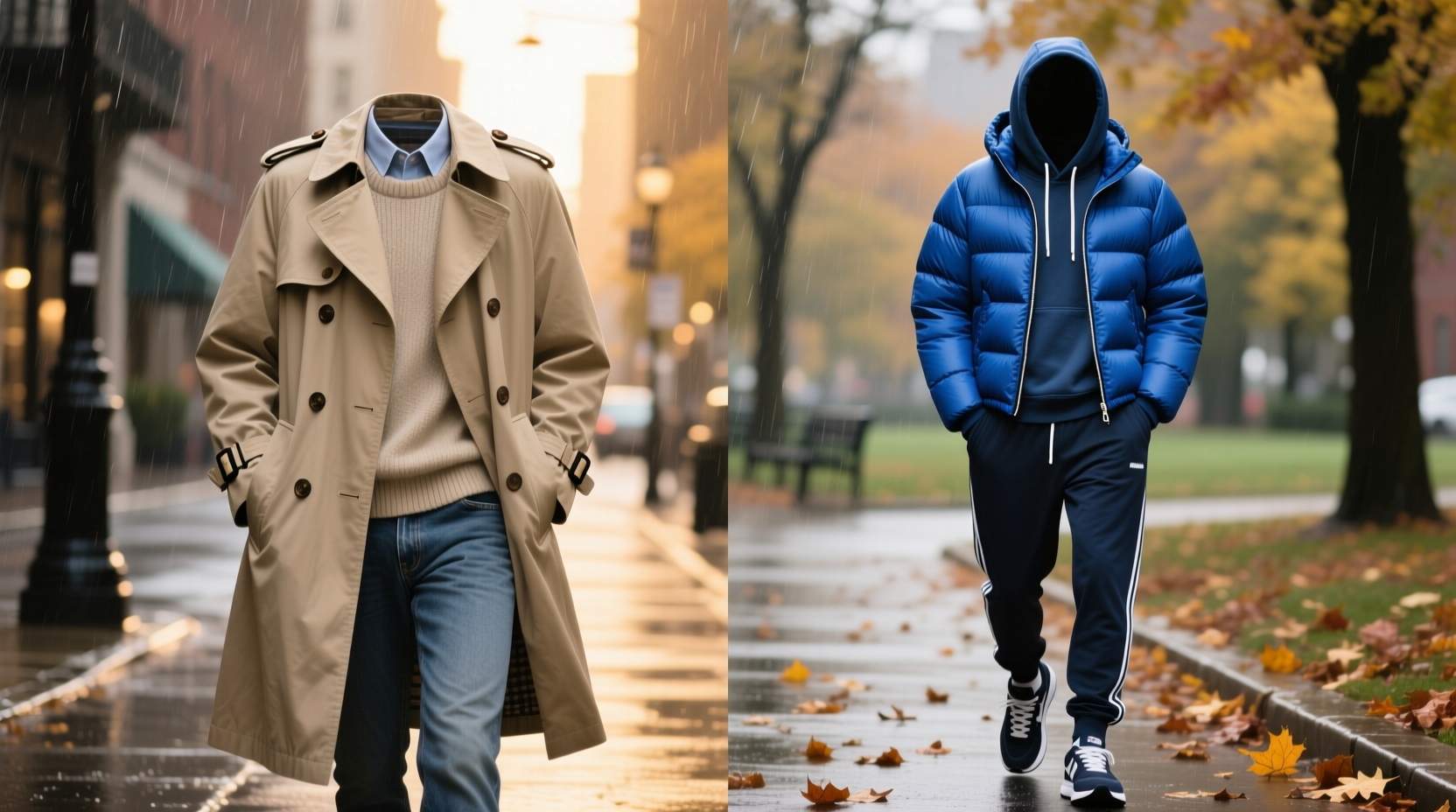
Before comparing trench coats and puffer jackets, it's essential to define what makes outerwear “versatile” during transitional months. The ideal piece should:
- Regulate body temperature as weather shifts from cool mornings to mild afternoons
- Resist light rain or drizzle without requiring an additional shell
- Layer easily over shirts, sweaters, or lightweight knits
- Maintain a professional or polished appearance for work, casual outings, or social events
- Be easy to pack, store, or carry when not in use
No single coat excels in every category, but some come closer than others. Let’s examine how each contender performs.
Trench Coats: Timeless Style Meets Functional Heritage
The trench coat originated as military wear during World War I, designed by Thomas Burberry using gabardine—a tightly woven, water-resistant cotton fabric. Its iconic features include a double-breasted front, epaulets, storm flaps, and a belted waist. Over time, it evolved into a fashion staple associated with sophistication and urban elegance.
In transitional weather, the trench shines where moderate temperatures and intermittent rain are common. A well-made trench provides light insulation while effectively shedding moisture thanks to its tightly woven fabric and structured design. It breathes better than synthetic alternatives, reducing overheating on milder days.
Styling-wise, the trench is unmatched in versatility. Worn over a dress shirt and blazer, it elevates a business-casual look. Paired with jeans and boots, it delivers effortless weekend polish. Its neutral palette (beige, navy, black) ensures compatibility with most wardrobes.
However, limitations exist. Most traditional trenches offer minimal thermal protection. On colder, windy days, they may require layering underneath that compromises their tailored fit. Additionally, while water-resistant, they aren't fully waterproof under prolonged exposure—ideal for drizzle, less so for heavy storms.
Puffer Jackets: Lightweight Warmth and Weatherproof Performance
Puffer jackets emerged from outdoor performance gear, designed to trap heat efficiently through quilted compartments filled with down or synthetic insulation. Their primary strength lies in warmth-to-weight ratio: even ultra-thin models provide significant thermal retention.
For transitional seasons, especially in early fall or late winter bleeding into spring, puffers excel when cold snaps persist. They handle wind exceptionally well, and many modern versions feature DWR (durable water repellent) coatings or laminated membranes that resist light rain and snow. Some styles now incorporate sleeker silhouettes—slim-fit, cropped, or minimalist designs—that bridge the gap between function and fashion.
Where puffers gain in utility, they sometimes lose in formality. While high-end brands like Canada Goose, Arc’teryx, or Moncler have elevated the aesthetic, most remain rooted in sportswear. Pairing a bulky puffer with tailored trousers or office attire can feel incongruous unless carefully styled.
Another consideration is breathability. Synthetic insulation and nylon shells often trap moisture when worn during activity, leading to discomfort if you're walking briskly or commuting. Ventilation zippers help, but few puffers match the airflow of natural fabrics like cotton gabardine.
“Puffer jackets solve the problem of sudden cold—but only if you’re willing to compromise on sartorial subtlety.” — Marcus Lin, Menswear Editor at *Urban Climate Review*
Head-to-Head Comparison: Trench Coat vs Puffer Jacket
| Feature | Trench Coat | Puffer Jacket |
|---|---|---|
| Temperature Range | 45°F–65°F (7°C–18°C) | 30°F–50°F (-1°C–10°C) |
| Rain Resistance | Good (drizzle/shower) | Fair to Good (varies by coating) |
| Breathability | High (natural fibers) | Low to Moderate |
| Style Flexibility | Excellent (office to casual) | Limited (best for casual/active) |
| Packability | Poor (bulky, doesn’t fold well) | Excellent (compressible) |
| Layering Ease | Moderate (structured cut) | High (loose fits common) |
| Durability | High (long-lasting materials) | Moderate (fabric prone to scuffing) |
This comparison reveals a clear trade-off: the trench prioritizes style and breathability, while the puffer emphasizes warmth and portability. Your environment and daily routine will determine which advantages matter most.
Real-World Use Case: Urban Commuter in Seattle
Consider Sarah, a marketing professional living in Seattle—known for its damp, cool springs and autumns. Her commute includes walking 15 minutes to the light rail, standing on uncovered platforms, and navigating indoor office spaces kept warm by central heating.
She initially favored a black puffer jacket for its warmth during morning commutes. However, she found herself overheating indoors and struggling to look polished in client meetings. After switching to a beige trench with a zip-in wool liner, she gained balance: protection from frequent drizzle, a professional appearance, and the ability to remove the liner midday as temperatures rose.
Sarah still owns a compact puffer, which she keeps folded in her work bag for unexpected cold spells or weekend hikes. But for five-day-a-week reliability, the trench proved more adaptable across environments.
This scenario illustrates a broader truth: versatility often means seamless integration across multiple contexts—not just surviving the elements, but thriving socially and professionally within them.
Actionable Checklist: Choosing the Right Outerwear for You
Use this checklist to evaluate which outerwear suits your transitional-season needs:
- ✅ Assess your typical daytime temperature range—is it consistently below 50°F (10°C)? If yes, lean toward a puffer.
- ✅ Consider precipitation frequency—do you face light mist or steady rain? Trenches handle mist well; puffers need coated shells for heavier wetness.
- ✅ Evaluate your daily environments—office, remote work, outdoor activities? Formal settings favor the trench; active lifestyles suit puffers.
- ✅ Think about layering habits—do you wear thick sweaters or prefer lightweight layers? Puffers accommodate bulkier layers better.
- ✅ Prioritize storage and portability—do you travel often or lack closet space? Puffers win in compressibility.
- ✅ Determine long-term value—trenches often last decades with care; puffers may degrade faster due to fabric wear.
Hybrid Strategy: Why Not Both?
For many, the answer isn’t choosing one over the other, but curating a seasonal rotation. A high-quality trench serves as your go-to for dry-cool days and professional settings. A lightweight, packable puffer acts as backup for cold fronts or travel.
Designers have noticed this demand. Brands like Barbour, Belstaff, and Massimo Dutti now offer “hybrid” trenches with insulated liners or water-resistant puffers styled with collar details reminiscent of classic coats. These pieces aim to merge functionality with finesse.
If wardrobe space allows, owning both maximizes preparedness. Reserve the trench for weekday wear and social engagements; deploy the puffer for weekends, travel, or regions with sharper temperature drops.
Frequently Asked Questions
Can a puffer jacket be worn to the office?
Yes, but only if it’s a sleek, minimalist design in neutral colors (black, charcoal, navy). Avoid oversized logos, bright colors, or extreme puffiness. Pair with tailored pants and closed-toe shoes to maintain professionalism.
Are trench coats suitable for rainy climates?
They perform well in light rain thanks to tightly woven cotton and storm flaps. However, extended exposure to heavy rain can saturate the fabric. For consistently wet areas, consider a trench with a Gore-Tex lining or carry a compact umbrella.
How do I prevent my puffer jacket from losing its loft?
Wash it sparingly (once per season max), use a front-loading machine, add tennis balls during drying to restore fluff, and store it uncompressed. Never hang it long-term—fold it loosely instead.
Final Verdict: Which Is More Versatile?
After evaluating style, performance, adaptability, and real-world usage, the **trench coat edges out the puffer jacket in overall versatility** for transitional seasons. It transitions more smoothly between settings, handles variable weather with grace, and maintains relevance across decades of fashion trends.
That said, the puffer remains indispensable in colder microclimates or highly active lifestyles. Its superior warmth and packability fill gaps the trench cannot.
The most versatile wardrobe doesn’t rely on a single hero piece—it leverages complementary tools. Start with a well-cut trench in a neutral tone as your foundation. Then, supplement with a streamlined puffer for days when warmth outweighs aesthetics.
“The most functional wardrobe isn’t built on extremes, but on intelligent overlap.” — Lena Choi, Sustainable Style Consultant
Take Action Today
Review your past week’s outfits and weather conditions. How often were you too hot, too cold, or underdressed? Chances are, refining your outerwear strategy can improve comfort and confidence immediately.
Invest in quality over quantity. A single trench made from durable gabardine will outlast three fast-fashion puffers. Likewise, a responsibly sourced down jacket from a reputable brand offers ethical and environmental benefits.




 浙公网安备
33010002000092号
浙公网安备
33010002000092号 浙B2-20120091-4
Comments
No comments yet. Why don't you start the discussion?