
Footwear choices often reflect style preferences, but when it comes to long-term comfort and foot health, function should never be sacrificed for fashion. In recent years, two footwear trends have dominated casual wear: platform sandals and minimalist slides. While both offer ease of wear and a laid-back aesthetic, they differ significantly in structural design, biomechanical support, and impact on foot alignment—especially regarding arch support. Understanding which option better accommodates the natural arch of the foot is crucial for those who spend extended time on their feet or suffer from flat feet, plantar fasciitis, or overpronation.
This article compares trending platform sandals and minimalist slides not just by appearance or popularity, but through the lens of podiatric science, ergonomics, and real-world usability. We’ll explore how each type affects your gait, whether either provides meaningful arch reinforcement, and what factors determine long-term foot wellness.
The Anatomy of Arch Support
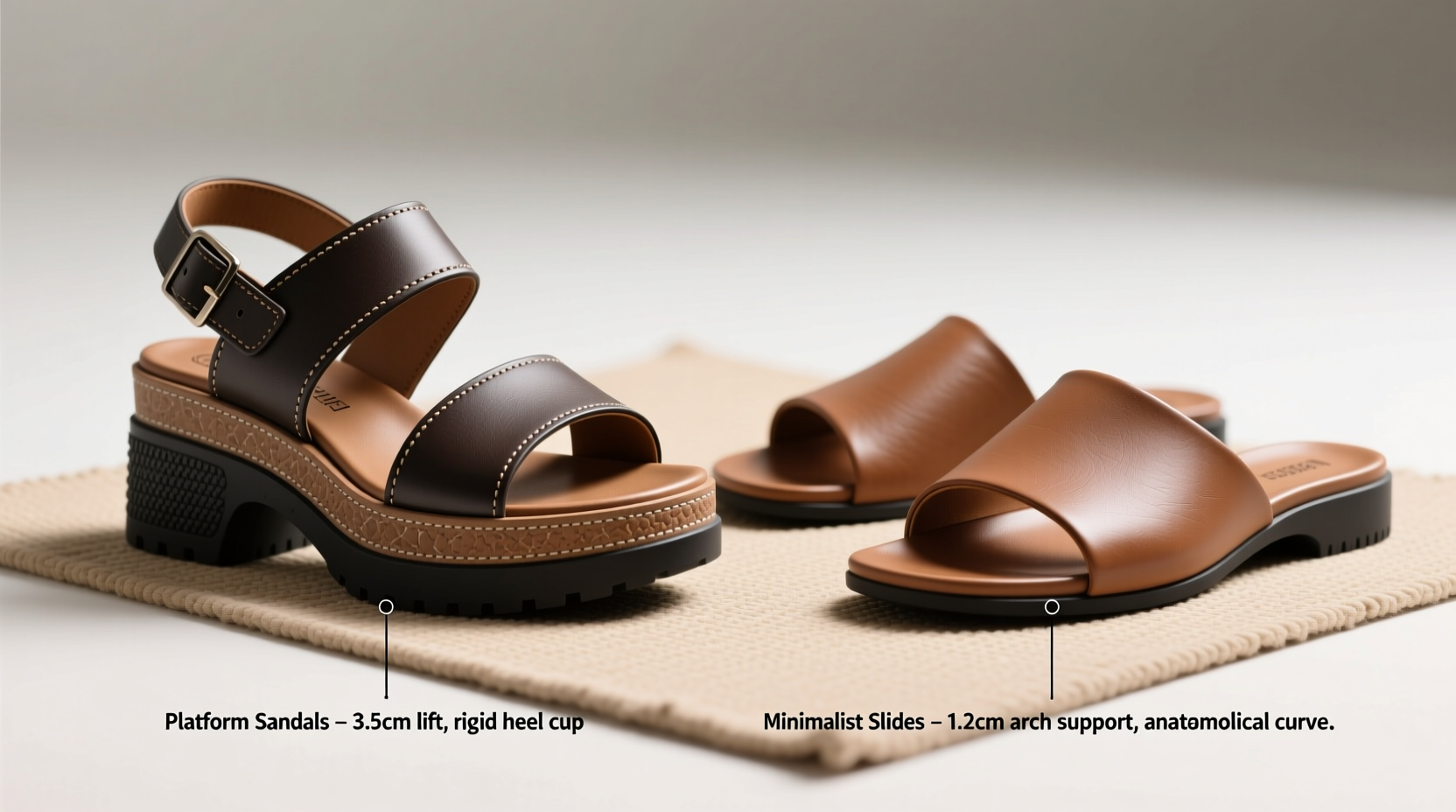
The foot’s arch plays a critical role in distributing body weight, absorbing shock, and maintaining balance during movement. When properly supported, the medial longitudinal arch (the inner curve of the foot) helps prevent strain on ligaments and tendons, particularly the plantar fascia. Poorly supported arches can lead to conditions like plantar fasciitis, shin splints, and even knee or lower back pain due to altered biomechanics.
Arch support in footwear refers to the presence of a contoured insole that mirrors the shape of the natural arch, providing structural reinforcement where needed. This isn’t merely about cushioning; true arch support resists collapse under load and maintains proper foot alignment throughout the gait cycle.
“Many people underestimate how much footwear influences posture and joint health. A shoe that fails to support the arch forces other parts of the body to compensate.” — Dr. Lena Torres, Podiatrist and Gait Specialist
Platform Sandals: Design, Popularity, and Structural Features
Platform sandals have surged in popularity thanks to celebrity endorsements, fashion runways, and social media influencers. Characterized by thick soles—often 1.5 to 3 inches high—they combine height with open-toe designs, frequently incorporating straps across the instep and ankle for stability. Many modern versions feature padded footbeds and synthetic or leather linings aimed at enhancing comfort.
From a structural standpoint, higher-end platform sandals often include molded EVA (ethylene vinyl acetate) midsoles or polyurethane bases that provide both lift and some degree of shock absorption. Crucially, many premium models now integrate built-in arch contouring. Brands such as Teva, Birkenstock, and even some contemporary designers like Aquazzura and By Far have begun embedding anatomically shaped footbeds into their platform styles.
However, not all platform sandals are created equal. Fast-fashion iterations may prioritize aesthetics over ergonomics, featuring flat, rigid platforms without any curvature beneath the arch. These versions offer elevation but no functional benefit—and sometimes active harm—to foot mechanics.
Minimalist Slides: Simplicity vs. Support
Minimalist slides gained traction through athletic brands like Adidas (with the Adilette), Nike (Kawa Slide), and Crocs (Classic LiteRide). Designed for post-workout recovery, poolside use, or quick errands, these shoes emphasize lightweight construction, easy slip-on functionality, and flexible materials.
True minimalist footwear aims to mimic barefoot walking by reducing heel-to-toe drop, limiting motion control, and allowing natural foot splay. However, this philosophy often sacrifices structured support. Most basic slides consist of a flat foam base with a single strap over the forefoot. The lack of heel enclosure and minimal midsole structure means they rely entirely on passive compression rather than active arch support.
While certain upgraded slide models incorporate soft memory foam or slight arch contours, these features rarely extend beyond superficial comfort. They may feel plush initially, but over hours of standing or walking, the absence of firm medial support leads to arch fatigue and overpronation.
Real-World Example: Office Commuter Struggles
Consider Maya, a graphic designer who walks 20 minutes to work daily and stands frequently during client meetings. Last summer, she switched to minimalist slides for their convenience and breathability. Within three weeks, she began experiencing sharp heel pain upon waking—a classic symptom of early-stage plantar fasciitis. After consulting a physical therapist, she learned her slides provided zero arch resistance, causing her flat feet to roll inward excessively with every step. Switching to a pair of supportive platform sandals with deep heel cups and molded arches alleviated her discomfort within ten days.
Comparative Analysis: Key Differences in Arch Support
To evaluate which style offers superior arch support, we must examine several key elements: insole structure, heel stability, material resilience, and adaptability to different foot types.
| Feature | Platform Sandals (Premium) | Minimalist Slides (Standard) |
|---|---|---|
| Insole Contouring | Often includes anatomical shaping with defined arch ridge | Rare; mostly flat or gently curved |
| Heel Cup Depth | Deep, structured cup stabilizes rearfoot | Shallow or absent; allows heel slippage |
| Midfoot Support Level | Moderate to high, depending on brand and design | Low to none; relies on foot’s own musculature |
| Material Firmness | Firm EVA or cork-latex blends resist compression | Soft foam compresses quickly, loses shape |
| Strap Configuration | Multiple straps secure foot, reduce pronation | Single front strap; poor lateral control |
| Suitable for Flat Feet? | Yes, if designed with medial support | No; exacerbates overpronation |
The data clearly shows that well-designed platform sandals outperform minimalist slides in nearly every category related to arch support. Their layered construction allows for engineering interventions that promote healthy foot alignment, while most slides remain functionally equivalent to walking barefoot on hard surfaces.
When Minimalist Slides Might Be Acceptable
It’s important to acknowledge that minimalist slides aren’t inherently harmful—if used appropriately. For short durations (under 30 minutes), indoor settings, or post-exercise recovery, they pose little risk to individuals with normal arches and no preexisting conditions.
Some newer hybrid models blur the line between categories. For example, Oofos’ OOmg series combines a slightly elevated sole with proprietary Zorb technology that absorbs impact and offers mild arch lift. Similarly, Chaco’s Z-cloud slides feature adjustable straps and a deeply sculpted footbed derived from their sandal line, making them an exception among slide-style footwear.
Action Plan: Choosing Footwear That Supports Your Arches
Selecting the right footwear isn't just about reading labels—it requires understanding your foot type and lifestyle demands. Follow this step-by-step guide to make informed decisions:
- Assess Your Foot Type: Perform a wet test at home. Step onto a brown paper bag with a damp foot. If you see a full imprint, you likely have flat feet. A narrow band indicates high arches. Moderate contact suggests neutral arches.
- Evaluate Daily Usage: How many hours will you spend on your feet? Walking on concrete requires more support than lounging at home.
- Inspect the Insole: Press your thumb into the center of the footbed. Does it give slightly but rebound? Or does it collapse completely? Resilience matters.
- Check Heel Counter Stability: Hold the back of the shoe and squeeze side to side. A stable heel counter won’t wobble.
- Try Before You Buy: Walk around the store for at least five minutes. Pay attention to pressure points, heel lift, and arch engagement.
- Break Them In Gradually: Even supportive shoes need adaptation. Wear new pairs for 1–2 hours per day initially.
Expert Recommendations and Common Misconceptions
One widespread myth is that “cushioning equals support.” In reality, excessive softness without underlying structure can destabilize the foot. As Dr. Torres explains, “A pillow isn’t good for your spine, and ultra-soft foam isn’t ideal for your feet. You need something that cradles, not swallows, the arch.”
Another misconception is that only people with foot pain need arch support. Preventive care is equally vital. Just as wearing sunglasses protects eyes before cataracts develop, supportive footwear helps maintain foot integrity over decades.
“Supportive footwear isn’t just for rehab—it’s part of lifelong musculoskeletal maintenance.” — Dr. Rajiv Mehta, Sports Medicine Physician
Frequently Asked Questions
Can I add insoles to minimalist slides for better arch support?
Technically yes, but effectiveness is limited. Most slides lack space for orthotics, and adhesive inserts tend to shift during use. Additionally, adding bulk can disrupt the fit and cause friction. It’s better to choose footwear with built-in support.
Are platform sandals bad for your knees because of the height?
Not necessarily. Research shows that moderate platform height (under 2 inches) with a low heel-to-toe drop (less than 5mm) doesn’t significantly alter joint angles. Problems arise when platforms are stiff or poorly balanced. Flexible, biomechanically aligned platforms are safer than stilettos or flat, unsupportive shoes.
Do podiatrists recommend any specific slide brands?
Yes—Chaco, Vionic, and Naot produce slide-style footwear with genuine arch support. These are exceptions in a market dominated by flimsy designs. Always verify that the model has a contoured footbed, not just soft padding.
Final Verdict: Which Offers Better Arch Support?
Based on biomechanical principles, clinical evidence, and real-world performance, **premium platform sandals** consistently outperform minimalist slides in arch support. Their ability to incorporate structured footbeds, secure fit systems, and durable materials makes them a far better choice for anyone seeking comfort during prolonged wear or managing foot-related concerns.
That said, not all platform sandals are beneficial. Consumers must distinguish between fashion-driven imitations and function-first designs. Look for brands known for orthopedic alignment, avoid overly flexible soles, and prioritize adjustability.
Minimalist slides serve a niche purpose but fall short as primary footwear for active lifestyles. They may suit brief transitions—like stepping out for mail—but shouldn’t replace supportive shoes in daily routines.
Your Next Steps Toward Healthier Feet
Foot health begins with awareness. Take a moment to examine your current go-to sandals. Do they truly support your arch, or do they simply feel soft underfoot? Consider replacing worn-out pairs with options engineered for longevity and alignment. Small changes today can prevent chronic discomfort tomorrow.




 浙公网安备
33010002000092号
浙公网安备
33010002000092号 浙B2-20120091-4
Comments
No comments yet. Why don't you start the discussion?