
For runners, especially those logging miles through sprints, trail sessions, or high-intensity interval training, the right pair of earbuds can make or break a workout. Audio distraction is essential—music drives pace, podcasts pass time, and rhythm keeps motivation alive. But when movement intensifies, so does the risk of your earbuds falling out, disconnecting, or shifting uncomfortably. The debate between true wireless earbuds and wired models designed to stay secure during intense runs isn’t just about sound quality or convenience—it’s about performance, fit, and reliability under pressure.
This article dives deep into the practical differences between these two categories, examining retention, durability, connectivity, and real-world usability. Whether you're a weekend warrior or a competitive runner, understanding how each type performs under duress will help you make a smarter choice—one that stays put when it matters most.
Fundamental Design Differences
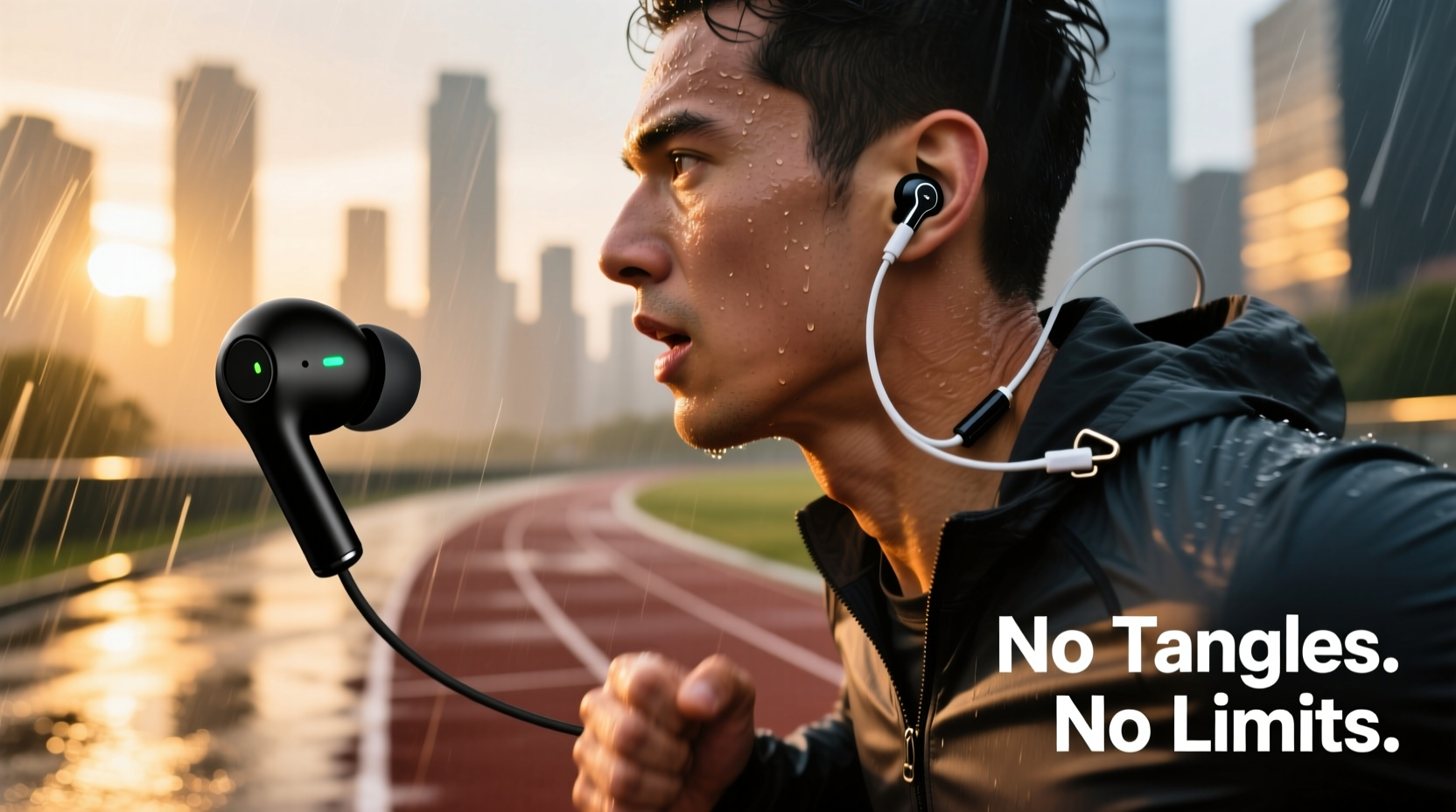
The core distinction lies in structure. True wireless earbuds operate without any physical connection between the left and right units. They rely on Bluetooth pairing with your device and often come with charging cases for portability. In contrast, wired earbuds maintain a cable linking both earpieces, sometimes incorporating behind-the-neck bands, reinforced cables, or over-ear hooks to enhance stability.
While true wireless models have surged in popularity due to their sleek design and freedom from tangling cords, they weren't originally built with athletes in mind. Many early versions struggled with fit and sweat resistance. Over time, manufacturers have responded by developing sport-focused variants with improved ergonomics. Still, the absence of a connecting wire means each bud must independently resist dislodging from the ear canal—a significant challenge during dynamic motion.
Wired earbuds, particularly those marketed for sports, are engineered with retention as a priority. Cables act as anchors, reducing individual bud movement. Some models integrate flexible neckbands or memory-wire loops that wrap around the ears, creating a custom-fit lock. These structural advantages often translate to fewer mid-run adjustments and less anxiety about losing an earpiece mid-stride.
Fit and Stability During High-Intensity Movement
Stability is non-negotiable during intense runs. Bouncing, head turns, wind resistance, and sweat all contribute to instability. A secure fit depends on three factors: ear anatomy, ear tip design, and external support features.
True wireless earbuds typically come with multiple silicone tip sizes and may include wingtips or stabilizing fins. Brands like Jaybird, Jabra, and Bose have invested heavily in ergonomic research to create buds that conform to the contours of the outer ear. However, even with these enhancements, some users report slippage after 20–30 minutes of vigorous activity—especially if sweating increases lubrication inside the ear canal.
In contrast, wired sport earbuds often use over-ear hooks made from flexible thermoplastic elastomer (TPE). These hooks mold slightly to the shape of the ear, forming a cradle that prevents forward or backward movement. Because both earpieces are physically linked, lateral tugs on one side don’t result in immediate detachment. This interconnectedness provides mechanical redundancy—if one bud shifts, the other helps pull it back into place.
Retention Comparison Table
| Feature | True Wireless Earbuds | Wired Sport Earbuds |
|---|---|---|
| Independent Bud Movement | High – each bud moves separately | Low – cable limits independent motion |
| Common Retention Aids | Silicone wings, foam tips, fin stabilizers | Over-ear hooks, neckband, reinforced cables |
| Risk of Loss | Moderate to high (if one falls out) | Very low (cable prevents separation) |
| Adjustment Frequency Mid-Run | Occasional to frequent | Rare |
| Best For | Casual jogs, steady-state runs | Sprints, interval training, trail running |
Durability and Environmental Resistance
Sweat, rain, dust, and UV exposure are common hazards during outdoor runs. Both types of earbuds now frequently include IP (Ingress Protection) ratings indicating resistance to water and particulates. However, implementation varies.
Many premium true wireless models carry IPX4, IPX5, or even IPX7 ratings, meaning they can withstand splashes, sweat, and short submersions. Yet, because charging ports and internal electronics are exposed when not in the case, long-term moisture exposure—even from heavy perspiration—can degrade components over time. Additionally, losing a single bud renders the pair unusable unless replaced at full cost.
Wired sport earbuds often feature ruggedized cabling with braided exteriors or rubberized sheathing that resists fraying. Their connectors are typically sealed, and since they plug directly into devices (or use inline remotes), there's no need for repeated plugging/unplugging that wears down contacts. While many still carry IPX4 or IPX5 ratings, the overall build tends to be more resilient to rough handling—drops, tangles, and snagging included.
“From a biomechanical standpoint, any unsecured object on the body during repetitive motion will eventually dislodge. Physical tethering—like a cable or band—reduces that risk significantly.” — Dr. Lena Torres, Sports Biomechanics Researcher, University of Colorado Boulder
Battery Life, Connectivity, and User Experience
One area where true wireless earbuds shine is battery flexibility. Most offer 4–8 hours per charge, with cases providing additional cycles—sometimes totaling 24+ hours. This makes them ideal for travel or multi-day use. However, during long-distance events like marathons or ultra-trails, battery anxiety can creep in, especially if ambient temperature affects performance.
Wired earbuds draw power directly from the connected device. As long as your phone or music player has charge, audio continues uninterrupted. There’s no separate battery to manage, no pairing rituals, and no risk of one bud dying mid-session. For runners who prioritize simplicity and continuity, this reliability is invaluable.
Connectivity issues remain a pain point for true wireless models. Although Bluetooth 5.0 and later versions have improved range and stability, interference from gym equipment, crowds, or urban environments can cause dropouts. Signal loss between buds (where one cuts out while the other plays) still occurs in lower-tier models. Wired alternatives eliminate this entirely—audio transmission is analog and instantaneous, with zero latency or sync issues.
Step-by-Step: Choosing Based on Your Running Style
- Assess your run intensity: If you regularly sprint, jump, or change direction rapidly, prioritize physical retention—opt for wired or neckband designs.
- Evaluate environment: Frequent rain or extreme heat? Look for IPX5+ and proven thermal resilience.
- Consider distance: Long endurance runs favor wired options for uninterrupted playback; shorter daily runs suit true wireless convenience.
- Test fit rigorously: Use sample runs to evaluate comfort and security—don’t rely solely on specs.
- Weigh replacement cost: Losing one true wireless bud often means replacing both; wired sets are easier and cheaper to repair.
Real-World Example: Marathon Training with Mixed Gear
Alex, a recreational runner preparing for her first marathon, experimented with both types over a 16-week schedule. She started with a popular true wireless model known for its app integration and noise cancellation. On easy recovery runs, they performed well. But during tempo sessions and hill repeats, she found herself constantly readjusting the left bud, which would slide forward with each footstrike.
Switching to a pair of wired sport earbuds with over-ear hooks, she noticed immediate improvement. Despite heavier sweating and windy conditions, the buds stayed locked in place. There were no connectivity hiccups, and she appreciated never worrying about case charging. The only drawback was minor cable slap against her jacket, but she mitigated this by routing the cord under her shirt.
On race day, Alex chose the wired option. “I didn’t want to risk anything,” she said. “When you’ve trained for months, the last thing you need is gear failure at mile 18.” Her decision paid off—she finished strong, with music carrying her through the final stretch.
Expert Tips for Maximizing Performance
- Use foam tips for deeper seal: Comply-style foam expands gently in the ear canal, improving both sound isolation and grip.
- Route cables strategically: Run the wire under your collar or through your shirt to minimize wind resistance and bouncing.
- Carry backup tips: Bring extra ear tips and wings in your running belt—sweat can change ear volume slightly over time.
- Check firmware updates: True wireless models often receive stability patches that improve Bluetooth performance.
- Invest in sweat-resistant coatings: Some third-party sprays add hydrophobic layers to protect electronics from moisture buildup.
Frequently Asked Questions
Can true wireless earbuds survive heavy sweating?
Yes, if they have at least an IPX4 rating. However, prolonged exposure to salt-laden sweat can corrode contacts over time. Always clean them post-run and avoid storing them damp.
Are wired earbuds outdated for runners?
No. While less trendy, they remain superior in retention and reliability for intense workouts. Many elite athletes still prefer them for competition due to zero latency and fail-safe connections.
Do over-ear hooks work for small ears?
Most modern hooks are flexible and adjustable. Look for models labeled “small ear fit” or with swappable hook sizes. Some brands, like Shure and Westone, specialize in customizable fits for diverse anatomies.
Final Recommendation: Match Gear to Goals
The choice between true wireless and wired earbuds for intense runs ultimately hinges on priorities. If minimalism, portability, and tech features top your list, and your runs are moderate in intensity, true wireless models from reputable sport-focused brands can perform admirably. Just be prepared for occasional fit checks and potential signal quirks.
But if your training involves explosive effort, uneven terrain, or long durations where consistency is key, wired sport earbuds—with their mechanical stability, uninterrupted playback, and rugged construction—offer unmatched dependability. The slight trade-off in aesthetics or convenience is outweighed by peace of mind when every stride counts.
Technology evolves quickly, and future iterations may close the gap. For now, however, physics favors connection. When your body is in motion, staying anchored matters more than going wireless.




 浙公网安备
33010002000092号
浙公网安备
33010002000092号 浙B2-20120091-4
Comments
No comments yet. Why don't you start the discussion?