
When it comes to projecting sophistication, few wardrobe choices carry as much weight as outerwear. A well-chosen piece doesn’t just protect from the elements—it communicates taste, status, and intention. Among the most iconic options, the tweed jacket and the trench coat stand out as timeless symbols of elegance. But if your goal is to achieve that elusive \"expensive look\"—polished, intentional, and effortlessly refined—which one delivers the greater impact?
The answer isn’t simply about fabric or cut; it’s about context, styling, and how each garment aligns with modern perceptions of luxury. To make an informed decision, we need to examine their heritage, visual cues of quality, adaptability across settings, and the psychological effect they have on perception.
Heritage and Perception: What Makes a Garment Look Expensive?
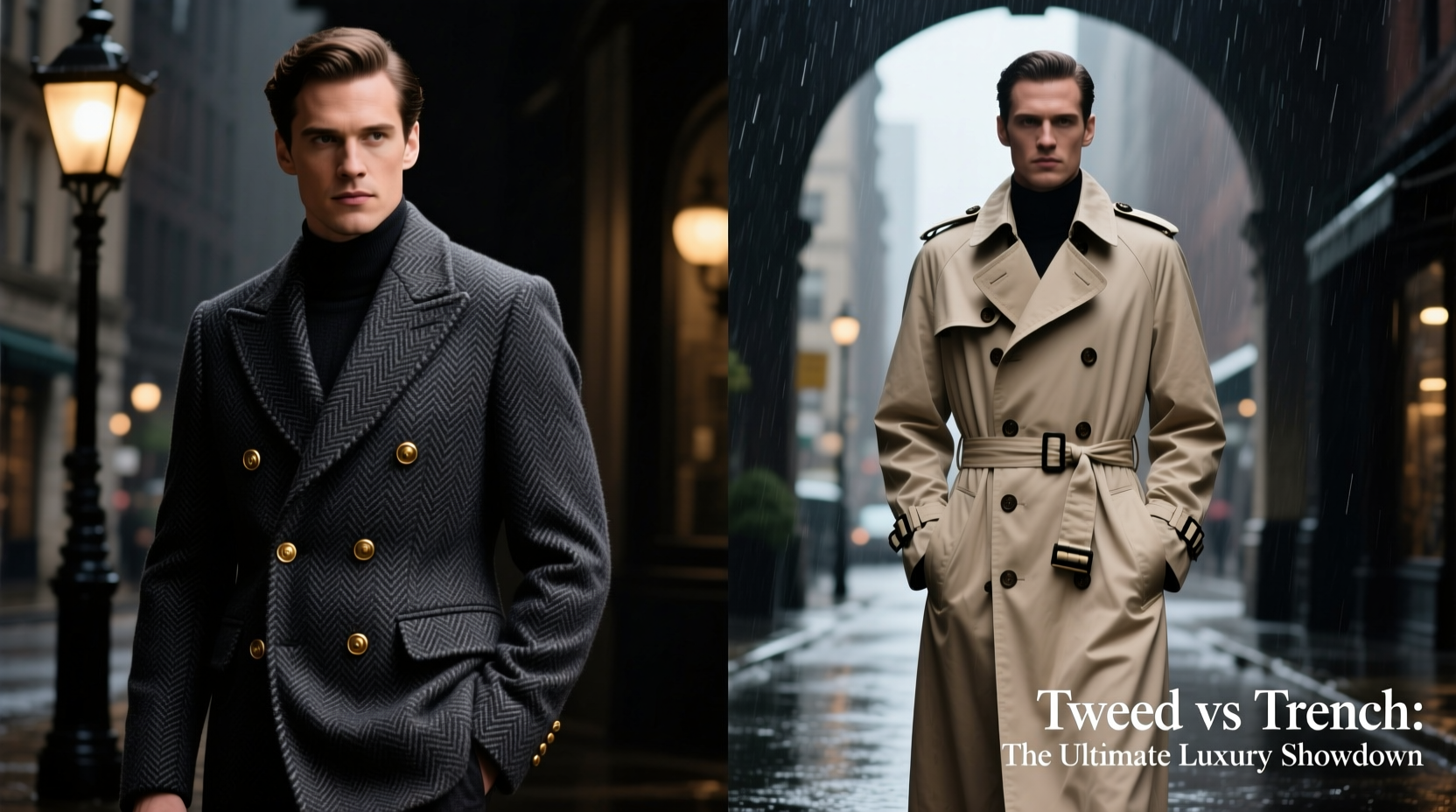
Before comparing the two garments directly, it’s essential to understand what makes clothing appear high-end. Expensive-looking attire typically features clean lines, premium materials, subtle branding, and craftsmanship that prioritizes longevity over trendiness. Both the tweed jacket and the trench coat score highly in these areas—but for different reasons.
The **tweed jacket** traces its roots to British country estates and aristocratic leisure. Traditionally woven from coarse wool, often in herringbone or check patterns, tweed conveys tradition, intellect, and understated wealth. It’s associated with academics, politicians, and old-money aesthetics—think Ralph Lauren campaigns or vintage photographs of Winston Churchill.
The **trench coat**, on the other hand, originated as military wear during World War I. Designed for British officers, its functional details—epaulets, storm flaps, and double-breasted closures—are now fashion signatures. In civilian life, the trench has evolved into a symbol of cosmopolitan elegance, famously worn by Humphrey Bogart, Audrey Hepburn, and modern-day executives navigating city streets.
“Luxury isn’t about price tags—it’s about presence. The right coat can elevate even simple clothes.” — Marcus Lang, Menswear Stylist & Consultant
Visual Impact: Which One Commands Attention?
First impressions matter, and outerwear is often the first thing noticed. Let’s break down the visual language of each option:
- Tweed Jacket: Textured, patterned, and structured. Its richness comes from material depth—the way light plays across the weave—and its tailored fit. A well-cut tweed blazer in charcoal, houndstooth, or Glen plaid reads as deliberate and cultured.
- Trench Coat: Minimalist, linear, and architectural. Its power lies in silhouette and proportion. A camel-colored trench with a belted waist creates an instant hourglass shape, suggesting precision and control.
In professional or semi-formal environments, the trench coat tends to project authority more universally. Its monochromatic design avoids distraction while emphasizing posture and movement. However, in creative industries or intellectual circles, a tweed jacket may signal deeper sartorial knowledge and individuality.
Material and Craftsmanship: The Real Markers of Quality
Both garments can be made cheaply or exquisitely, but only certain versions deliver the authentic expensive look. Here’s what to look for:
| Feature | Tweed Jacket (High-End) | Trench Coat (High-End) |
|---|---|---|
| Fabric | 100% wool, tightly woven Harris or Donegal tweed | Double-layered cotton gabardine, water-resistant finish |
| Lining | Silk or Bemberg cupro, full or half-lined | Viscose or silk blend, often with signature print |
| Craftsmanship | Hand-stitched lapels, pick stitching, functioning buttonholes | Storm shield, gun flap, articulated sleeves |
| Fit | Semi-structured shoulders, nipped waist | Fitted at waist, slightly oversized through torso |
A poorly made trench with synthetic fabric and stiff collar instantly undercuts its potential. Likewise, a shiny, thin tweed blazer with plastic buttons looks cost-conscious rather than luxurious. Authenticity lies in tactile details: the soft crunch of real tweed, the drape of a heavy-duty trench when cinched at the waist.
Styling Versatility: Where Each Piece Shines
The ability to transition across occasions enhances the perception of value. An expensive-looking garment should work in multiple contexts—not just look good once.
Tweed Jacket: Best For
- Business-casual offices
- Cocktail events with dark trousers
- Cultural outings (theater, gallery openings)
- Layering over turtlenecks or dress shirts
Trench Coat: Best For
- Urban commuting
- Formal entrances (worn over suits)
- Rainy days where function meets form
- All-day wear from office to dinner
The trench coat edges ahead in versatility. Worn open over a suit, it adds drama without overpowering. Paired with jeans and boots, it lends polish to casual wear. The tweed jacket, while elegant, leans more formal and seasonal—best suited for autumn and early winter, and less effective in rainy climates unless treated for moisture resistance.
Real-World Example: Two Professionals, Two Choices
Consider Sarah and James, both attending a client pitch in London.
Sarah wears a navy tweed blazer with leather loafers and a silk blouse. She looks sharp and intelligent, but when caught in sudden rain, her jacket absorbs moisture, loses shape, and appears damp and disheveled by meeting time. Clients note her style but question practicality.
James wears a classic camel trench over a charcoal suit. Rain rolls off the fabric. He arrives composed, dry, and authoritative. His outerwear frames his presence without drawing undue attention. The message: prepared, capable, in control.
In this scenario, the trench coat not only maintains its expensive appearance under pressure—it enhances it.
Step-by-Step: How to Choose Based on Your Lifestyle
- Evaluate your environment: Do you walk in cities with unpredictable weather? Trench wins. Work in academia or creative fields? Tweed fits better.
- Assess your existing wardrobe: If you own several blazers, a trench adds contrast. If your outerwear is mostly puffer or denim jackets, tweed introduces refinement.
- Try both on with neutral outfits: Wear each over gray trousers and a white shirt. Observe which makes you feel more confident and pulled-together.
- Check fabric weight and drape: Drape matters more than color. A heavy, fluid trench looks costly. A crisp, textured tweed radiates authenticity.
- Invest in one excellent version: Don’t buy cheap versions of either. Spend on a single high-quality piece that will last a decade.
Final Verdict: Which One Wins the \"Expensive Look\"?
If judged purely on universal appeal, adaptability, and resilience under real-world conditions, the **trench coat takes the crown**. It transcends gender, age, and profession. It works in rain or shine, day or night, formal or casual. Its clean lines and architectural structure naturally suggest investment and care.
That said, the tweed jacket holds a special place for those who value texture, heritage, and quiet distinction. In the right setting—a lecture hall, a countryside retreat, a creative studio—it projects a different kind of luxury: thoughtful, enduring, and deeply personal.
The truth is, you don’t have to choose forever. But if you’re investing in one statement outerwear piece that consistently says “I know what I’m doing,” the trench coat is the safer, more impactful bet.
Frequently Asked Questions
Can a tweed jacket look expensive if it’s not bespoke?
Absolutely. Ready-to-wear pieces from brands like Loro Piana, Drake’s, or even high-end retailers such as J.Crew Ludlow Collection or Massimo Dutti Premium can offer excellent wool, proper construction, and a refined fit that mimics bespoke quality.
Is the trench coat outdated?
No. While trends shift, the trench remains a staple in designer collections year after year. Modern updates—slimmer cuts, recycled fabrics, unexpected colors—keep it relevant. Timelessness is its strength, not a weakness.
Which color gives the most expensive impression?
For trenches: camel, stone, or black. For tweed: charcoal, olive, or mid-gray checks. Avoid bright reds or neon linings unless used subtly. Neutrals convey restraint and maturity—hallmarks of true luxury.
Conclusion: Elevate Your Presence With Intention
Outerwear is the frame around your daily self-presentation. Whether you choose the rugged elegance of a tweed jacket or the streamlined authority of a trench coat, the key is intentionality. Opt for quality over quantity, fit over fashion, and durability over fleeting trends.
The trench coat offers broader utility and a stronger universal signal of expense and taste. But the tweed jacket rewards those who appreciate nuance and narrative in their style. Whichever you choose, wear it with confidence—because the most expensive thing about any outfit is the assurance behind it.




 浙公网安备
33010002000092号
浙公网安备
33010002000092号 浙B2-20120091-4
Comments
No comments yet. Why don't you start the discussion?