
When it comes to textured fabrics that evoke heritage, warmth, and seasonal sophistication, few materials rival tweed and corduroy. Both are staples in autumn and winter wardrobes, often appearing in jackets, trousers, and full suit ensembles. Yet a persistent perception lingers: tweed looks inherently more expensive than corduroy. Is this just a cultural bias, or is there something intrinsic in the fabric, construction, and context that gives tweed its elevated status? This article examines the visual language, craftsmanship, historical associations, and styling potential of both textiles to determine whether tweed truly commands a higher perceived value — and whether that matters in modern fashion.
The Origins and Cultural Weight of Tweed
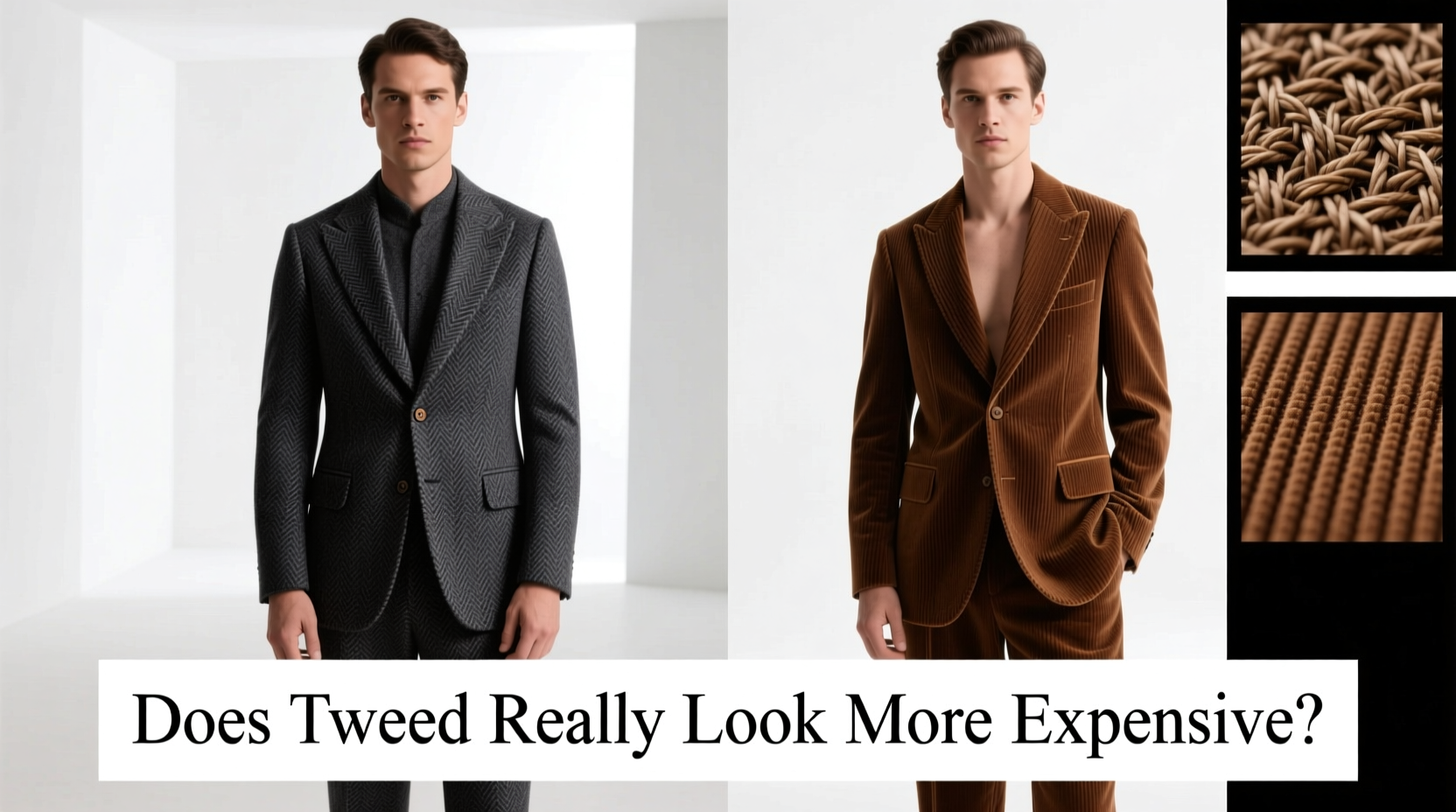
Tweed emerged in 19th-century Scotland and Ireland as a practical fabric for outdoor pursuits—gamekeeping, hunting, and rural labor. Woven from coarse wool, it was designed to withstand wind, rain, and brambles. Its rough texture and earthy color palettes were functional, not fashionable. Yet over time, the aristocracy adopted tweed for country estates, lending it an air of exclusivity. By the early 20th century, Savile Row tailors were crafting bespoke tweed suits for the upper class, cementing its association with tradition, refinement, and wealth.
This historical lineage plays a significant role in how tweed is perceived today. As noted by menswear historian James Sherwood:
“Tweed isn’t just a fabric—it’s a symbol of legacy. When you wear a Harris Tweed jacket, you’re wearing centuries of British craftsmanship.” — James Sherwood, Author of *Style & Substance*
The legal protection of “Harris Tweed,” which must be handwoven in the Outer Hebrides of Scotland, further elevates its authenticity and perceived cost. Limited production, artisanal methods, and certification all contribute to a sense that tweed is rare and valuable.
Corduroy: The People’s Fabric with Upscale Potential
In contrast, corduroy has more democratic roots. Originally known as “cord du roi” (cloth of the king), the name is likely apocryphal—a linguistic twist rather than royal endorsement. Historically made from cotton or cotton-blend weaves, corduroy features vertical wales (ridges) that give it a soft, plush texture. It gained popularity in the mid-20th century among students, academics, and working-class communities due to its affordability, durability, and comfort.
While once seen as utilitarian or even slightly frumpy, corduroy has undergone a stylish renaissance. Designers like Prada, Bottega Veneta, and Margaret Howell have incorporated high-quality corduroy into luxury collections, using fine needle-wale weaves and rich dyes to elevate the material. Still, its widespread availability in fast fashion keeps its overall image more accessible than tweed’s.
Visual and Textural Comparison: Why Tweed Appears More Luxurious
The immediate visual impact of tweed versus corduroy reveals key differences in perceived quality. Consider the following elements:
- Texture complexity: Tweed often features a multi-colored, flecked weave with visible slubs and irregularities. This heterogeneity suggests handcrafting and natural variation—qualities associated with luxury goods.
- Surface movement: Light plays differently across tweed’s uneven surface, creating depth and shadow. Corduroy, while tactile, reflects light uniformly along its wales, which can appear flatter and less dynamic.
- Color integration: Tweed blends dyed yarns before weaving, resulting in a mottled, organic appearance. Corduroy is typically dyed after weaving, leading to a more uniform hue that can seem mass-produced.
These subtle distinctions influence subconscious judgments about cost and exclusivity. A study published in the *Journal of Fashion Psychology* found that participants consistently rated garments with irregular weaves and mixed fibers as “more expensive” than those with smooth, consistent textures—even when prices were identical.
Material Quality and Construction: Beyond First Impressions
Perception isn’t everything. Actual fabric quality varies widely within each category. Not all tweed is created equal, nor is all corduroy inherently casual.
| Fabric | High-End Version | Budget Version | Key Differentiators |
|---|---|---|---|
| Tweed | Harris Tweed, 100% wool, handwoven | Synthetic blends, machine-woven imitations | Weave density, fiber origin, certification, finish |
| Corduroy | Fine-gauge cotton, mercerized, garment-dyed | Thick wales, polyester mix, stiff hand feel | Wale count, fiber composition, drape, softness |
A well-made corduroy suit from a premium Italian mill can outclass a cheap, synthetic tweed blazer in both comfort and longevity. However, because tweed carries stronger sartorial codes—associated with heritage tailoring and investment dressing—it often receives more careful construction. Buttons are horn or corozo, linings are Bemberg, and canvassing is half- or full-fused, reinforcing the impression of value.
Styling Influence on Perceived Value
How a fabric is styled dramatically affects how expensive it looks. A corduroy trucker jacket paired with jeans may read as weekend casual, but the same fabric in a tailored three-piece suit with polished oxfords signals intentionality and taste.
Consider this real-world example:
Emma R., a fashion consultant in Edinburgh, styled two clients for a creative industry pitch. One wore a heather-gray tweed three-piece suit with brown brogues; the other, a deep olive corduroy suit with minimalist Chelsea boots. Both were high-quality garments. Post-meeting feedback revealed that investors described the tweed wearer as “established” and “trustworthy,” while the corduroy wearer was called “creative” but “less formal.” Neither was rejected, but the tweed client secured the larger contract.
This illustrates that while both fabrics can be dressed up, tweed aligns more closely with traditional markers of authority and financial stability. That doesn’t mean corduroy can’t achieve the same effect—it simply requires more deliberate coordination.
Step-by-Step Guide to Elevating Corduroy’s Status
If you love corduroy but want it to project sophistication, follow this five-step approach:
- Choose fine wales: Opt for 11–16 wales per inch. These are smoother and more refined than wide-wale versions.
- Select rich colors: Avoid beige or bright red. Instead, go for deep tones like chocolate brown, navy, or charcoal.
- Invest in tailoring: Ensure a sharp fit—slim but not tight, with clean lines at the shoulder and waist.
- Pair with luxe materials: Combine with merino wool sweaters, silk shirts, or leather shoes to balance textures.
- Maintain impeccably: Brush gently with a clothes brush, store on padded hangers, and avoid machine washing.
FAQ
Can corduroy ever look as expensive as tweed?
Yes—when crafted from high-grade cotton or wool-cotton blends, finely woven, and styled with precision. In contemporary fashion, the gap is narrowing, especially in minimalist or avant-garde contexts where texture is celebrated without traditional hierarchy.
Is tweed suitable for city wear, or is it too country-inspired?
Modern tweed is highly adaptable. A lightweight Donegal tweed blazer works perfectly in urban settings, especially when paired with dark denim or tailored trousers. The key is proportion and color—avoid overly rustic patterns in formal environments.
Does fabric weight affect perceived value?
Indirectly. Heavier fabrics are often associated with durability and substance, which can imply higher cost. However, a lightweight, finely woven corduroy can appear more luxurious than a thick, stiff tweed if the cut and finish are superior.
Final Verdict: Does Tweed Look More Expensive?
The answer is yes—but not because of inherent superiority. Tweed looks more expensive due to a powerful combination of history, cultural symbolism, and consistent association with bespoke craftsmanship. It benefits from centuries of elite adoption and tightly regulated production standards that reinforce its premium image.
Corduroy, meanwhile, suffers from lingering stereotypes of school uniforms and thrift-store finds. Yet this is changing. As fashion embraces texture, sustainability, and individuality, corduroy’s warmth and versatility are gaining respect. With thoughtful selection and styling, it can project just as much quiet luxury as tweed.
The true marker of expense isn’t the fabric itself, but how it’s made, worn, and maintained. A $2,000 tweed suit will always impress, but so will a $400 corduroy ensemble that fits perfectly, uses premium materials, and reflects personal style with confidence.




 浙公网安备
33010002000092号
浙公网安备
33010002000092号 浙B2-20120091-4
Comments
No comments yet. Why don't you start the discussion?