
When winter sets in and temperatures drop, the question isn’t just about staying warm—it’s about doing so with style. Two iconic outerwear choices stand out in cold-weather fashion: the tweed jacket and the down jacket. One carries the heritage of British countryside elegance; the other represents modern thermal engineering. But which one actually keeps you warmer? And more importantly, which looks better in everyday life? The answer depends on context, climate, and personal taste.
Understanding the Materials: How Warmth Is Built
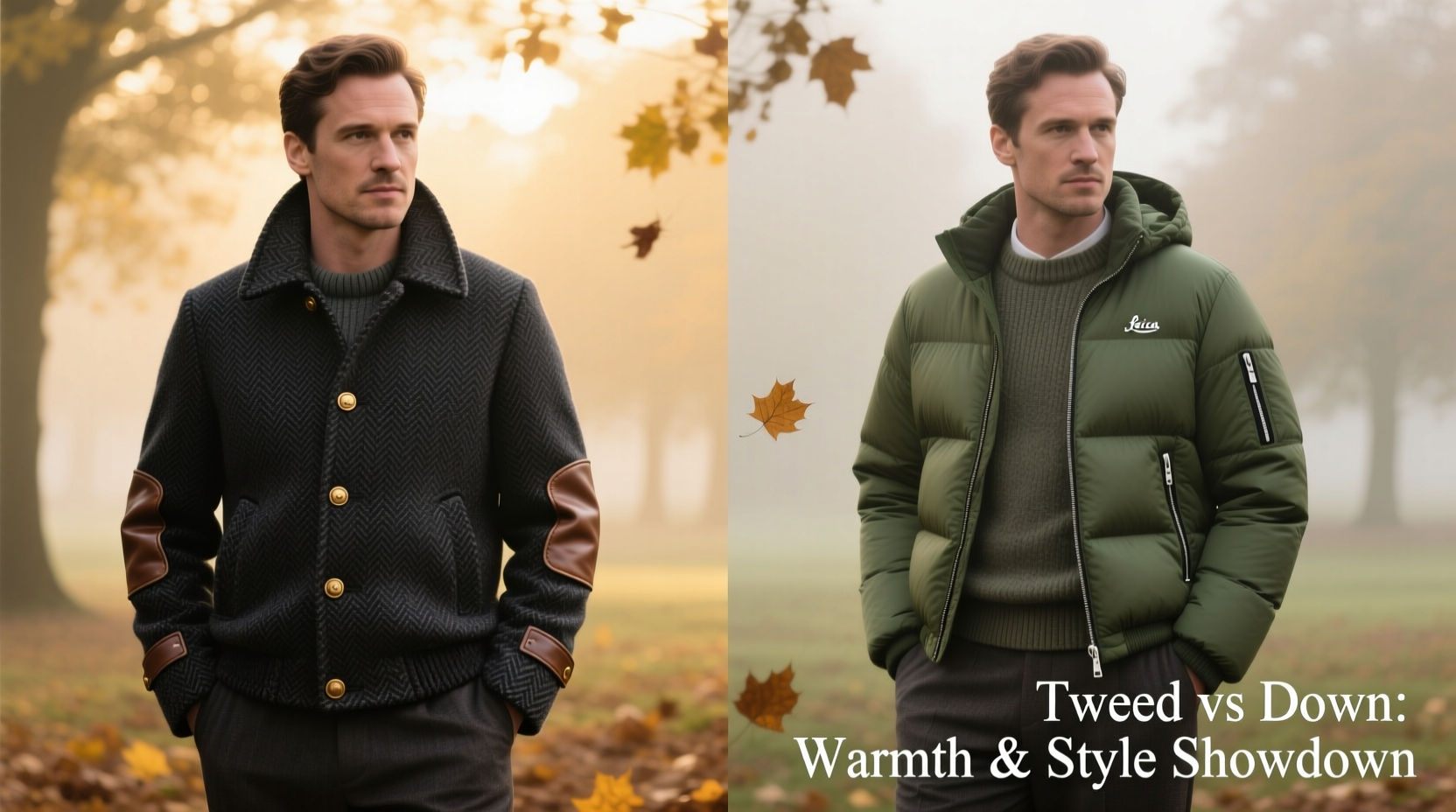
The foundation of any jacket’s performance lies in its material. Tweed and down are fundamentally different in composition, origin, and function.
Tweed is a rough-surfaced wool fabric traditionally woven from dyed wool fibers. Originating in Scotland and Ireland, it was designed for rural outdoor work in damp, windy conditions. Its tight weave and natural lanolin content offer water resistance and moderate insulation. However, tweed relies on air pockets within the wool fibers to trap heat—making it effective in dry, cool environments but less so in extreme cold or wet weather.
Down, on the other hand, refers to the soft undercoating of feathers found beneath the tougher exterior feathers of ducks and geese. High-quality down has an exceptional ability to loft, creating thousands of tiny air pockets that retain body heat efficiently. When encased in tightly woven, wind-resistant shells, down jackets achieve some of the highest warmth-to-weight ratios in outerwear.
“Down remains the gold standard for insulation in sub-zero conditions. No natural fabric comes close in pure thermal efficiency.” — Dr. Lena Hartwell, Textile Scientist at Alpine Performance Labs
While tweed offers modest insulation, it functions best as part of a layered system. Down excels as a standalone insulator in frigid climates, especially when combined with a waterproof shell.
Warmth Comparison: Real-World Performance by Climate
To determine which jacket keeps you warmer, consider where and how you’ll wear it.
| Condition | Tweed Jacket | Down Jacket |
|---|---|---|
| Dry, Cool (40–50°F / 4–10°C) | Excellent – breathable, stylish, comfortable | Overkill – may cause overheating |
| Cold, Dry (20–30°F / -7–-1°C) | Fair – requires layering for comfort | Excellent – high insulation with minimal bulk |
| Wet or Snowy Conditions | Poor – absorbs moisture, loses warmth | Good (if treated) – water-resistant shells prevent clumping |
| Urban Commuting (stop-and-go) | Good – easy to remove indoors, maintains formality | Fair – can be bulky, hard to store when removed |
| Outdoor Activity (hiking, skiing) | Poor – lacks breathability and moisture management | Excellent – lightweight, highly efficient |
In freezing weather, particularly below 30°F (-1°C), the down jacket clearly wins in warmth. Its superior loft and low conductivity mean it traps heat far more effectively than even the heaviest tweed. However, tweed performs admirably in milder autumn or early winter days, especially when paired with a sweater or vest.
Style & Aesthetic Appeal: When Fashion Meets Function
If warmth were the only factor, down would dominate every winter wardrobe. But clothing is also about expression, identity, and social context. Here, tweed often takes center stage.
A well-tailored tweed jacket exudes timeless sophistication. Whether in herringbone, houndstooth, or classic Donegal patterns, tweed conveys craftsmanship and attention to detail. It pairs naturally with flannel trousers, oxford shirts, and brogues—ideal for office settings, dinner dates, or weekend countryside outings. Its texture adds visual depth, and its earthy tones blend seamlessly into fall and winter palettes.
Down jackets, historically associated with utilitarian gear, have evolved dramatically. Modern designs from brands like Canada Goose, Moncler, and Arc’teryx feature sleek silhouettes, minimalist lines, and premium finishes. In urban environments, a tailored puffer can project a contemporary, athletic-chic aesthetic. However, few down jackets transition smoothly into formal or semi-formal settings.
The style gap narrows when considering occasion. For a business meeting in London, tweed is unquestionably the better choice. For a ski trip in Aspen, down reigns supreme. The key is alignment: match the jacket to the environment, not just the temperature.
Real-Life Scenario: A Week in Edinburgh
Consider James, a marketing consultant visiting Edinburgh in late November. His week includes client meetings, evening dinners, and a weekend hike in the Pentland Hills.
- Monday–Thursday (City Meetings): He wears a charcoal herringbone tweed jacket with a turtleneck and overcoat. Indoors, he removes the overcoat and remains polished. The tweed breathes well in heated rooms and impresses clients with its classic refinement.
- Friday Evening (Dinner Out): Same tweed jacket, now with a silk scarf and leather gloves. It holds up beautifully under ambient lighting and complements his smart-casual look.
- Saturday (Hiking): He switches to a lightweight, packable down jacket under a waterproof shell. Despite sleet and wind, he stays warm and mobile. The tweed would have been soaked and heavy within minutes.
This example illustrates that neither jacket is universally superior. Each excels in its intended domain. The most practical wardrobe includes both—used strategically.
Choosing What’s Right for You: A Practical Checklist
Deciding between tweed and down shouldn’t be binary. Use this checklist to assess your needs:
- What is the coldest temperature you regularly face?
- Do you spend most of your time indoors, commuting, or outdoors?
- How important is formality or professional appearance?
- Do you need a jacket that packs small or stores easily?
- Are you exposed to rain, snow, or high humidity?
- Do you value heritage style over technical performance?
- Will you layer underneath, or do you prefer standalone warmth?
If you answered “very cold,” “outdoors,” or “wet conditions” to multiple questions, prioritize a high-fill-power down jacket (650+ fill). If your answers lean toward “moderate cold,” “urban,” or “professional,” a quality tweed jacket offers unmatched versatility and elegance.
Frequently Asked Questions
Can I wear a tweed jacket in the snow?
Not ideally. While tweed sheds light rain due to lanolin, prolonged exposure to snow causes it to absorb moisture, become heavy, and lose insulating properties. Always pair it with a waterproof overcoat in snowy conditions—or choose down instead.
Are down jackets going out of style?
No—they’re evolving. Once seen as bulky and unstylish, modern down jackets now come in slim fits, neutral colors, and premium fabrics. Worn correctly (e.g., under a trench or with dark denim), they fit seamlessly into city wardrobes.
Is tweed warmer than fleece?
High-pile fleece generally provides more immediate insulation than standard tweed. However, tweed is more durable, breathable, and wind-resistant. Fleece wins in active warmth; tweed wins in structure and longevity.
Final Verdict: Warmth vs. Style – The Balanced Approach
So, which keeps you warmer? The down jacket—without question. Its scientific design maximizes heat retention in the harshest conditions. But which looks better? That depends on where you’re going. In terms of raw aesthetics, cultural resonance, and sartorial tradition, the tweed jacket holds a distinct edge.
The smart solution isn’t choosing one over the other—it’s owning both and using them appropriately. Think of tweed as your cold-weather suit: sharp, structured, and socially adaptable. Treat down as your thermal armor: efficient, protective, and mission-focused.
Conclusion
The debate between tweed and down isn’t about declaring a single winner—it’s about understanding purpose. Warmth is essential, but so is looking like yourself in the clothes you wear. A down jacket will keep you alive in a blizzard. A tweed jacket will make you feel confident in a boardroom. The most effective winter wardrobe respects both priorities. Assess your lifestyle, climate, and style goals—and build a collection that performs when it needs to, and impresses when it matters.




 浙公网安备
33010002000092号
浙公网安备
33010002000092号 浙B2-20120091-4
Comments
No comments yet. Why don't you start the discussion?