
When following a recipe that calls for “one medium potato,” many home cooks are left wondering: How much does that actually weigh? Unlike precise measurements such as cups or grams, ingredient descriptions like “medium” can be ambiguous, leading to inconsistent results in everything from mashed potatoes to roasted sides. Understanding the typical weight of a standard potato is essential for accurate cooking, proper portion control, and successful meal planning. This guide breaks down the average weights of common potato varieties by size, explains how these differences impact culinary outcomes, and provides actionable insights for both everyday cooking and professional kitchen applications.
Definition & Overview
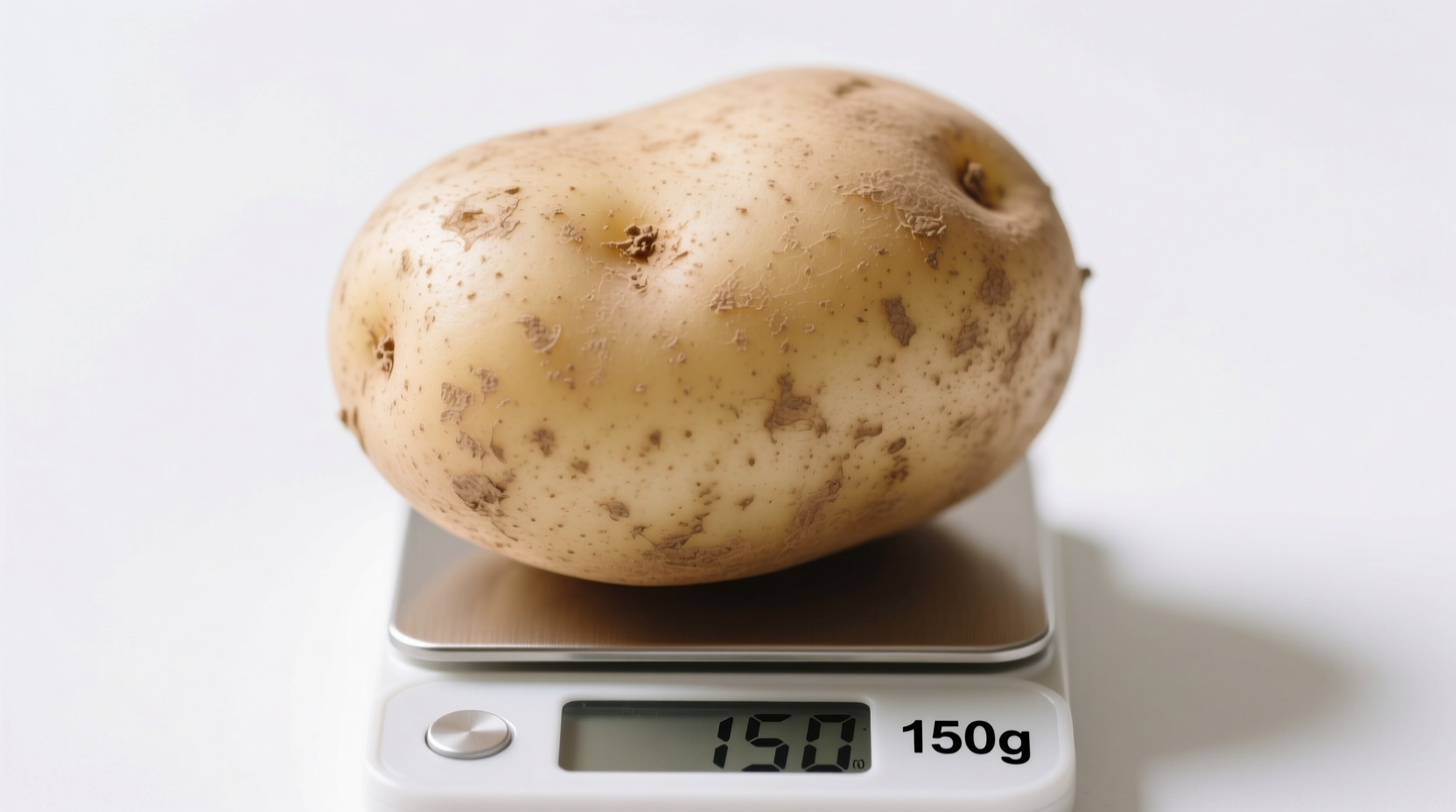
The term “standard potato” typically refers to the most commonly consumed white or russet potato found in supermarkets across North America and Europe. Botanically classified as Solanum tuberosum, the potato is a starchy tuber that serves as a dietary staple in numerous cultures worldwide. Originating in the Andes Mountains of South America over 7,000 years ago, it was introduced to Europe in the 16th century and has since become one of the most important food crops globally.
In culinary contexts, “standard” often implies a medium-sized, all-purpose variety suitable for boiling, baking, mashing, frying, or roasting. While no universal industry standard defines exact dimensions or mass, food scientists, agricultural organizations, and recipe developers use standardized size categories—small, medium, large—to approximate weight ranges for consistency in nutrition labeling and recipe formulation.
Key Characteristics of Common Potatoes
Potatoes vary not only in weight but also in texture, moisture content, and starch level—all of which influence their performance in different cooking methods. Below is an overview of key characteristics relevant to understanding how weight correlates with usability:
| Characteristic | Description |
|---|---|
| Average Weight (Medium) | 5.3 oz (150 grams) |
| Size Range | Small: 4–6 oz (113–170 g) Medium: 5.3–8 oz (150–225 g) Large: 8–12 oz (225–340 g) |
| Starch Content | High (russet), Medium (Yukon Gold), Low (red, fingerling) |
| Moisture Level | Inversely related to starch; high-starch potatoes have lower moisture |
| Culinary Function | Baking, mashing, frying, boiling, roasting |
| Shelf Life | 2–3 weeks at cool room temperature; up to 2 months refrigerated (not ideal for long-term) |
| Common Varieties | Russet, Yukon Gold, red bliss, fingerling, purple |
The most frequently referenced “standard” potato in American recipes is the russet, known for its rough brown skin and fluffy interior when baked. A medium russet potato—approximately 2.75 to 3.25 inches in diameter and 5 to 6 inches long—typically weighs around 150 grams (5.3 ounces). However, this can vary significantly depending on growing conditions, storage, and specific cultivar.
Practical Usage: Why Weight Matters in Cooking
Accurate potato measurement ensures consistent texture, doneness, and flavor balance in dishes. Using a potato that’s too large or too small alters ingredient ratios, especially in recipes where potatoes play a structural or textural role, such as gratins, soups, or gnocchi.
For example, mashed potatoes made with oversized russets may result in excess starch, creating a gluey consistency if not balanced with adequate fat and liquid. Conversely, underweight potatoes in a stew might break down too quickly or fail to provide sufficient body.
Measuring Potatoes by Weight vs. Count
Professional chefs and precision-focused bakers rely on weight rather than count. Here’s why:
- Consistency: Two “medium” potatoes from different batches may differ by 30–40 grams, affecting final yield.
- Nutrition Accuracy: Dietary tracking requires precise gram counts; a 200g potato has nearly double the carbohydrates of a 100g fingerling.
- Recipe Scaling: Doubling a casserole recipe demands proportional increases—not just “two more potatoes.”
To ensure accuracy, use a digital kitchen scale calibrated in grams. When a recipe specifies “1 medium potato,” assume 150 grams unless otherwise noted. If weighing isn’t possible, visual estimation based on size helps:
- Hold the potato in your palm; a true medium should fit comfortably without bulging.
- Compare length: 5–6 inches is typical for a standard baking potato.
- Use familiar objects for reference—a medium potato is roughly the size of a baseball or large apple.
Pro Tip: Always peel and trim potatoes before weighing for exact measurements in processed forms (e.g., diced, mashed). The skin accounts for about 10–15% of total weight.
Variants & Types: How Different Potatoes Compare by Weight
Not all potatoes are created equal—not even in size. Each variety has distinct growth patterns, influencing average weight and suitability for specific uses.
| Variety | Average Weight (Whole) | Best Uses | Notes on Size Consistency |
|---|---|---|---|
| Russet | 150–340 g (5.3–12 oz) | Baking, frying, mashing | Grows large; wide natural variation |
| Yukon Gold | 130–200 g (4.6–7 oz) | Boiling, roasting, soups | More uniform size; popular in pre-cut packs |
| Red Bliss | 110–170 g (3.9–6 oz) | Salads, steaming, roasting with skin | Often sold as “small” or “new” potatoes |
| Fingerling | 70–100 g each (2.5–3.5 oz) | Roasting, grilling, gourmet plating | Long and narrow; multiple per serving |
| Purple/Blue | 100–180 g (3.5–6.3 oz) | Roasting, salads, colorful sides | Denser flesh; slightly heavier per volume |
| Mini/New Potatoes | 50–80 g (1.8–2.8 oz) | Boiling whole, buttered sides | Harvested early; highly variable individually |
Understanding these differences allows cooks to substitute intelligently. For instance, replacing russets with red potatoes in a soup changes both weight-to-volume ratio and texture—red potatoes hold their shape better due to lower starch content.
Comparison with Similar Ingredients
Potatoes are often confused with other root vegetables, particularly in global cuisines. While similar in function, they differ significantly in weight, density, and nutritional profile.
| Ingredient | Avg. Weight (Medium) | Key Differences |
|---|---|---|
| Sweet Potato | 130–200 g (4.6–7 oz) | Sweeter, denser, higher sugar content; orange or purple flesh; preferred in moist-cooking methods |
| Yam (True) | 450–900 g (1–2 lbs) | Much larger, drier, less common outside Africa; often mislabeled as sweet potato in U.S. |
| Turnip | 100–150 g (3.5–5.3 oz) | Peppery taste, firm texture; used in savory stews and mashes; cruciferous vegetable |
| Parsnip | 120–180 g (4.2–6.3 oz) | Sweet, earthy flavor; creamy white flesh; excellent roasted or pureed |
This comparison underscores that while some substitutes match in weight, they do not behave the same way in recipes. Substituting parsnips for potatoes in scalloped potatoes, for example, will yield a sweeter, more aromatic dish—but one that browns faster and lacks the same binding starch.
Practical Tips & FAQs
How much does a medium potato weigh after peeling?
A raw medium potato loses approximately 10–15% of its weight once peeled. A 150g unpeeled russet yields about 130–135g of usable flesh. For precise baking or canning, always weigh after preparation.
Can I substitute baby potatoes for medium ones?
Yes, but adjust quantity. Two to three baby potatoes (each ~70g) generally equal one medium (150g). Note that baby potatoes have thinner skins and waxy textures, making them better suited for boiling than baking.
What’s the best way to store potatoes to maintain weight and freshness?
Store in a cool, dark, well-ventilated place between 45°F and 50°F (7°C–10°C). Avoid refrigeration below 40°F, which converts starch to sugar and alters flavor. Do not wash before storing—moisture accelerates spoilage. Properly stored, a standard potato retains weight and quality for 2–3 weeks.
Does cooking change a potato’s weight?
Yes. Boiling causes water absorption, increasing weight temporarily by up to 20%. Baking or roasting leads to moisture loss, reducing cooked weight by 15–25%. For calorie counting or dietary tracking, use raw weights unless specified otherwise.
Are organic potatoes heavier than conventional ones?
No significant difference exists solely due to farming method. Weight depends more on variety, water availability during growth, and post-harvest handling than whether the crop is organic or conventional.
How many potatoes do I need per person?
As a side dish, plan for one medium potato (150g raw) per person. For hearty mains like loaded baked potatoes, allow 1.5 to two per serving. In soups or casseroles, 100g per person is usually sufficient.
Storage Hack: Never store potatoes near onions. Both emit gases that accelerate sprouting and decay. Keep them in separate baskets or pantry zones.
“In professional kitchens, we never say ‘one potato.’ We say ‘150 grams, peeled and diced.’ That’s the only way to guarantee consistency across hundreds of servings.” — Chef Elena Rodriguez, Executive Sous Chef, Harvest Table Bistro
Summary & Key Takeaways
The typical weight of a standard potato—most accurately defined as a medium russet—is approximately 150 grams (5.3 ounces). However, actual weights vary widely by variety, growing conditions, and size classification. Understanding these nuances empowers cooks to follow recipes accurately, substitute wisely, and manage portions effectively.
Key points to remember:
- A “medium” potato generally means 150g unpeeled, though sizes range from 113g to 225g.
- Russets are heaviest and starchiest; ideal for baking and frying.
- Waxy potatoes like red bliss and fingerlings are smaller and better for boiling and salads.
- Always weigh potatoes for precision cooking, especially in large batches or dietary plans.
- Substitutions require attention not just to weight but to starch and moisture levels.
- Proper storage preserves both weight and quality over time.
Whether you're preparing Sunday roast potatoes, whipping up creamy gratin, or tracking macronutrients, knowing the real-world weight of a standard potato transforms guesswork into reliable results. Incorporate weighing into your routine, and you’ll notice immediate improvements in consistency, texture, and overall dish success.
Next Step: Keep a labeled container in your pantry with a note card listing average weights of your most-used produce—including potatoes. Over time, this builds intuitive accuracy in your cooking.




 浙公网安备
33010002000092号
浙公网安备
33010002000092号 浙B2-20120091-4
Comments
No comments yet. Why don't you start the discussion?