
Cat ownership brings joy, companionship, and a certain level of mess. Among the most persistent challenges is managing cat odor—especially urine, feces, and litter box smells that can linger long after the source is gone. Unlike surface-level air fresheners, true elimination requires understanding the chemistry of odor, identifying hidden contamination, and implementing consistent preventive measures. This guide delivers actionable, science-backed techniques used by pet care professionals and veterinarians to neutralize odors at the molecular level and keep your home smelling fresh—for good.
Understanding the Science Behind Cat Odor
Cat urine contains urea, creatinine, and uric acid. While urea breaks down quickly, uric acid crystallizes and bonds tightly to porous surfaces like wood, drywall, and carpet padding. Most household cleaners only mask the ammonia scent but leave uric acid behind, which reactivates when exposed to humidity. Enzymatic cleaners are essential because they contain bacteria or enzymes that digest uric acid, eliminating the odor source rather than covering it up.
“Uric acid in cat urine can remain detectable for years if not properly broken down. Standard cleaners often fail because they don’t address the biochemical root.” — Dr. Laura Bennett, DVM, Feline Behavior Specialist
Feces and litter dust also contribute to ambient odor, especially in poorly ventilated areas. Ammonia buildup from decomposing waste affects indoor air quality and can trigger respiratory issues in sensitive individuals. The solution lies not just in cleaning, but in disrupting the odor lifecycle through targeted intervention.
Step-by-Step Guide to Eliminate Cat Smell Permanently
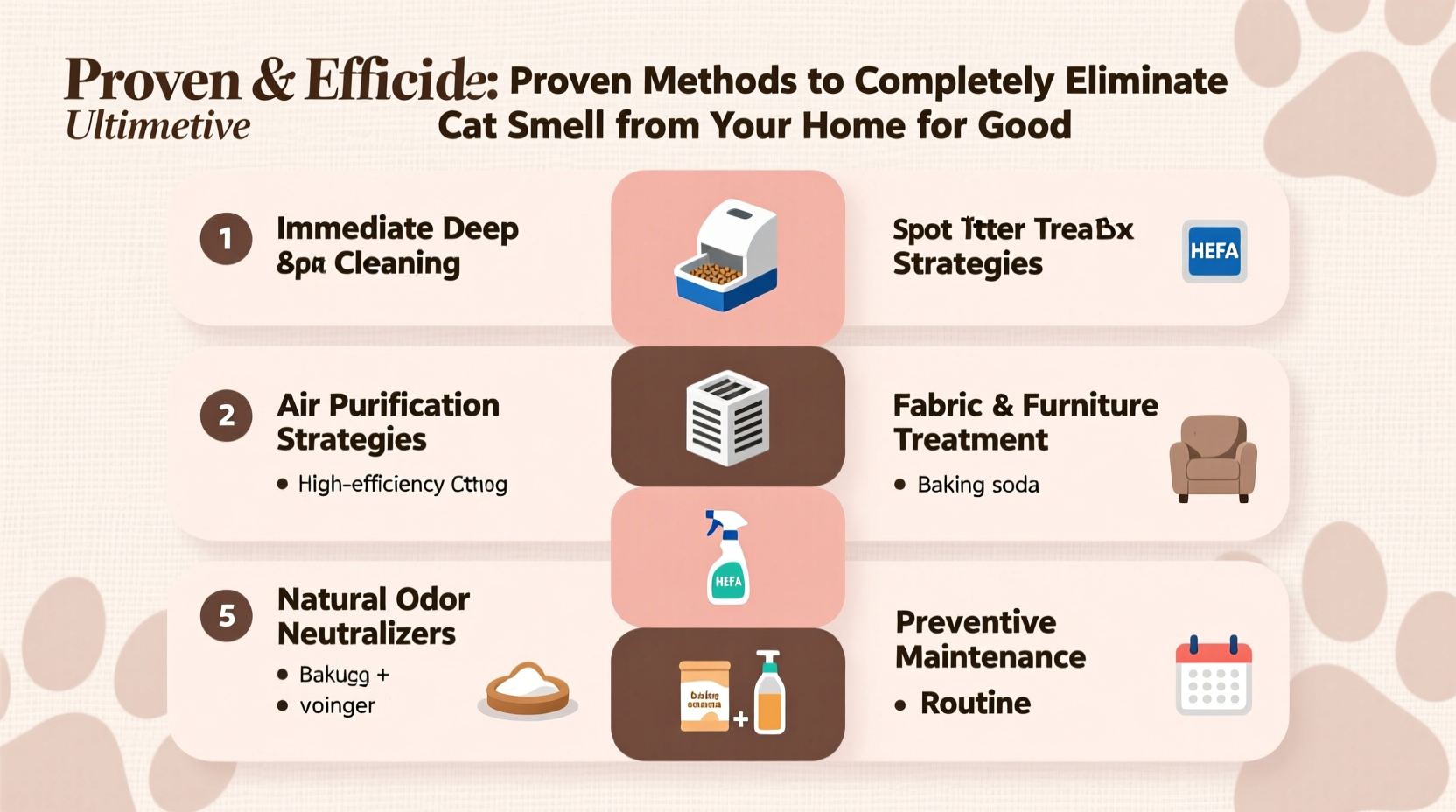
Eliminating cat odor isn’t a one-time task—it’s a process that combines immediate cleanup, deep decontamination, and long-term prevention. Follow this 7-step timeline to reclaim your home:
- Identify all odor sources: Use a blacklight in a dark room to locate dried urine stains (they fluoresce under UV light).
- Remove contaminated materials: Replace soaked carpet padding or baseboards if heavily soiled; these cannot be fully sanitized.
- Blot and clean fresh spots immediately: Use paper towels to absorb liquids, pressing down—not rubbing—to avoid spreading.
- Apply an enzymatic cleaner: Choose a product with live enzyme cultures (e.g., Nature’s Miracle, Rocco & Roxie). Saturate the area and let it dry naturally—do not wipe.
- Treat underlying layers: For carpets, use a syringe or spray tool to inject cleaner into the padding beneath.
- Neutralize airborne particles: Run HEPA air purifiers with activated carbon filters in high-traffic and litter areas.
- Re-evaluate litter box management: Ensure proper number, placement, and maintenance of litter boxes (one per cat plus one extra).
Do’s and Don’ts of Cat Odor Management
| Do | Don't |
|---|---|
| Use enzymatic cleaners designed for pet urine | Use steam cleaners on untreated urine spots (heat sets the stain) |
| Provide one litter box per cat, plus one extra | Place all litter boxes in the same location |
| Scoop litter daily and change it weekly | Switch litter types abruptly without transition |
| Vacuum with a HEPA-filter vacuum weekly | Use scented air fresheners near litter boxes (can deter cats) |
| Wash bedding in oxygen-based cleaners (e.g., OxiClean) | Use bleach on urine-stained fabrics (creates toxic chlorine gas) |
Real Example: How One Home Was Transformed
A family in Portland struggled with persistent cat odor despite daily litter scooping and frequent carpet cleaning. Their two cats had been marking near a bedroom doorway for months. A professional pet odor inspector used a blacklight and discovered multiple old urine stains under the baseboard and within the wall insulation. After removing the affected drywall section, applying a commercial-grade enzymatic gel, installing a carbon air purifier, and relocating the litter box away from the sleeping area, the odor vanished within three weeks. Follow-up visits confirmed no recurrence over a six-month period.
This case underscores that hidden contamination is often the culprit. Surface treatments alone rarely suffice when structural materials have absorbed waste over time.
Essential Checklist for Complete Odor Removal
- ☑ Inspect all rooms with a UV blacklight
- ☑ Identify and mark all fluorescence spots
- ☑ Remove and replace non-cleanable materials (carpet padding, fabric upholstery)
- ☑ Apply enzymatic cleaner generously and allow 24–48 hours to dry
- ☑ Clean air vents and replace HVAC filters
- ☑ Wash all pet bedding, curtains, and washable fabrics
- ☑ Install HEPA + carbon air purifier in main living and litter zones
- ☑ Evaluate litter box hygiene and location
- ☑ Monitor cat behavior for signs of stress or medical issues
- ☑ Schedule bi-weekly deep cleans for first month, then monthly maintenance
Preventing Future Odors: Long-Term Strategies
Once the existing odor is eliminated, maintaining a fresh environment depends on consistency. Cats are creatures of habit and stress can lead to inappropriate elimination. Common triggers include dirty litter boxes, household changes, new pets, or underlying health issues like urinary tract infections.
Ensure litter boxes are large enough (1.5x the cat’s length), filled with 2–3 inches of unscented clumping litter, and placed in quiet, accessible locations. Avoid corners where cats feel trapped. Scoop solid waste daily and perform full litter changes weekly. Consider automatic self-cleaning boxes for multi-cat homes to reduce competition.
Additionally, feed a high-quality diet rich in moisture. Hydrated cats produce less concentrated urine, reducing ammonia intensity. Canned or raw diets significantly improve urine pH and volume, minimizing odor development.
FAQ: Common Questions About Cat Smell Removal
Can baking soda permanently remove cat urine smell?
Baking soda helps absorb moisture and temporarily reduces odor when used in litter or sprinkled on carpets before vacuuming. However, it does not break down uric acid crystals. It should be used as a supplement to enzymatic treatment, not a replacement.
How long does it take for enzymatic cleaners to work?
Most require 24 to 72 hours to fully digest organic compounds. Results may take several days to become noticeable, especially in humid environments. Repeat applications may be necessary for older or deeply embedded stains.
Why does my house still smell after cleaning?
If odor persists, contamination likely exists in subflooring, walls, or ventilation systems. Professional remediation may be needed. Also, ensure you’re not using products that react with urine (like bleach), which can create worse odors or harmful fumes.
Conclusion: Take Control of Your Home’s Air Quality
Eliminating cat smell for good isn’t about masking odors with perfumes or temporary fixes—it’s about addressing the biological, behavioral, and environmental roots of the problem. From using enzymatic cleaners that destroy odor at the molecular level to optimizing litter box logistics and improving indoor air filtration, every step plays a role in creating a truly fresh home. Cats deserve clean spaces, and so do you. By following these proven methods consistently, you can enjoy the companionship of your pets without compromising comfort or air quality.




 浙公网安备
33010002000092号
浙公网安备
33010002000092号 浙B2-20120091-4
Comments
No comments yet. Why don't you start the discussion?