
Patchwork handbags are more than accessories—they’re wearable art. Crafted from a mosaic of fabrics, textures, and colors, each piece tells a story. But their intricate construction also makes them vulnerable to wear, fading, and damage if not properly cared for. Unlike solid-material bags, patchwork designs demand special attention due to mixed fabric types, delicate stitching, and color variations. Understanding how to clean, store, and preserve these unique items ensures they remain vibrant and structurally sound for years.
Understanding Patchwork Bag Materials and Construction
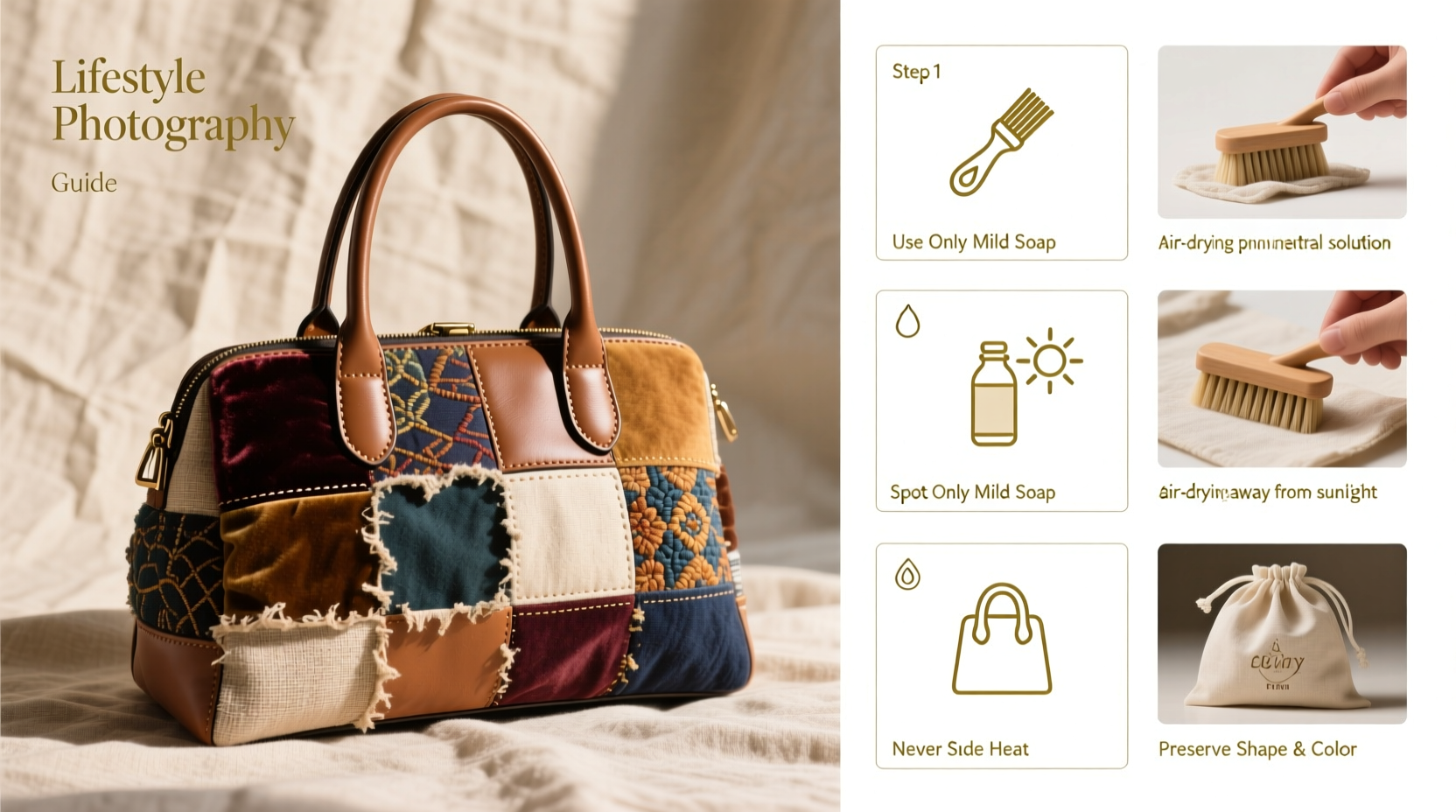
Patchwork handbags often combine cotton, linen, denim, silk, synthetic blends, and even leather accents. Each material reacts differently to moisture, sunlight, and friction. The seams—where multiple fabrics converge—are particularly prone to stress and fraying. Embellishments like embroidery, beads, or appliqués add aesthetic value but increase fragility.
Before any cleaning or storage decision, inspect the bag’s label or consult the maker for care instructions. If unavailable, perform a discreet spot test on an inconspicuous area when using any cleaner. Knowing your bag’s composition is the foundation of effective maintenance.
“Patchwork isn’t just about aesthetics—it’s a textile puzzle. Each piece has its own care needs. Treating it as a single entity risks damaging individual components.” — Lena Torres, Textile Conservator & Handbag Archivist
Daily Maintenance: Habits That Extend Longevity
Preventative care is the most powerful tool in preserving a patchwork handbag. Simple daily habits can prevent stains, shape distortion, and premature aging.
- Rotate usage: Avoid using the same bag every day. Rotation reduces wear on specific areas and allows fabric fibers time to recover.
- Empty regularly: Remove contents nightly to prevent overstretching and creasing at stress points like corners and straps.
- Check lining integrity: A torn lining can catch on outer patches, pulling threads loose. Repair small tears promptly.
- Handle with clean hands: Oils and dirt from skin transfer to fabric, especially light-colored patches, causing discoloration over time.
Step-by-Step Cleaning Guide for Mixed Fabrics
Cleaning a patchwork handbag requires precision. Never submerge it in water. Instead, follow this timeline-based approach for safe, effective results:
- Day 1: Dry Surface Cleaning
Use a soft-bristled clothes brush or microfiber cloth to gently remove dust and debris. Work in one direction to avoid disturbing stitches. - Day 2: Spot Treatment (if needed)
For stains, mix one teaspoon of mild detergent (like Woolite) with one cup of lukewarm water. Dip a clean cotton swab into the solution, wring thoroughly, and dab—not rub—the affected area. Blot immediately with a dry cloth. - Day 3: Target Delicate Areas
For embellished sections, use a dry, clean makeup brush to dislodge trapped particles. Avoid liquid near beads or glued elements. - Day 4: Air Out
Leave the bag open in a well-ventilated room away from direct sunlight for 24 hours to ensure all moisture evaporates. - Day 5: Final Inspection
Check for lingering dampness, color bleeding, or loosened threads. Address issues before storing.
Do’s and Don’ts: Fabric-Specific Care Table
| Fabric Type | Do’s | Don’ts |
|---|---|---|
| Cotton | Spot clean gently; air dry flat | Avoid prolonged sun exposure; don’t machine wash |
| Linen | Brush lightly; store folded with tissue paper | Don’t scrub—linen fibers break easily when wet |
| Silk | Use dry brushing only; keep away from moisture | Never apply water or detergent directly |
| Denim | Wipe with damp cloth if soiled; let dry naturally | Don’t soak—can cause shrinkage and stiffness |
| Synthetics (Polyester, Nylon) | Can tolerate mild soap solutions | Avoid heat—melts fibers and causes warping |
Storage Solutions to Prevent Damage
Improper storage leads to yellowing, mold, and structural collapse. The goal is to protect from environmental stressors while maintaining form.
Always store your patchwork handbag in a breathable cotton dust bag—never plastic, which traps moisture and promotes mildew. Stuff the interior loosely with acid-free tissue paper or clean, undyed cotton cloths to retain shape without overexertion.
Keep bags upright on a shelf, away from direct sunlight and humidity. Basements and attics are poor choices due to fluctuating temperatures. Ideal conditions: 65–72°F (18–22°C) and 45–55% humidity.
“Consistent care and proper storage can double a bag’s lifespan.” — Emma Clarke, Fashion Care Expert
Mini Case Study: Reviving a Vintage Patchwork Tote
Sophie inherited a 1970s patchwork tote from her grandmother. Stored in a cedar chest for decades, it emerged with musty odor and faded patches. Following a careful restoration process—dry brushing, airing in indirect breeze for two days, and replacing the deteriorated lining with vintage cotton—the bag regained its charm. Sophie now rotates its use seasonally and stores it with lavender sachets to deter moths. Three years later, it remains a centerpiece of her wardrobe.
Essential Preservation Checklist
Use this checklist quarterly to keep your patchwork handbag in optimal condition:
- ✅ Inspect all seams for loose threads or pulls
- ✅ Clean surface with soft brush or microfiber cloth
- ✅ Check for signs of mold, especially in humid climates
- ✅ Rotate stuffing material to prevent permanent indentations
- ✅ Verify that zippers and clasps operate smoothly
- ✅ Reassess storage location for light and moisture exposure
- ✅ Photograph the bag to document condition over time
Frequently Asked Questions
Can I machine wash my patchwork handbag?
No. Machine washing subjects the bag to agitation, heat, and moisture that can unravel seams, bleed colors, and shrink fabrics. Always clean by hand using gentle, targeted methods.
How do I handle color bleeding between patches?
Color transfer usually occurs when a damp dark fabric contacts a lighter one. To minimize risk, avoid over-wetting dark patches during cleaning. If bleeding happens, blot immediately and separate patches with tissue paper while drying. In severe cases, consult a textile conservator.
Is it safe to use fabric protector sprays?
Only if specifically designed for multi-fiber textiles and tested first. Spray a small hidden area and wait 24 hours. Look for silicone-free, non-aerosol formulas to avoid residue buildup. Reapply no more than twice a year.
Final Thoughts: Treat Your Bag Like Heirloom Art
A patchwork handbag is a labor of love—both in creation and care. Its value grows not just in appearance but in memory and craftsmanship. By adopting mindful cleaning routines, respecting material diversity, and prioritizing thoughtful storage, you honor the artistry behind every stitch. These practices don’t just prolong life—they elevate everyday use into a ritual of appreciation.




 浙公网安备
33010002000092号
浙公网安备
33010002000092号 浙B2-20120091-4
Comments
No comments yet. Why don't you start the discussion?