
Every morning, millions of students heave backpacks onto their shoulders—often without considering the long-term impact on their posture, comfort, or even self-expression. A poorly chosen backpack can lead to chronic back pain, shoulder strain, and fatigue by midday. Yet, with thoughtful selection, a school backpack doesn’t have to be a burden. It can support spinal health, carry essentials efficiently, and reflect personal style. This guide walks through every critical factor in choosing a backpack that balances ergonomics, durability, and aesthetics.
The Hidden Cost of an Unsupportive Backpack
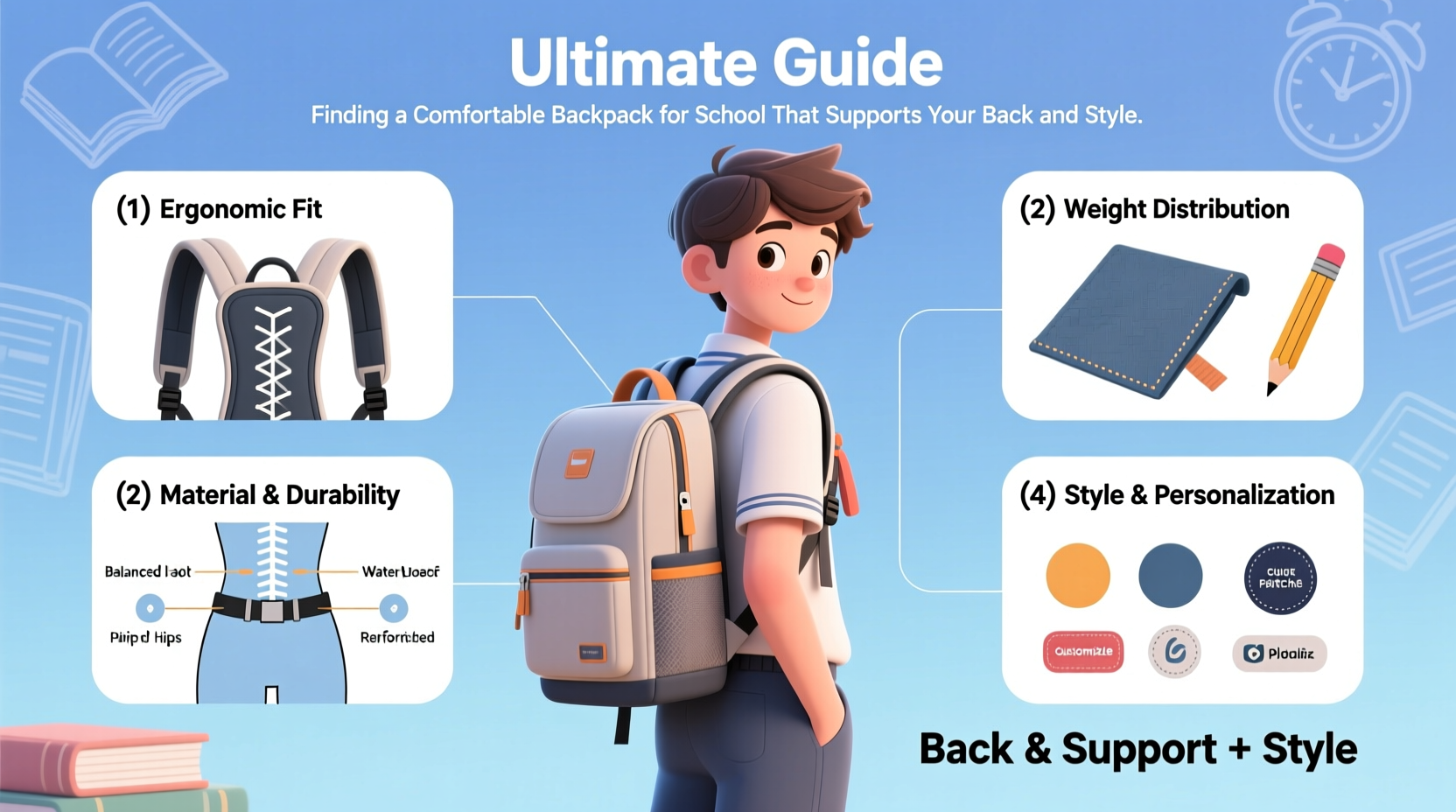
Carrying excessive weight improperly is one of the leading causes of musculoskeletal discomfort in adolescents. According to the American Academy of Orthopaedic Surgeons, students often carry between 10% and 22% of their body weight in backpacks—far exceeding the recommended 10% maximum. Over time, this leads to poor posture, muscle imbalances, and even early-onset spinal issues.
A well-designed backpack reduces pressure on the spine by distributing weight evenly across the hips and shoulders. It also encourages proper alignment, minimizing forward head posture and rounded shoulders. Beyond physical health, a backpack that fits well and feels good to wear improves focus and energy throughout the school day.
Key Features of an Ergonomic School Backpack
Not all backpacks are built equally. To protect your back and ensure lasting comfort, look for these essential features:
- Padded, contoured shoulder straps: Wide (at least 2 inches) and cushioned straps reduce pressure on the shoulders and prevent digging.
- Adjustable sternum strap: Helps stabilize the load and keeps shoulder straps from slipping.
- Hip belt: Transfers up to 80% of the weight to the pelvis, reducing spinal compression.
- Back padding and ventilation: Breathable mesh panels wick moisture and promote airflow, preventing sweat buildup.
- Compartments with weight distribution: Heavier items should rest close to the back and centered between the shoulder blades.
- Chest and waist stabilizers: Especially important for taller students or those carrying heavy loads.
“An ergonomic backpack isn’t just about comfort—it’s a preventive tool against long-term postural damage.” — Dr. Lena Torres, Pediatric Physical Therapist
Choosing Based on Body Type and Daily Load
A backpack should fit your body, not the other way around. The ideal fit starts at the top of the shoulders and ends at the waistline—never extending below the hips. Here’s how different factors influence your choice:
| Body Type | Recommended Backpack Height | Strap Adjustability Needed? | Extra Support Tips |
|---|---|---|---|
| Shorter frame (under 5'3\") | 14–16 inches | High (shorter torso) | Look for compact models with adjustable sternum straps |
| Average height (5'4\"–5'9\") | 17–19 inches | Moderate | Ensure hip belt is functional and padded |
| Taller students (over 5'10\") | 20+ inches | Essential | Prioritize extended back panels and load-lifter straps |
Also consider your typical load. If you carry textbooks, a laptop, and sports gear daily, aim for a 25–30 liter capacity with reinforced stitching and a rigid internal frame. Light packers may do well with slimmer 18–22 liter designs.
Style That Doesn’t Sacrifice Substance
Let’s be honest: no matter how supportive a backpack is, if it clashes with your personal style, you won’t want to wear it. Fortunately, today’s market offers a wide range of designs that blend function and fashion.
From minimalist monochrome nylon packs to vibrant prints and sustainable materials like recycled PET fabric, there’s no need to compromise. Brands like Herschel, Fjällräven, and JanSport now offer ergonomically sound models in trendy cuts and colors. Some even feature magnetic closures, USB charging ports, and hidden anti-theft pockets—modern touches that enhance both utility and appeal.
When selecting a design, ask yourself: Does the color suit my wardrobe? Is the material resistant to stains and weather? Can I easily clean it when needed? Style should complement usability, not override it.
Step-by-Step Guide to Choosing Your Ideal Backpack
Follow this sequence to make a confident, informed decision:
- Assess your daily load: Weigh your most common combination of books, devices, and supplies. Aim to keep total weight under 10% of your body weight.
- Measure your torso: Use a tape measure from the base of your neck (C7 vertebra) to the top of your hip bone. Match this to the backpack’s back panel length.
- Try it on with weight: If possible, test the backpack in-store with books inside. Adjust all straps and walk around for several minutes.
- Evaluate fit: Straps shouldn’t slip, the hip belt should sit snugly on your iliac crest, and the pack should not sway side-to-side.
- Check organization: Ensure there’s a dedicated laptop sleeve, front-access pockets, and space for water bottles or snacks.
- Verify warranty and durability: Look for brands offering at least a 2-year warranty and water-resistant zippers.
Real-World Example: Maya’s Backpack Transformation
Maya, a 10th-grade student, used to complain of lower back pain every afternoon. Her old canvas backpack had thin straps, no padding, and carried nearly 20 pounds of textbooks. After consulting her school nurse, she switched to a 28-liter model with a ventilated back panel, padded hip belt, and load-compression straps.
Within two weeks, her pain decreased significantly. She chose a deep burgundy color with gold hardware, which made her feel confident. “I didn’t realize how much better I’d feel just by changing my bag,” she said. “Now I actually forget I’m wearing it.”
Do’s and Don’ts When Selecting a School Backpack
| Do’s | Don’ts |
|---|---|
| Choose a backpack with multiple adjustment points | Buy oversized bags “for growth” |
| Opt for lightweight, durable materials like ballistic nylon | Select packs with flimsy, non-padded straps |
| Use both shoulder straps and fasten stabilizers | Carry the backpack on one shoulder |
| Pack heavier items closest to your back | Overstuff the backpack beyond its intended capacity |
| Regularly clean and inspect for wear | Ignore fraying seams or broken zippers |
Frequently Asked Questions
How do I know if my backpack fits properly?
A properly fitted backpack sits 2 inches below the shoulders and ends at the waist. The hip belt should rest on your pelvic bones, and the chest strap should lie flat across your sternum without pulling. There should be minimal movement when walking or turning.
Are rolling backpacks a good alternative?
Rolling backpacks can reduce strain for students with medical conditions or extremely heavy loads. However, they’re less practical on stairs, uneven terrain, or crowded hallways. If used, ensure the handle is height-adjustable and the wheels are durable.
Can a stylish backpack still be orthopedic?
Absolutely. Many modern brands integrate medical-grade ergonomic design into fashionable silhouettes. Look for certifications like “spine-friendly” labels or partnerships with posture specialists. Function and fashion are no longer mutually exclusive.
Final Checklist Before You Buy
- ✅ Back panel length matches torso measurement
- ✅ Shoulder straps are padded and adjustable
- ✅ Includes functional hip and sternum straps
- ✅ Weight is under 3.5 lbs (empty)
- ✅ Material is water-resistant and easy to clean
- ✅ Has designated compartments for laptop and essentials
- ✅ Color/style aligns with personal taste
- ✅ Comes with manufacturer warranty
Conclusion: Carry Confidence, Not Pain
Your backpack is more than a container for books—it’s an extension of your daily routine, your health, and your identity. Investing time in selecting the right one pays dividends in comfort, posture, and confidence. Don’t settle for a bag that hurts your back or dulls your vibe. Use the insights here to find a backpack that supports your spine and showcases your style. Your future self will thank you for making the smart choice today.




 浙公网安备
33010002000092号
浙公网安备
33010002000092号 浙B2-20120091-4
Comments
No comments yet. Why don't you start the discussion?