
Short jackets are a wardrobe staple—versatile, stylish, and seasonally adaptable. Whether it’s a cropped denim jacket, a tailored blazer, or a leather moto, the right short jacket can elevate your look instantly. But no matter the fabric or design, one rule holds true: fit is everything. A poorly fitted jacket can distort proportions, add bulk, or make you appear shorter. The key lies in understanding your body shape and choosing a jacket that enhances your natural silhouette. This guide walks you through how to select short jackets that not only fit well but also flatter your unique form.
Understanding Body Shapes and Proportions
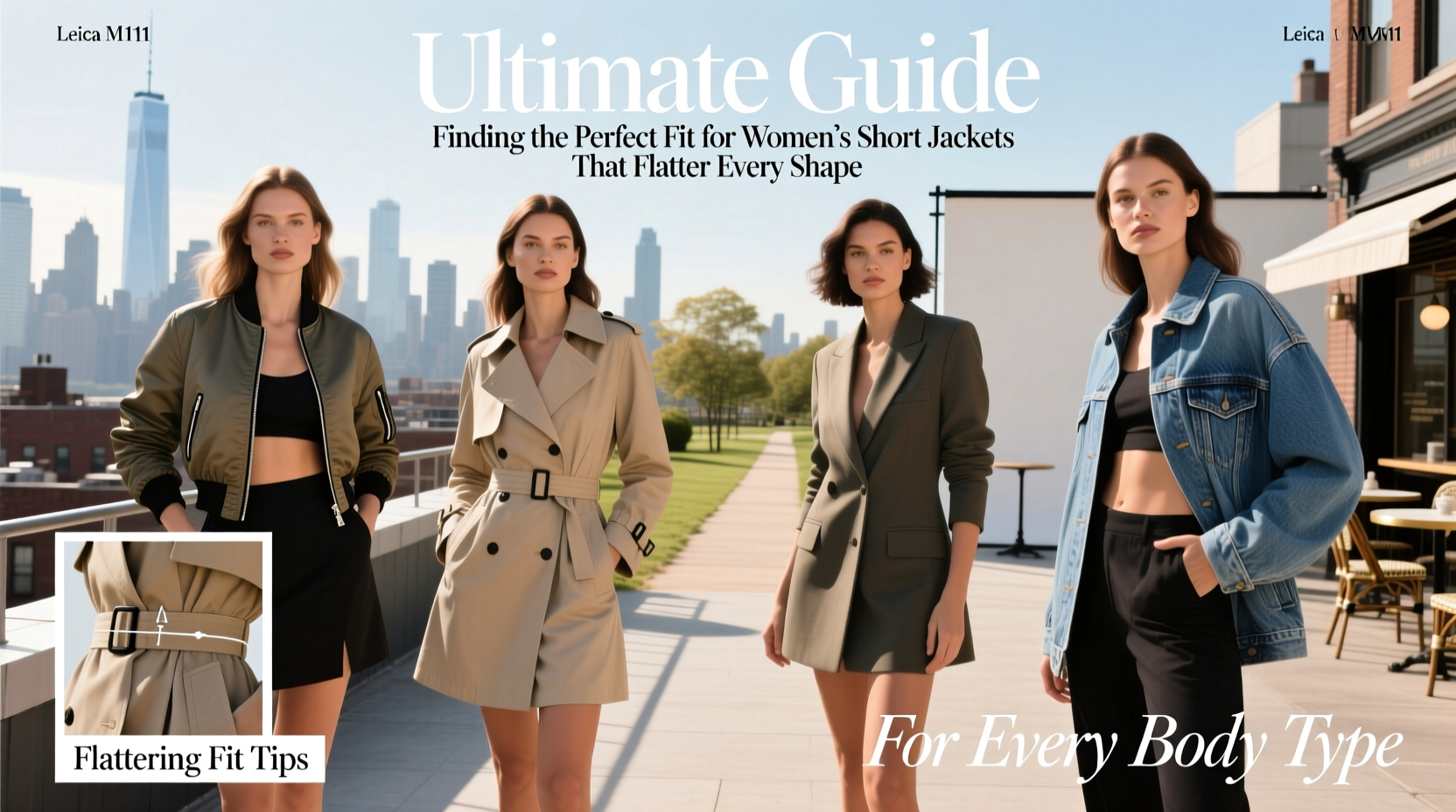
Before selecting a short jacket, it helps to identify your body shape. While everyone is uniquely proportioned, most women fall into one of five common categories: hourglass, pear, apple, rectangle, and inverted triangle. Each has distinct features that influence how clothing drapes and balances the frame.
For example, an hourglass shape benefits from structured waist definition, while a pear shape often looks best with jackets that draw attention upward. Knowing your shape allows you to choose cuts, lengths, and details that harmonize rather than compete with your figure.
Choosing the Right Length and Cut
The term “short jacket” typically refers to any outerwear that ends at or above the hip. However, even within this category, small differences in length can have big effects on appearance.
- Waist-length (ends at natural waist): Ideal for creating definition on hourglass and rectangle shapes.
- Hip-grazing (ends just below waist, above hip bone): Most universally flattering—works well for pears and apples by balancing proportions.
- Cropped (ends above the waist): Best paired with high-waisted bottoms; suits taller torsos or petite frames when proportion is managed carefully.
A jacket ending at the narrowest part of your torso usually creates the most flattering line. Avoid styles that end at the widest part of your hips or waist, as they can visually widen the area.
“Length is just as important as size. A jacket that hits at the right point can create the illusion of longer legs and a more balanced silhouette.” — Lena Ruiz, Fashion Stylist & Fit Consultant
Jacket Styles That Flatter Every Shape
Different jacket silhouettes emphasize different parts of the body. Matching the cut to your shape ensures balance and confidence.
| Body Shape | Best Jacket Styles | Features to Look For | Styles to Avoid |
|---|---|---|---|
| Hourglass | Tailored blazers, belted trenches, cinched waists | Defined waist, structured shoulders | Boxy cuts, oversized fits |
| Pear | Structured shoulder jackets, open-front cardigans | Bold collars, slightly padded shoulders | Tight sleeves, hip-level hemlines that emphasize lower body |
| Apple | V-neck dusters, wrap-style jackets | Vertical lines, elongating necklines | Fitted waists, bulky fabrics at midsection |
| Rectangle | Cropped moto, double-breasted styles | Mock belts, peplum hems, layered textures | Loose, shapeless cuts without structure |
| Inverted Triangle | Soft blazers, trench coats with flare at hips | Wider hems, rounded shoulders, relaxed fit | Strong shoulder pads, narrow-bottom cuts |
Real Example: How Sarah Found Her Perfect Fit
Sarah, a 34-year-old teacher with a pear-shaped body, always avoided short jackets because they made her feel top-heavy. After consulting a stylist, she switched from boxy denim jackets to structured cotton blazers with notch lapels and slightly padded shoulders. She chose a length that ended just below her waist, pairing it with dark jeans. The new cut balanced her proportions, drawing attention to her shoulders and creating a more even silhouette. “I didn’t realize a two-inch difference in length could change everything,” she said.
Step-by-Step Guide to Fitting a Short Jacket
Follow this practical sequence when trying on or shopping for short jackets, whether in-store or online.
- Check Shoulder Seams: They should align exactly with the edge of your shoulders. If they hang over, the jacket is too big; if they dig in, it’s too small.
- Assess Sleeve Length: Sleeves should end at your wrist bone. You shouldn’t need to tug them down.
- Test Armhole Height: The armhole should sit close under your armpit without pinching. High armholes allow better movement and cleaner lines.
- Evaluate Torso Fit: Button or zip up the jacket. There should be no pulling across the chest, back, or stomach. A slight ease is normal; tension is not.
- Observe the Hemline: Move around—sit, walk, raise your arms. The jacket should stay in place without riding up excessively or gaping open.
- Check Proportion: Step back from the mirror. Does the jacket visually divide your body at a flattering point? Does it complement your pants or skirt?
Fabric, Structure, and Stretch Matter
Fit isn’t just about measurements—it’s also influenced by material. A stiff wool blend behaves differently than a soft, stretchy jersey.
- Non-stretch fabrics (tweed, denim, structured cotton): Require precise sizing. Prioritize getting the shoulders and chest right, as these won’t give.
- Stretch blends (elastane, spandex mixes): Offer forgiveness in the waist and hips. Ideal for apple or rectangle shapes needing subtle shaping.
- Lined vs. unlined: Lined jackets add volume. Choose lightweight linings for warmer climates or slimmer profiles.
If you're between sizes, opt for the larger size in non-stretch materials and the smaller in stretchy ones—provided the shoulders still fit correctly.
Frequently Asked Questions
How do I know if a short jacket is too short?
A jacket may be too short if it rides up above your waist when you sit or move, exposing your midriff unintentionally. It should rest comfortably at its intended hemline without constant adjustment. Consider your outfit: a cropped jacket works with high-waisted bottoms, but may look awkward with low-rise jeans.
Can petite women wear short jackets?
Absolutely. In fact, short jackets are often ideal for petite frames because they avoid overwhelming the body. Focus on clean lines, minimal hardware, and a hem that hits at or just above the hip. Avoid overly long zippers or wide lapels, which can dominate a smaller frame.
Should short jackets be tight or loose?
Neither extreme works best. Aim for “tailored ease”—snug enough to follow your shape without constriction, loose enough to layer over a sweater. The jacket should move with you, not restrict or flap open.
Final Checklist Before You Buy
Use this checklist to evaluate any short jacket before purchasing:
- ✅ Shoulder seams align with the edge of your shoulders
- ✅ Jacket closes without pulling or gapping
- ✅ Sleeve length reaches your wrist bone
- ✅ Hemline hits at a flattering point (waist, just below waist, or hip)
- ✅ Fabric allows for layering and movement
- ✅ Proportion complements your bottom half (e.g., balanced with pants/skirt length)
- ✅ You feel confident and comfortable moving in it
Conclusion: Confidence Starts with the Right Fit
Finding the perfect short jacket isn’t about chasing trends—it’s about aligning style with your body’s natural strengths. When you understand your shape, prioritize proper proportions, and test fit with intention, you unlock a world of effortless elegance. The right jacket doesn’t just keep you warm; it transforms your posture, lifts your mood, and sharpens your presence. Take the time to invest in pieces that truly fit. Your wardrobe—and your confidence—will reflect the difference.




 浙公网安备
33010002000092号
浙公网安备
33010002000092号 浙B2-20120091-4
Comments
No comments yet. Why don't you start the discussion?