
Layering necklaces is one of the most expressive ways to elevate an outfit. Whether you're stacking delicate chains or combining bold pendants, a well-layered look adds depth, personality, and sophistication. But anyone who’s tried it knows the frustration: within minutes, your carefully curated stack turns into a knotted mess. Tangled necklaces aren’t just annoying—they can damage delicate chains, weaken clasps, and shorten the lifespan of your favorite pieces.
The good news? With the right approach, you can enjoy layered jewelry that stays beautiful, untangled, and easy to wear. This guide dives deep into the practical, aesthetic, and organizational strategies that make necklace layering effortless. From selecting compatible lengths to mastering at-home storage, you’ll learn how to build a system that works every time.
Choose the Right Necklace Lengths and Styles
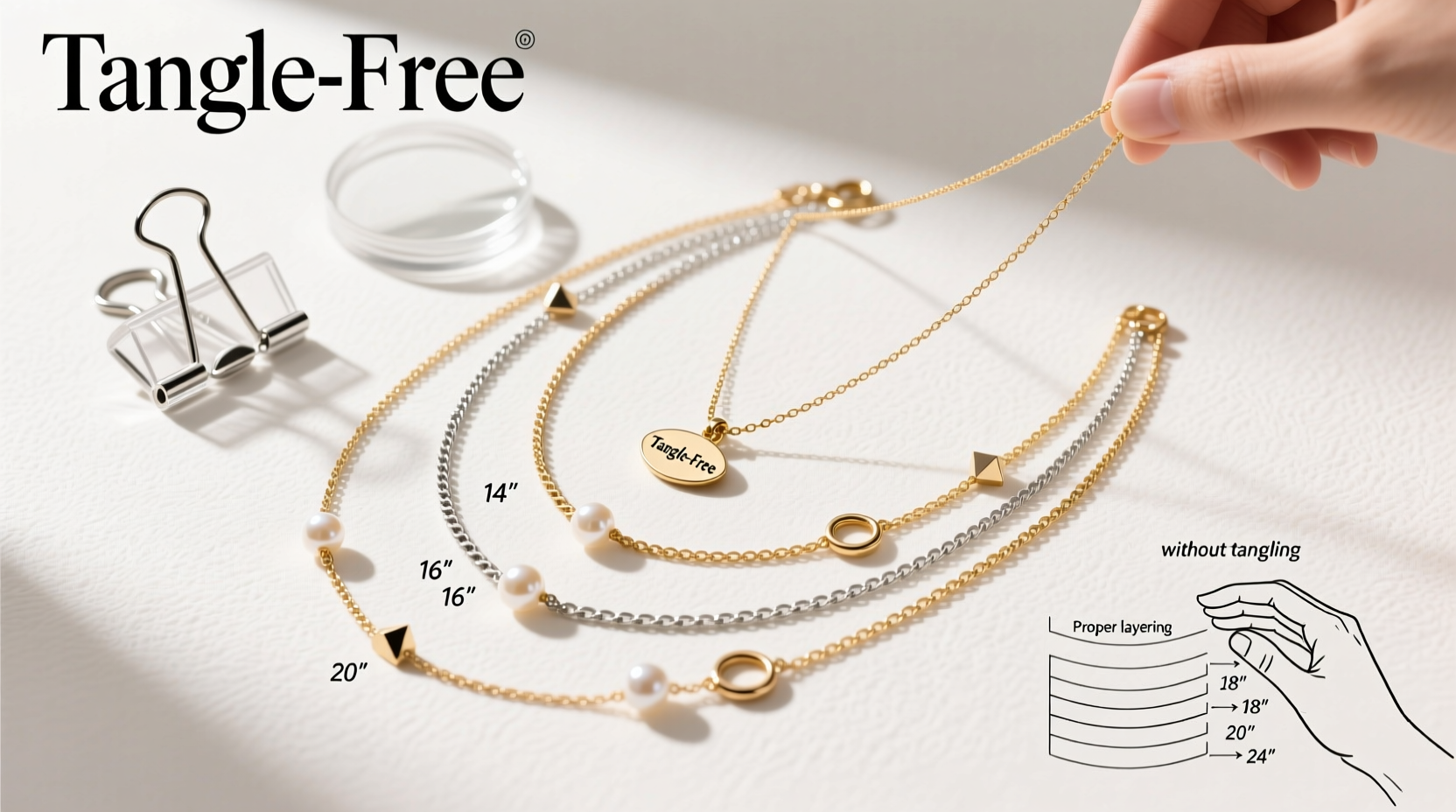
The foundation of a tangle-free layered look begins with smart selection. Not all necklaces are designed to coexist peacefully. When multiple chains move against each other—especially if they’re similar in length or thickness—they naturally twist and knot.
Start by varying chain lengths. A classic rule is to space layers at least 2 inches apart. For example:
- Choker: 14–16 inches
- Princess: 17–19 inches
- Matinee: 20–24 inches
- Opera: 28–34 inches
- Rope: 45+ inches
By spacing your layers across these categories, you reduce contact between chains. A choker paired with a matinee-length pendant will rarely tangle because their movement arcs don’t overlap much.
Also consider chain thickness and design. Mixing a fine cable chain with a chunky curb or rope chain creates natural separation. Delicate chains should be balanced with bolder ones that act as physical spacers. Avoid stacking three or more ultra-thin chains unless they’re secured with a clasp extender or anti-tangle device.
“Spacing is everything. I never style two chains closer than 1.5 inches in length. It’s the simplest way to prevent friction.” — Lena Torres, Jewelry Stylist & Founder of Layer & Co.
Build a Smart Layering Routine
How you put on and take off your necklaces matters just as much as what you choose to wear. A consistent routine reduces stress on both the jewelry and your patience.
Follow this step-by-step sequence for smooth, tangle-free layering:
- Prepare your necklaces by laying them flat on a soft surface, fully unclasped and extended.
- Start with the longest chain. Drape it around your neck and fasten the clasp. This ensures shorter pieces won’t get trapped underneath.
- Add middle-length layers, checking alignment in a mirror. Gently adjust pendants so they sit centered.
- Finish with the shortest piece, usually a choker or collar-style chain.
- Move your head and shoulders slightly to let the chains settle into their natural positions.
When removing your necklaces, reverse the process: unclasp the shortest first, then work your way down. This minimizes pulling and dragging, which often leads to snags.
Real Example: Morning Styling Struggle to Seamless Success
Sophia, a marketing executive in Chicago, used to spend 10 minutes every morning untangling her go-to trio: a 16-inch initial pendant, an 18-inch bar necklace, and a 22-inch cross. The first two were too close in length, and she’d often yank them apart, weakening the clasp on the bar chain.
After adjusting her stack—replacing the 18-inch with a 20-inch version and adding a slightly thicker trace chain—her routine improved dramatically. She now layers them in under 90 seconds, and hasn’t had a single tangle in over two months. The fix wasn’t new jewelry; it was smarter spacing.
Use Anti-Tangle Accessories and Techniques
Even with careful planning, some movement is inevitable. That’s where specialized tools and hacks come in.
Anti-tangle jump rings, silicone spacer beads, and necklace weights are small but powerful allies. They work by either reducing chain mobility or creating intentional separation.
For instance, a lightweight silicone bead slid onto a chain near the clasp can prevent it from sliding through another loop. Alternatively, a tiny brass weight clipped to the back of a pendant keeps it oriented forward, reducing rotation that leads to knots.
| Tool | How It Works | Best For |
|---|---|---|
| Clasp Extenders (2–3 inch) | Adds slack, reducing tension and friction between layers | Fine chains, mixed metals |
| Silicone Spacer Beads | Creates physical gap between chains at the back | Delicate layering, pendant-heavy stacks |
| Magnetic Clasps | Easier fastening, less fumbling that causes twisting | Arthritis sufferers, frequent wearers |
| Necklace Guards (clear plastic sleeves) | Covers clasps to prevent snagging on fabric or other chains | High-friction outfits like knits or lace |
Another clever technique: use a “base chain” strategy. Wear one sturdy, medium-length chain (like a 20-inch Figaro) as your anchor. Then, drape shorter pieces over it rather than letting them hang freely. The base chain acts like a rail, guiding the others into place and minimizing entanglement.
Store Necklaces Properly to Prevent Overnight Tangles
Most tangles start not during wear, but during storage. Throwing necklaces into a drawer or pile creates pressure points and constant friction. Even overnight, loosely stored chains can develop kinks that worsen with use.
The best storage method depends on your collection size and space, but the principle remains the same: keep chains separated and supported.
For those with fewer than 10 pieces, a standing jewelry tree with individual hooks is ideal. Hang each necklace separately, ensuring no chains drape over one another. If using a tray with compartments, lay each piece flat and straight—never coiled.
Travel requires extra care. Use a foldable travel case with buttoned straps or silicone loops that hold each chain in place. Avoid zip pouches unless each necklace is in its own soft sleeve.
Checklist: Tangle-Free Storage Routine
- Always unclasp necklaces before storing
- Hung individually on hooks or laid flat in compartments
- Stored away from humidity and direct sunlight
- Kept separate from earrings and bracelets that could snag
- Wrapped in soft cloth if no dedicated organizer is available
- Inspected monthly for weak links or fraying
For larger collections, consider wall-mounted displays with horizontal rods. These allow you to slide necklaces onto bars, keeping them visible and tangle-free. Some modern organizers even include built-in anti-tarnish lining, which doubles as protection against oxidation that can make chains brittle and prone to breaking when knotted.
“Improper storage is responsible for over 60% of repair cases we see. A five-second unclasp saves hours of detangling later.” — Marcus Reed, Master Jeweler at Boston Fine Repair Studio
FAQ: Common Concerns About Layering Necklaces
Can I layer necklaces made of different metals?
Yes, mixing metals is stylish and safe—but be cautious about friction. Softer metals like gold-filled or vermeil can scratch when rubbed against stainless steel or titanium. To reduce contact, space them further apart or use a fabric-lined chain guard at connection points.
How do I untangle a badly knotted necklace without breaking it?
Stay calm and work slowly. Lay the chain on a flat, well-lit surface. Use a pin or needle to gently loosen the outer loops of the knot. Never pull—this stretches the chain and can snap soldered joints. Apply a drop of olive oil or specialized jewelry lubricant to help the links slide. For complex knots, take it to a professional rather than risking damage.
Is it okay to sleep in layered necklaces?
It’s not recommended. Movement during sleep increases friction against pillows and bedding, raising the risk of tangling and breakage. Sweat and oils can also tarnish metals over time. Reserve layered looks for waking hours, and remove them before bed.
Final Thoughts: Make Layering Effortless
Layering necklaces shouldn’t be a daily battle. With thoughtful selection, a consistent routine, and proper care, your jewelry can remain as beautiful as the day you bought it. The key is intentionality—every choice, from length spacing to storage, contributes to long-term ease.
You don’t need expensive tools or a huge collection to get it right. Start with two well-spaced chains, store them properly, and gradually build your system. Over time, you’ll develop a personal rhythm that makes layering feel natural, not frustrating.




 浙公网安备
33010002000092号
浙公网安备
33010002000092号 浙B2-20120091-4
Comments
No comments yet. Why don't you start the discussion?