
In Battlefield 1, your soldier is more than just a class or weapon loadout—they are an extension of your playstyle, values, and personality. While many players focus on optimizing gear and tactics, one often overlooked yet deeply expressive feature is the customization of dog tags. More than just a digital trinket, your dog tag serves as a signature—visible to teammates and enemies alike when you're downed or killed. With thoughtful personalization, it becomes a lasting emblem of your presence on the battlefield.
This guide explores how to fully leverage the dog tag system in Battlefield 1 to reflect individuality, honor historical authenticity, or even communicate subtle messages. From understanding unlock mechanics to crafting symbolic designs, we’ll walk through every layer of customization to help you forge a truly unique in-game identity.
Understanding Dog Tags in Battlefield 1
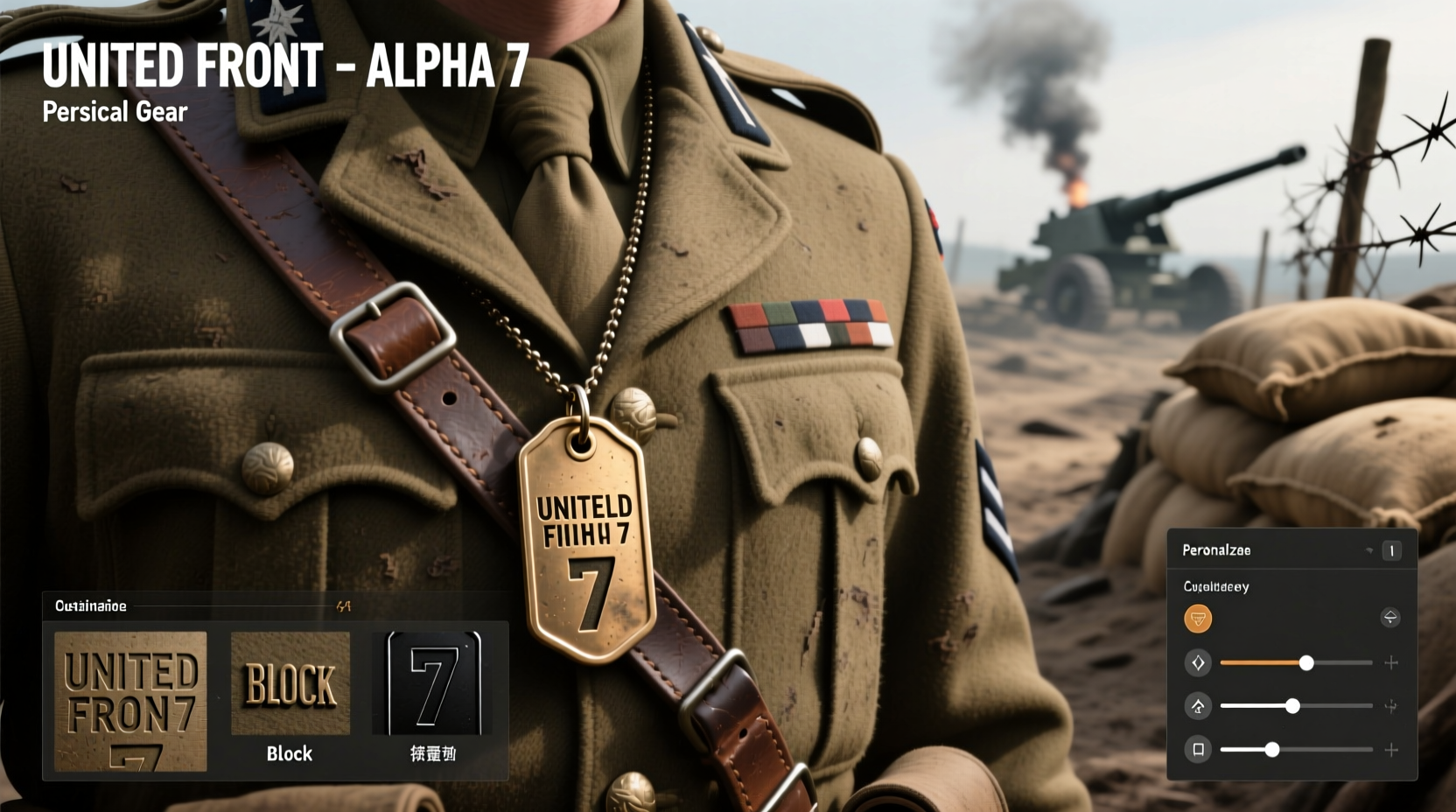
Dog tags in Battlefield 1 are not merely cosmetic; they appear during kill cams and when another player inspects your body after eliminating you. This visibility makes them a rare form of passive expression in a fast-paced multiplayer environment. Each time you earn enough experience points (XP) to rank up, you unlock a new dog tag design. These range from simple engravings to intricate emblems representing different nations, regiments, and achievements.
There are two sides to each dog tag: Side A and Side B. You can mix and match these across unlocked designs, allowing for layered personalization. Some tags carry thematic relevance—like the \"War Pigeon\" tag earned by using reconnaissance tools effectively—while others celebrate milestones such as 100 kills with a specific weapon.
Strategies for Meaningful Customization
True personalization goes beyond aesthetics—it tells a story. Whether you want to pay homage to real-world military units, express personal beliefs, or craft a mysterious persona, consider these approaches:
- Historical Accuracy: Choose dog tags that match the faction and era you most enjoy playing. For example, selecting British Expeditionary Force-themed tags while playing as a Royal Flying Corps pilot adds immersion.
- Playstyle Representation: Use achievement-based tags that reflect your strengths. If you’re known for sniping, equip the “Sharpshooter” tag to signal expertise.
- Symbolic Messaging: Combine icons and text to convey messages like resilience (“Survivor”), teamwork (“Squad Support”), or humor (“Back Again”).
- Nostalgia or Tribute: Honor fallen comrades, real-life veterans, or memorable gaming moments by aligning tags with significant events.
“Personalization isn’t vanity—it’s identity. In games where thousands fight anonymously, a well-chosen dog tag makes you unforgettable.” — Marcus Rennolds, Game Culture Analyst & Former Military Historian
Step-by-Step Guide to Crafting Your Signature Tag
Follow this process to build a dog tag combination that stands out both visually and thematically:
- Earn Rank Progression: Play consistently to level up. Each rank-up unlocks a new dog tag option. Focus on completing assignments and earning bonus XP to accelerate progress.
- Review Unlocked Tags: Go to the “Unlocks” section under your soldier profile. Filter by “Dog Tags” to see all available options and their associated criteria.
- Select a Theme: Decide whether you want your tag to represent realism, achievement, humor, or mystery. This will guide your choices.
- Choose Side A: Pick the primary face—this should be the most impactful. Achievement-based or visually striking tags work best here.
- Pair with Side B: Complement Side A with a secondary message. For example, pair a medal-themed Side A with a motivational quote on Side B.
- Test in Combat: Enter a few matches and observe how your tag appears during kill cams. Adjust if the contrast or readability is poor.
- Update Periodically: Refresh your tag every 10–15 hours of gameplay to reflect new accomplishments or seasonal themes.
Do’s and Don’ts of Dog Tag Personalization
| Do’s | Don’ts |
|---|---|
| Use high-contrast color combinations for better visibility | Avoid overly cluttered designs that blur at small scale |
| Align your tag with your most-used class or weapon | Don’t ignore historical context if aiming for authenticity |
| Leverage earned tags to showcase skill progression | Don’t use offensive symbols or inappropriate references |
| Change tags to mark personal milestones (e.g., 1k kills) | Don’t rotate too frequently—consistency builds recognition |
| Consider legibility in fast-paced kill cam sequences | Don’t assume no one notices—veteran players remember distinctive tags |
Real Example: The Evolution of “Red Wire”
Take the case of player “Red Wire,” a dedicated medic known across multiple servers for aggressive revives under fire. Initially, he used default tags, blending into the crowd. After unlocking the “Lifesaver” tag for 50 revives, he paired it with a crimson-colored side featuring a heartbeat line motif. Over time, opponents began recognizing the red pulse during kill cams—even before seeing his name.
Eventually, enemy squads would call out, “Watch for Red Wire—he respawns like a ghost.” His dog tag became synonymous with persistence. He later switched to a black-and-silver tag after reaching 1,000 heals, symbolizing a transition from chaos to calculated support. This evolution wasn’t just cosmetic; it reinforced his reputation and made him a memorable figure in the community.
Frequently Asked Questions
Can I customize the text on my dog tag?
No, direct text editing is not supported in Battlefield 1. All inscriptions are pre-set based on the tag’s theme or achievement. However, you can choose from a wide variety of tags with meaningful phrases like “Valor,” “Duty,” or “For King and Country.”
How many dog tags can I unlock?
There are over 70 dog tags available, unlocked progressively through rank advancement and completion of specific challenges. Some are tied to elite weapons, assignments, or special operations, requiring dedicated effort to obtain.
Do dog tags affect gameplay?
Not mechanically. They do not alter stats, detection, or spawn priority. However, psychologically, distinctive or intimidating tags can influence enemy perception—some players report hesitating before finishing off someone with a legendary-tier tag visible.
Maximizing Identity Through Consistent Expression
Your dog tag is one of the few persistent identifiers in a chaotic warzone. Unlike uniforms or weapon skins, which may go unnoticed in smoke and gunfire, your tag appears in a moment of stillness—the aftermath of combat. That brief second offers a chance to make an impact.
To maximize its effect, treat your dog tag like a personal insignia. Maintain a coherent identity across your soldier’s appearance, name, and behavior. If your tag says “Relentless,” play like it. If it bears the crest of the French Foreign Legion, adopt the mindset of a seasoned mercenary. Authenticity resonates, even in virtual battlefields.
Conclusion
Personalizing your dog tag in Battlefield 1 is more than a cosmetic choice—it’s a declaration of who you are as a soldier in the Great War’s digital recreation. By thoughtfully combining unlocked designs, aligning them with your playstyle, and maintaining a consistent identity, you transform a small metal disc into a symbol of legacy.
Start today: review your unlocked tags, reflect on what you want to communicate, and craft a combination that feels uniquely yours. Then step back into the trenches knowing that when the dust settles, your name—and your tag—will be remembered.




 浙公网安备
33010002000092号
浙公网安备
33010002000092号 浙B2-20120091-4
Comments
No comments yet. Why don't you start the discussion?