
Traveling with your dog by air can be a rewarding experience—whether you're relocating, visiting family, or including your pet in a vacation. However, it requires careful planning, strict adherence to airline rules, and attention to your dog’s physical and emotional well-being. Unlike human passengers, pets face unique challenges during flights, from noise and pressure changes to confinement and unfamiliar environments. This guide delivers actionable insights, real-world examples, and essential checklists to ensure your dog travels safely and comfortably.
Understanding Airline Pet Policies
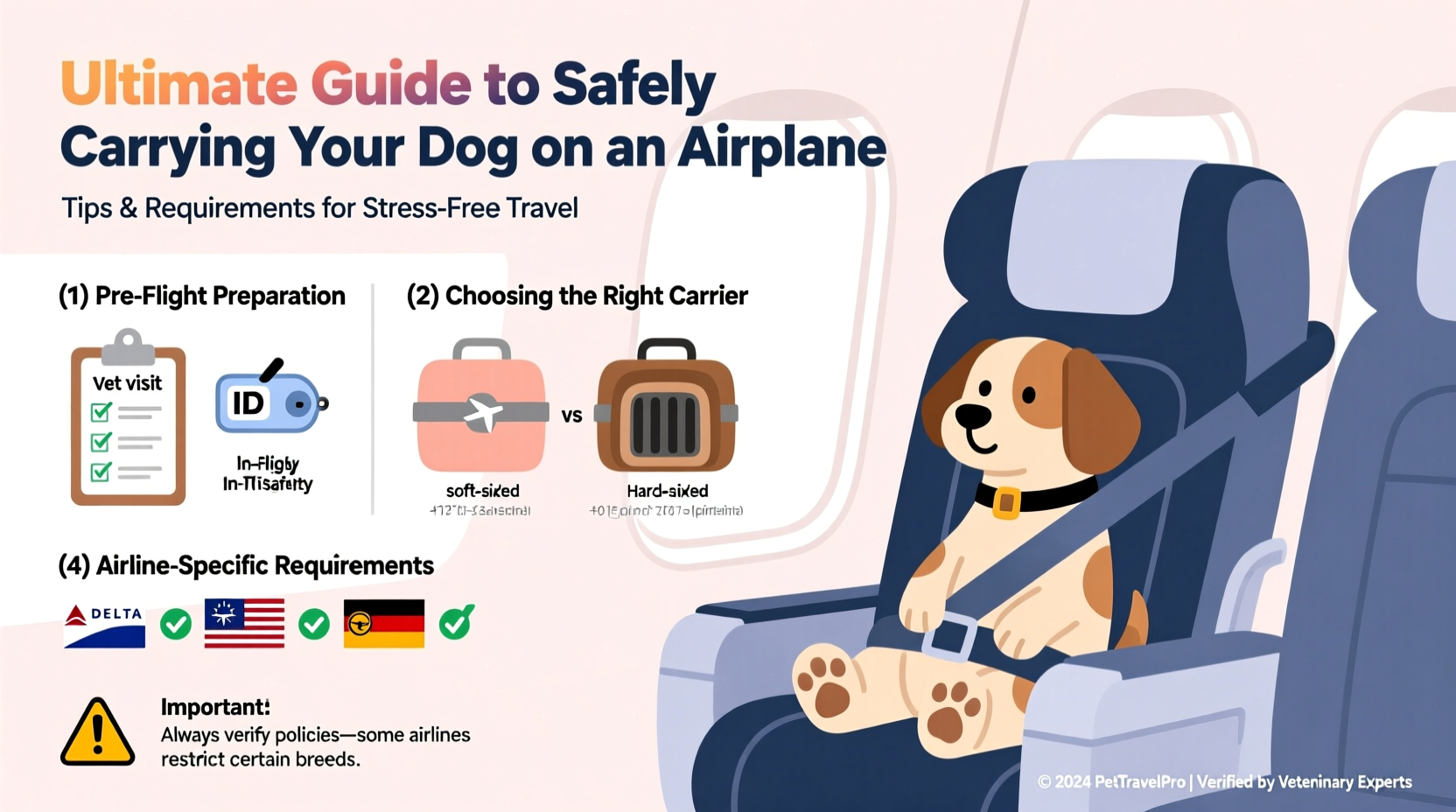
Airlines vary significantly in their rules for pet travel. Some allow small dogs in the cabin, while others only permit cargo transport or prohibit live animals altogether. Before booking any flight, research the carrier’s specific policies regarding breed restrictions, carrier dimensions, health documentation, and fees.
Major U.S. carriers like Delta, United, and American Airlines generally permit small dogs (typically under 20 pounds) in the cabin, provided they remain in an approved carrier stowed under the seat. Larger dogs must travel as checked baggage or in climate-controlled cargo holds, which carries higher risk and stricter regulations.
International airlines often have more rigid rules. For example, Lufthansa permits in-cabin pets on select long-haul flights but requires advance notice and health certification. Others, like Qatar Airways, do not accept pets in the cabin at all on passenger flights.
Preparing Your Dog for Flight: A Step-by-Step Guide
Preparation begins weeks before departure. The goal is to reduce anxiety, ensure compliance, and build positive associations with travel.
- Visit Your Veterinarian: Obtain a health certificate issued within 10 days of travel. Ensure vaccinations are up to date and discuss sedation—most airlines prohibit tranquilizers due to respiratory risks at altitude.
- Acclimate to the Carrier: Introduce the travel crate gradually. Place treats, toys, and bedding inside. Encourage naps and meals in the carrier to create comfort.
- Practice Short Trips: Take car rides using the same carrier to simulate motion and confinement.
- Microchip and ID: Confirm your dog’s microchip is registered with current contact information. Attach a secure collar tag with your mobile number.
- Exercise Before Travel: A brisk walk or play session before check-in helps reduce restlessness during transit.
“Dogs don’t understand flying—they only feel it. Our job is to minimize fear through predictability and positive reinforcement.” — Dr. Lena Torres, Veterinary Behaviorist
Pet Carrier Requirements and Best Practices
The right carrier is critical for safety and approval. Most airlines follow International Air Transport Association (IATA) standards, which specify durability, ventilation, and leak-proof construction.
| Feature | Requirement | Why It Matters |
|---|---|---|
| Material | Rigid plastic or reinforced soft-sided | Withstands stacking and pressure changes |
| Ventilation | On at least three sides | Ensures airflow in confined spaces |
| Flooring | Non-slip, absorbent padding | Prevents slipping and manages accidents |
| Door | Secure metal latch, front or top opening | Reduces escape risk; allows easy access |
| Labeling | “Live Animal” stickers, owner contact info | Ensures proper handling by staff |
Checklist: Pre-Flight Essentials for Dog Travel
- ✔ Approved IATA-compliant carrier
- ✔ Up-to-date rabies and health certificates
- ✔ Flight reservation with pet confirmation
- ✔ Collar, ID tag, and microchip verification
- ✔ Food and water bowls (attach to carrier)
- ✔ Emergency vet contacts at departure and destination
- ✔ Recent photo of your dog (in case of separation)
- ✔ Waste bags and cleaning wipes
- ✔ Favorite toy or chew (non-perishable)
- ✔ Written care instructions (feeding schedule, medical needs)
Real-World Scenario: Traveling with a Senior Dog
Sarah flew from Chicago to Portland with her 10-year-old Golden Retriever, Max, who suffers mild arthritis and anxiety. She booked with United Airlines, which allowed Max in the cabin due to his weight (18 lbs in a lightweight carrier). Three weeks prior, she visited her vet for a fitness evaluation and received a health certificate. She introduced Max to the carrier daily, placing his favorite bed and a shirt she’d worn inside. On travel day, she arrived three hours early, walked Max thoroughly, and offered water but no food two hours before boarding.
During the flight, Max whined briefly during takeoff but calmed after Sarah gently spoke to him and offered a frozen treat pouch. The flight attendant permitted brief carrier access once cruising altitude was reached. Upon landing, Sarah confirmed Max had urinated in the pad-lined carrier but remained otherwise composed. The successful trip was credited to early preparation, realistic expectations, and choosing a pet-friendly airline.
Common Mistakes to Avoid
- Sedating your dog: Most airlines ban sedatives because they impair thermoregulation and breathing at altitude.
- Using an oversized carrier: Even if your dog fits, exceeding airline dimensions leads to denied boarding.
- Feeding right before flight: A full stomach increases nausea and bathroom urgency.
- Assuming all airports handle pets the same: Transfer hubs like Atlanta or Dallas may require layover care plans.
- Waiting until the last minute: Pet spots are limited. Book as soon as your itinerary is confirmed.
Frequently Asked Questions
Can my large dog fly in the cabin?
No. Only small dogs that fit entirely under the seat in an approved carrier are allowed in the cabin. Large breeds must travel as manifest cargo, typically in pressurized, temperature-controlled holds. Some service dogs are exempt based on training and documentation.
How much does it cost to fly with a dog?
Cabin fees range from $100–$150 each way in the U.S. Cargo transport costs $200–$1,000+ depending on size, distance, and airline. International flights often incur additional inspection and quarantine fees.
What happens if my dog barks during the flight?
Occasional barking is normal, especially during takeoff. Crew members are trained to handle such situations. If excessive, you may be asked to address the animal discreetly. Never open the carrier mid-flight. Calming aids like Thundershirts or pheromone sprays (Adaptil) may help, but consult your vet first.
Final Tips for a Safe and Smooth Journey
Success hinges on preparation, patience, and partnership with your airline and veterinarian. Choose direct flights when possible—layovers increase stress and handling risks. Notify gate agents that you’re traveling with a pet so they can assist with boarding and deplaning. Keep paperwork accessible in a sealed folder or digital copy. After landing, inspect your dog for signs of dehydration, injury, or extreme fatigue, and offer water immediately.
Remember: not every dog is suited for air travel. Brachycephalic breeds (e.g., Bulldogs, Pugs) face higher respiratory risks and are banned by many airlines. Older dogs or those with heart/lung conditions may fare better with ground transport. When in doubt, consult your vet and consider alternatives.




 浙公网安备
33010002000092号
浙公网安备
33010002000092号 浙B2-20120091-4
Comments
No comments yet. Why don't you start the discussion?