
Smartphones have turned everyone into a photographer. With thousands of photos captured annually—birthdays, travel, pets, and everyday moments—digital clutter is inevitable. Google Photos offers powerful tools to store, organize, and retrieve your memories, but only if used strategically. Without a clear system, even cloud storage becomes overwhelming. This guide reveals how to harness Google Photos effectively, ensuring your images are not just saved, but also instantly accessible and securely backed up for years to come.
Understand Your Storage Options: Free vs. Paid
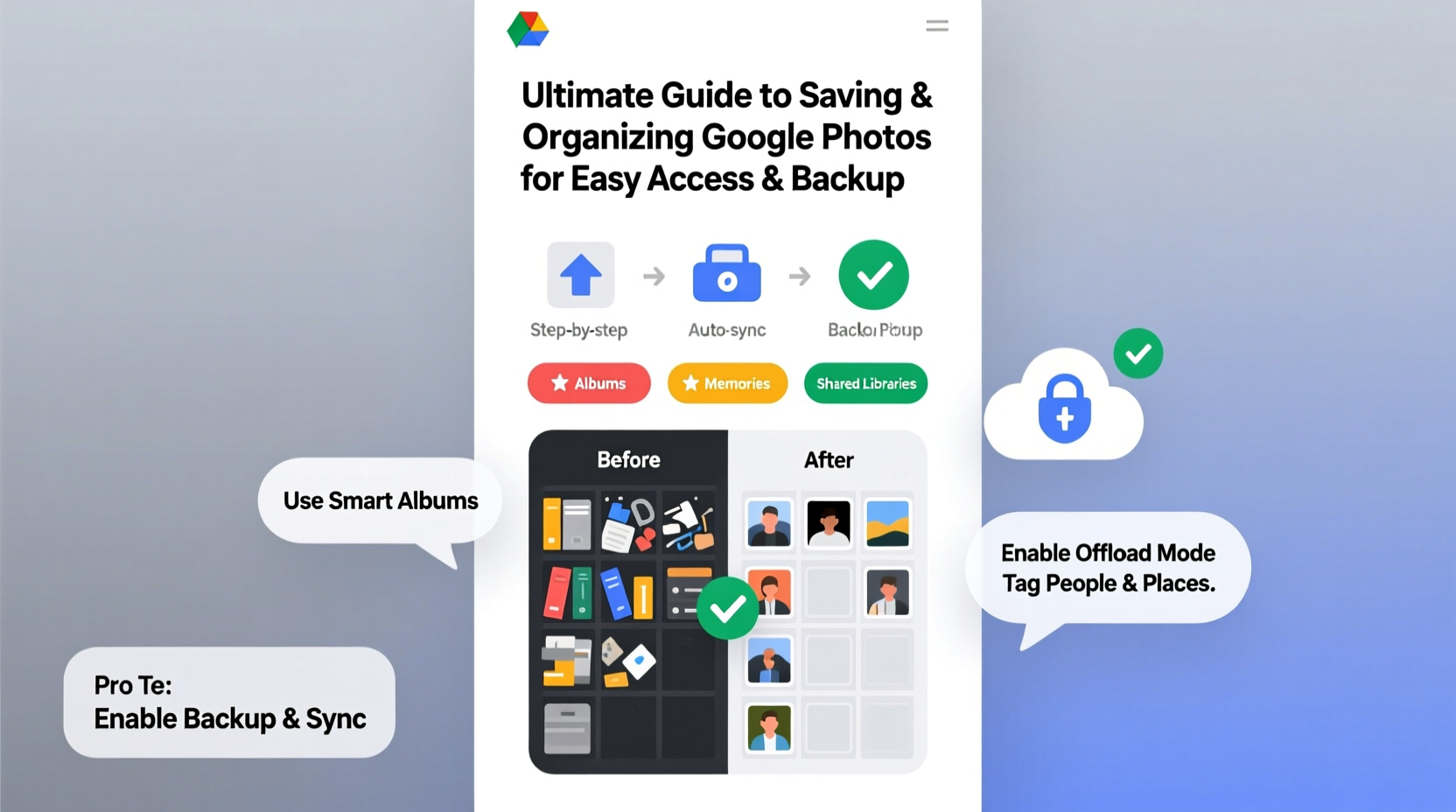
Google Photos operates on a tiered storage model that directly impacts how you manage your library. Since June 2021, new uploads count against your Google Account’s shared 15 GB free storage, which includes Gmail and Drive. High-quality photos (compressed) no longer bypass this limit as they once did.
If you exceed 15 GB, you must upgrade to Google One. Plans start at 100 GB for $1.99/month, scaling up to 2 TB and beyond. Choosing the right plan depends on your photo volume and resolution preferences.
| Plan | Storage Capacity | Best For |
|---|---|---|
| Free Tier | 15 GB (shared) | Casual users with under 3,000 high-res photos |
| Google One 100 GB | 100 GB | Families or frequent photographers |
| Google One 2 TB | 2 TB | Power users, 4K video creators, multi-device households |
Automate Backups Across All Devices
The foundation of any reliable photo strategy is automatic backup. Manual saving leads to missed moments and device-specific loss. Google Photos can sync across Android, iOS, and even desktops when configured correctly.
On mobile, enable backup in the app settings: go to Settings > Backup & Sync. Ensure Wi-Fi-only backup is enabled to avoid data overages. Toggle on “Back up over mobile networks” only if necessary. Choose between “High quality” (free, compressed) and “Original quality” (uses storage).
For desktop users, install the Google Photos Desktop Uploader. It runs quietly in the background, syncing folders like “Pictures” or custom directories. This is especially useful for transferring legacy photos from old hard drives.
“Automation isn’t convenience—it’s insurance. The most important photos are often the ones you didn’t think to save.” — Lena Park, Digital Archivist
Organize with Albums, Labels, and Location Data
Google Photos uses AI to group similar images by faces, places, and objects, but smart manual organization enhances retrieval. Relying solely on search can be inconsistent, especially with common terms like “dog” or “beach.”
Create meaningful albums for events, trips, or people. Name them clearly: “Italy Trip 2023,” “Maya’s First Birthday,” or “Family Reunion – July.” Avoid vague titles like “Vacation” or “Photos.”
Use the built-in labeling feature through Google’s AI. When you search “dog,” Google identifies all dog photos—even different breeds. Similarly, searching “mountains” pulls relevant images without tagging. But for precision, combine AI with manual curation.
Step-by-Step: Build a Smart Album System
- Open Google Photos and tap the \"+\" icon to create an album.
- Name it descriptively and add relevant photos manually or via search.
- Enable “Collaboration” to let family members contribute.
- Pin frequently accessed albums to the top for quick access.
- Use archive for less important albums to reduce clutter.
Protect Against Data Loss: The 3-2-1 Backup Rule
No cloud service is immune to account breaches, accidental deletions, or policy changes. A robust backup strategy follows the 3-2-1 rule: keep three copies of your data, on two different media, with one offsite.
- Copy 1: Original on your phone or camera.
- Copy 2: Google Photos (cloud).
- Copy 3: External hard drive or NAS (Network Attached Storage).
Monthly, export key albums to a physical drive. Use Google Takeout for full archives. This ensures you retain ownership even if Google changes its policies or you cancel your subscription.
Mini Case Study: Recovering After a Lost Phone
Sarah, a travel blogger, dropped her phone in the ocean while photographing a reef in Bali. She lost the device and all local files. Because she had Google Photos set to auto-backup over Wi-Fi, every image from the trip was safely stored in the cloud. Within hours, she accessed her gallery from a borrowed tablet and continued posting. However, she realized her older videos weren’t backing up due to size limits. Afterward, she implemented monthly exports to a portable SSD, ensuring redundancy beyond the cloud.
Optimize Search and Retrieval
Google Photos’ search function is powerful but underutilized. Beyond typing “cat” or “birthday,” try natural language queries: “photos from June 2022 with Mom,” “videos at the beach,” or “pictures of my car in snow.”
Search filters include date ranges, locations, people, and even text within images (e.g., whiteboards or signs). You can also filter by media type: video, portrait, panorama, etc.
To improve search accuracy, verify face groupings. Go to the “People & Pets” section and confirm suggested names. Merging duplicate faces improves future recognition. Tagging pets with names (e.g., “Luna”) also strengthens AI learning.
Essential Maintenance Checklist
- ✅ Verify backup status on all devices
- ✅ Review and delete blurry or duplicate photos
- ✅ Organize new photos into labeled albums
- ✅ Export important albums to external storage
- ✅ Update face labels and pet identifications
- ✅ Monitor Google storage usage
FAQ
Can I recover deleted photos from Google Photos?
Yes. Deleted photos remain in the Trash for 60 days before permanent removal. Open the Trash folder in the app, select the items, and tap “Restore.” After 60 days, recovery is only possible if you have a separate backup.
Does Google own my photos once I upload them?
No. Google does not claim ownership of your content. According to their Terms of Service, you retain all rights to your photos. Google only obtains a license to host, display, and process them for service functionality.
How do I share albums without giving edit access?
When sharing an album, choose “View only” instead of “Can add photos and comment.” This allows others to see and download images but prevents modifications. Ideal for sending galleries to clients or extended family.
Final Thoughts: Make Your Memories Work for You
Your photos are more than digital files—they’re emotional records of your life. Taking control of your Google Photos library transforms chaos into clarity. With automated backups, intelligent organization, and redundant storage, you ensure that nothing is ever truly lost. Technology should serve memory, not complicate it. By investing a few minutes each month, you build a resilient, searchable archive that future generations can explore.




 浙公网安备
33010002000092号
浙公网安备
33010002000092号 浙B2-20120091-4
Comments
No comments yet. Why don't you start the discussion?