
Mini pendant decorations have emerged as one of the most versatile and expressive elements in modern interior design. From delicate glass orbs in a nursery to whimsical animal-shaped pendants in a home office, these small-scale lighting fixtures blend functionality with artistic flair. Their compact size allows them to fit seamlessly into any room without overwhelming the space, making them ideal for apartments, alcoves, or rooms where statement chandeliers would feel too bulky.
Beyond their aesthetic appeal, mini pendants offer practical advantages: they provide focused illumination, can be installed in multiples for layered lighting, and come in an expansive range of materials, finishes, and designs. Whether you're drawn to minimalist Scandinavian silhouettes or vintage-inspired brass domes, there's a mini pendant to match every decor theme and spatial need.
Understanding Mini Pendant Lighting: What Makes Them Unique
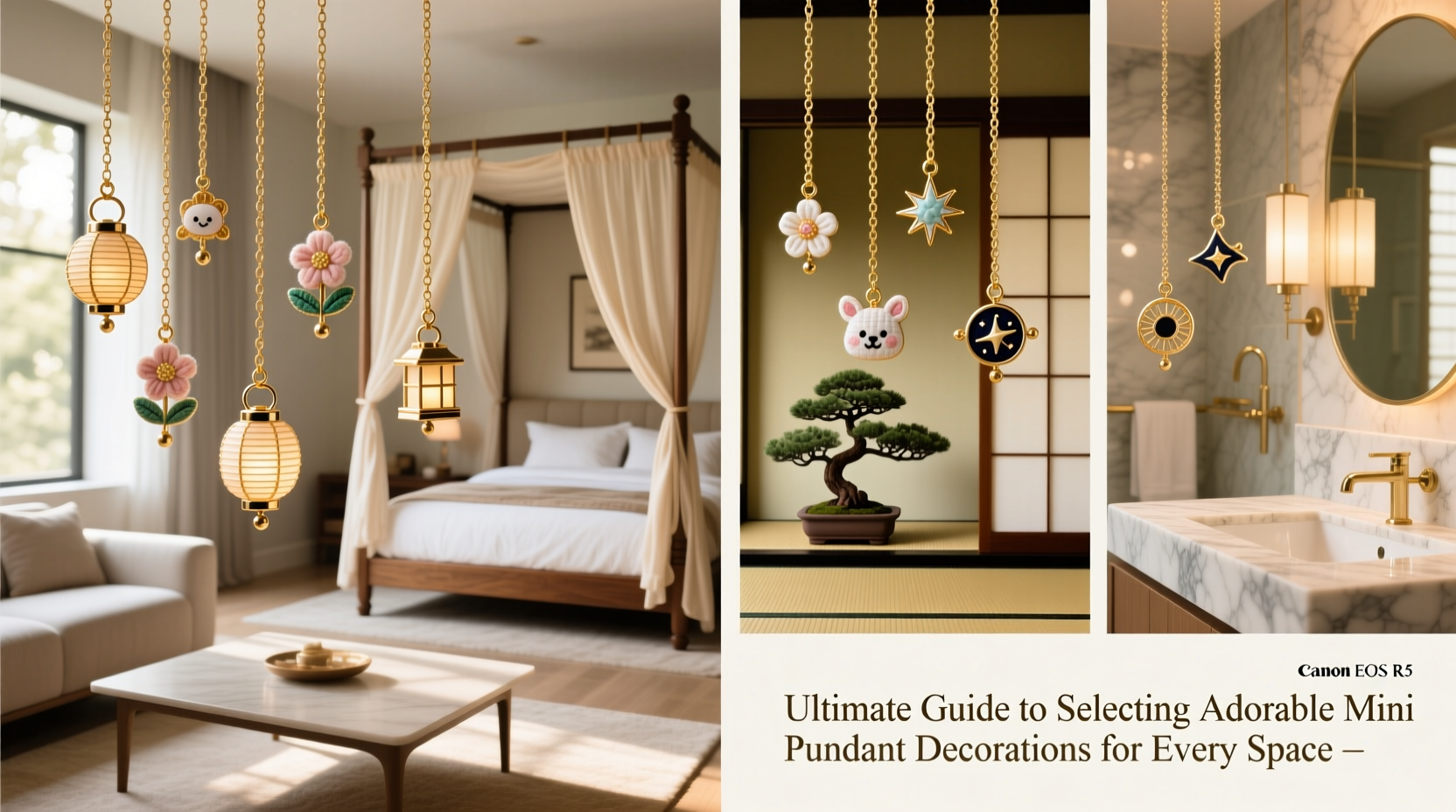
Mini pendant lights are typically defined by their diameter—usually under 12 inches—and their singular, downward-facing light source. Unlike larger pendants that serve as focal points, mini pendants often work best in groups or clusters, creating rhythm and balance over kitchen islands, dining nooks, or bathroom vanities.
Their small footprint makes them suitable not just for ceilings but also for shelves, wall niches, or even suspended from bookcase tops to add ambient glow. Because of their scale, they’re particularly effective in low-ceiling spaces or areas where headroom is limited.
Choosing the Right Style for Your Space
Selecting the perfect mini pendant begins with aligning its design with your room’s overall aesthetic. Consider the following popular styles and where they shine best:
- Modern/Minimalist: Clean lines, geometric shapes, and monochrome finishes (like matte black or brushed nickel) suit contemporary kitchens and offices.
- Rustic/Farmhouse: Woven rattan, mason jar glass, or aged brass pendants bring warmth to breakfast nooks and country-style living rooms.
- Vintage/Eclectic: Antique brass, colored glass, or ornate metalwork add character to reading corners or entryways.
- Whimsical/Playful: Animal motifs, cloud shapes, or pastel hues are ideal for children’s rooms or creative studios.
- Industrial: Exposed bulbs, steel cages, and utilitarian forms work well above desks or in urban lofts.
“Mini pendants are like jewelry for your ceiling—they should complement the room’s personality without dominating it.” — Lena Torres, Interior Lighting Consultant
Material & Finish Guide: Durability Meets Design
The material of your mini pendant affects not only its appearance but also its longevity and maintenance needs. Below is a comparison of common materials used in mini pendant construction:
| Material | Best For | Pros | Cons |
|---|---|---|---|
| Brass | Luxury bathrooms, entryways | Durable, ages beautifully, timeless | Expensive, requires polishing |
| Matte Black Metal | Kitchens, modern living rooms | Scratch-resistant, sleek, hides dust | Can look cold if overused |
| Glass (Clear/Frosted) | Anywhere needing soft diffusion | Easy to clean, elegant, versatile | Fragile, shows fingerprints |
| Rattan/Wicker | Nurseries, sunrooms, boho spaces | Warm texture, eco-friendly | Not moisture-resistant, harder to clean |
| Ceramic | Artistic installations, accent lighting | Unique glazes, handcrafted appeal | Heavy, fragile, limited availability |
Step-by-Step: How to Install Mini Pendants Like a Pro
Installing mini pendants doesn’t require professional help in most cases, especially when replacing existing fixtures. Follow this timeline for a smooth setup:
- Week 1: Planning & Measurement
Measure ceiling height, determine fixture placement, and sketch a layout if using multiple pendants. Ensure at least 30 inches between pendants and 7 feet of clearance from floor to bottom of fixture. - Day of Installation: Gather Tools
You’ll need a voltage tester, wire stripper, screwdriver, ladder, and mounting hardware. Turn off power at the breaker before beginning. - Mount the Bracket
Attach the electrical mounting bracket to the ceiling box. Feed wires through the pendant’s stem or cord. - Connect Wiring
Match black (hot) to black, white (neutral) to white, and ground (green/bare) to grounding screw. Secure with wire nuts. - Secure & Test
Attach the canopy, install the bulb (LED recommended), restore power, and test the light. Adjust height if needed.
Real-Life Application: A Kitchen Island Transformation
Sarah, a graphic designer in Portland, wanted to refresh her narrow galley kitchen without major renovations. The island had a blank ceiling spot above it, previously lit only by recessed lights. She chose three matte black mini pendants with cylindrical glass shades, spaced evenly along the island’s length.
By hanging them 30 inches above the countertop and aligning them with the cabinet pulls below, she created visual symmetry. The new lighting improved task visibility while adding a subtle industrial edge. “It transformed the whole mood,” she said. “Now it feels intentional, not just functional.”
Do’s and Don’ts of Mini Pendant Selection
| Do’s | Don’ts |
|---|---|
| Match the pendant finish to other metal accents (faucets, handles) | Use overly bright bulbs in cozy spaces (stick to 2700K–3000K color temperature) |
| Scale the number of pendants to the surface below (e.g., one per 2 feet of island) | Install in high-traffic hallways where people might bump into them |
| Use dimmer switches for adjustable ambiance | Ignore ceiling height—mini pendants still need proper clearance |
| Consider plug-in pendant kits for rental-friendly setups | Overcrowd a small room with too many fixtures |
Checklist: Before You Buy Your Mini Pendant
- ✅ Measure ceiling height and available vertical space
- ✅ Determine the primary function (task, ambient, or accent lighting)
- ✅ Choose a bulb type compatible with the fixture (LED, incandescent, etc.)
- ✅ Confirm compatibility with existing electrical setup
- ✅ Decide on single or multi-pendant arrangement
- ✅ Match the style and finish to your room’s existing decor
- ✅ Check return policy, especially for online purchases
Frequently Asked Questions
Can I use mini pendants in a bathroom?
Yes, but ensure the fixture is rated for damp or wet locations if near a shower or tub. Enclosed glass shades and non-corrosive materials like aluminum or sealed brass are ideal.
How many mini pendants do I need over an island?
A good rule is one pendant per 2 linear feet of island. For a 6-foot island, three evenly spaced pendants create balanced illumination and visual harmony.
Are mini pendants suitable for low ceilings?
Absolutely. Their compact size makes them perfect for ceilings under 8 feet. Opt for semi-flush or short-hang models to maximize headroom.
Final Thoughts: Light Up Your Life with Thoughtful Details
Mini pendant decorations are more than just sources of light—they’re subtle storytellers within your home. Each choice, from material to placement, contributes to the atmosphere and usability of your space. Whether you’re illuminating a cozy reading bench or elevating a minimalist kitchen, the right mini pendant adds both charm and clarity.
Start small. Pick one area that feels underlit or visually flat. Introduce a single pendant or a trio, and observe how it changes the energy of the room. With careful selection and smart installation, these tiny luminaries can make a big impact—one glowing detail at a time.




 浙公网安备
33010002000092号
浙公网安备
33010002000092号 浙B2-20120091-4
Comments
No comments yet. Why don't you start the discussion?