
Pillow covers are more than just protective layers for cushions—they’re design tools. The right pattern can anchor a color scheme, add texture, introduce rhythm, or become the focal point of a room. Yet, choosing the ideal pattern isn’t just about aesthetics; it’s about harmony between personal taste, room function, and interior cohesion. With countless options—from geometric prints to botanical motifs—navigating the world of pillow cover patterns can feel overwhelming. This guide breaks down the essentials, offering actionable insights to help you make confident, stylish choices that elevate your space.
Understand Your Room’s Design Personality
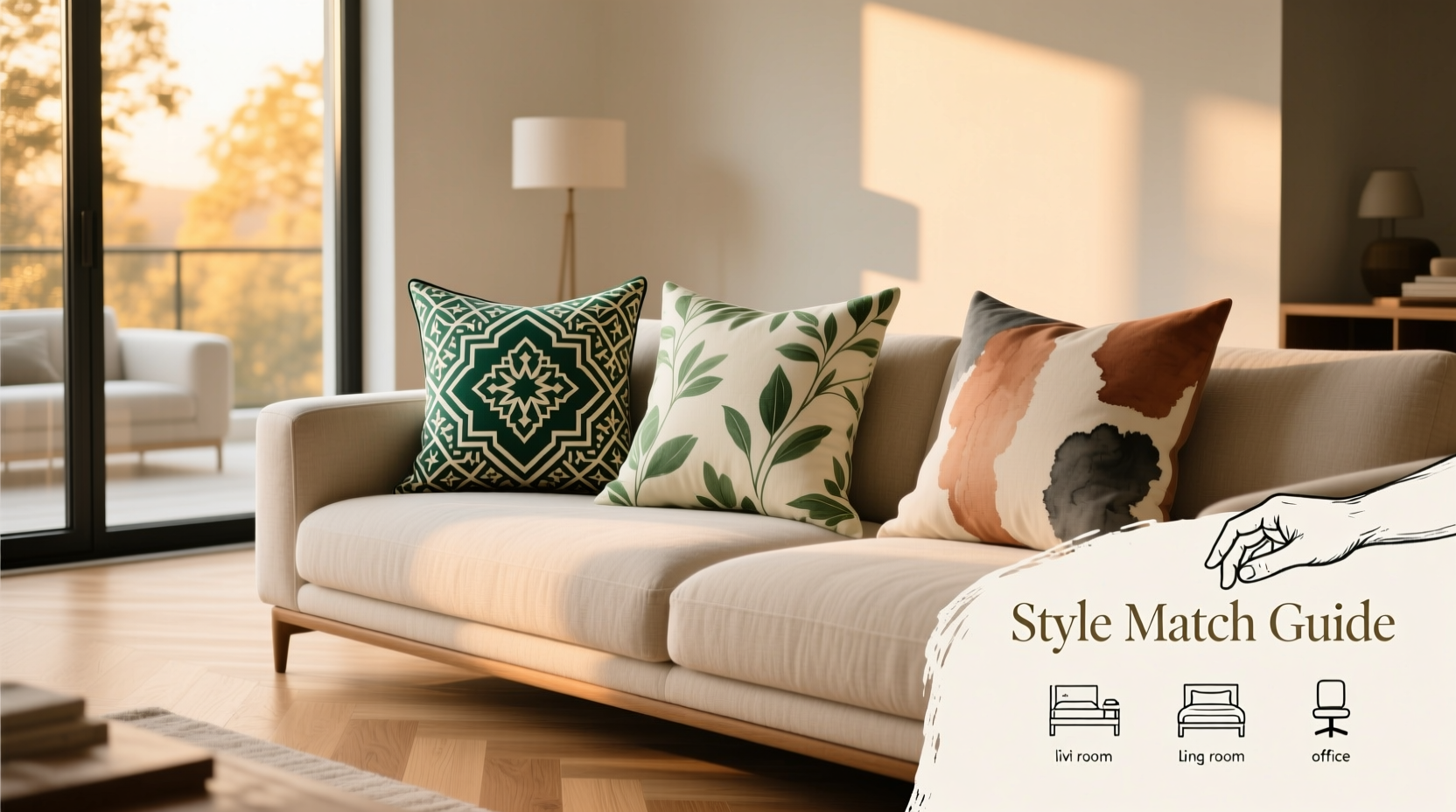
Every room carries a distinct design language, whether intentional or evolved over time. Before selecting a pattern, assess the existing elements: furniture style, wall color, flooring, and lighting. A minimalist Scandinavian bedroom calls for different patterns than a bohemian living room filled with layered textiles.
Start by identifying your dominant design style:
- Modern/Contemporary: Clean lines, neutral palettes. Opt for abstract, linear, or monochrome patterns.
- Boho/Eclectic: Rich textures and global influences. Try tribal prints, ikats, or floral medleys.
- Traditional: Classic symmetry and elegance. Consider damask, toile, or subtle paisley.
- Coastal/Farmhouse: Light, airy, and relaxed. Stripes, nautical motifs, or faded botanicals work well.
- Maximalist: Bold colors and layered visuals. Go for large-scale florals, animal prints, or vibrant geometrics.
Match Pattern Scale to Room Size and Furniture
The size of a pattern—referred to as \"scale\"—plays a crucial role in visual balance. A large print in a small room can overwhelm, while tiny patterns on a sectional may get lost.
Consider these guidelines:
- Large-scale patterns (e.g., oversized florals, bold geometrics) suit spacious rooms with substantial furniture. They create drama and serve as statement pieces.
- Medium-scale patterns offer versatility. They work across most settings and pair easily with solids or smaller prints.
- Small-scale patterns (like polka dots, micro-checks, or fine stripes) add subtle interest without dominating. Ideal for compact spaces or when layering multiple textures.
Also consider pillow size. A 20x20 inch cushion can carry a larger repeat than an 18x18. Always visualize the full motif—if only half a flower appears, the impact diminishes.
Harmonize Color and Contrast
Color is often the first thing noticed, but it must work in tandem with pattern. A vibrant print might seem appealing in isolation but jarring in context.
To ensure color harmony:
- Extract 2–3 dominant hues from your existing decor (e.g., sofa fabric, rug, or wall art).
- Select a pillow cover that includes at least one of these colors.
- Use contrast strategically: dark patterns on light backgrounds add depth; tonal patterns (similar hues) create sophistication.
| Room Mood | Suggested Color-Pattern Combo | Avoid |
|---|---|---|
| Calm & Serene | Soft blues with delicate stripe or watercolor print | Bright reds or chaotic zigzags |
| Warm & Inviting | Terracotta with organic leaf motifs | Cool grays with sharp angular designs |
| Energetic & Playful | Yellow and navy chevrons or polka dots | Muted pastels with minimal contrast |
| Luxurious & Refined | Deep emerald with metallic-thread damask | Plastic-looking synthetics or cartoonish prints |
“A well-chosen pattern doesn’t just decorate—it connects. It ties together disparate elements through rhythm and repetition.” — Lena Torres, Interior Stylist & Textile Curator
Layer Patterns Like a Pro
One of the most effective ways to add depth to a space is mixing patterns. But successful layering follows unspoken rules of balance and proportion.
Follow this formula for cohesive combinations:
- Choose a base pattern: Often derived from a rug or curtain, this sets the tone.
- Add a secondary pattern: Complementary in color but different in type (e.g., if the base is floral, add a stripe).
- Include a solid or textured neutral: Linen, velvet, or bouclé in a coordinating hue grounds the arrangement.
Stick to the 60-30-10 rule: 60% dominant pattern (or solid), 30% secondary, 10% accent. For example, three pillows could include one large floral (dominant), one pinstripe (supporting), and one solid velvet (accent).
Mini Case Study: Transforming a Dated Living Room
Jamie inherited a beige sectional and oak furniture in her new apartment. The space felt flat. Instead of replacing everything, she introduced three pillow covers: a navy-and-white ikat (larger scale), a soft gray herringbone (medium), and a solid mustard lumbar. The shared blue-gray undertone tied the room together, while the varied patterns added movement. Within minutes, the space felt curated and inviting—all without repainting or buying new furniture.
Durability and Practicality Matter
Beauty means little if a pillow cover fades after two months or stains easily. Consider usage before falling for a delicate print.
For high-traffic areas like living rooms or kids’ spaces, prioritize performance fabrics:
- Cotton blends: Breathable and washable, ideal for everyday use.
- Linen: Naturally textured and elegant, but prone to wrinkling and fading in sunlight.
- Polyester or performance acrylic: Stain-resistant and UV-stable, great for sunrooms or homes with pets.
- Silk or velvet: Luxurious but delicate—best for low-use spaces like master bedrooms.
Always check care instructions. Machine-washable covers offer long-term convenience, especially when rotating seasonal styles.
Checklist: How to Choose the Right Pillow Cover Pattern
- Identify your room’s primary design style.
- Measure your space and furniture to determine appropriate pattern scale.
- Extract 2–3 key colors from existing decor.
- Select a base pattern from major textiles (rug, curtains).
- Pair with one contrasting pattern and one solid or textured neutral.
- Ensure fabric suits the room’s usage (durable for high traffic).
- Order swatches or samples when shopping online to test in natural light.
- Step back and assess the overall composition—does it feel balanced?
Frequently Asked Questions
Can I mix floral and geometric patterns?
Yes, but do so intentionally. Pair a large floral with a small geometric (like dots or checks) in a shared color family. Avoid using two bold patterns of similar scale—they compete rather than complement.
How many patterned pillows are too many?
In most seating areas, 3–5 decorative pillows are sufficient. More than three patterned ones can feel chaotic unless carefully balanced with solids and varied textures. Use odd numbers for visual appeal—three or five tend to look more natural than four.
Should all my pillow covers match?
No. Matching sets look dated. Instead, aim for coordinated diversity—different patterns that share color, theme, or material. Think “related,” not “identical.”
Final Thoughts: Make It Yours
The perfect pillow cover pattern isn’t about following trends—it’s about expressing who you are within the context of your space. Whether you gravitate toward vintage chintz or modern asymmetry, let your choice reflect intention. Test combinations, live with samples, and don’t rush. Small changes yield big results, and a thoughtfully chosen pattern can transform not just a couch, but the entire mood of a room.




 浙公网安备
33010002000092号
浙公网安备
33010002000092号 浙B2-20120091-4
Comments
No comments yet. Why don't you start the discussion?