
Google Chrome is one of the most widely used web browsers in the world, known for its speed, integration with Google services, and user-friendly interface. However, having Chrome installed doesn’t automatically make it your default search engine. Many users continue using other browsers or face issues where links open in unintended applications. Setting Google Chrome as your default search engine ensures that every time you type a query or click a link, it opens in Chrome—giving you faster results, better sync across devices, and seamless access to your bookmarks and history.
This comprehensive guide walks you through everything you need to know about making Google Chrome your default search engine on various operating systems and devices, including Windows, macOS, Android, and iOS. Whether you're switching from Firefox, Safari, or Microsoft Edge, these steps will help you take full control of your browsing experience.
Why Make Chrome Your Default Search Engine?
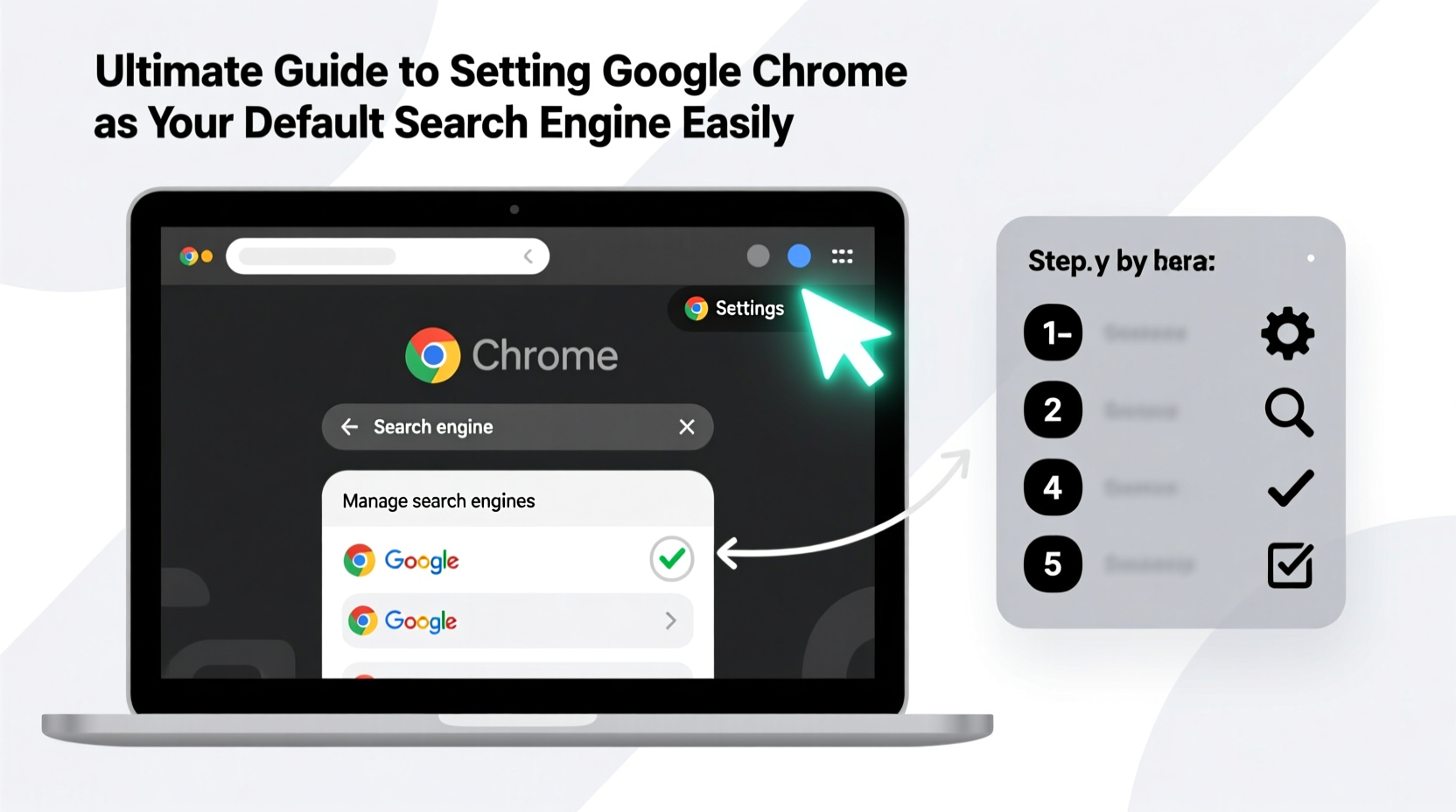
Choosing Chrome as your default browser and search engine isn’t just about preference—it’s about consistency, performance, and personalization. When Chrome handles your searches by default, you benefit from:
- Seamless Google integration: Instant access to Gmail, Drive, Calendar, and YouTube with automatic sign-in.
- Faster load times: Chrome's optimized rendering engine delivers pages quickly, especially on lower-end hardware.
- Better sync capabilities: Bookmarks, passwords, extensions, and settings stay updated across all your devices.
- Enhanced security: Real-time phishing protection, safe browsing alerts, and automatic updates keep your data secure.
- Custom search suggestions: Personalized autocomplete based on your search history improves efficiency.
“Setting your preferred browser as default eliminates friction in daily tasks and enhances digital workflow.” — David Lin, Digital Productivity Consultant
Step-by-Step Guide: Set Chrome as Default on Windows 10 & 11
Windows gives users full control over which apps handle specific functions like browsing. Here’s how to assign Chrome as the default browser so that all HTTP and HTTPS links open within it.
- Open Settings from the Start menu (or press Win + I).
- Navigate to Apps > Default apps.
- Scroll down and click on Web browser.
- Select Google Chrome from the list of available browsers.
- Close Settings. The change takes effect immediately.
To verify the change, try clicking a link in an email or document. It should now open directly in Chrome.
Configure Chrome as Default on macOS
Mac users enjoy tight ecosystem integration, but sometimes third-party apps override browser preferences. Follow these steps to restore Chrome as your primary browser.
- Launch Google Chrome from your Applications folder.
- Click the three-dot menu in the top-right corner and select Settings.
- Under the \"Default browser\" section, click Make Default.
- If prompted, confirm the action via System Preferences.
- Alternatively, go to System Settings > Desktop & Screen Saver > Default Web Browser, then choose Chrome.
Note: On newer macOS versions (Ventura and later), Apple streamlines this process directly within Chrome’s settings, reducing the need to navigate system menus.
Set Chrome as Default on Android Devices
Android offers deep customization, allowing users to define default apps for browsing, calling, messaging, and more. To route all web activity through Chrome:
- Open your phone’s Settings app.
- Tap Apps (or Apps & notifications depending on device).
- Select Default apps.
- Tap Browser app.
- Choose Chrome from the dropdown list.
Now, when you tap links in messages, emails, or social media posts, they’ll open in Chrome instead of another browser.
iOS Exception: Limited Control on iPhones
While iOS 14 and later allow changing the default browser, the process differs slightly. As of now, even if you set Chrome as default, some internal links (especially in apps like Facebook or Twitter) may still open in Safari due to app-level restrictions.
To set Chrome as default on iPhone:
- Install Google Chrome from the App Store.
- Open Settings on your iPhone.
- Scroll down and tap Chrome.
- Select Default Browser App and choose Chrome.
Despite this setting, certain native behaviors persist. For best results, manually copy and paste external links into Chrome when needed.
Troubleshooting Common Issues
Sometimes, despite following correct procedures, Chrome fails to become the default. Below are common problems and their solutions.
| Issue | Possible Cause | Solution |
|---|---|---|
| Chrome not appearing in default apps list | Outdated or corrupted installation | Reinstall Chrome from chrome.google.com |
| Links still open in another browser | Conflicting app defaults or permissions | Reset app preferences in OS settings |
| \"Make Default\" button grayed out | Insufficient permissions or admin restrictions | Run Chrome as administrator or check group policies |
| Changes revert after restart | Third-party software interference | Disable startup programs or antivirus overrides |
Mini Case Study: Sarah Transitions from Safari to Chrome
Sarah, a freelance graphic designer, used her MacBook primarily for client communication and creative research. She relied on Safari initially but found herself constantly logging back into Google services and missing recent bookmarks on her work PC.
After setting Chrome as her default browser across both Mac and iPhone, she noticed immediate improvements. Her login sessions persisted, auto-fill worked accurately, and her project-related tabs synced between devices. Most importantly, client meeting links from Google Calendar opened directly in Chrome without prompting.
“Switching to Chrome as default saved me at least 15 minutes per day,” Sarah said. “It’s small, but consistent gains like that add up over time.”
Checklist: Confirming Your Chrome Setup Is Complete
Use this checklist to ensure Chrome is properly configured as your default search engine and browser:
- ✅ Chrome is installed and updated to the latest version
- ✅ Set as default browser in operating system settings
- ✅ Verified by clicking an external link (e.g., in email)
- ✅ Signed into Chrome with your Google Account
- ✅ Sync enabled for bookmarks, passwords, and history
- ✅ No conflicting browser extensions or pop-ups redirecting searches
- ✅ Search bar in Chrome uses Google (not Bing or Yahoo)
Frequently Asked Questions
Does setting Chrome as default affect my search engine?
Yes. While the default browser determines which app opens links, Chrome typically uses Google Search by default. You can verify this by typing a query in the address bar—results should come from google.com.
Can I use Chrome without being signed in?
Absolutely. However, signing in enables syncing, personalized results, and easier access to Google Workspace tools. For privacy-focused users, staying signed out is perfectly valid.
Will changing my default browser delete my data?
No. Your existing bookmarks, passwords, and history remain intact in both the old and new browsers. Switching only changes which app launches by default—it does not erase or transfer data automatically.
Final Thoughts: Take Control of Your Browsing Experience
Making Google Chrome your default search engine and browser is a simple yet powerful way to streamline your digital life. From improved productivity to enhanced security and cross-device continuity, the benefits are tangible and long-lasting. With just a few clicks, you eliminate unnecessary friction every time you browse, search, or follow a link.
The steps outlined here apply across major platforms and require no technical expertise. Whether you’re a student, professional, or casual user, taking ownership of your default settings empowers you to shape your online experience exactly how you want it.




 浙公网安备
33010002000092号
浙公网安备
33010002000092号 浙B2-20120091-4
Comments
No comments yet. Why don't you start the discussion?