
Flower pendant keychains blend elegance with everyday utility, often carrying emotional significance as gifts or mementos. Yet their delicate appearance belies a vulnerability to wear, corrosion, and breakage. Without proper care, even high-quality pendants can tarnish, weaken at stress points, or detach from their chains. The good news: with informed maintenance and strategic protection, these small treasures can remain vibrant and intact for years. This guide delivers actionable steps to preserve both beauty and structural integrity, ensuring your keychain endures daily use without compromise.
Understand Your Materials: The Foundation of Durability
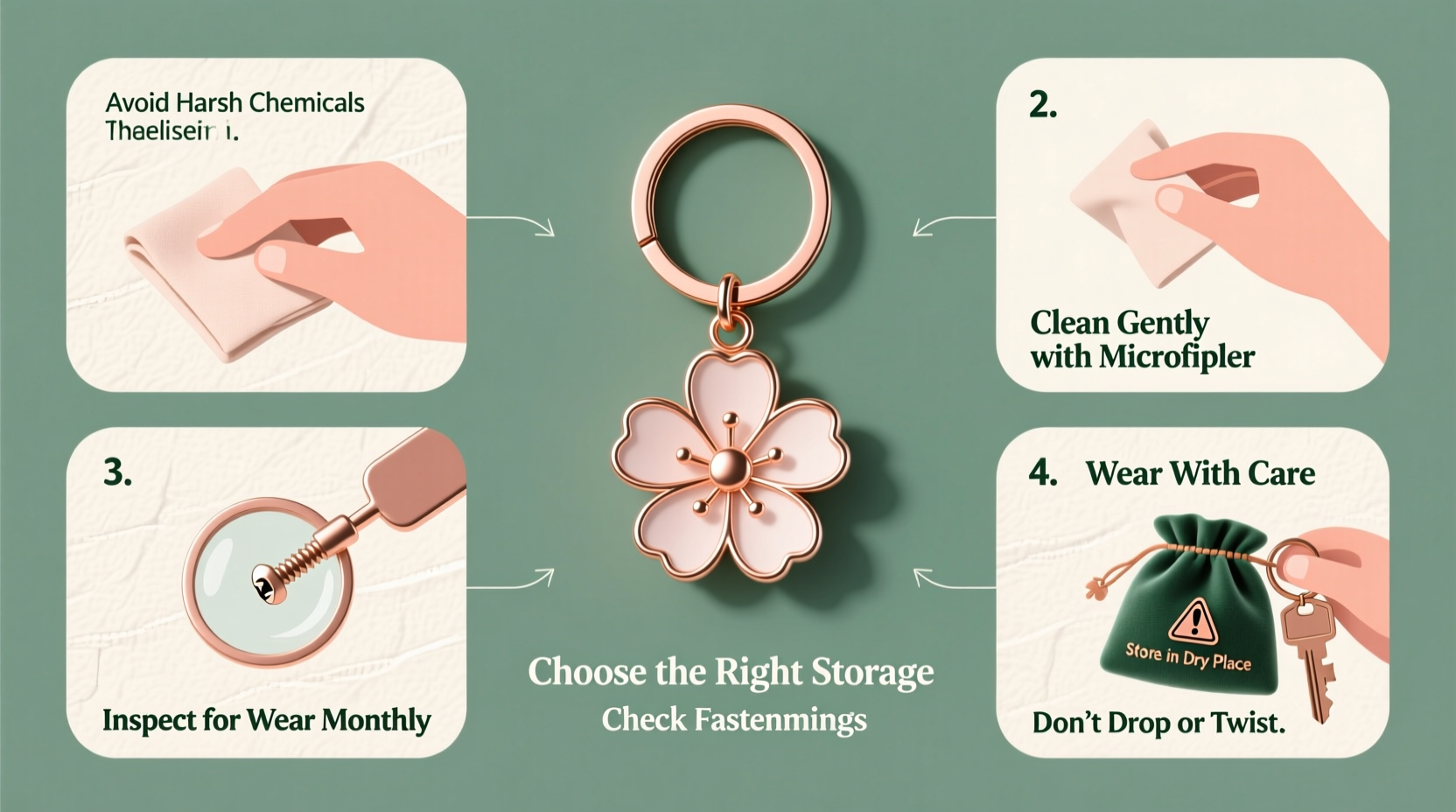
The longevity of a flower pendant keychain begins with knowing what it’s made of. Common materials include stainless steel, sterling silver, gold-plated metal, brass, and enamel-coated alloys. Each reacts differently to environmental exposure and mechanical stress.
Stainless steel offers excellent resistance to rust and scratching, making it ideal for daily carry. Sterling silver provides a classic luster but is prone to tarnishing when exposed to moisture and sulfur in the air. Gold-plated pieces add luxury but risk flaking if scratched or worn thin over time. Brass may develop a patina—some appreciate this aged look, while others find it undesirable. Enamel details, often used in floral designs, are beautiful but brittle and susceptible to chipping.
“Material knowledge isn’t just aesthetic—it informs how you clean, store, and interact with your piece.” — Lena Ruiz, Jewelry Preservation Specialist
Protective Maintenance Routine: Daily and Monthly Care
A consistent care schedule prevents minor damage from becoming irreversible. Unlike larger jewelry items, keychains face constant jostling against keys, pockets, and surfaces, accelerating wear.
After each use, especially in humid or salty environments (beaches, pools, gyms), gently wipe the pendant with a soft, dry microfiber cloth. This removes oils, sweat, and debris that contribute to corrosion. For deeper cleaning, use a solution of mild dish soap and lukewarm water. Soak for no more than five minutes, then scrub lightly with a soft-bristled toothbrush, focusing on crevices in the flower design where grime accumulates.
Rinse under cool running water and pat dry thoroughly—never air-dry, as residual moisture promotes tarnish. Avoid commercial jewelry dips or ultrasonic cleaners unless explicitly safe for your material; these can strip plating or weaken solder joints.
Monthly Protection Boost
Once a month, apply a protective barrier. For silver, use a tarnish-prevention polish followed by a jeweler’s anti-tarnish cloth. For plated or base metals, consider a clear nail polish sealant on non-exposed areas (like jump rings), which creates a transparent shield against oxidation. Reapply every 4–6 weeks or after cleaning.
Structural Reinforcement: Strengthening Weak Points
The most common failure points on flower pendant keychains are the bail (the loop attaching the pendant to the chain), the chain links themselves, and the clasp. These components endure repeated tension and impact.
To reinforce the bail, examine it monthly for bending or widening. If loose, visit a jeweler for professional tightening or replacement with a sturdier, closed-loop design. As an interim fix, wrap the top of the bail with fine-gauge jeweler’s wire in a matching metal tone to reduce strain.
Chains should be at least 1.5mm thick for regular use. Thin chains (<1mm) are prone to snapping. Consider upgrading to a trace or curb chain, known for their interlocking strength. Always ensure the clasp is secure—lobster clasps outperform spring rings in durability.
| Component | Durability Risk | Reinforcement Strategy |
|---|---|---|
| Bail | Widening, detachment | Professional resizing or wire wrapping |
| Chain | Link breakage | Upgrade to 1.5mm+ trace chain |
| Clasp | Accidental opening | Replace with lobster clasp |
| Pendant Surface | Scratches, chipping | Clear sealant on enamel areas |
Smart Storage and Usage Habits
How you store and use your keychain dramatically affects its lifespan. Tossing it into a cluttered bag or drawer exposes it to abrasion from keys and other hard objects. Over time, this causes micro-scratches that dull the finish and weaken metal fatigue points.
When not in use, store the keychain in a soft-lined jewelry pouch or a dedicated compartment box. If traveling, use a rigid travel case to prevent crushing. Avoid leaving it in hot environments like car dashboards—heat accelerates metal expansion and coating degradation.
Real Example: The Commuter’s Keychain
Sophie, a city commuter, wore her rose-gold floral keychain daily for two years. Initially pristine, it began showing signs of wear after six months: faint scratches and a loose clasp. She started wiping it weekly, switched to a thicker chain, and stored it in a velvet pouch at night. After one year of this routine, the pendant remained secure and bright, while a friend’s identical keychain—worn without care—had already lost its plating and broken clasp. Small habits made a measurable difference.
Step-by-Step Longevity Plan
Follow this timeline to maximize durability from day one:
- Day 1: Identify material and inspect for weak points (bail, clasp, chain thickness).
- Week 1: Clean gently and apply protective sealant if using enamel or plating.
- Monthly: Deep clean, reapply sealant, check for structural wear.
- Every 3 Months: Visit a jeweler for professional inspection and reinforcement.
- Ongoing: Use a protective pouch and avoid high-risk environments (chlorine, saltwater, extreme heat).
Frequently Asked Questions
Can I wear my flower pendant keychain in the shower?
No. Water, soap, and steam accelerate tarnishing and degrade adhesives in enamel or glued elements. Remove it before bathing.
What if the flower enamel starts chipping?
Minor chips can be sealed with clear nail polish to prevent further flaking. For larger damage, consult a jeweler for professional touch-up or restoration.
Is it safe to use hand sanitizer around my keychain?
Minimize contact. Alcohol and chemicals in sanitizers can erode plating and cause discoloration over time. Apply sanitizer first, let it dry completely, then handle your keys.
Final Checklist for Lasting Protection
- ✔️ Identify your pendant’s material and hallmark
- ✔️ Upgrade to a 1.5mm+ chain with lobster clasp
- ✔️ Wipe clean weekly with microfiber cloth
- ✔️ Perform deep cleaning monthly
- ✔️ Apply protective sealant on vulnerable areas
- ✔️ Store in a soft, lined pouch when not in use
- ✔️ Schedule biannual professional inspections
Conclusion: Preserve Beauty Through Proactive Care
A flower pendant keychain is more than a functional item—it’s a personal statement, a gift, or a symbol of memory. Its delicate form doesn’t have to mean short-lived. By understanding materials, reinforcing structural weaknesses, and adopting consistent care habits, you transform fragility into resilience. Durability isn’t accidental; it’s the result of mindful attention. Start today: inspect your keychain, implement one new habit, and give your cherished piece the longevity it deserves.




 浙公网安备
33010002000092号
浙公网安备
33010002000092号 浙B2-20120091-4
Comments
No comments yet. Why don't you start the discussion?