
As summer temperatures rise, so do energy bills—often with air conditioning as the primary culprit. While staying cool is essential, many homeowners are surprised by just how much their AC system impacts monthly electricity expenses. The cost of running an air conditioner isn’t fixed; it depends on a combination of equipment efficiency, usage habits, climate, and home-specific factors. Understanding these variables empowers you to make smarter decisions that reduce consumption, extend system life, and lower utility costs over time.
How Air Conditioners Contribute to Your Energy Bill
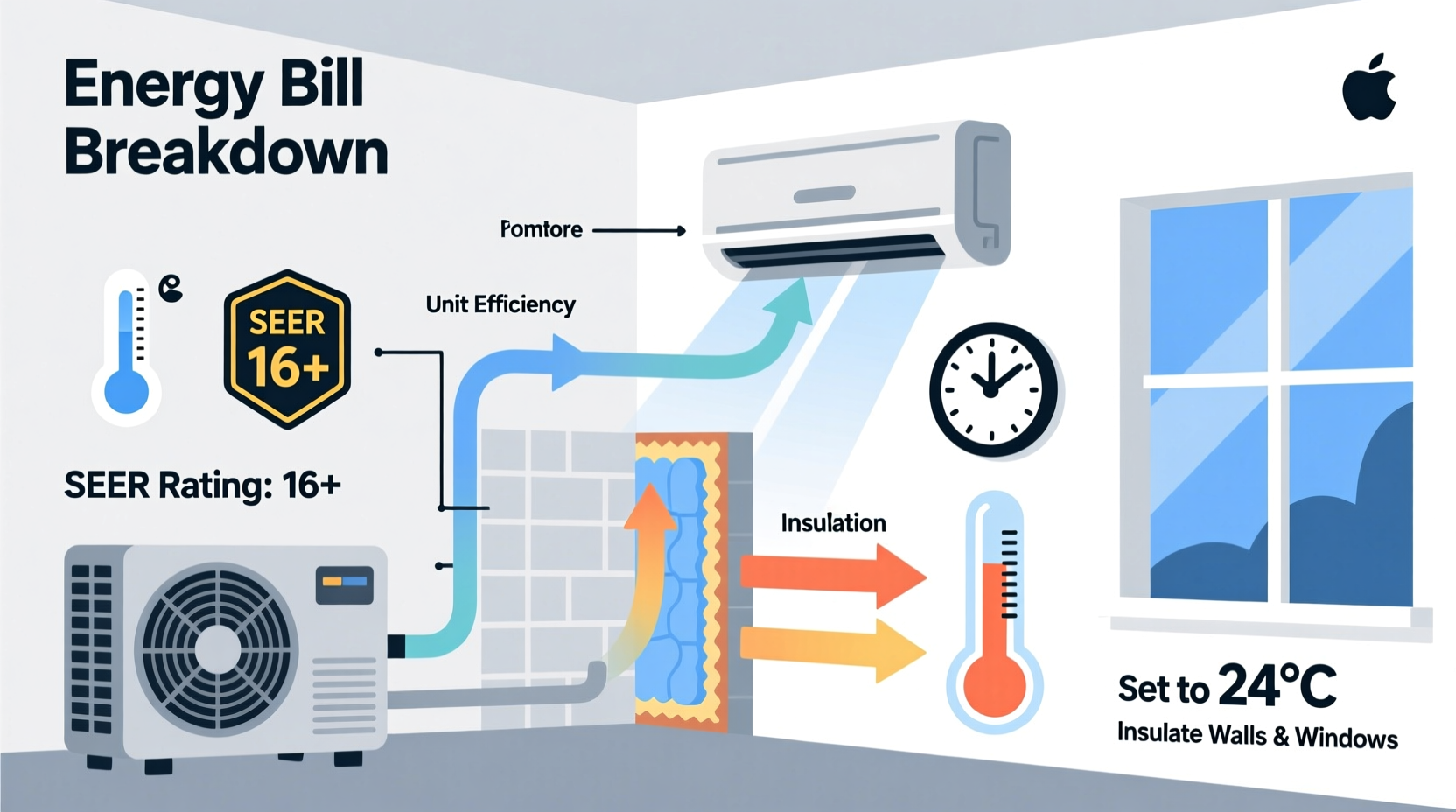
Air conditioners are typically the largest energy-consuming appliances in homes during warm months. In fact, according to the U.S. Department of Energy, cooling accounts for about 12% of total household energy use—and up to 30% or more in hotter climates. The exact impact on your bill depends on several interrelated factors: the size and efficiency of your unit, how often it runs, local electricity rates, and whether your home retains cooled air effectively.
An average central air conditioner (3-ton unit) uses between 3,000 and 3,500 watts per hour when running. If it operates for 8 hours daily at $0.14 per kilowatt-hour (kWh), that’s roughly $3.50–$4.00 per day—or over $100 per month. But real-world usage varies significantly based on insulation quality, thermostat settings, outdoor temperature, and maintenance status.
Key Factors That Affect Air Conditioner Running Costs
1. Equipment Efficiency (SEER Rating)
The Seasonal Energy Efficiency Ratio (SEER) measures how efficiently an AC unit converts electricity into cooling. Modern units range from 13 to 26 SEER. Higher SEER ratings mean greater efficiency and lower operating costs. For example, upgrading from a 10-SEER to a 16-SEER system can reduce cooling energy use by up to 40%.
2. Unit Size and Home Match
An oversized AC cools too quickly, leading to short cycling—frequent on/off cycles that waste energy and wear out components. An undersized unit runs constantly, struggling to reach the desired temperature. Both scenarios increase energy consumption. Proper load calculation ensures the right-sized system for your square footage, layout, and insulation level.
3. Thermostat Settings and Usage Patterns
The longer and more frequently your AC runs, the higher your bill. Manual thermostats often lead to inefficient use, while programmable or smart thermostats allow precise scheduling and remote adjustments. Leaving the AC on all day “just in case” is far more costly than using setback strategies.
4. Home Insulation and Air Sealing
Poor insulation, leaky windows, and unsealed ducts allow cooled air to escape and hot air to enter. This forces your AC to work harder and longer. Homes with adequate attic insulation (R-30 or higher), weatherstripped doors, and sealed ductwork maintain indoor temperatures more efficiently.
5. Climate and Outdoor Temperature
In regions like Arizona or Florida, where temperatures regularly exceed 95°F (35°C), AC systems run nearly continuously. Every 10°F above 75°F increases cooling demand significantly. Urban heat islands and direct sun exposure on walls or roofs also amplify load requirements.
6. Maintenance and System Age
Dust buildup on coils, dirty filters, low refrigerant, and worn motors reduce efficiency. A neglected system can consume up to 25% more energy than a well-maintained one. Units older than 10–15 years lose efficiency over time and may be due for replacement.
“Even the most efficient AC system will underperform if it's not properly maintained or installed in a poorly insulated home.” — Dr. Linda Chen, HVAC Efficiency Researcher, National Renewable Energy Lab
Practical Ways to Reduce Air Conditioning Costs
Step-by-Step Guide to Lowering Cooling Expenses
- Install a Smart Thermostat: Automate temperature adjustments based on occupancy and time of day.
- Seal Air Leaks: Use caulk or weatherstripping around windows, doors, and electrical outlets.
- Upgrade Insulation: Focus on attics, basements, and exterior walls—especially in older homes.
- Clean or Replace Filters Monthly: Restricted airflow increases energy use and strain on the compressor.
- Service Your AC Annually: Schedule professional tune-ups before peak season to ensure optimal performance.
- Use Ceiling Fans Strategically: They create a wind-chill effect, allowing you to set the thermostat 4°F higher without discomfort.
- Close Blinds During Peak Sun: Block solar heat gain, especially on south- and west-facing windows.
- Consider Zoning Systems: Cool only occupied areas instead of the entire house.
Comparison of Cooling Strategies and Estimated Savings
| Strategy | Estimated Annual Savings | Upfront Cost | Payback Period |
|---|---|---|---|
| Smart thermostat installation | $100–$180 | $100–$250 | 8–18 months |
| AC tune-up (annual) | $70–$120 | $75–$150 | 1 year |
| Attic insulation upgrade (R-19 to R-38) | $150–$300 | $800–$1,500 | 5–8 years |
| Replacing 10-SEER with 18-SEER unit | $200–$500 | $3,000–$7,000 | 7–12 years |
| Using ceiling fans with AC | $50–$100 | $50–$200 | 1 season |
Real-World Example: How One Household Cut Cooling Costs by 35%
The Martinez family lived in a 2,200 sq ft home in Austin, Texas. Their summer electric bills averaged $280/month, peaking at $340 in August. After an energy audit, they implemented several changes: installed a smart thermostat, sealed duct leaks, added attic insulation, replaced their 14-year-old 10-SEER AC with a 16-SEER model, and began using ceiling fans regularly. The following summer, their average bill dropped to $182—a 35% reduction. Though the upgrades cost $4,200, the annual savings of $1,176 mean the investment paid back in just over three years.
Checklist: Monthly & Seasonal AC Maintenance Tasks
- ✅ Check and clean or replace air filter
- ✅ Wipe down thermostat sensors
- ✅ Clear debris from outdoor condenser unit (leaves, grass clippings)
- ✅ Ensure condensate drain line is unclogged
- ✅ Verify thermostat settings align with schedule
- ✅ Inspect window seals and close blinds during daylight
- ✅ Schedule professional inspection once per year (spring recommended)
Frequently Asked Questions
Is it cheaper to leave the AC on all day or turn it off when I’m away?
No—it’s more efficient to adjust the temperature when you’re away. Leaving the AC running all day maintains an unnecessarily cool home, wasting energy. Using a programmable or smart thermostat to raise the temperature by 7–10°F while you're out can save up to 10% annually.
Can cleaning my AC unit really save money?
Yes. A dirty evaporator coil or clogged filter reduces airflow and forces the system to work harder. Regular cleaning restores efficiency, lowers energy use, and prevents premature breakdowns. Replacing a standard filter every 30–60 days is one of the easiest and most cost-effective maintenance steps.
Should I repair or replace my old air conditioner?
If your unit is over 10 years old, requires frequent repairs, or has a SEER rating below 13, replacement is likely more economical long-term. New models are significantly more efficient and often qualify for rebates or tax credits, improving return on investment.
Take Control of Your Cooling Costs Today
Reducing air conditioner running costs doesn’t require extreme sacrifices or expensive overhauls. Small, consistent actions—like adjusting your thermostat, sealing leaks, and maintaining your system—add up to meaningful savings. By understanding the factors that drive energy use, you gain the power to optimize comfort and efficiency simultaneously. Start with one improvement this week, then build from there. Over time, these choices lead to lower bills, a longer-lasting system, and a more sustainable home.




 浙公网安备
33010002000092号
浙公网安备
33010002000092号 浙B2-20120091-4
Comments
No comments yet. Why don't you start the discussion?