
Napalm is one of the most infamous incendiary weapons in modern history. Known for its devastating effects during wartime, napalm has become synonymous with destruction and suffering. While often referenced in popular culture, few understand its actual chemistry, the extreme risks associated with its use—or more dangerously—its production. This article examines the science behind napalm, evaluates its hazards, and explains why manufacturing it is not only highly dangerous but strictly illegal under international law.
The Chemistry Behind Napalm
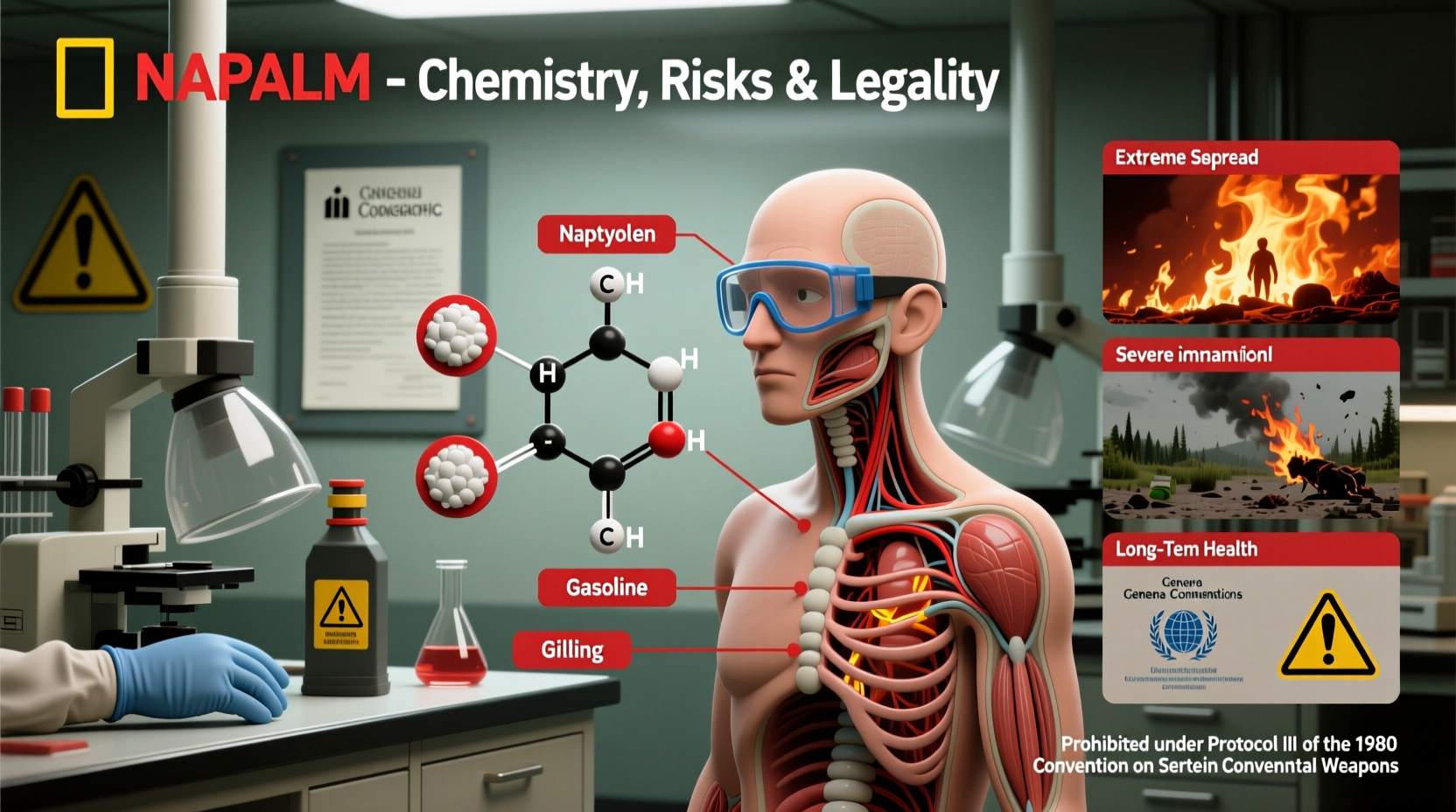
Napalm is not a single compound but rather a gelled fuel mixture designed to stick to surfaces and burn at extremely high temperatures. The term \"napalm\" originates from its original components: **naphthenic acid** and **palmitic acid**, which were used as gelling agents when mixed with gasoline. Today, modern variants may use polystyrene or other synthetic polymers to achieve similar thickening effects.
When combined with a hydrocarbon base like gasoline or diesel, these gelling agents create a sticky, viscous substance that can be dispersed via bombs, flamethrowers, or improvised devices. Once ignited, napalm burns at temperatures exceeding **1,000°C (1,832°F)**, producing intense heat and consuming oxygen rapidly in its vicinity.
The gel-like consistency allows napalm to adhere to surfaces—including human skin and buildings—making it particularly effective (and horrific) as an area-denial weapon. Its combustion produces large amounts of toxic fumes, including carbon monoxide and various hydrocarbons, which pose additional health risks beyond thermal injury.
Health and Environmental Risks
The dangers of napalm extend far beyond immediate burns. Victims of napalm attacks often suffer third-degree burns over large portions of their bodies, leading to severe scarring, disability, and long-term psychological trauma. Because napalm sticks to skin and continues burning, survival rates are low without immediate medical intervention.
In addition to direct physical harm, napalm releases harmful pollutants into the air and soil. Combustion byproducts include benzene, formaldehyde, and soot laden with carcinogens. These substances contaminate ecosystems and can persist in the environment for years, affecting water sources and agricultural land.
Urban or forested areas targeted with napalm face near-total destruction. Fires can spread uncontrollably, especially in dry conditions, leading to secondary disasters such as landslides (due to loss of vegetation) or mass displacement of populations.
“Napalm inflicts cruel and inhumane suffering. Its use against civilians constitutes a grave breach of humanitarian law.” — Dr. Helen Ramirez, International Human Rights Watch Advisor
Legal Status and International Treaties
The development, production, and use of napalm are heavily regulated under international agreements. Most notably, the **1980 United Nations Convention on Certain Conventional Weapons (CCW)** includes Protocol III, which restricts the use of incendiary weapons like napalm—especially against civilian populations or in areas with concentrated non-combatants.
While the treaty does not ban napalm outright, it prohibits targeting civilians and using air-delivered incendiaries in forests or other naturally flammable areas. Many countries, including the United States, have signed and ratified this protocol, though enforcement remains challenging in conflict zones.
Domestically, in nations like the U.S., creating napalm falls under strict anti-terrorism and explosive control laws. The Bureau of Alcohol, Tobacco, Firearms and Explosives (ATF) classifies homemade incendiary devices as illegal explosives. Possession or manufacture can result in federal charges carrying penalties of up to 10–20 years in prison.
| Aspect | Regulation | Consequence of Violation |
|---|---|---|
| International Use | Banned against civilians (CCW Protocol III) | War crimes prosecution |
| Domestic Production | Illegal under explosive control statutes | Fines, imprisonment |
| Research or Experimentation | Requires federal licensing | Criminal liability if unauthorized |
Why Attempting to Make Napalm Is Extremely Dangerous
Despite occasional online tutorials or curiosity-driven searches, attempting to synthesize napalm—even in small quantities—is exceptionally perilous. Gasoline, the primary base ingredient, is highly volatile and easily ignited by static electricity, sparks, or open flames. Mixing it with gelling agents like polystyrene foam (commonly suggested in DIY guides) creates a combustible slurry that can ignite spontaneously during preparation.
Moreover, many household chemicals used in amateur experiments release toxic vapors when heated or combined. Styrene, released when dissolving polystyrene in gasoline, is a known neurotoxin and possible carcinogen. Inhalation can cause dizziness, respiratory distress, or long-term organ damage.
There is no safe or legal context for individuals to produce napalm outside of authorized military or research facilities. Even academic institutions require special permits and containment protocols to study such materials.
Step-by-Step: What Happens When Someone Attempts to Make Napalm?
- Obtaining Materials: Gasoline, styrofoam, and containers are gathered—often from everyday sources like garages or stores.
- Mixing Process: Polystyrene is dissolved into gasoline, creating a thick gel. This step releases toxic fumes and increases fire risk.
- Ignition Test: A common impulse is to test flammability, leading to accidental fires or explosions.
- Loss of Control: Fire spreads rapidly; individual suffers burns or triggers structural fire.
- Legal Intervention: Authorities respond, investigate origin, and charge individual under explosives or arson laws.
Real-World Example: The Case of a College Experiment Gone Wrong
In 2015, a university student in the Midwest attempted to recreate napalm for a “demonstration” after reading about it online. Using gasoline and crushed styrofoam cups, he mixed the solution in his dorm room. When he lit a match to test it, the fumes ignited instantly, causing a flash fire that burned his hands and set his curtains ablaze.
Firefighters responded quickly, preventing greater damage. However, campus police launched an investigation. The student faced felony charges for unlawful possession of an incendiary device, was expelled, and sentenced to probation and community service. His academic career was derailed, and he later spoke publicly about misjudging the risks involved.
This case illustrates how seemingly minor experimentation with dangerous substances can escalate into life-altering consequences—not just physically, but legally and socially.
Frequently Asked Questions
Is napalm still used in warfare today?
While its use has declined significantly since the Vietnam War era, some militaries retain incendiary weapons for specific tactical purposes. However, their deployment is restricted under international law, particularly against civilian populations. Open use of napalm-like weapons today would likely provoke global condemnation and potential war crimes investigations.
Can I legally own or make napalm if I’m not planning to use it as a weapon?
No. In most jurisdictions, including the United States, simply possessing or manufacturing napalm—even for display or experimental purposes—violates federal explosives regulations. Intent is difficult to prove, and the mere creation of such a substance is considered inherently dangerous and illegal.
Are there safer alternatives for studying combustion or pyrotechnics?
Yes. Educational institutions offer controlled environments for studying fire chemistry using approved materials and safety protocols. Organizations like science museums, 4-H clubs, or STEM programs provide hands-on learning without the risks of illicit experimentation.
Final Thoughts and Call to Responsibility
Understanding napalm goes beyond its chemical formula—it involves recognizing the profound human and environmental cost of incendiary weapons. Scientific curiosity is valuable, but it must be guided by ethics, legality, and respect for safety. There is no justification for attempting to create weapons of war in a garage, basement, or dorm room.
If you're interested in chemistry, consider joining a lab, enrolling in courses, or participating in accredited science fairs. Knowledge should empower, not endanger. Share this information with others who may not realize how quickly fascination can turn into tragedy.




 浙公网安备
33010002000092号
浙公网安备
33010002000092号 浙B2-20120091-4
Comments
No comments yet. Why don't you start the discussion?