
Knowing exactly where your property begins and ends is more than just a matter of pride—it’s essential for legal, financial, and practical reasons. Whether you're planning a fence, building an addition, or simply resolving a neighborly disagreement, understanding your property lines helps prevent costly mistakes and long-term conflicts. Despite their importance, many homeowners operate under assumptions about their land boundaries that are inaccurate or outdated. This guide provides a clear, step-by-step approach to identifying your property lines with confidence and precision.
Why Accurate Property Lines Matter
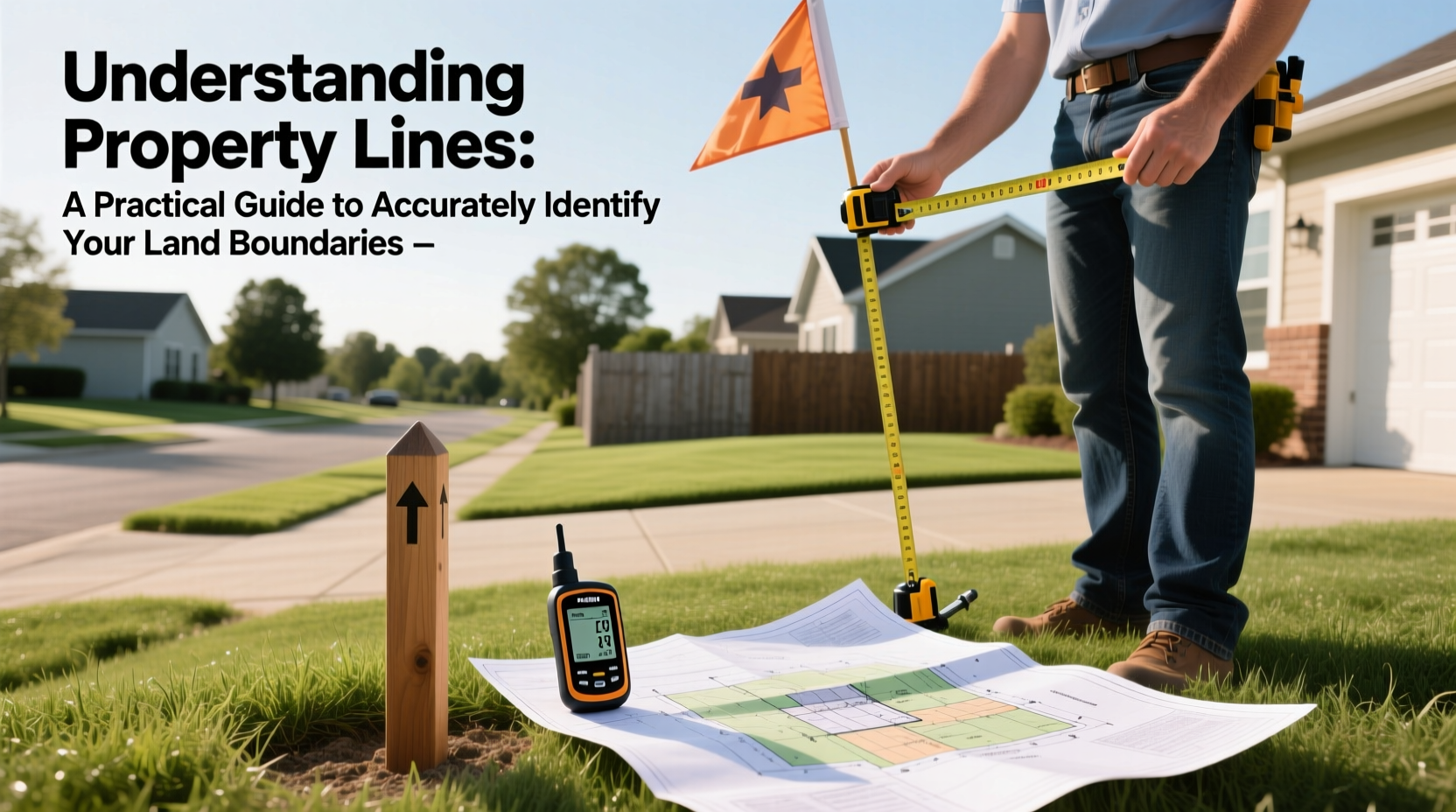
Property lines define the legal extent of your ownership. Crossing them—intentionally or not—can lead to boundary disputes, legal action, or denial of permits. Common scenarios include:
- Installing a fence that encroaches on a neighbor’s land
- Building a shed or deck too close to a setback line
- Landscaping that interferes with easements
- Selling property with undisclosed boundary issues
A survey conducted by the American Society of Home Inspectors found that nearly 20% of homes have some form of boundary dispute or encroachment issue. Many go unnoticed until a sale, renovation, or conflict arises.
“Most property line disputes start with good intentions but end in court because people relied on guesswork instead of verified data.” — James R. Holloway, Land Use Attorney
Step-by-Step: How to Identify Your Property Lines
Accurately determining your property boundaries involves several stages, from document review to physical verification. Follow this timeline to ensure thoroughness:
- Locate your property deed: This foundational document describes your parcel using metes and bounds or lot/block numbers within a subdivision.
- Obtain a copy of your plat map: Available from your county recorder or assessor’s office, this map shows lot dimensions, adjacent properties, and easements.
- Hire a licensed land surveyor: For definitive accuracy, a professional survey will locate physical markers and produce a current boundary report.
- Search for existing monuments: Look for iron rods, concrete posts, or capped pipes buried at corners—these are official survey markers.
- Verify setbacks and easements: Confirm local zoning rules and utility access rights that may restrict use even within your property lines.
Common Tools and Documents Used in Boundary Identification
Different tools provide varying levels of accuracy. Understanding what each offers helps you choose the right approach for your needs.
| Tool/Document | Accuracy Level | Best For | Limits |
|---|---|---|---|
| Online Property Maps (Zillow, County GIS) | Low to Moderate | Initial reference, visual layout | Often outdated; not legally binding |
| Plat Map | Moderate | Understanding lot dimensions and easements | Doesn’t reflect recent changes or physical markers |
| Property Deed | Moderate | Legal description of boundaries | Uses technical language; hard to interpret without training |
| GPS Devices (Consumer Grade) | Low | General location estimation | Can be off by 10+ feet; unreliable for legal purposes |
| Licensed Land Survey | High (Legal Standard) | All construction, dispute resolution, sales | Costs $500–$1,500 depending on terrain and size |
Real Example: The Fence That Caused a Five-Year Dispute
In suburban Charlotte, NC, the Thompson family built a wooden privacy fence along what they believed was their rear property line. They used a free online map and estimated the edge based on their neighbor’s existing fence. Two years later, during a home appraisal, a new survey revealed the fence was 18 inches inside the neighbor’s yard.
The affected neighbor refused to grant a retroactive easement, demanding removal. The Thompsons faced $3,000 in removal costs and a strained relationship. A pre-installation survey costing less than $700 would have prevented the entire situation.
This case underscores how assumptions—even seemingly minor ones—can lead to significant consequences.
Checklist: Ensuring You Know Your Boundaries
Before starting any outdoor project, use this checklist to verify your property lines:
- ✅ Obtain a copy of your property deed from the county recorder
- ✅ Download the official plat map from your local assessor’s website
- ✅ Search for survey markers (look for metal pins or pipes near corners)
- ✅ Cross-reference online maps with official documents
- ✅ Contact a licensed surveyor if planning construction or resolving disputes
- ✅ Confirm any utility or drainage easements affecting usable space
- ✅ Discuss findings with neighbors if projects are near shared edges
When to Hire a Professional Surveyor
While DIY methods can offer general guidance, only a licensed land surveyor can provide legally recognized boundary confirmation. Consider hiring one in these situations:
- You’re preparing to sell your home
- Planning any permanent structure (deck, pool, garage)
- Involved in a boundary or encroachment dispute
- Subdividing land or adjusting lot lines
- Your property has irregular shape or dense tree cover
A professional survey includes a site visit, marker verification, GPS measurement, and a formal report filed with the county if needed. It serves as legal evidence in disputes and satisfies lender requirements for financing.
Frequently Asked Questions
Can I rely on my GPS or smartphone app to find my property lines?
No. Consumer-grade GPS devices and apps like Google Earth or Apple Maps typically have a margin of error between 5 and 15 feet. While useful for general orientation, they are not accurate enough for legal or construction decisions.
What should I do if I find my neighbor’s structure on my property?
Remain calm and gather evidence first. Obtain a survey to confirm the encroachment. Then, discuss the issue politely with your neighbor. If no resolution occurs, consult a real estate attorney. In some cases, adverse possession laws may apply if the structure has been in place for many years.
Do property lines change over time?
Yes—though rarely without documentation. Natural events like erosion or human actions such as subdivisions, road expansions, or mutual boundary agreements can alter legal lines. Always verify with up-to-date records and surveys.
Final Thoughts: Take Control of Your Property Knowledge
Your land is one of your most valuable assets, and knowing its exact limits is fundamental to responsible ownership. Guessing where your yard ends and your neighbor’s begins invites risk. By reviewing deeds, consulting plat maps, locating physical markers, and investing in a professional survey when necessary, you protect your investment and maintain positive community relationships.
Boundary clarity empowers better decisions—whether you're planting a garden, expanding your home, or preparing for a sale. Don’t wait for a dispute to uncover a decades-old error. Take action now to understand your property lines with confidence.




 浙公网安备
33010002000092号
浙公网安备
33010002000092号 浙B2-20120091-4
Comments
No comments yet. Why don't you start the discussion?