
The debate between Valorant and Counter-Strike 2 (CS2) isn't just about which game plays better today—it's about which one will remain relevant, engaging, and dominant in the competitive FPS landscape five or even ten years from now. Both titles represent the pinnacle of tactical first-person shooters, but they come from different philosophies, developer approaches, and player expectations. One is a legacy title evolving with modern tech; the other is a new-gen entrant built for accessibility and spectacle. So, which has stronger long-term legs?
This analysis dives into core mechanics, monetization models, esports infrastructure, community engagement, and developer vision to determine which game is better positioned for sustained success.
Gameplay Philosophy and Accessibility
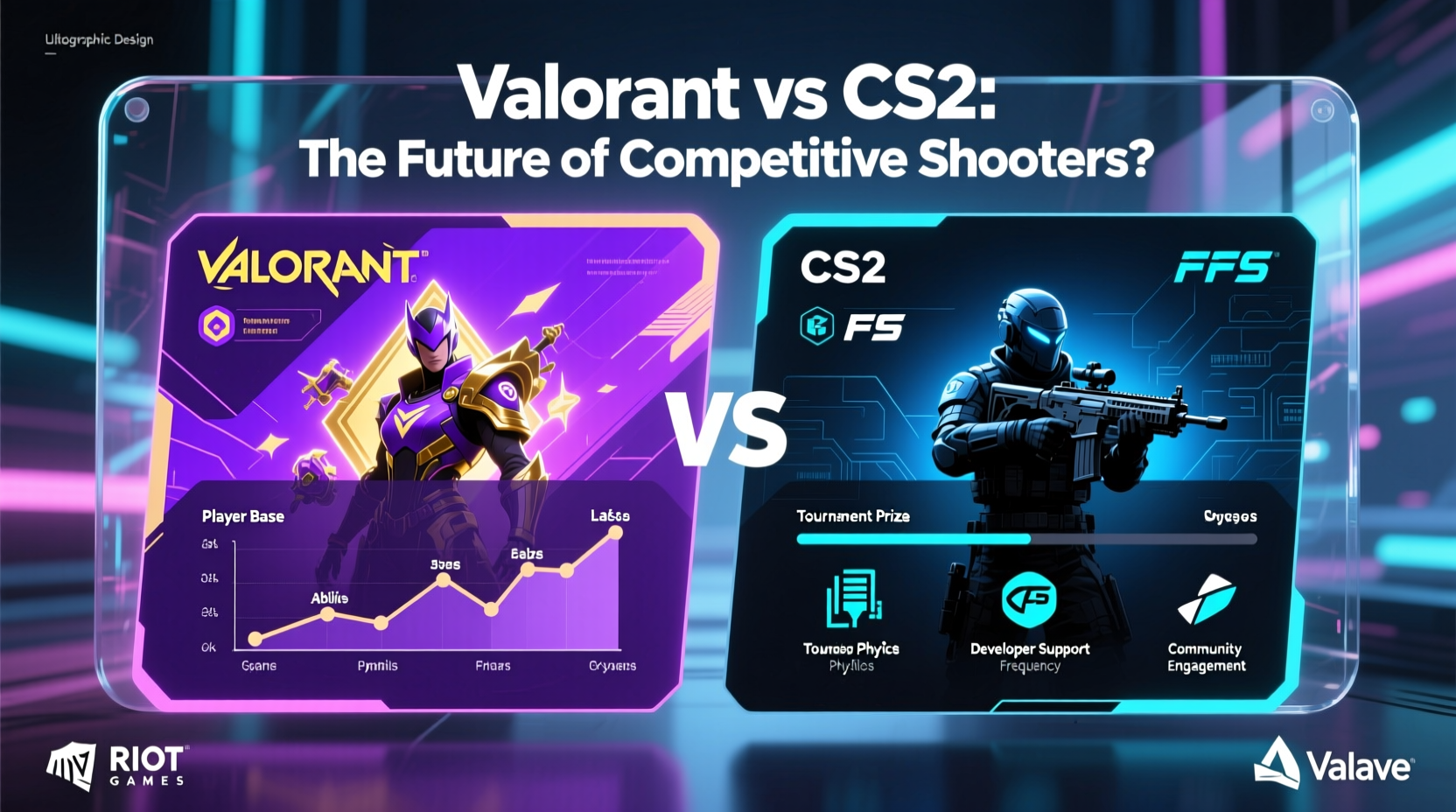
At their cores, both Valorant and CS2 emphasize precision, map control, and strategic teamwork. However, their design choices reflect fundamentally different philosophies.
CS2, as the successor to Counter-Strike: Global Offensive, inherits decades of tradition. It’s unforgiving—every round matters, economy management is critical, and death is permanent. There are no respawns, no abilities, and no second chances. Mastery requires hundreds of hours of aim practice, map knowledge, and coordination. This purity appeals to purists, but it also creates a steep entry barrier.
In contrast, Valorant introduces agent-based abilities—each character has unique skills that influence utility usage, information gathering, and team strategy. While gunplay remains central, these abilities lower the mechanical skill floor. A well-placed flashbang from an ability can be more impactful than pixel-perfect aim, making tactical awareness accessible to newer players.
Accessibility directly affects long-term viability. Games that welcome newcomers tend to maintain larger player bases over time. While CS2 benefits from an established community, its resistance to change and lack of quality-of-life improvements alienate casual players. Valorant, by comparison, regularly updates tutorials, matchmaking systems, and onboarding flows to ease progression.
Monetization and Player Trust
Sustainable games need sustainable revenue models. How a game makes money—and how fairly it treats players—shapes trust and longevity.
CS2 operates under a largely cosmetic-only model through the Steam Workshop and marketplace. Skins are user-created and traded peer-to-peer, with Valve taking a cut. While this fosters a vibrant economy, it also enables gambling ecosystems and price volatility. More critically, Valve has historically invested minimally in direct content updates or developer communication, leading to perceptions of neglect despite massive player numbers.
Riot Games takes a different approach with Valorant. All cosmetics are developed in-house or through official partnerships. The store refreshes daily, and battle passes offer structured progression. Importantly, Riot does not sell gameplay advantages—only cosmetics and minor quality-of-life features like spray customization. This reinforces fairness and keeps competitive integrity intact.
Moreover, Riot reinvests heavily into the ecosystem. Champions Tour funding, regional leagues, and grassroots tournaments ensure players at all levels have pathways to compete. This level of support builds loyalty and gives players confidence in the game’s future.
“Games that treat players as partners, not just revenue sources, build communities that last.” — Sarah Kim, Esports Business Analyst
Esports Infrastructure and Growth Trajectory
Competitive longevity hinges on robust esports frameworks. A thriving pro scene attracts viewers, sponsors, and aspiring players.
| Aspect | CS2 | Valorant |
|---|---|---|
| Major Tournaments | Historically strong (e.g., ESL One, BLAST) | Riot-run VCT Masters & Champions |
| Prize Pools | Varies by third-party org (~$1M avg) | Guaranteed $1M+ per Champions |
| Developer Involvement | Minimal (mostly platform support) | Full ownership and investment |
| Regional Pathways | Fragmented, inconsistent | Structured Acts and international qualifiers |
| Long-Term Stability | Uncertain due to Valve's hands-off model | High—Riot committed through 2030+ |
While CS2 enjoys prestige from two decades of tournament history, its esports scene relies on third-party organizers. Valve only sanctions Majors sporadically, leaving teams dependent on external entities for income and exposure. This inconsistency makes career sustainability difficult for pros.
Valorant’s **VCT (Valorant Champions Tour)** offers a unified global structure with guaranteed events, prize pools, and media rights deals. Riot signs franchise-like agreements with select teams while maintaining open qualifiers for others. This hybrid model balances stability with inclusivity—a formula proven successful in League of Legends.
Furthermore, Riot promotes production quality. Matches feature professional casting, real-time stats overlays, and cinematic highlights—making broadcasts appealing even to non-players. CS2 streams, while functional, often lack polish and narrative depth.
Developer Vision and Roadmap Reliability
A game lives or dies by its developer’s commitment. Long-term potential isn’t just about current features—it’s about consistent innovation and responsiveness.
Valve’s approach to CS2 has been technically impressive—leveraging the Source 2 engine for improved visuals, lighting, and netcode—but creatively stagnant. Aside from engine upgrades and anti-cheat improvements, there are no major gameplay additions. No new maps beyond remakes, no quality-of-life changes to match systems, and minimal balance updates. The absence of a public roadmap or regular developer blogs erodes player confidence.
Riot, conversely, publishes quarterly updates detailing balance changes, upcoming agents, map rotations, and competitive adjustments. They run player surveys, host Reddit AMAs, and adjust course based on feedback. When the Omen rework caused backlash, Riot rolled back changes and redesigned them collaboratively with the community.
This transparency builds trust. Players know the game is being actively managed—not just maintained. Over time, this makes a crucial difference in retention and word-of-mouth growth.
Mini Case Study: The Rise of Team Liquid in Valorant
In 2023, Team Liquid entered the Valorant scene amid skepticism. Despite being a powerhouse in CS:GO, many doubted their ability to adapt to agent-based dynamics. But within a year, they won VCT Masters Tokyo and became fan favorites.
Their success wasn’t accidental. Riot’s structured regional leagues gave them consistent competition. Sponsorship opportunities grew as viewership climbed past 1.5 million peak concurrent viewers during Champions. Unlike in CS2, where organizations scramble for invites, Liquid had a clear path forward.
This case illustrates how Riot’s ecosystem empowers teams to invest long-term. Franchise spots cost millions, signaling belief in the game’s staying power. In CS2, no such guarantees exist—teams operate on short-term contracts with uncertain futures.
Player Retention and Community Health
Even the best-designed game fails if its community drives players away.
CS2 struggles with toxicity and burnout. The high-stakes nature of rounds—where one mistake costs the team the round—fuels frustration. Combined with limited reporting tools and slow moderation, this creates a hostile environment for newcomers. Matchmaking often pits veterans against beginners, worsening the experience.
Valorant implemented several safeguards early on: voice chat opt-in, automated toxicity detection, and stricter penalties for smurfing and boosting. While not perfect, these systems show intent. The game also encourages positive behavior through recognition systems like “Play of the Game” and post-match commendations.
Additionally, Valorant’s seasonal content keeps players engaged. New agents, map updates, and limited-time modes (like Spike Rush or Escalation) provide variety without disrupting core balance. CS2, meanwhile, sees content updates infrequently, relying on community servers for novelty.
Checklist: Signs of a Game with Long-Term Potential
- ✅ Regular, predictable content updates
- ✅ Transparent developer communication
- ✅ Balanced monetization without pay-to-win
- ✅ Structured competitive pathways (amateur to pro)
- ✅ Active anti-toxicity and cheat prevention measures
- ✅ Investment in broadcast production and storytelling
- ✅ Scalable infrastructure for growing audiences
By this checklist, Valorant scores six out of seven. CS2 meets only three—primarily due to technical excellence and existing popularity, not forward momentum.
Frequently Asked Questions
Is CS2 dying?
No, CS2 is not dying. It maintains over 800,000 concurrent players daily and remains a staple in LAN tournaments. However, its lack of developer direction raises concerns about stagnation. Without meaningful innovation, it risks becoming a niche classic rather than a living esport.
Can Valorant surpass CS in popularity?
It already has in key metrics. Valorant boasts higher peak viewership on Twitch, broader global reach (especially in Asia and Latin America), and faster-growing mobile spin-offs (like *Project L* and *Valorant Mobile*). While CS still leads in total hours watched due to historical volume, Valorant is closing the gap rapidly.
Will Valorant stay relevant if new agents stop being added?
Possible, but unlikely. Agent releases are central to Valorant’s update cycle. However, Riot has shown capacity to pivot—introducing map reworks, weapon rebalances, and mode innovations. Even if agent drops slow, the underlying framework supports ongoing evolution.
Step-by-Step: Evaluating a Shooter’s Longevity
- Assess Developer Activity: Check patch notes frequency, blog updates, and social media engagement.
- Analyze Competitive Structure: Is there a clear ladder from beginner to pro? Are prize pools guaranteed?
- Review Monetization Model: Does spending affect fairness? Is cosmetic content fresh and desirable?
- Evaluate Community Tools: Reporting systems, mute options, and behavioral incentives matter.
- Monitor Innovation Rate: New modes, maps, and gameplay tweaks indicate healthy iteration.
- Track Viewership Trends: Rising numbers on Twitch and YouTube suggest cultural momentum.
- Consider Global Reach: Games expanding beyond Western markets have stronger growth curves.
Applying this framework, Valorant consistently outperforms CS2 across categories—except raw historical legacy.
Conclusion: Why Valorant Holds the Edge
CS2 is a masterpiece of minimalist design—an enduring testament to what pure gunplay and strategy can achieve. Its influence on the genre is unmatched. But influence doesn’t guarantee longevity.
Valorant, though younger, demonstrates superior long-term potential. Backed by Riot’s full organizational might, it combines tight gameplay with scalable systems, inclusive design, and relentless innovation. It respects its roots in tactical shooters while embracing modern expectations: accessibility, representation, production value, and community partnership.
Most importantly, Valorant feels alive. Seasons bring change. Developers listen. Players see themselves reflected in the game’s evolution. That sense of shared ownership is what turns a good game into a lasting phenomenon.
CS2 may endure as a cult favorite, preserved by passionate players and nostalgic tournaments. But for the future of competitive shooting—the next decade of pro circuits, streaming culture, and global fandom—Valorant is building the foundation.




 浙公网安备
33010002000092号
浙公网安备
33010002000092号 浙B2-20120091-4
Comments
No comments yet. Why don't you start the discussion?