
When comparing two of the most influential tactical shooters of the past decade—Counter-Strike 2 (CS2) and Valorant—it’s easy to focus on mechanics, graphics, or competitive balance. But one critical factor often overlooked is the health and culture of their communities. While both games demand precision, strategy, and communication, the way players interact with each other can drastically affect the experience. For many, a toxic environment can ruin even the best-designed game. So, which title fosters a healthier, more inclusive, and sustainable player base?
The answer isn’t as simple as declaring a winner. Each game attracts different demographics, has distinct design philosophies, and enforces moderation differently. This analysis explores key aspects of community behavior, developer responsiveness, in-game reporting systems, and cultural shifts over time to determine where players are more likely to find respectful, cooperative, and welcoming environments.
Understanding Community Culture in Tactical Shooters
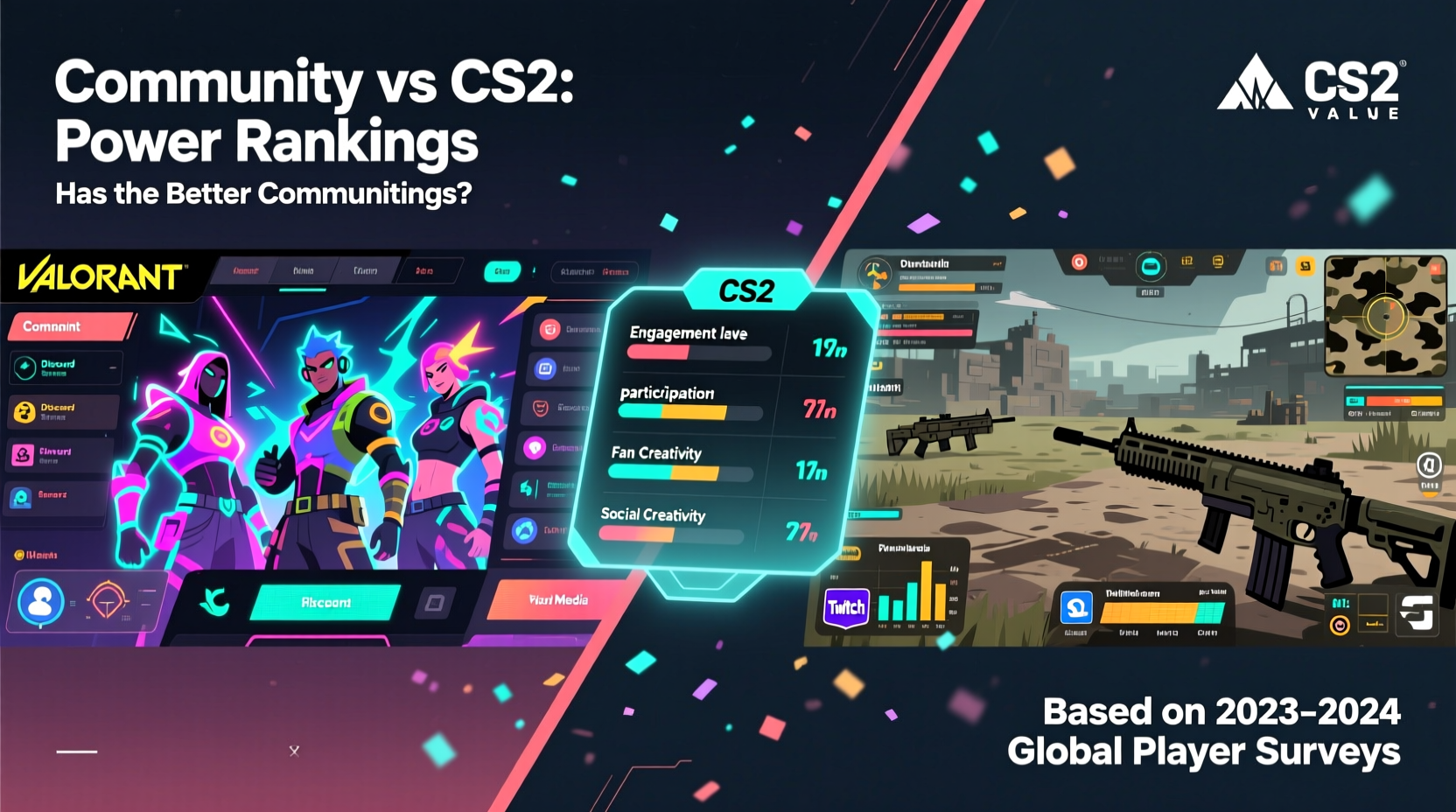
Tactical shooters have historically struggled with high levels of toxicity. The genre emphasizes performance, coordination, and split-second decision-making, which naturally leads to frustration when things go wrong. In such high-pressure environments, blame is often assigned quickly, and communication can turn hostile. However, not all communities respond the same way under pressure.
CS2, the evolution of Counter-Strike: Global Offensive (CS:GO), inherits a legacy stretching back nearly two decades. Its community is deeply rooted in competitive integrity, but also carries generational baggage—longstanding norms around trash talk, elitism, and gatekeeping. Meanwhile, Valorant, released in 2020 by Riot Games, was built with modern online safety standards in mind from day one. It targets a younger, broader audience and leverages Riot’s experience managing large-scale multiplayer ecosystems like League of Legends.
These foundational differences shape how players behave, how developers intervene, and ultimately, how enjoyable the average match feels for someone who just wants to play without being harassed.
Toxicity Levels and Player Behavior
Toxicity remains one of the most cited issues in online gaming. A 2023 study by the Anti-Defamation League found that over 60% of online gamers experienced harassment, ranging from insults to threats and hate speech. Both CS2 and Valorant fall within this spectrum, but the frequency and severity differ significantly.
In CS2, voice chat abuse, team-killing retaliation, and aggressive text spam are common, especially in lower-ranked matches. The lack of mandatory voice chat doesn’t prevent its misuse when enabled. Additionally, because Valve does not actively moderate servers or enforce consistent penalties, enforcement relies heavily on third-party platforms like FACEIT or ESEA for structured environments.
Valorant, by contrast, implements stricter behavioral policies. Riot uses AI-driven voice monitoring (Poro Voice), automated chat filtering, and a transparent penalty system through its Honor & Punishment framework. Players receive temporary mute or voice restrictions after repeated offenses, and permanent bans are issued for severe violations. According to internal Riot data shared in 2022, these systems reduced reported toxicity by 42% year-over-year.
Developer Philosophy and Moderation Approach
The role of developers in shaping community culture cannot be overstated. How they design reporting systems, communicate policy changes, and penalize bad actors directly influences player behavior.
Valve, the developer behind CS2, operates on a hands-off philosophy. They provide basic reporting tools, but enforcement is inconsistent. There's no public dashboard showing ban statistics, and appeals processes are opaque. While Steam offers some account-level restrictions, in-game consequences are minimal unless players participate in VAC-secured servers—which only detect cheating, not behavioral issues.
Riot Games takes a proactive stance. Their Trust & Safety team publishes quarterly transparency reports detailing millions of enforcement actions. They’ve invested in machine learning models that detect harmful language patterns and integrate player feedback loops into policy updates. One notable example: after backlash over racial slurs in voice chat, Riot fast-tracked Poro Voice, an opt-in AI tool that mutes offensive audio in real time while preserving privacy.
“Community health isn’t a side project—it’s core to gameplay longevity. We build systems so players can focus on playing, not defending themselves.” — Dani Rivas, Head of Player Advocacy at Riot Games
This fundamental difference in philosophy means that while CS2 relies on self-policing and external platforms, Valorant builds safeguards directly into the client, creating a more controlled—and arguably safer—environment.
Accessibility, Inclusivity, and Onboarding Experience
A healthy community isn't just about reducing toxicity—it's also about inclusion. New players should feel welcome, supported, and capable of improving without fear of ridicule.
CS2’s steep learning curve is legendary. While this appeals to hardcore enthusiasts, it creates friction for newcomers. Deathmatch servers help, but there’s no formal mentoring system. Players jumping in blind often face instant criticism for lacking map knowledge or mechanical skill. Terms like “leeroy” or “bot” are used pejoratively, reinforcing exclusionary dynamics.
Valorant addresses this with guided progression. The game features interactive tutorials, agent-specific practice modes, and a robust coaching program where veteran players can volunteer to mentor beginners. The Honor system rewards positive behaviors like teamwork and sportsmanship, encouraging constructive interactions. After a match, players can award accolades like “Nice Plays” or “Good Communication,” reinforcing good conduct.
Moreover, Valorant promotes diversity through its agent roster—characters represent various ethnicities, genders, and backgrounds. This representation extends to marketing and esports, fostering a sense of belonging among marginalized groups. CS2, meanwhile, maintains a utilitarian aesthetic focused on realism, which lacks narrative depth but avoids controversy at the cost of visibility.
| Factor | CS2 | Valorant |
|---|---|---|
| Toxicity Management | Minimal enforcement; reliance on third-party platforms | AI monitoring, real-time muting, clear penalties |
| New Player Support | Limited tutorials; community-driven learning | Interactive training, coaching, mentorship |
| Reporting Transparency | No public data on bans or actions | Quarterly Trust Reports published |
| Inclusivity Efforts | Neutral visual design; limited representation | Diverse agents; inclusive events and campaigns |
| Behavioral Incentives | None beyond rank progression | Honor system rewards positive conduct |
Real-World Example: A New Player’s First Week
Consider Alex, a 17-year-old student trying out both games for the first time.
In CS2, Alex joins a casual server. Within minutes, they’re mocked for missing shots and using the wrong weapon. Someone types “uninstall” in chat after a lost round. No reporting occurs because Alex doesn’t know how, and the session ends with frustration. Over three days, similar experiences repeat across different matches. By day five, Alex quits, concluding that CS2 is “too mean” for someone still learning.
In Valorant, Alex starts with the tutorial, then plays against bots before entering matchmaking. During their first few losses, teammates type “gg, we’ll get the next one.” When Alex hesitates during a clutch situation, a teammate says, “No worries, happens to everyone.” Later, they receive an Honor point for “Staying Positive.” Encouraged, Alex watches a few strategy videos and returns the next day. Within a week, they’ve made two friends in the game and joined a Discord group for new players.
This scenario reflects a broader trend: while individual experiences vary, structural support increases retention and satisfaction among newer or sensitive players. Valorant’s ecosystem is designed to reduce friction; CS2 assumes resilience.
Actionable Steps to Improve Your Experience
No community is perfect, but players aren’t powerless. Here’s how to protect your mental well-being and contribute positively, regardless of which game you play:
- Use mute functions early. If a player starts being rude, mute them immediately—don’t wait for escalation.
- Report consistently. Submit reports even if you think “nothing will happen.” Aggregated data drives policy change.
- Join curated communities. Look for verified Discord servers, ranked lobbies, or third-party leagues with codes of conduct.
- Award positive behavior. In Valorant, give Honor points. In CS2, simply saying “good game” sets a tone.
- Take breaks after losing streaks. Emotionally charged sessions increase exposure to conflict.
Frequently Asked Questions
Is CS2 more toxic than Valorant?
Statistically and qualitatively, yes. Independent studies and player surveys consistently rank CS2 higher in perceived hostility, particularly in unranked queues. Valorant’s active moderation and behavioral incentives create a measurably friendlier baseline experience.
Can I enjoy CS2 without dealing with toxicity?
Yes, but it requires effort. Playing on community-run servers with strict rules (like ESEA or CEVO), using voice chat selectively, and joining small squads or clans can insulate you from the worst elements. However, casual matchmaking remains largely unmoderated.
Does Valorant’s community stay positive at higher ranks?
While stress increases at Diamond+ ranks, the overall tone remains more respectful than CS2’s elite tiers. The Honor system and coaching culture carry upward, and top players are often recognized for leadership, not just skill. That said, competitiveness brings tension—but rarely outright abuse.
Final Verdict: Which Community Is Better?
Based on transparency, enforcement, inclusivity, and newcomer experience, **Valorant has the healthier community**. It may not appeal to purists who prefer the raw, unfiltered intensity of CS2, but for the vast majority of players—especially those new to tactical shooters—it provides a safer, more supportive environment.
CS2’s community has strengths: deep strategic discourse, passionate modding scenes, and a strong DIY ethic. But these coexist with entrenched norms of harshness and exclusion that deter many potential players. Without systemic intervention from Valve, improvement will remain slow and uneven.
Ultimately, the “better” community depends on what you value. If authenticity, minimal oversight, and competitive grit matter most, CS2 delivers. But if respect, accessibility, and emotional safety are priorities, Valorant sets a new standard for what a modern tactical shooter community can be.




 浙公网安备
33010002000092号
浙公网安备
33010002000092号 浙B2-20120091-4
Comments
No comments yet. Why don't you start the discussion?