
Streaming services like Netflix, Hulu, BBC iPlayer, and Disney+ have become essential parts of digital life. But when you're traveling, living abroad, or simply trying to access region-locked content, you may hit a wall: the dreaded “You seem to be using a proxy or VPN” error. This message blocks your access and interrupts your viewing experience. Many users turn to proxies or virtual private networks (VPNs) to bypass geo-restrictions, but not all tools are created equal. In fact, most free proxies trigger detection systems instantly. Understanding the real differences between a VPN and a proxy — especially in the context of streaming — is critical to staying ahead of these errors.
The key isn’t just about changing your IP address; it’s about doing so in a way that mimics legitimate user behavior and evades increasingly sophisticated detection algorithms. Let’s break down how each technology works, why one consistently outperforms the other for streaming, and what steps you can take to ensure uninterrupted access to your favorite platforms.
How Streaming Platforms Detect Proxies and Block Access
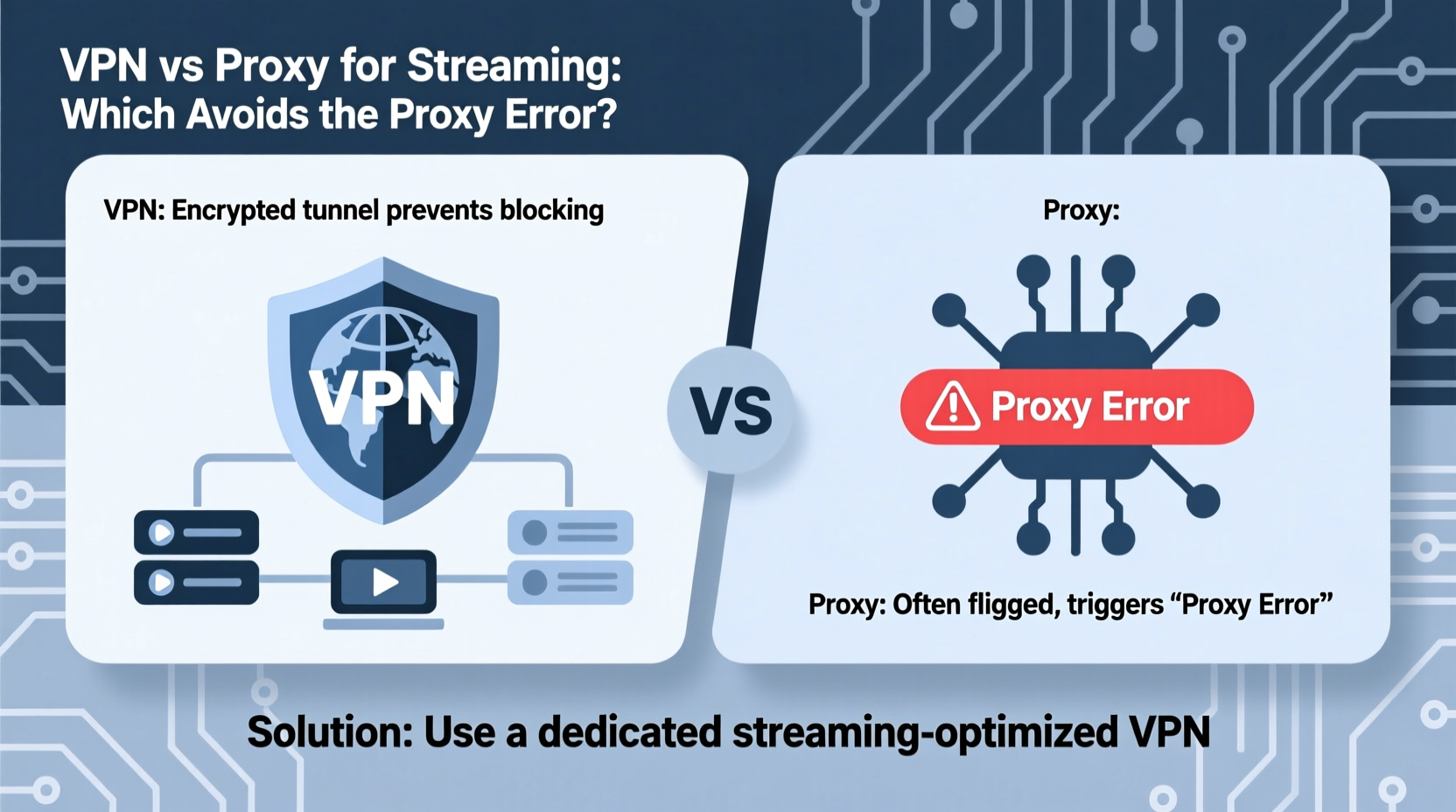
Major streaming services invest heavily in geolocation enforcement. They maintain extensive databases of known proxy and data center IP addresses. When you connect through an IP associated with a hosting provider rather than a residential internet service provider (ISP), red flags go up. These platforms analyze multiple signals beyond just your IP:
- IP reputation: Data center IPs are easily flagged because they’re commonly used by proxies and low-tier VPNs.
- DNS leaks: If your DNS requests reveal a mismatch between your physical location and claimed location, detection occurs.
- WebRTC leaks: Browser-level protocols can expose your real IP even if your traffic is routed elsewhere.
- Behavioral patterns: Unusual connection speeds, high concurrency from a single IP, or lack of typical browsing activity raise suspicion.
When any of these triggers fire, the platform displays the infamous proxy error. It doesn’t matter whether you’re technically using a proxy or a poorly configured VPN — the result is the same: blocked access.
“Streaming platforms now use machine learning models to detect anomalies in network behavior. It's no longer enough to just hide your IP — you need full protocol consistency.” — Dr. Lena Torres, Cybersecurity Researcher at NetFlow Labs
Proxy Servers: Why They Fail at Streaming
A proxy acts as an intermediary between your device and the internet. When you route traffic through a proxy server, your requests appear to come from its IP address instead of yours. While this sounds useful, proxies were never designed for security or stealth. Most operate at the application level (e.g., browser-only), meaning only specific apps use the tunnel — not your entire system.
There are several types of proxies, including HTTP, SOCKS4, and SOCKS5, but none offer encryption by default. This makes them fast but extremely vulnerable to detection. Worse, many free public proxies are hosted in data centers with thousands of users sharing the same IP. That kind of congestion is a dead giveaway to streaming platforms.
Even premium residential proxies — which use real ISP-assigned IP addresses — struggle with long-term reliability. Streaming services continuously update their blacklists, and once an IP is flagged, it’s rendered useless until rotated. Because proxies typically don’t encrypt traffic or mask deeper network fingerprints, they remain fragile tools in the face of modern anti-proxy systems.
VPNs: The Superior Choice for Bypassing Proxy Errors
Unlike proxies, Virtual Private Networks (VPNs) create an encrypted tunnel for all internet traffic leaving your device. This includes not just your browser, but apps, background services, and operating system updates. Encryption prevents third parties from inspecting your data, while comprehensive routing ensures consistent IP masking across all connections.
High-quality streaming-focused VPNs go further. They use advanced techniques such as:
- Obfuscated servers: Masking VPN traffic to look like regular HTTPS traffic, helping evade deep packet inspection.
- Residential IP pools: Some premium providers partner with ISPs to assign users genuine residential IPs.
- Dedicated streaming servers: Optimized endpoints specifically tuned for Netflix, Hulu, etc., with frequent IP rotation.
- Perfect forward secrecy: Ensures session keys change frequently, reducing traceability.
Because a good VPN controls both the IP source and the method of delivery — including DNS and WebRTC handling — it presents a far more convincing profile of a local user. This is why top-tier services like ExpressVPN, NordVPN, and Surfshark consistently work where proxies fail.
Real Example: Traveler Trying to Access Home Content
Sophie, a UK resident, moved to Thailand for a six-month remote work stint. She expected to continue watching BBC iPlayer during her evenings. On her first attempt, she used a free online proxy extension promising “UK IP access.” Within seconds, BBC’s system detected the anomaly and displayed: “This content is not available in your region. You appear to be using a proxy.”
Frustrated, she switched to a reputable paid VPN with dedicated UK servers. After connecting, she cleared her browser cache and disabled WebRTC in settings. This time, BBC iPlayer loaded without issue. Over the next five months, she accessed iPlayer daily without a single block — thanks to the VPN’s stable residential-grade IP pool and built-in leak protection.
The difference wasn’t just the IP; it was the holistic approach to mimicking authentic user behavior.
Detailed Comparison: VPN vs Proxy for Streaming
| Feature | VPN | Proxy |
|---|---|---|
| Traffic Encryption | Yes (end-to-end) | No (unless manually configured) |
| System-Wide Coverage | Yes (all apps and devices) | Limited (usually per-app or browser-only) |
| DNS Leak Protection | Built-in on quality services | Rarely included |
| IP Type (Data Center vs Residential) | Mixed; premium options offer residential | Mostly data center IPs |
| Speed Impact | Moderate (depends on server load) | Low to high (often unstable) |
| Security & Privacy | High (no logs, secure protocols) | Poor (many log user data) |
| Success Rate with Streaming Services | High (with trusted providers) | Very low (especially free proxies) |
This table underscores a fundamental truth: proxies prioritize simplicity and speed over reliability and stealth, making them ill-suited for evading intelligent streaming filters. A well-configured VPN, in contrast, offers the depth of control needed to pass as a genuine local viewer.
Step-by-Step Guide to Avoiding the Proxy Error Message
If you want reliable access to geo-blocked content without triggering warnings, follow this proven sequence:
- Choose a streaming-optimized VPN: Select a provider known to work with your target platform (e.g., ExpressVPN for Netflix US).
- Install the official app: Use native applications instead of browser extensions for full-system coverage.
- Connect to a dedicated streaming server: Many VPNs label servers optimized for specific platforms — use those.
- Disable WebRTC in your browser: In Chrome or Firefox, install extensions or adjust settings to prevent IP leaks.
- Clear cookies and cache: Old location data can conflict with your new IP; start fresh.
- Test for leaks: Visit sites like
dnsleaktest.comandipleak.netto confirm no exposure. - Try accessing the service: Open the streaming site in an incognito window to reduce tracking interference.
If the proxy error still appears, disconnect and reconnect to a different server within the same country. Persistent issues may require switching providers altogether — some services aggressively blacklist certain IP ranges regardless of configuration.
Checklist: Before You Stream Abroad
- ✅ Verified that your chosen VPN supports the streaming service you want
- ✅ Installed the latest version of the VPN client
- ✅ Connected to a server labeled for streaming (if available)
- ✅ Disabled WebRTC in your browser settings
- ✅ Ran a DNS and IP leak test
- ✅ Cleared browser cache and cookies
- ✅ Tested access in incognito/private mode
- ✅ Have a backup server or provider ready in case of failure
Frequently Asked Questions
Can a proxy ever work for streaming?
Occasionally, yes — especially if it’s a high-quality residential proxy with a clean IP reputation. However, success is inconsistent and short-lived. Most proxies lack the infrastructure to handle dynamic blacklisting, making them unreliable for regular use.
Why does my VPN still show a proxy error?
Not all VPNs are equal. If your provider uses easily identifiable data center IPs or fails to prevent DNS/WebRTC leaks, streaming platforms will flag the connection. Additionally, some services like Netflix actively sue or pressure VPN companies, leading to rapid IP takedowns. Switching to a more robust provider usually resolves this.
Is it legal to use a VPN to stream geo-restricted content?
In most countries, using a VPN is legal. However, violating a streaming platform’s terms of service may result in account restrictions. While enforcement is rare for individual users, it’s important to understand that bypassing regional locks exists in a gray area — technically possible, but against the rules of most platforms.
Final Recommendation: Invest in Quality, Not Convenience
The choice between a proxy and a VPN for streaming comes down to one question: Do you want a temporary fix or a sustainable solution? Free proxies might seem appealing due to zero cost and instant setup, but they fail precisely when you need them most — right before your favorite show loads.
A premium VPN requires a modest monthly investment, but delivers consistent performance, enhanced privacy, and freedom from the proxy error loop. More importantly, it gives you control. With proper configuration and a trustworthy provider, you can reliably access global content libraries while minimizing detection risks.




 浙公网安备
33010002000092号
浙公网安备
33010002000092号 浙B2-20120091-4
Comments
No comments yet. Why don't you start the discussion?