
In recent years, virtual reality (VR) fitness has exploded in popularity. From rhythm-based boxing in Beat Saber to full-body HIIT sessions in Supernatural, millions are trading dumbbells for headsets. But as VR workouts become more immersive and effective, a pressing question emerges: Can virtual reality truly replace traditional gym workouts? The answer isn’t binary. While VR offers compelling advantages in motivation, accessibility, and fun, it also has limitations in strength development, biomechanics, and long-term adaptability. This article breaks down the science, practicality, and future potential of VR fitness compared to conventional training.
The Rise of VR Fitness: More Than Just a Game
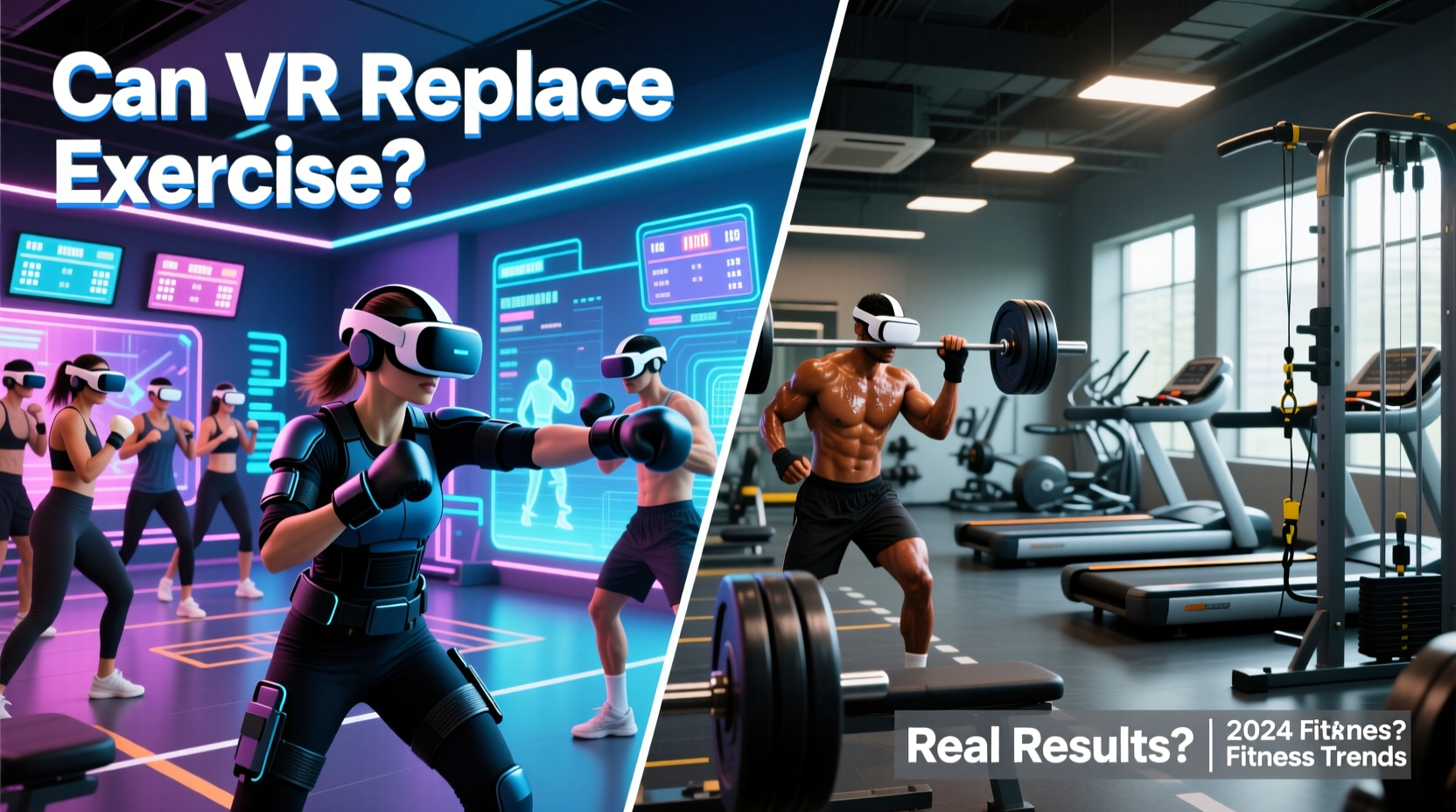
What began as experimental tech is now a legitimate fitness modality. Platforms like Meta Quest have made VR accessible, affordable, and wireless—removing major barriers to entry. Unlike passive video games, VR fitness titles require physical movement, often elevating heart rate, improving coordination, and burning calories. Titles such as Fitness Boxing VR, Cyberfit, and OhShape combine music, visuals, and motion tracking to create engaging full-body experiences.
According to a 2023 study published in the Journal of Sports Science & Medicine, participants who engaged in 30-minute VR cardio sessions burned between 200–400 calories—comparable to moderate treadmill walking or cycling. The key differentiator? Enjoyment. Over 75% of users reported they were more likely to stick with VR workouts due to their gamified nature.
Comparing Physical Outcomes: Strength, Endurance, and Flexibility
To assess whether VR can replace the gym, we must evaluate outcomes across three core domains: cardiovascular health, muscular strength, and flexibility.
| Training Type | Cardiovascular Benefit | Muscular Strength Gain | Flexibility & Coordination |
|---|---|---|---|
| Traditional Gym | High (treadmill, spin, circuits) | Very High (progressive overload) | Moderate (with dedicated stretching) |
| VR Fitness Games | High (dynamic movement games) | Low-Moderate (bodyweight only) | High (reactive movements, spatial awareness) |
While VR excels at boosting heart rate and enhancing neuromuscular coordination, it falls short in progressive resistance training. Most VR workouts rely on bodyweight or light resistance via motion controllers (typically under 1 lb). Without external load, significant muscle hypertrophy or maximal strength gains are unlikely. As Dr. Lena Torres, sports physiologist at the University of Colorado, explains:
“Resistance is the cornerstone of strength adaptation. You can’t out-train the need for mechanical tension. VR can complement weight training, but it won’t replace deadlifts or squats for building functional strength.” — Dr. Lena Torres, PhD, Sports Physiology
That said, VR does offer unique neurological benefits. Fast-paced games improve reaction time, hand-eye coordination, and spatial cognition—skills rarely targeted in standard gym routines.
Accessibility and Adherence: Where VR Shines
One of VR’s strongest arguments is its ability to overcome common gym barriers: intimidation, cost, time, and monotony. Many people avoid gyms due to social anxiety or lack of knowledge about equipment. VR provides a private, judgment-free environment where users can work out at home with guided instruction.
A 2022 survey by the American Council on Exercise found that 68% of inactive adults cited “lack of motivation” as their primary obstacle to exercise. VR directly addresses this through instant feedback, leaderboards, narrative progression, and adaptive difficulty—all psychological triggers that promote habit formation.
Consider Maria, a 42-year-old office worker from Portland. After two knee surgeries, she struggled with consistency in physical therapy and avoided gyms due to pain and self-consciousness. She started using Supernatural for 20 minutes daily. Within six weeks, her step count increased by 45%, her resting heart rate dropped, and she reported higher energy levels. Though not replacing rehab, VR gave her a sustainable way to stay active when traditional options felt overwhelming.
“I don’t feel like I’m exercising. I feel like I’m escaping into another world. That mental shift made all the difference.” — Maria R., VR fitness user for 8 months
Limitations and Risks of VR-Only Training
Despite its appeal, relying solely on VR for fitness carries risks:
- Limited Resistance Progression: Without increasing load, muscles plateau quickly.
- Biomechanical Inefficiency: Simulated movements don’t replicate real-world lifting mechanics.
- Motion Sickness: Up to 30% of users experience dizziness or nausea, especially during rapid transitions.
- Overuse Injuries: Repetitive swinging motions in games like Beat Saber may strain shoulders or wrists over time.
- Social Isolation: While privacy is a benefit, lack of human interaction may reduce long-term adherence for some.
Additionally, VR lacks the tactile feedback of free weights or resistance bands. Proper form in squats or deadlifts requires proprioception—the body’s ability to sense position and force. In VR, users may develop compensatory movement patterns because visual cues override kinesthetic awareness.
Hybrid Approach: Combining VR and Gym Workouts
The most effective fitness strategy may not be choosing one over the other—but integrating both. A hybrid model leverages the strengths of each:
- Monday & Thursday: VR cardio (e.g., 30 min Cyberfit) for endurance and enjoyment.
- Tuesday & Friday: Gym-based strength training focusing on compound lifts (squats, rows, presses).
- Wednesday: Active recovery with VR yoga or stretching programs like Tripp.
- Weekend: Outdoor activity (hiking, cycling) to maintain real-world movement literacy.
This approach maintains physical variety, reduces burnout, and supports holistic development. Gamers who already enjoy VR can use it as a gateway to broader fitness engagement. For example, someone who starts with BoxVR might later join a real kickboxing class inspired by the virtual experience.
Checklist: Building a Balanced VR + Gym Routine
- ✅ Assess current fitness level and goals (weight loss, strength, mobility)
- ✅ Choose 2–3 VR workouts aligned with your goals (cardio, coordination, mindfulness)
- ✅ Schedule at least two strength training sessions per week using external resistance
- ✅ Limit VR sessions to 45 minutes max to prevent eye strain and fatigue
- ✅ Track progress with metrics: calories burned, workout frequency, strength gains
- ✅ Take breaks: follow the 20-20-20 rule (every 20 minutes, look 20 feet away for 20 seconds)
Future Outlook: Will VR Eventually Replace Gyms?
Technology is advancing rapidly. Haptic resistance suits, omnidirectional treadmills, and AI-powered personal trainers are already in development. Companies like Black Box VR integrate real weight machines with VR gameplay, allowing users to lift actual resistance while immersed in a sci-fi universe. These innovations could bridge the gap between digital engagement and physical adaptation.
However, the gym offers irreplaceable elements: fresh air, sunlight, social accountability, and complex environmental stimuli. Human bodies evolved to move in diverse, unpredictable settings—not just within a 6x6 foot play area. While VR can simulate climbing or dancing, it cannot replicate the uneven terrain of a trail run or the dynamic balance required in sports.
Furthermore, community remains a powerful motivator. Group classes, personal trainers, and casual gym conversations foster connection that even the most social VR platforms struggle to match. As fitness influencer Jamal Reed notes:
“The gym isn’t just about lifting weights—it’s about showing up, being seen, and growing alongside others. No avatar can replace that energy.” — Jamal Reed, Certified Trainer & Fitness Coach
FAQ
Can VR help me lose weight effectively?
Yes, if used consistently. High-intensity VR games can burn 300+ calories per hour and support fat loss when combined with proper nutrition. However, results plateau without added resistance or dietary control.
Is VR safe for older adults or people with joint issues?
Generally yes, especially low-impact options like VR yoga or tai chi. Always consult a healthcare provider first. Use wrist straps to prevent controller drops, and ensure ample clearance to avoid collisions.
Do I need expensive equipment for VR fitness?
Not necessarily. The Meta Quest 3 (starting at $499) is a standalone headset requiring no PC or console. Many effective fitness apps cost under $20. Compare that to a $80/month gym membership, and VR becomes a cost-effective alternative—especially for home users.
Conclusion
Virtual reality fitness is not a replacement for the gym—but it is a revolutionary supplement. It lowers entry barriers, increases adherence, and makes movement enjoyable in ways traditional workouts often fail to achieve. Yet, it cannot fully replicate the physiological stimulus of heavy resistance training or the ecological richness of outdoor activity.
The future of fitness lies not in choosing between worlds, but in blending them. By integrating VR’s motivational power with the proven efficacy of gym-based training, individuals can create personalized, sustainable routines that evolve with their lives. Whether you’re a busy parent, recovering patient, or seasoned athlete, there’s room for both the headset and the squat rack.




 浙公网安备
33010002000092号
浙公网安备
33010002000092号 浙B2-20120091-4
Comments
No comments yet. Why don't you start the discussion?