
In an era where minimalism meets multitasking, the debate between wallet phone cases and regular phone cases has become increasingly relevant. With smartphones already occupying a central role in our daily lives, the idea of combining your phone and wallet into one device seems appealing. But does the added thickness and rigidity justify the convenience? Or does it compromise comfort, durability, and long-term usability?
For many, the appeal lies in streamlining essentials—fewer items in the pocket, fewer things to forget. Yet others argue that merging two distinct tools undermines both functionality and design. To make an informed decision, it’s essential to weigh the pros and cons across multiple dimensions: practicality, protection, ergonomics, security, and lifestyle fit.
Convenience vs. Compromise: The Core Trade-Off
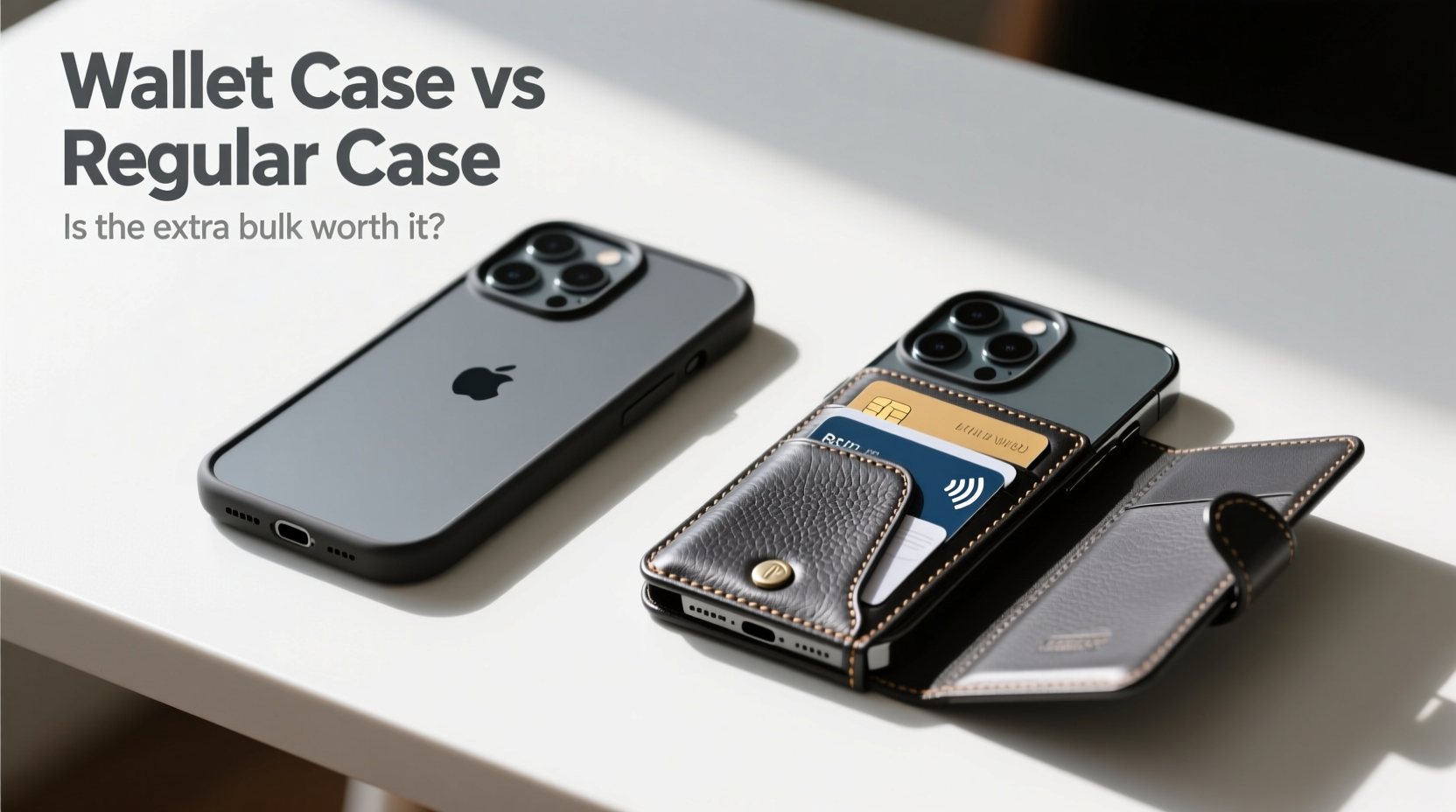
The primary advantage of a wallet phone case is consolidation. It holds cards, cash, or both, eliminating the need for a separate wallet. This can be especially useful during quick outings—grabbing coffee, hitting the gym, or running errands. Fewer items mean less clutter, reduced weight in pockets, and fewer chances of misplacing something critical.
However, this convenience comes at a cost. Wallet cases are inherently thicker and heavier than standard cases. They alter the phone’s profile, making one-handed use more difficult and increasing strain on fingers and wrists over time. Additionally, accessing cards often requires removing the phone from a pocket or bag, which defeats the purpose of speed if not designed thoughtfully.
Protection and Durability: How Design Affects Longevity
Standard phone cases prioritize shock absorption, drop protection, and sleek integration with the device. Many high-end models feature raised edges, precision cutouts, and materials like TPU or polycarbonate that enhance grip and impact resistance without adding significant weight.
Wallet cases, by contrast, must accommodate additional layers—card slots, magnetic closures, or fold-over flaps—which can create structural weaknesses. Over time, repeated insertion and removal of cards may stretch or crack the material around the slots. Moreover, the uneven weight distribution (especially when loaded) increases the risk of tipping during falls, potentially leading to screen-first impacts.
“Combining functions doesn’t always improve function. In fact, dual-purpose designs often sacrifice longevity for novelty.” — Daniel Reeves, Product Design Consultant at TechForm Labs
Another concern is heat dissipation. Phones generate heat during charging or heavy usage, and enclosing them in thicker materials with added insulation (like leather or synthetic wallets) can hinder airflow. While not immediately damaging, prolonged exposure to elevated temperatures may degrade battery performance over months.
Security and Accessibility: Real-World Implications
One overlooked aspect is how wallet cases affect access control. When your ID, credit cards, and phone are all in one place, losing the phone means losing everything. While digital wallets like Apple Pay and Google Wallet reduce dependency on physical cards, not all vendors accept contactless payments, and emergencies may require physical identification.
Additionally, retrieving a card from most wallet cases involves sliding it out while holding the phone—a process that can feel awkward in public settings. Some users report dropping cards mid-pull or fumbling during transactions, particularly with tight-fitting slots.
| Feature | Wallet Phone Case | Regular Case + Wallet |
|---|---|---|
| Item Count Carried | 1 (phone) | 2 (phone + wallet) |
| Bulk/Thickness | High (adds 8–15mm) | Low (case only ~1–3mm) |
| Drop Risk | Moderate-High (uneven shape) | Low-Moderate (balanced design) |
| Card Access Speed | Fast (if well-designed) | Slower (separate retrieval) |
| Loss Impact | Severe (all-in-one loss) | Manageable (can lose one item) |
Real-Life Scenario: Commuter’s Dilemma
Take Sarah, a 32-year-old urban professional who commutes via subway and walks 20 minutes to work. She used a wallet case for three months, drawn by promises of simplicity. Initially, she loved leaving her purse behind for short trips. But within weeks, she noticed discomfort in her hand after prolonged texting due to the case’s thickness. After two minor drops—one resulting in a cracked corner near the card slot—she switched back to a minimalist bumper case and a front-pocket leather wallet.
Her verdict? “It was convenient for coffee runs, but I ended up carrying my actual wallet anyway for backup cards and receipts. The phone felt unwieldy, and I worried about breaking it every time I pulled out a card.”
Sarah’s experience reflects a broader trend: hybrid solutions work best for specific, limited use cases rather than as full-time replacements.
When a Wallet Case Makes Sense: A Practical Checklist
Not everyone should avoid wallet cases. For certain lifestyles and preferences, they offer genuine value. Use this checklist to determine if one suits your needs:
- You regularly carry only 1–3 cards and no cash
- You frequently engage in hands-free activities (e.g., cycling, hiking, jogging)
- You prefer using contactless payments and rarely need physical ID
- You value reducing pocket clutter above all else
- You own a rugged smartphone model (e.g., iPhone with Ceramic Shield or Samsung Galaxy with Armor Aluminum)
- You’re willing to replace the case more often due to wear on card slots
If most of these apply, a well-reviewed wallet case from a reputable brand could be a smart addition. Look for features like secure card retention, slim profiles (<8mm), and anti-slip exteriors.
Frequently Asked Questions
Can wallet cases interfere with wireless charging?
Yes, especially if they contain metal plates or thick card stacks. Most modern wallet cases are designed to be charging-compatible, but removing cards before charging ensures optimal efficiency and prevents overheating.
Do wallet cases damage credit cards over time?
Potentially. Constant friction, bending, and exposure to heat inside pockets can demagnetize strips or disrupt EMV chips. Keep cards flat and avoid overloading slots to minimize risk.
Are there alternatives to wallet phone cases?
Absolutely. Consider a snap-on card holder (like PopWallet or MagSafe-compatible accessories), a belt holster, or a compact sleeve that clips to your phone case. These allow modular flexibility without permanent bulk.
Final Verdict: Is the Extra Bulk Worth It?
The answer depends entirely on your priorities. If your goal is maximum convenience for lightweight, on-the-go scenarios—and you're comfortable accepting slightly reduced ergonomics and higher replacement frequency—then yes, a wallet phone case can be worth the trade-off.
But if you value long-term durability, balanced handling, and security through separation of critical items, a regular case paired with a dedicated wallet remains the superior choice. The slight increase in pocket volume is often outweighed by improved usability, peace of mind, and device protection.
Ultimately, technology should serve lifestyle—not dictate it. Choose based on how you actually live, not just how marketers promise you’ll benefit.




 浙公网安备
33010002000092号
浙公网安备
33010002000092号 浙B2-20120091-4
Comments
No comments yet. Why don't you start the discussion?