
For decades, dental professionals have emphasized the importance of flossing to maintain gum health and prevent tooth decay between teeth. Traditionally, that meant using string floss—waxed or unwaxed thread pulled between each tooth. But in recent years, the water flosser, commonly known by the brand name Waterpik, has gained popularity as a modern alternative. With its pulsating stream of water, it promises easier cleaning, especially for people with braces, implants, or dexterity issues. But does it really work as well as traditional floss? Or is it just a high-tech placebo? Let’s examine the science, practicality, and real-world performance of both methods.
How Each Method Works
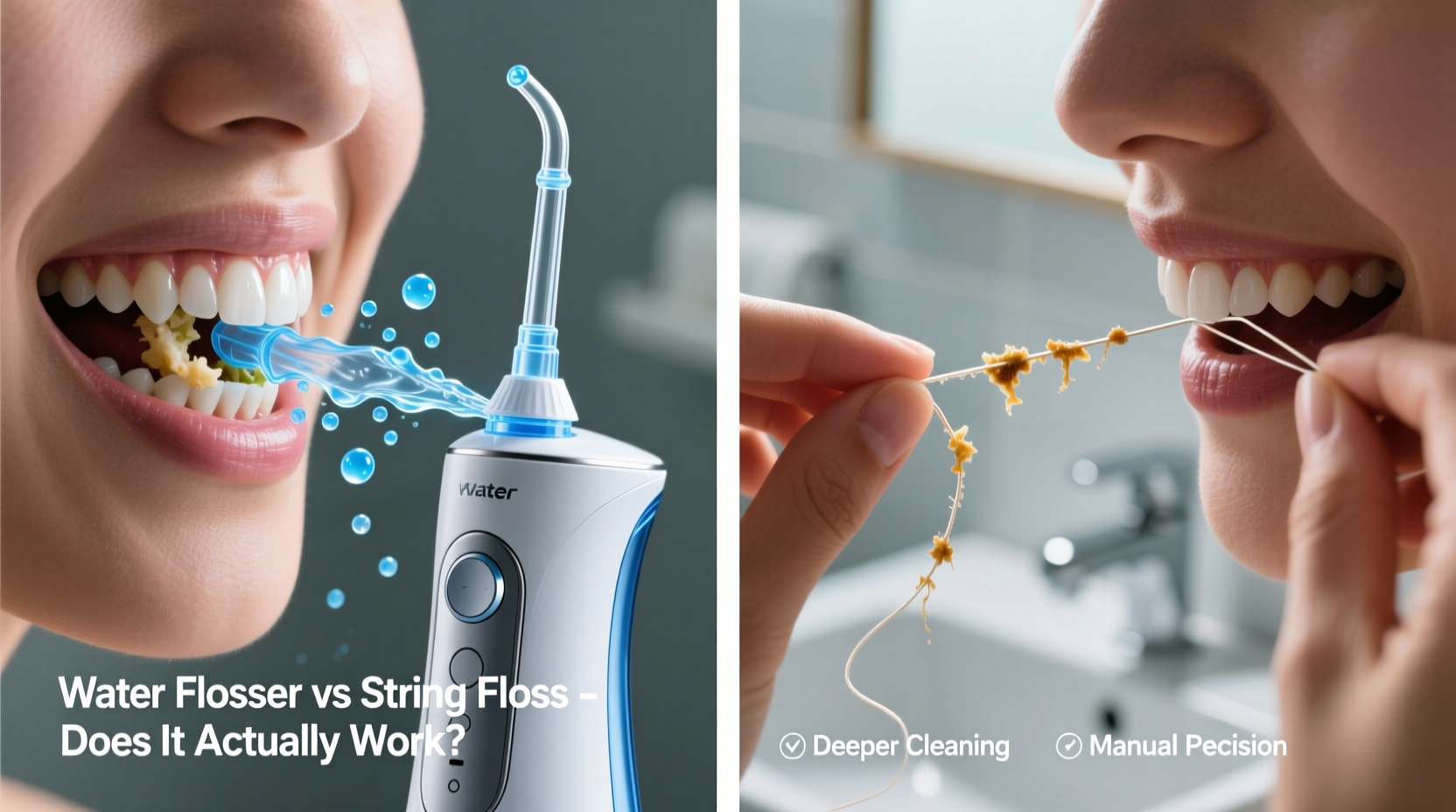
Understanding the mechanics behind each flossing method is essential to evaluating their effectiveness.
String floss relies on mechanical abrasion. A thin filament is guided between teeth and moved up and down along the sides of each tooth, disrupting plaque biofilm and removing food debris from tight interdental spaces. When done correctly, it reaches below the gumline and disrupts bacterial colonies that brushing alone can’t touch.
Water flossers, on the other hand, use a pressurized stream of water to flush out debris and bacteria from between teeth and along the gumline. The pulsation helps dislodge trapped particles and may stimulate blood flow in the gums, promoting healthier tissue. Unlike string floss, it doesn’t rely on physical contact with tooth surfaces but instead uses hydrodynamic force to clean hard-to-reach areas.
Scientific Evidence: What Research Says
The debate isn’t just anecdotal—numerous clinical studies have compared water flossers to traditional flossing. One key concern: Can water really remove plaque as effectively as physical scraping?
A 2005 study published in the Journal of Clinical Dentistry found that water flossers removed significantly more plaque than string floss when used consistently over two weeks. Participants using the Waterpik showed a 29% greater reduction in gingival bleeding and a 74.5% reduction in overall plaque compared to 57.7% with string floss.
Another meta-analysis in the International Journal of Dental Hygiene (2018) concluded that water flossers were superior to string floss in reducing gingivitis, bleeding, and plaque, particularly among patients with orthodontic appliances or periodontal pockets.
“Water flossing isn’t just convenient—it’s clinically effective. In my experience, patients with bridges, implants, or crowded teeth often achieve better hygiene outcomes with a water flosser.” — Dr. Lena Tran, Board-Certified Periodontist
However, critics argue that many of these studies are funded by manufacturers of water flossing devices. While independent research supports some benefits, the consensus remains cautious: water flossing is effective, but not necessarily a complete replacement for string floss in all cases.
Comparison Table: Water Flosser vs String Floss
| Feature | Water Flosser | String Floss |
|---|---|---|
| Plaque Removal | Effective, especially in deep pockets and around appliances | Highly effective when used properly |
| Gum Stimulation | Yes—pulsation improves circulation | Limited |
| Accessibility | Excellent for braces, implants, crowns, and limited mobility | Challenging in tight or complex dental work |
| Learning Curve | Low—easy to use with minimal training | Moderate—requires proper technique |
| Portability | Low—requires power and water source | High—compact and travel-friendly |
| Cost Over Time | Higher initial cost ($50–$100), low maintenance | Very low—floss is inexpensive |
| Environmental Impact | Higher—uses electricity and plastic device | Lower—biodegradable options available |
When a Water Flosser Excels—and When It Falls Short
Water flossers aren’t universally better—but they shine in specific scenarios.
People with braces often struggle with string floss because wires block access. A water flosser can easily flush out food stuck around brackets. Similarly, those with dental implants, bridges, or crowns benefit from the gentle yet thorough cleaning that avoids damaging restorations.
Patients with arthritis or limited hand mobility find water flossers far more manageable. Manipulating string floss requires fine motor control; a water flosser only requires guiding a nozzle.
However, water flossers have limitations. They may not fully remove tenacious plaque that adheres tightly to tooth enamel, especially in flat contact zones between molars. The absence of friction means some sticky biofilm survives the rinse. Additionally, improper use—such as holding the tip too far from the gumline—reduces effectiveness.
In contrast, string floss provides direct tactile feedback. Users can feel resistance when plaque is present, allowing for targeted cleaning. It’s also silent, portable, and doesn’t require cleanup after use—no splashing, no refilling.
Real-World Example: Sarah’s Orthodontic Journey
Sarah, a 32-year-old teacher, started wearing braces to correct a bite issue. Within weeks, she noticed persistent food trapping and sore gums. She tried string floss daily but found it painful and time-consuming. After her hygienist recommended a water flosser, she purchased a mid-range model.
Within two weeks, her gum bleeding decreased noticeably. At her next checkup, her dentist noted a 40% reduction in gingival inflammation and praised her improved interproximal cleanliness. “I still floss one or two tricky spots with string,” Sarah says, “but the water flosser handles 90% of my routine now. It’s faster, cleaner, and way less frustrating.”
Best Practices: How to Maximize Results
Whether you choose water flossing, string flossing, or both, technique matters more than the tool. Here’s a step-by-step guide to get the most out of your routine:
- Start with a clean mouth: Brush first to loosen surface debris before flossing.
- Use fresh water: Fill the reservoir with lukewarm water—avoid hot or cold extremes.
- Select the right tip: Use an orthodontic tip if you have braces, or a periodontal tip for deep pockets.
- Set appropriate pressure: Begin on low and increase gradually. High pressure can damage sensitive gums.
- Floss systematically: Start at the back molars and work forward, pausing between each tooth.
- Angle the nozzle: Aim just below the gumline at a 90-degree angle to target plaque buildup.
- Rinse the reservoir: Empty and dry it after use to prevent mold or mineral buildup.
Dentist-Recommended Checklist
- ✔ Floss daily—either method counts, but consistency is key
- ✔ Replace worn floss tips every 3–6 months
- ✔ Combine water flossing with string floss for stubborn areas
- ✔ Use antimicrobial mouthwash in the reservoir if advised by your dentist
- ✔ Don’t skip the back teeth—they’re most prone to decay
FAQ: Common Questions Answered
Can I use a water flosser instead of string floss?
Yes, for most people. The American Dental Association (ADA) has accepted certain water flossers as safe and effective for reducing gingivitis and plaque. However, some dentists recommend combining both methods—water flossing for general cleaning and string floss for tight contacts where plaque tends to cling.
Do water flossers cause gum recession?
No, when used properly. In fact, regular water flossing can improve gum health by reducing inflammation. However, using excessively high pressure or directing the stream directly into delicate gum tissue may cause irritation over time. Always follow manufacturer guidelines.
Are water flossers safe for kids?
Yes, with supervision. Many pediatric dentists recommend water flossers for children with braces or difficulty handling string floss. Use a lower pressure setting and teach proper aiming to avoid accidental injury. Some models come with fun colors and timers to encourage compliance.
Final Verdict: Is the Water Pick Actually Doing Anything?
Yes—it’s doing quite a lot. The idea that water flossers are merely a gimmick ignores both user experiences and scientific evidence. They effectively reduce plaque, decrease gum bleeding, and improve oral hygiene, especially for individuals with special dental needs.
But they’re not magic. Like any tool, their success depends on consistent, correct use. While they offer convenience and accessibility advantages, they don’t automatically outperform string floss without effort. And for some users—particularly those with tightly spaced teeth or heavy plaque buildup—string floss remains the gold standard for mechanical disruption.
The smartest approach? Consider your personal needs. If you have braces, implants, arthritis, or simply hate the hassle of string floss, a water flosser is a legitimate, effective option. If you’re highly disciplined and have no physical barriers, traditional floss works beautifully. Many dental professionals now advocate for a hybrid model: use a water flosser for daily maintenance and string floss once a day for precision cleaning.
“The goal isn’t which tool you use—it’s whether you’re reaching the spaces your toothbrush misses. Both methods work. Choose the one you’ll actually use every day.” — Dr. Marcus Reed, ADA Spokesperson
Take Action Today
Your gums don’t care whether you use water or string—they just want to be cleaned. Instead of debating which method is “better,” focus on what works for your lifestyle, anatomy, and commitment level. Try a water flosser for two weeks and assess how your gums feel. Or refine your string flossing technique with professional guidance. The real win isn’t in the tool—it’s in the habit.




 浙公网安备
33010002000092号
浙公网安备
33010002000092号 浙B2-20120091-4
Comments
No comments yet. Why don't you start the discussion?