
Every holiday season, millions of homes across the world light up with festive displays powered by strings of Christmas lights. While these decorations bring joy and warmth, they also introduce a hidden risk: circuit overloads. When too many lights are connected to a single circuit, the electrical system can be pushed beyond its capacity, leading to tripped breakers, damaged wiring, or even fire hazards. Understanding why overloads happen—and how to prevent them—is essential for a safe and stress-free holiday.
Understanding Electrical Circuits and Load Capacity
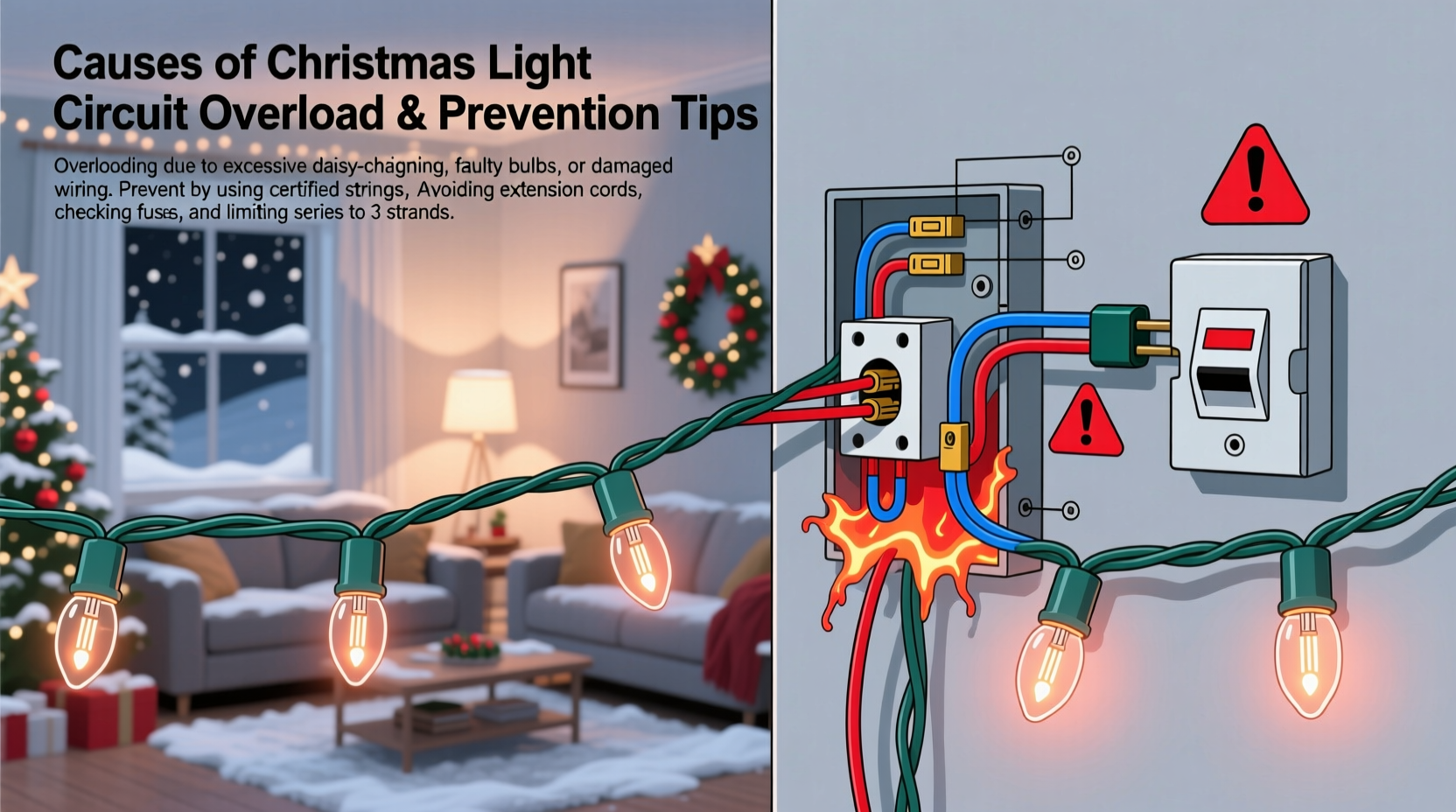
Most residential homes in North America use 15-amp or 20-amp circuits operating at 120 volts. A standard circuit can handle up to 1,800 watts (for a 15-amp circuit) or 2,400 watts (for a 20-amp circuit). However, electrical codes recommend using only 80% of that capacity for continuous loads—like holiday lights—to prevent overheating. That means:
- A 15-amp circuit should not exceed 1,440 watts
- A 20-amp circuit should stay under 1,920 watts
Christmas lights vary widely in power consumption. Incandescent mini-lights can draw 40–50 watts per string, while LED versions typically use only 4–7 watts. The difference may seem small, but when multiplied across dozens of strands, it becomes significant. Connecting six incandescent strings could consume nearly 300 watts—more than 20% of a 15-amp circuit’s safe limit—while the same number of LEDs would use less than 50 watts.
The problem arises when multiple devices share the same circuit. A living room outlet might already power a TV, gaming console, space heater, or sound system. Adding a large light display without accounting for this existing load increases the risk of exceeding safe limits.
“Many homeowners don’t realize their outlets in one room are often on the same circuit. Plugging in too many decorative lights alongside other electronics is a common cause of overloads.” — James Landon, Licensed Electrician and Home Safety Inspector
Common Causes of Christmas Light Circuit Overloads
Overloads rarely happen due to a single mistake. Instead, they result from a combination of factors that gradually push a circuit past its limits. The most frequent causes include:
Daisy-Chaining Too Many Light Strings
Many people connect multiple light strings end-to-end, assuming the label “connectable” means unlimited expansion. In reality, manufacturers specify a maximum number of strings that can be safely linked—often between 3 and 6, depending on bulb type and wattage. Exceeding this limit increases current draw beyond what the first string’s wiring can handle.
Mixing Old and New Light Sets
Older incandescent sets have higher wattage and less durable wiring. When combined with newer, lower-wattage LEDs on the same circuit, the total load isn’t always obvious. Even if the newer lights are efficient, the older ones can dominate the energy draw and create an imbalance.
Using Indoor Lights Outdoors (or Vice Versa)
Indoor-rated lights lack weatherproofing and are not designed for outdoor circuits, which often serve multiple fixtures like porch lights and garage outlets. Using indoor strings outside may lead to unsafe setups, such as running extension cords through windows or doors, increasing resistance and heat buildup.
Overloading Extension Cords and Power Strips
Extension cords are temporary solutions, yet many treat them as permanent fixtures. Using undersized cords (e.g., 18-gauge instead of 16- or 14-gauge) for long runs increases resistance, causing the cord to heat up. Similarly, plugging multiple light strands into a single power strip without checking its rated capacity can easily surpass safe limits.
Ignoring Other Devices on the Same Circuit
A single wall outlet doesn’t operate in isolation. Multiple outlets in a room are usually wired to the same breaker. If you’re adding 10 light strings to a circuit already powering a refrigerator, entertainment center, or space heater, the cumulative load can trigger a trip—or worse, sustained overheating.
How to Prevent Christmas Light Circuit Overloads
Preventing overloads requires planning, awareness, and adherence to electrical best practices. Follow these steps to ensure your holiday display stays bright and safe.
Step-by-Step Guide to Safe Holiday Lighting Setup
- Map Your Circuits: Identify which outlets are on the same circuit by turning off breakers one at a time and testing each outlet with a lamp or plug-in tester. Label them if needed.
- Calculate Total Wattage: Add up the wattage of all devices currently using the circuit, then subtract that from the 80% safe capacity (1,440W for 15A). The remainder is your available budget for lights.
- Choose LED Lights: Switch to LED strings whenever possible. They use up to 90% less energy, generate less heat, and last longer.
- Limit Daisy-Chaining: Respect manufacturer guidelines. If a string allows three connections, do not link four—even if they “fit.” Use a multi-outlet adapter or additional circuits instead.
- Use Outdoor-Rated Cords and Timers: For exterior displays, use heavy-duty extension cords labeled “outdoor use” and install a programmable timer to turn lights off during late-night hours, reducing strain and saving energy.
- Distribute Loads Across Circuits: Plug different sections of your display into outlets on separate circuits. For example, front yard lights on one breaker, roof lights on another.
- Inspect All Components: Check for frayed wires, cracked sockets, or loose plugs. Replace damaged sets immediately—don’t try to repair them with tape.
Checklist: Pre-Lighting Safety Review
- ✅ Verified circuit capacity and existing load
- ✅ Calculated total wattage of planned lights
- ✅ Selected LED strings where possible
- ✅ Confirmed max daisy-chain limit is respected
- ✅ Used outdoor-rated cords and GFCI outlets for exterior setups
- ✅ Installed a timer to limit daily runtime
- ✅ Inspected all cords, plugs, and sockets for damage
Real Example: How One Family Avoided a Hazard
The Thompson family in Portland, Oregon, loved elaborate holiday displays. In 2022, they planned to double their usual setup with new icicle lights, inflatable figures, and animated reindeer. Their initial plan involved connecting 12 incandescent light strings along the roofline—all plugged into a single outdoor outlet.
Before installation, they consulted a neighbor who was an electrician. He tested the circuit and found it already powered landscape lighting and a security camera. The combined load was near 1,300 watts. Adding the new lights—estimated at 600 watts—would have exceeded the 1,440-watt safety threshold.
Instead, he advised switching to LED strings (totaling just 84 watts), using a second circuit for the inflatables, and installing a GFCI-protected power hub. The result? A brighter, safer display that used less energy and didn’t trip a single breaker all season.
This case highlights how simple changes—like switching to LEDs and distributing loads—can prevent serious issues without sacrificing festive impact.
Do’s and Don’ts: Managing Holiday Lighting Safely
| Do | Don’t |
|---|---|
| Use LED lights for lower energy consumption | Daisy-chain more than the manufacturer allows |
| Plug high-draw items into separate circuits | Use indoor lights outdoors |
| Use heavy-gauge extension cords for long runs | Run cords under rugs or through high-traffic areas |
| Install timers to reduce daily runtime | Leave lights on 24/7, especially unattended |
| Test GFCI outlets monthly during the season | Ignore flickering lights or warm outlets—they signal danger |
Frequently Asked Questions
Can I plug Christmas lights into a power strip?
Yes, but only if the power strip is rated for the total wattage of all connected devices. Most standard strips handle 1,800–2,000 watts. Always check the label, avoid daisy-chaining strips, and never use them as a permanent solution. For high-load displays, consider installing additional outlets or using dedicated circuits.
Why do my lights keep tripping the breaker?
This usually means the circuit is overloaded or there’s a fault in the wiring. First, unplug everything and reset the breaker. Then, reconnect devices one at a time to identify the culprit. If the breaker trips with only a few lights, inspect for short circuits, damaged cords, or moisture exposure—especially outdoors. Persistent issues require a licensed electrician.
Are smart lights safer than traditional ones?
Smart lights themselves aren’t inherently safer electrically, but they offer features that improve safety. Remote control and scheduling reduce the need to manually switch outlets, and usage monitoring can alert you to abnormal power draws. Most smart strings are also LED-based, which lowers overall load. Just ensure your Wi-Fi-enabled hubs are on surge protectors.
Conclusion: Light Up Safely This Season
Christmas light circuits overload when convenience overrides caution. Whether it’s linking too many strings, ignoring existing loads, or using improper cords, the risks accumulate silently until a breaker trips—or worse. But with a little planning, the right equipment, and respect for electrical limits, you can create a dazzling display without compromising safety.
The shift to LED technology has made holiday lighting more efficient than ever, but awareness remains the most important tool. Know your circuits, calculate your loads, and distribute your setup wisely. A well-managed display isn’t just safer—it lasts longer, costs less to run, and brings peace of mind along with the holiday cheer.




 浙公网安备
33010002000092号
浙公网安备
33010002000092号 浙B2-20120091-4
Comments
No comments yet. Why don't you start the discussion?