
Mustard is one of the world’s most enduring and versatile condiments, found in kitchens from Parisian bistros to Midwestern picnic tables. Yet despite its ubiquity, few understand what mustard actually is at its core—beyond a yellow squeeze bottle on a hot dog stand. The truth is far more nuanced: mustard is not merely a sauce but a transformation of tiny seeds into a pungent, complex flavor agent through simple chemistry. Understanding how mustard works—how it’s made, why it behaves the way it does in cooking, and how its forms differ—is essential for anyone serious about flavor development. This guide breaks down mustard from seed to spread, offering practical insights for home cooks, culinary professionals, and curious eaters alike.
Definition & Overview
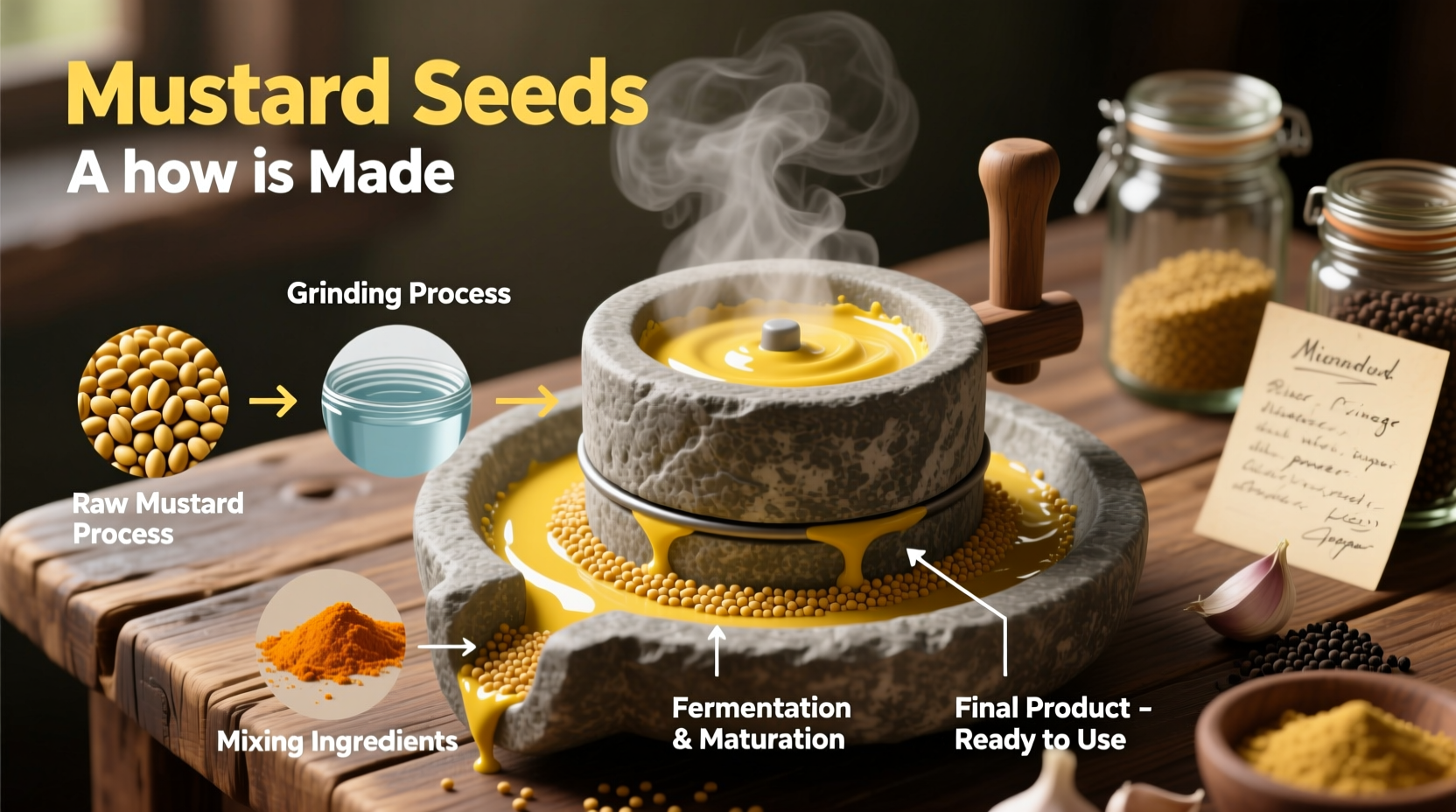
Mustard refers both to the plant of the Brassicaceae family—genus Brassica or Sinapis—and to the condiment produced by grinding its seeds and mixing them with liquid. The three primary species used are Brassica juncea (brown mustard), Brassica nigra (black mustard), and Brassica hirta (white or yellow mustard). Each yields seeds with distinct heat levels, aromas, and culinary applications.
The condiment we recognize as \"mustard\" emerges when ground mustard seeds come into contact with a liquid—typically water, vinegar, wine, or beer. This triggers an enzymatic reaction that releases allyl isothiocyanate, the compound responsible for mustard’s signature heat and nasal bite. Unlike chili peppers, whose burn builds and lingers, mustard’s heat is sharp, immediate, and fleeting—peaking within minutes and dissipating quickly unless stabilized by an acidic medium like vinegar.
Historically, mustard has been cultivated for over 5,000 years. Ancient civilizations in India and the Mediterranean used mustard seeds for both medicine and seasoning. By the Roman era, crushed mustard seeds mixed with unfermented grape juice (called *mustum ardens*, or “burning must”) gave rise to the word “mustard.” Over centuries, regional variations evolved—from the smooth Dijon of France to the coarse German whole-grain styles and the bright yellow American ballpark style—each reflecting local ingredients and culinary traditions.
Key Characteristics
The sensory profile of mustard varies dramatically depending on seed type, liquid, temperature, and processing method. Below is a breakdown of its defining characteristics:
| Characteristic | Description |
|---|---|
| Flavor Profile | Sharp, pungent, slightly bitter; can range from mild and tangy to intensely hot and sinus-clearing. Sweetness or umami may be added via honey, sugar, or aged liquids. |
| Aroma | Pungent, earthy, sometimes nutty. Freshly prepared mustard has a volatile, almost horseradish-like scent due to released isothiocyanates. |
| Color | Varies: bright yellow (with turmeric) for American-style; pale gold to deep brown for European styles; grayish when raw seeds are used without coloring agents. |
| Heat Level | Moderate to high, but short-lived. Heat intensity depends on seed variety (black > brown > yellow), liquid pH (water increases heat, vinegar suppresses it), and preparation temperature (cold liquid enhances pungency). |
| Culinary Function | Emulsifier (in dressings and sauces), tenderizer (in marinades), flavor enhancer (in rubs and braises), preservative (due to antimicrobial properties). |
| Shelf Life | Commercial mustard: 1–2 years refrigerated after opening. Homemade: 1–3 months, depending on acidity and storage. Properly acidified mustards resist spoilage due to low pH and natural compounds. |
How Mustard Is Made: From Seed to Sauce
The process of making mustard is deceptively simple, relying on minimal ingredients and precise timing to control flavor development. At its core, mustard requires only two components: ground mustard seeds and a liquid. However, subtle changes in technique yield vastly different results.
- Seed Selection and Preparation: Whole mustard seeds are cleaned, sorted, and sometimes toasted to deepen flavor. They may be used whole, cracked, or finely ground, depending on the desired texture.
- Grinding: Seeds are milled into a powder or paste. Industrial production uses stone or steel grinders; artisanal methods may involve mortar and pestle for small batches.
- Liquid Addition: The critical step. When liquid hits the ground seeds, the enzyme myrosinase converts sinigrin (a glucosinolate) into allyl isothiocyanate—the source of heat. The choice of liquid alters both flavor and stability:
- Water: Maximizes initial heat but is unstable; pungency fades within 10–15 minutes.
- Vinegar (acetic acid): Halts the enzymatic reaction quickly, preserving a consistent, milder heat. Most commercial mustards use vinegar for shelf stability.
- Wine, Beer, or Cider: Adds complexity and slight fermentation notes. Often used in European styles (e.g., Dijon, Bavarian).
- Aging: Many high-end mustards are aged for days or weeks in sealed containers. This mellows harshness and allows flavors to meld. Dijon mustard, for example, traditionally ages for 1–2 weeks.
- Additives: Salt (for preservation and taste), sweeteners (honey, sugar), spices (turmeric for color, garlic, coriander), and thickeners (flour, starch) may be blended in depending on the style.
Pro Tip: To maximize heat in homemade mustard, mix ground seeds with cool water and let sit for 10 minutes before adding vinegar. For milder flavor, add vinegar immediately. Temperature matters: warm liquids accelerate enzyme activity but shorten peak heat duration.
Variants & Types of Mustard
Mustard is not a monolith. Around the world, regional traditions have shaped dozens of styles, each suited to specific dishes and preparations. The most common types include:
- Yellow Mustard: Made from white/yellow seeds, heavily processed, and colored with turmeric. Mild, tangy, and slightly sweet. Ubiquitous in American cuisine—ideal for hot dogs, burgers, and ballpark fare.
- Dijon Mustard: Originating in Dijon, France, traditionally made from brown or black seeds macerated in unfermented grape juice (*verjus*) or white wine. Smooth, sharp, and complex. Excellent in vinaigrettes, deglazing pans, and cream sauces.
- Whole-Grain / Coarse Mustard: Contains partially crushed or intact seeds. Offers textural contrast and bursts of flavor. Common in charcuterie, sausages, and robust meat dishes. Alsace-style and German variants often include wine or beer.
- Honey Mustard: A blend of mustard and honey, balancing heat with sweetness. Used as a dip, glaze, or dressing base. Can be made with any mustard base.
- Spicy Brown Mustard: Made from coarsely ground brown seeds, often with vinegar and spices. Hotter and more aromatic than yellow mustard. A staple in deli sandwiches and Reubens.
- Chinese Mustard: Prepared from brown mustard seeds mixed with water only, producing an intense, short-lived heat. Used in dumpling dips and cold noodle dishes.
- English Mustard: A fine powder (often a blend of white and black seeds) mixed with water to form a paste. Extremely hot when fresh, fading quickly. Traditionally served with roast beef.
| Type | Seed Base | Liquid Used | Heat Level | Best Culinary Use |
|---|---|---|---|---|
| Yellow Mustard | White/Yellow | Vinegar + Water | Low | Burgers, hot dogs, potato salad |
| Dijon | Brown/Black | White Wine/Vinegar | Medium-High | Pan sauces, marinades, dressings |
| Whole-Grain | Brown + Yellow | Vinegar/Wine | Medium | Sausages, terrines, cheese boards |
| Spicy Brown | Brown | Vinegar + Spices | High | Reubens, pastrami, pretzels |
| English (prepared) | White + Black | Water | Very High (fleeting) | Roast beef, accompaniments |
| Chinese Mustard | Brown | Water | Intense (short-lived) | Dipping sauces, noodles |
Comparison with Similar Ingredients
Mustard is often confused with other pungent condiments, but key differences set it apart:
- Horseradish: While both produce a nasal heat via isothiocyanates, horseradish (from a root) delivers a sharper, cleaner burn that also fades quickly. Mustard offers more complexity, with bitterness and umami. Horseradish is often blended with mustard (e.g., in cocktail sauce or chophouse sauces) for layered heat.
- Wasabi: True wasabi (from *Wasabia japonica*) is rare and expensive. Most “wasabi” is a mix of horseradish, mustard powder, and green dye. Real wasabi has a fresher, more floral heat and loses potency rapidly. Mustard powder is a functional substitute in dry wasabi blends.
- Mayonnaise: Though both are emulsified and used as spreads, mayo relies on egg yolks and oil for richness, while mustard uses seed mucilage and acid. Mustard can stabilize mayo emulsions and cut through fat—many chefs add a spoonful to prevent splitting.
- Ketchup: Ketchup is sweet, tomato-based, and low in acidity compared to most mustards. While ketchup dominates American fast food, mustard offers superior functionality in cooking due to its emulsifying and tenderizing properties.
“Mustard is the unsung hero of the pantry. It doesn’t just add flavor—it transforms textures, binds sauces, and amplifies other ingredients without dominating. Once you understand how it works, you’ll reach for it as often as salt.” — Chef Elena Martinez, Culinary Institute of America
Practical Usage: How to Use Mustard in Cooking
Far beyond a sandwich spread, mustard is a powerhouse ingredient in both home and professional kitchens. Its ability to emulsify, tenderize, and enhance makes it indispensable.
1. As an Emulsifier
Mustard contains natural gums and proteins that help bind oil and water. In vinaigrettes, a teaspoon of Dijon prevents separation. Ratio: 1 part mustard to 3 parts vinegar to 9 parts oil. Whisk mustard and vinegar first, then slowly drizzle in oil.
2. In Marinades and Glazes
Mustard penetrates meat fibers, carrying flavor deep into proteins. Its acidity helps break down connective tissue, especially in tougher cuts. For a pork loin glaze: mix 2 tbsp Dijon, 1 tbsp honey, 1 minced garlic clove, and 1 tsp thyme. Brush on during last 15 minutes of roasting.
3. In Sauces and Pan Deglazing
After searing meats, deglaze the pan with wine or stock, then whisk in mustard to create a rich, cohesive sauce. Example: Sear chicken breasts, remove, deglaze with ½ cup white wine, reduce by half, add 1 cup cream and 2 tsp Dijon, simmer until thickened.
4. In Baking and Bread Making
Whole-grain mustard adds depth to savory scones, breads, and cheese crackers. Fold 2–3 tbsp into dough just before shaping. Also excellent in pretzel dipping sauces.
5. As a Rub Component
Combine mustard with herbs, spices, and oil to form a paste for ribs, brisket, or salmon. The mustard acts as a binder, helping the rub adhere and forming a flavorful crust during cooking.
Home Cook Hack: Replace 1–2 teaspoons of oil in salad dressing with mustard for extra body and reduced calorie count. The result is creamier without dairy.
Practical Tips & FAQs
Does mustard go bad?
Commercial mustard is highly resistant to spoilage due to its acidity and natural preservatives. It may darken or separate over time but remains safe. Discard if mold appears or odor turns rancid. Homemade versions without sufficient acid should be consumed within weeks.
How should I store mustard?
Keep opened mustard refrigerated to preserve flavor and prevent oxidation. Unopened jars can be stored in a cool, dark pantry. Avoid contamination by using clean utensils.
Can I make my own mustard?
Yes—and it’s easier than you think. Combine ½ cup ground mustard seeds (or whole seeds soaked overnight) with ⅓ cup liquid (vinegar, beer, or wine), 1 tsp salt, and optional honey or spices. Let sit for 24–48 hours for best flavor. Adjust consistency with more liquid.
Is mustard gluten-free?
Pure mustard made from seeds, vinegar, and salt is naturally gluten-free. However, some brands add wheat flour as a thickener or process in facilities with gluten. Always check labels if sensitive.
What’s the difference between dry mustard and prepared mustard?
Dry mustard is ground seed powder. It has little flavor until activated by liquid. Prepared mustard is already mixed and ready to use. One teaspoon of dry mustard equals about one tablespoon of prepared mustard in recipes.
Why does my homemade mustard taste too harsh?
Freshly mixed mustard can be overly pungent. Aging it for 1–2 days in the refrigerator allows flavors to mellow. Adding a pinch of sugar or a splash of cream can also balance sharpness.
Summary & Key Takeaways
Mustard is far more than a condiment—it is a dynamic ingredient rooted in biochemical transformation. At its heart, it is ground mustard seeds activated by liquid, releasing a burst of pungency that can be controlled through choice of seed, pH, and temperature. From ancient remedies to modern gastronomy, mustard has evolved into a spectrum of styles, each with unique culinary roles.
Understanding the differences between yellow, Dijon, whole-grain, and spicy brown mustards empowers better recipe decisions. Recognizing its function as an emulsifier, tenderizer, and flavor amplifier unlocks advanced techniques in sauces, marinades, and baking. And knowing how to make and store it ensures freshness and customization.
Whether you're dressing a salad, roasting a chicken, or crafting a charcuterie board, mustard deserves a permanent place in your kitchen—not just on the table. Master its nuances, and you gain a tool that elevates every dish it touches.
Try this tonight: Make a quick pan sauce for grilled steak. Deglaze the skillet with red wine, stir in 1 tsp Dijon and a pat of butter, then finish with chopped parsley. Serve immediately.




 浙公网安备
33010002000092号
浙公网安备
33010002000092号 浙B2-20120091-4
Comments
No comments yet. Why don't you start the discussion?