
Baharat—Arabic for “spices”—is not a single fixed recipe but a culinary tradition of aromatic spice blends that vary by region, household, and dish. Found across the Middle East, North Africa, and parts of the Mediterranean, baharat forms the backbone of countless savory dishes, from grilled kebabs to slow-cooked stews and fragrant rice preparations. Unlike Western spice mixes that often prioritize heat, baharat balances warmth with sweetness, earthiness, and subtle floral notes, creating depth without overwhelming the palate. Understanding baharat means understanding the soul of Middle Eastern home cooking: layered, intentional, and deeply aromatic.
For home cooks seeking to elevate their pantry with globally inspired flavors, mastering baharat is a pivotal step. Whether you're seasoning ground lamb for kofta, rubbing chicken before grilling, or enriching a lentil soup, this blend delivers complexity with minimal effort. More than just convenience, homemade baharat offers superior freshness and customization compared to pre-packaged versions. This guide explores the essence of baharat, its regional expressions, practical applications, and how to integrate it seamlessly into everyday cooking.
Definition & Overview
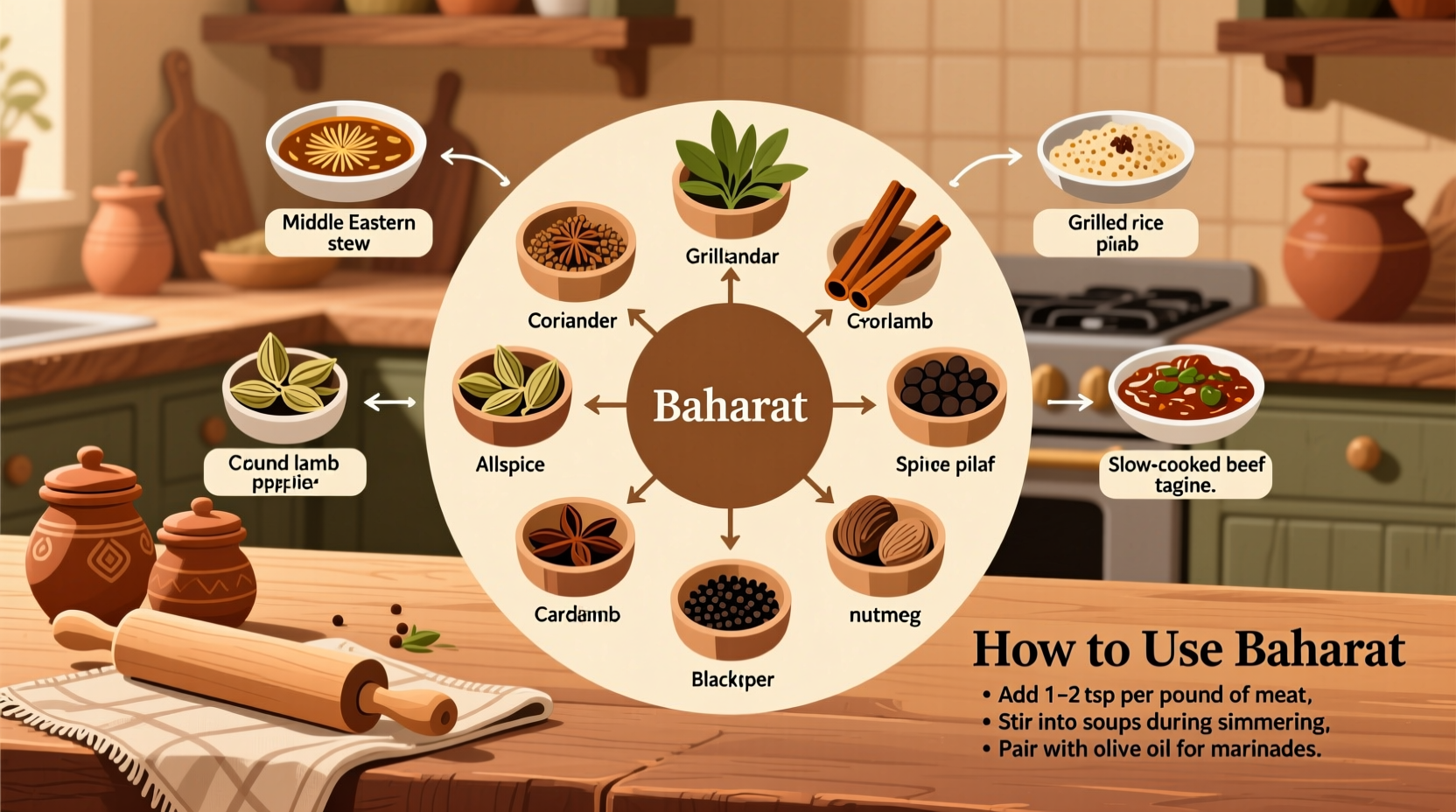
Baharat is a versatile spice blend used throughout the Arab world, particularly in Lebanon, Syria, Jordan, Iraq, and the Gulf states. While recipes differ, the core purpose remains consistent: to enhance savory dishes with a harmonious mix of warm, sweet, and slightly pungent spices. The word itself comes from the Arabic *bahārāt* (بهارات), the plural of *bahār* (بَهَار), meaning \"spice.\" Historically, such blends emerged from trade routes that brought black pepper, cinnamon, and cloves to the region, where they were combined with locally available ingredients like cumin and coriander.
In practice, baharat functions as a foundational seasoning—similar to garam masala in Indian cuisine or herbes de Provence in French cooking. It’s used both as a dry rub and as a flavor base added early in cooking. Its versatility spans proteins, grains, legumes, and vegetables. Because it's typically made from dried spices, it integrates well into marinades, doughs, and batters without altering texture.
The hallmark of a good baharat is balance. No single spice dominates; instead, each contributes to a rounded, warming aroma that lingers on the palate without burning. This makes it ideal for daily use, even in delicate dishes like stuffed vegetables or spiced yogurt sauces.
Key Characteristics
| Characteristic | Description |
|---|---|
| Flavor Profile | Warm, slightly sweet, with earthy and peppery undertones. Notes of citrus (from cardamom), wood (cinnamon), and mild heat (black pepper) are common. |
| Aroma | Fragrant and inviting—reminiscent of baking spices mixed with toasted seeds and dried herbs. |
| Color | Ranges from light brown to deep reddish-brown, depending on paprika or chili content. |
| Heat Level | Mild to moderate. Not inherently spicy unless red pepper flakes or cayenne are added. |
| Culinary Function | Seasoning base, dry rub, marinade enhancer, grain and stew flavor booster. |
| Shelf Life | 6–12 months when stored in an airtight container away from light and heat. |
| Form | Dry, powdered blend. Sometimes includes finely ground whole spices like cloves or cardamom seeds. |
Typical Ingredients in Baharat
While no single recipe is universal, most Middle Eastern versions include a core set of spices. A standard **Levantine-style baharat** typically contains:
- Black pepper (freshly ground preferred)
- Cinnamon (Ceylon or cassia)
- Cloves (used sparingly due to potency)
- Nutmeg (freshly grated)
- Allspice (whole berries, ground)
- Paprika (sweet or smoked, depending on region)
- Cumin seeds or ground cumin
- Coriander seeds or ground coriander
- Cardamom pods (green), seeds only
- Salt (optional in homemade blends)
Some Gulf Coast variations may include saffron, turmeric, or dried lime powder (*loomi*), which imparts a distinctive tangy depth. In contrast, Turkish *pul biber* blends or Moroccan *ras el hanout*—while similar—are distinct in composition and usage.
Pro Tip: For maximum flavor, toast whole spices before grinding. Heat a dry skillet over medium-low, add spices in batches (avoid burning), stir until fragrant (about 1–2 minutes), then cool before blending. This unlocks essential oils and intensifies aroma.
Variants & Types
Baharat is not monolithic. Regional differences reflect local tastes, ingredient availability, and historical influences. Understanding these variations allows cooks to select or create the right blend for a given dish.
1. Levantine Baharat (Lebanon, Syria, Palestine)
The most widely recognized version outside the Arab world. Warm and balanced, often used in meat dishes and rice. Typically includes equal parts black pepper, cinnamon, allspice, and cloves, with supporting notes of cumin, coriander, and nutmeg. Paprika adds color and mild sweetness.
2. Iraqi Baharat
Distinguished by the inclusion of dried crushed fenugreek leaves and sometimes ground mahlab (cherry pits). More herbal and slightly bitter, ideal for rich lamb dishes and flatbreads. May also contain sumac for tartness.
3. Gulf (Khaleeji) Baharat
Used in Saudi Arabia, Kuwait, and the UAE. Often includes saffron threads, turmeric, and dried lime. This version leans brighter and more complex, suited to biryanis, fish, and seafood. The addition of loomi (dried black lime) gives a fermented, umami-rich note unique to Persian Gulf cuisine.
4. Turkish Baharat (Less Common)
In Turkey, \"baharat\" usually refers to any spice mix, but some vendors sell a version similar to Levantine blends. However, Turkish cuisine more commonly uses *kimyon* (cumin-heavy) mixes or *pul biber* (pepper-based) blends rather than a unified baharat.
5. North African Adaptations
In Egypt and parts of North Africa, baharat may resemble a simplified ras el hanout, with more ginger and less clove. It’s often used in stuffing for grape leaves or zucchini.
| Region | Distinctive Ingredients | Best Used For |
|---|---|---|
| Levantine | Cinnamon, allspice, cloves, black pepper, cumin | Kofta, shawarma, rice pilaf, roasted vegetables |
| Iraqi | Fenugreek, sumac, mahlab | Lamb stews, flatbreads, stuffed onions |
| Gulf (Khaleeji) | Dried lime, saffron, turmeric | Seafood, biryani, machboos, soups |
| Egyptian | Ginger, coriander, paprika | Stuffing, legume dishes, grilled fish |
Comparison with Similar Ingredients
Baharat is often confused with other global spice blends due to overlapping ingredients. However, key distinctions exist in composition, intensity, and culinary role.
- Ras el Hanout (Morocco): More complex and variable—can contain up to 30 spices including rose petals, ash bark, and chilies. Generally hotter and more floral than baharat. Used in tagines and couscous.
- Garam Masala (India): Focuses on intense warmth (more cinnamon, cardamom, mace) and is often added at the end of cooking. Baharat tends to be used earlier and has a broader savory function.
- Chinese Five-Spice: Dominated by star anise, fennel, and Sichuan pepper. Sweet and licorice-forward, whereas baharat is earthier and more balanced across sweet and savory notes.
- Herbes de Provence (France): Herb-based (thyme, rosemary, lavender), not spice-based. Lacks the warmth and pungency of baharat. Better suited to roasts and tomato sauces than Middle Eastern dishes.
- Adobo Seasoning (Latin America): Centered on cumin, oregano, garlic, and vinegar (in wet forms). More herbaceous and acidic; baharat lacks oregano and emphasizes warming spices.
\"Baharat is the quiet foundation of so many dishes—it doesn’t shout, but without it, the food feels incomplete. It’s like salt, but for aroma.\" — Amal Farouk, chef and author of *Olive Tree Kitchen*
Practical Usage: How to Use Baharat in Cooking
Baharat’s strength lies in its adaptability. It enhances both simple weeknight meals and elaborate feasts. Below are specific applications, with guidance on quantity and technique.
1. As a Dry Rub for Meats
The most common use. Coat lamb chops, chicken thighs, or beef strips with 1–2 teaspoons of baharat per pound of meat. Add olive oil to help the spices adhere. Let sit for at least 30 minutes (or overnight for deeper flavor) before grilling, roasting, or pan-searing.
Example: For chicken shawarma, combine 2 tbsp baharat with 1 tbsp paprika, 1 tsp garlic powder, juice of one lemon, and ¼ cup olive oil. Marinate chicken for 4–12 hours before slicing and grilling.
2. In Ground Meat Preparations
Add 1–1.5 teaspoons per pound of ground meat for kofta, meatballs, or stuffed vegetables. The blend binds flavor and reduces the need for additional seasonings.
Tip: Mix baharat into the meat gently to avoid compacting, which can make the final product tough.
3. Flavor Base for Rice and Grains
Toast ½–1 teaspoon baharat in butter or olive oil before adding rinsed rice and liquid. This technique, known as *tahdig* in some cultures, infuses every grain. Works exceptionally well with basmati or jasmine rice.
Variation: Stir a pinch into quinoa or bulgur salads for a subtle aromatic lift.
4. In Stews and Legume Dishes
Add 1 teaspoon to lentil soups, chickpea stews, or white bean casseroles during the sauté phase (after onions and garlic). Allows the spices to bloom in fat before liquid is added.
Case Study: A traditional Lebanese *mjaddara* (lentils and rice with caramelized onions) gains depth when ¾ tsp baharat is added with cumin and cinnamon, balancing earthiness with warmth.
5. In Doughs and Breads
Some savory flatbreads, especially in Iraq and Kuwait, incorporate baharat directly into the dough. Try adding ½ tsp to za’atar dough or manakeesh for a spiced twist.
6. With Eggs and Vegetables
Sprinkle lightly over scrambled eggs, frittatas, or roasted carrots and cauliflower. Use sparingly—½ tsp is sufficient for four servings—to avoid overpowering delicate flavors.
7. In Marinades and Sauces
Mix baharat into yogurt-based marinades for chicken or lamb. Also excellent in tahini sauces: whisk 1 tsp into ¼ cup tahini, lemon juice, and water for a spiced dip.
Storage Note: Always store baharat in an airtight glass jar away from sunlight. Avoid plastic containers, which can absorb odors and degrade over time. Label with the date—use within 8 months for peak potency.
Substitutions and DIY Blending
If you don’t have baharat on hand, a quick substitute can be made using common pantry spices:
- 1 tsp ground cumin
- 1 tsp ground coriander
- ½ tsp cinnamon
- ½ tsp black pepper
- ¼ tsp cloves (or allspice)
- ¼ tsp nutmeg
- ½ tsp paprika
Mix together and use in a 1:1 ratio. While not identical, this approximation captures the essential warmth and balance.
For a true-to-tradition blend, make your own using whole spices. Here’s a reliable Levantine-style recipe:
- Toast 1 tbsp black peppercorns, 1 tbsp allspice berries, 1 tbsp cumin seeds, 1 tbsp coriander seeds, and 1-inch cinnamon stick in a dry skillet over low heat until fragrant (~2 minutes).
- Grind with 1 tsp whole cloves, 1 tsp cardamom seeds (removed from pods), and ½ tsp grated nutmeg.
- Add 1 tbsp sweet paprika and mix thoroughly.
- Store in an airtight container.
This yields about ¼ cup—enough for several meals. Adjust ratios to taste: more cinnamon for sweetness, more pepper for heat.
Practical Tips & FAQs
Can I use baharat in vegetarian or vegan cooking?
Absolutely. Baharat enhances legumes, mushrooms, eggplant, and root vegetables. It’s a staple in many plant-based Middle Eastern dishes, such as stuffed peppers or lentil kibbeh.
Is baharat spicy hot?
Not necessarily. Traditional versions are warm but not fiery. If you prefer heat, add a pinch of cayenne or Aleppo pepper to your blend.
How much baharat should I use per serving?
Start with ¼ to ½ teaspoon per person. Taste as you go—spices can vary in potency based on freshness and origin.
Can I buy baharat, or should I make it?
Pre-made blends are available in Middle Eastern grocery stores and online. However, commercial versions often contain salt, fillers, or anti-caking agents. Homemade ensures purity and freshness.
Does baharat contain allergens?
Typically no, but check labels if buying pre-mixed. Some blends may be processed in facilities with nuts or sesame. When making your own, control all ingredients.
Can I use baharat in sweet dishes?
Rarely. While it contains sweet spices like cinnamon and nutmeg, the presence of cumin and pepper makes it unsuitable for desserts. Reserve it for savory applications.
What dishes pair best with baharat?
- Grilled or roasted meats (especially lamb and chicken)
- Rice pilafs and biryanis
- Stuffed vegetables (zucchini, grape leaves, bell peppers)
- Lentil and bean soups
- Flatbreads and savory pastries
- Yogurt and tahini sauces
Summary & Key Takeaways
Baharat is far more than a spice mix—it’s a cultural signature of Middle Eastern cuisine. Defined by balance and warmth, it elevates everyday ingredients through a symphony of cinnamon, pepper, cumin, and clove. Regional variations offer nuanced interpretations, from the citrusy brightness of Gulf blends to the earthy depth of Iraqi versions.
Home cooks benefit most by making their own baharat, allowing control over freshness, salt content, and flavor balance. Whether used as a rub, stirred into rice, or folded into stews, it delivers complexity with ease. Unlike aggressive spice blends, baharat integrates seamlessly, enhancing without dominating.
Its versatility across proteins, grains, and vegetables makes it a pantry essential for anyone exploring global flavors. With proper storage, a batch lasts months, ready to transform a simple dish into something memorable.
Ready to explore? Make a small batch of homemade baharat this week. Start with the Levantine recipe, then experiment by adjusting cinnamon or adding dried lime. Notice how it changes the character of familiar dishes—from roasted chicken to lentil soup. Once you taste the difference, you’ll never reach for generic seasoning again.




 浙公网安备
33010002000092号
浙公网安备
33010002000092号 浙B2-20120091-4
Comments
No comments yet. Why don't you start the discussion?