
Paprika is one of the world’s most versatile and visually striking spices, instantly recognizable by its vibrant red hue and ability to transform both the color and character of a dish. While often relegated to a garnish or background note in Western kitchens, paprika plays a central role in many global cuisines—particularly in Hungary, Spain, and parts of North Africa. Understanding what paprika is, how it's made, and how to use it properly unlocks new dimensions in home cooking, from deeply savory stews to subtly spiced roasted vegetables. This guide explores the origins, varieties, and practical applications of paprika, offering actionable insights for cooks seeking to harness its full potential.
Definition & Overview
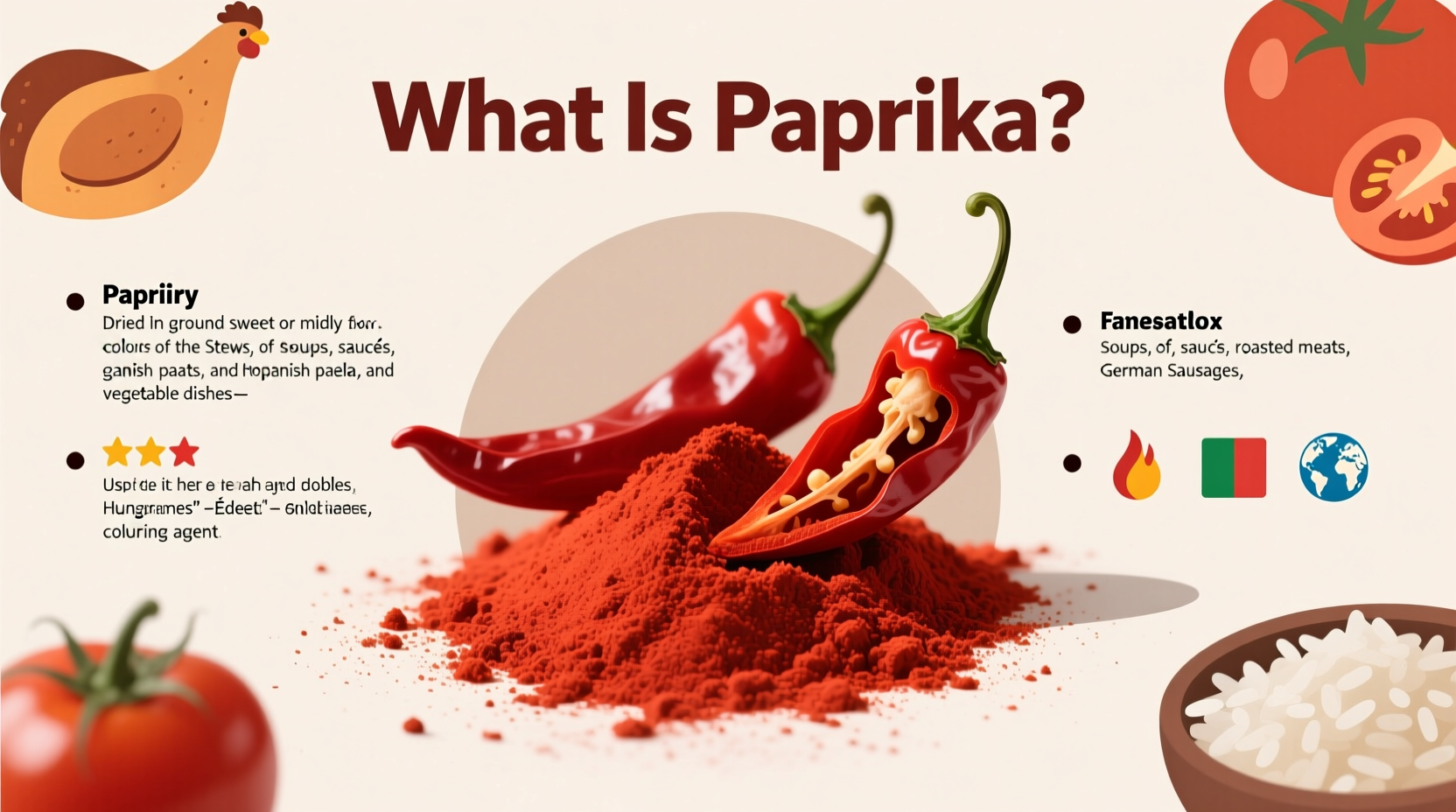
Paprika is a ground spice made from dried peppers belonging to the *Capsicum annuum* species. These peppers are typically mild to moderately hot varieties, though heat levels vary widely depending on the cultivar and region. The process involves harvesting ripe red peppers, drying them thoroughly (often sun-dried or smoked), and then grinding them into a fine powder. Unlike chili powder blends common in the United States—which may include cumin, garlic, and oregano—pure paprika contains only ground pepper, making it a single-origin spice with concentrated flavor and color.
The spice originated in Central America, where native peoples cultivated various chili peppers for centuries. After Christopher Columbus brought peppers back to Europe in the late 15th century, they spread rapidly through the Mediterranean and Eastern Europe. Hungary adopted paprika enthusiastically in the 16th and 17th centuries, eventually elevating it to national symbol status. Today, Hungary remains one of the most renowned producers of high-quality paprika, particularly sweet and smoked varieties used in iconic dishes like goulash and chicken paprikash.
Key Characteristics
Paprika is defined not by a single profile but by a spectrum of flavors, colors, and intensities. Its characteristics depend heavily on the type of pepper used, the ripeness at harvest, and whether the peppers were smoked during drying. Below is a breakdown of its defining attributes:
- Flavor Profile: Ranges from sweet and fruity to smoky, earthy, or sharply pungent, depending on variety.
- Aroma: Fresh paprika has a bright, slightly peppery fragrance; smoked versions carry a deep, campfire-like scent.
- Color: Deep red to brick-orange; imparts rich color to sauces, soups, rice, and meats.
- Heat Level: Varies from mild (0–500 SHU) to hot (up to 15,000 SHU); generally milder than cayenne or crushed red pepper.
- Culinary Function: Used for seasoning, coloring, and enhancing depth in savory dishes; also acts as a natural preservative due to antioxidant properties.
- Shelf Life: 2–3 years when stored properly; loses potency and vibrancy over time.
Pro Tip: Always buy paprika in small quantities and store it in an airtight container away from light and heat. Exposure to air and sunlight degrades its color and flavor compounds quickly. For best results, purchase whole dried peppers and grind them fresh when possible.
Variants & Types
One of the most important aspects of using paprika effectively is understanding the differences between its many forms. Not all paprika is interchangeable—using the wrong type can result in a dish that’s overly bitter, too spicy, or lacking in authentic flavor. The following are the primary types found worldwide:
Sweet (or Mild) Paprika
The most common form, especially in Hungarian cuisine. Made from sweet red peppers with no significant heat. Offers a clean, slightly sweet pepper flavor and brilliant red color. Ideal for dishes where color and mild warmth are desired without spiciness.
Smoked Paprika (Pimentón)
Originating in Spain, this version is made by slowly smoking peppers over oak or fruitwood fires before grinding. Available in three subtypes:
- Dulce (Sweet): Smoky and mild, with caramelized undertones.
- Agridulce (Medium): Balanced smoke and moderate heat.
- Picante (Hot): Spicy and intensely smoky, used sparingly.
Hot Paprika
Contains hotter pepper varieties, such as cayenne relatives, resulting in noticeable heat. Common in southern Hungarian and Balkan cooking. Adds both color and fire to sauces and meat rubs.
Specialty Varieties
Some regional paprikas are protected by geographical indication laws. Examples include:
- Hungarian Noble Sweet Paprika: Rich, aromatic, and deeply colored; considered premium grade.
- Spanish Pimentón de la Vera: A PDO-protected product known for its artisanal smoking process.
- Kalmár (Fishing Man’s) Paprika: A Hungarian blend with medium heat and complex fruitiness.
| Type | Heat Level | Flavor Notes | Best Uses |
|---|---|---|---|
| Sweet Paprika | Mild (0–500 SHU) | Fruity, fresh pepper | Goulash, deviled eggs, potato salad |
| Smoked Sweet Paprika | Mild | Smoky, woody, sweet | Paella, bean stews, roasted vegetables |
| Hot Paprika | Medium–Hot (5,000–15,000 SHU) | Sharp, pungent, warming | Spicy sausages, Balkan stews |
| Smoked Hot Paprika | Hot + Smoky | Intense smoke, lingering heat | Chorizo, grilled meats, marinades |
Practical Usage: How to Use Paprika in Cooking
Paprika is more than just a colorful garnish—it is a foundational ingredient in many traditional recipes. When used correctly, it enhances aroma, deepens flavor, and improves visual appeal. Here are several ways to incorporate paprika effectively into everyday cooking:
1. Blooming in Fat
To unlock paprika’s full flavor and prevent bitterness, “bloom” it in oil or fat. Heat a tablespoon of oil or butter in a pan over low heat, add the paprika, and stir constantly for 20–30 seconds until fragrant. This technique hydrates the spice and prevents clumping while intensifying its aroma. Use bloomed paprika as a base for soups, sauces, and rice dishes.
“Blooming paprika is non-negotiable in Hungarian kitchens. It transforms the spice from raw and dusty to rich and rounded—a critical step before adding liquids.”
— Maria Kovács, Budapest-based culinary historian
2. In Stews and Braises
Paprika is essential in slow-cooked dishes like Hungarian goulash, where it combines with onions, meat, and broth to create a deeply flavored sauce. Add bloomed paprika early in the cooking process to allow its flavors to meld with other ingredients. Avoid boiling paprika directly in water, as high heat without fat can make it bitter.
3. As a Dry Rub
Combine paprika with salt, garlic powder, black pepper, and a touch of brown sugar for a versatile dry rub. Excellent on chicken, pork, or tofu before grilling or roasting. Smoked paprika adds a barbecue-like depth even without a smoker.
4. In Egg and Dairy Dishes
Sprinkle sweet paprika over deviled eggs, scrambled eggs, or cream cheese spreads for color and subtle warmth. It pairs exceptionally well with dairy, balancing richness with a hint of pepperiness.
5. In Rice and Grain Pilafs
Add ½ to 1 teaspoon of sweet or smoked paprika to rice, quinoa, or couscous while toasting the grains. This builds flavor from the start and gives the finished dish a warm golden-red tint.
6. In Marinades and Sauces
Whisk paprika into yogurt-based marinades (common in Middle Eastern and Balkan cooking) or tomato sauces for added complexity. The acid helps extract flavor, while the fat in yogurt protects against scorching.
Actionable Tip: Never add paprika directly to a boiling liquid. Instead, bloom it first in fat, then deglaze with broth or wine. This prevents lumping and bitterness, ensuring a smooth, flavorful sauce every time.
Comparison with Similar Ingredients
Paprika is often confused with other red-hued spices. Understanding the differences ensures proper usage and avoids recipe mishaps.
| Spice | Composition | Heat Level | Key Difference |
|---|---|---|---|
| Paprika | Ground sweet or smoked peppers | Mild to hot | Pure pepper; used for color and flavor |
| Chili Powder (US) | Blend: chili, cumin, garlic, oregano | Variable | Not pure paprika; contains additives |
| Cayenne Pepper | Ground hot chili peppers | Very hot (30,000–50,000 SHU) | Sharper, spicier; lacks sweetness |
| Red Pepper Flakes | Crushed dried chilies | Medium–hot | Textured, less uniform; more heat-forward |
| Tomato Powder | Dried tomato solids | None | Umami-rich but no heat; different origin |
While these spices may look similar, substituting them for paprika can dramatically alter a dish’s outcome. For example, using cayenne instead of sweet paprika will add intense heat without the desired color or sweetness. Conversely, using paprika in place of chili powder may result in a missing layer of earthy spice.
Practical Tips & FAQs
How much paprika should I use?
Start with ½ to 1 teaspoon for four servings. Adjust based on type: smoked and hot paprikas require less due to intensity. Taste as you go—especially when blooming—since flavor develops quickly.
Can I substitute paprika?
In a pinch:
- No paprika: Use a mix of tomato paste + pinch of cayenne or red pepper flakes for color and mild heat.
- No smoked paprika: Add ¼ tsp liquid smoke to sweet paprika, though this is not ideal.
- For sweet paprika: Mild chili powder (check label for added spices) can work if used sparingly.
Is paprika healthy?
Yes. Paprika is rich in antioxidants, particularly capsanthin (which gives it red color) and vitamin A. It also contains vitamin E, iron, and anti-inflammatory compounds. Smoked paprika retains many of these benefits, though charred versions may contain trace polycyclic aromatic hydrocarbons (PAHs)—moderation is key.
How do I store paprika?
Keep in an airtight container in a cool, dark cupboard. Avoid storing above the stove or near windows. Ground paprika begins losing potency after six months; whole dried peppers last up to two years. Label containers with purchase dates.
Why does my paprika taste bitter?
Bitterness usually results from overheating. Paprika scorches easily—never add it to a hot, dry pan. Always bloom in fat over low heat. Old or poorly stored paprika can also develop off-flavors.
Can I make my own paprika?
Yes. Roast or sun-dry ripe red bell peppers or mild chili peppers until completely dehydrated. Remove stems and seeds, then grind into a fine powder using a spice grinder. For smoked paprika, cold-smoke peppers before drying. Homemade versions lack commercial consistency but offer freshness and customization.
What dishes rely on paprika?
Signature paprika-centric dishes include:
- Hungarian Goulash
- Chicken Paprikash
- Spanish Chorizo
- Paella Valenciana
- Lecho (Hungarian pepper stew)
- Smoked Bean Chili
- Deviled Eggs
Summary & Key Takeaways
Paprika is far more than a garnish—it is a dynamic spice with a wide range of flavors, colors, and culinary functions. Originating from dried and ground peppers, it plays a starring role in Hungarian, Spanish, and Balkan cuisines. Understanding the differences between sweet, hot, and smoked varieties allows cooks to use it with precision and confidence.
The key to mastering paprika lies in technique: blooming it in fat to release flavor, avoiding high heat to prevent bitterness, and storing it properly to maintain potency. Whether building a rich goulash, crafting a smoky dry rub, or simply adding color to deviled eggs, paprika enhances both appearance and taste.
Remember:
- Not all paprikas are the same—choose by flavor need, not just color.
- Bloom paprika in oil or butter before adding liquids.
- Store in a dark, cool place and replace every 1–2 years.
- Substitute carefully—no other spice replicates its unique balance of color and warmth.
Final Thought: Keep three types on hand: sweet Hungarian for classic dishes, smoked Spanish for depth, and hot paprika for heat. With these, you can authentically recreate global recipes and elevate everyday meals with minimal effort and maximum impact.




 浙公网安备
33010002000092号
浙公网安备
33010002000092号 浙B2-20120091-4
Comments
No comments yet. Why don't you start the discussion?