
Every holiday season, millions of homes across the country light up with festive cheer. But behind those twinkling displays lies a hidden risk: electrical overload from improper use of extension cords. Connecting multiple Christmas light strands improperly can lead to overheating, melted insulation, or even house fires. The key to a safe and dazzling display starts with choosing the right extension cord—one that’s built to handle the load without compromising safety.
Not all extension cords are created equal. Using a lightweight indoor cord outdoors or daisy-chaining too many strands can create dangerous conditions. Understanding what makes an extension cord safe—especially when powering several strings of lights—is essential for protecting your home and family. This guide breaks down the technical and practical aspects of selecting the safest cord, backed by electrician insights, real-life scenarios, and actionable checklists.
Understanding Electrical Load and Cord Ratings
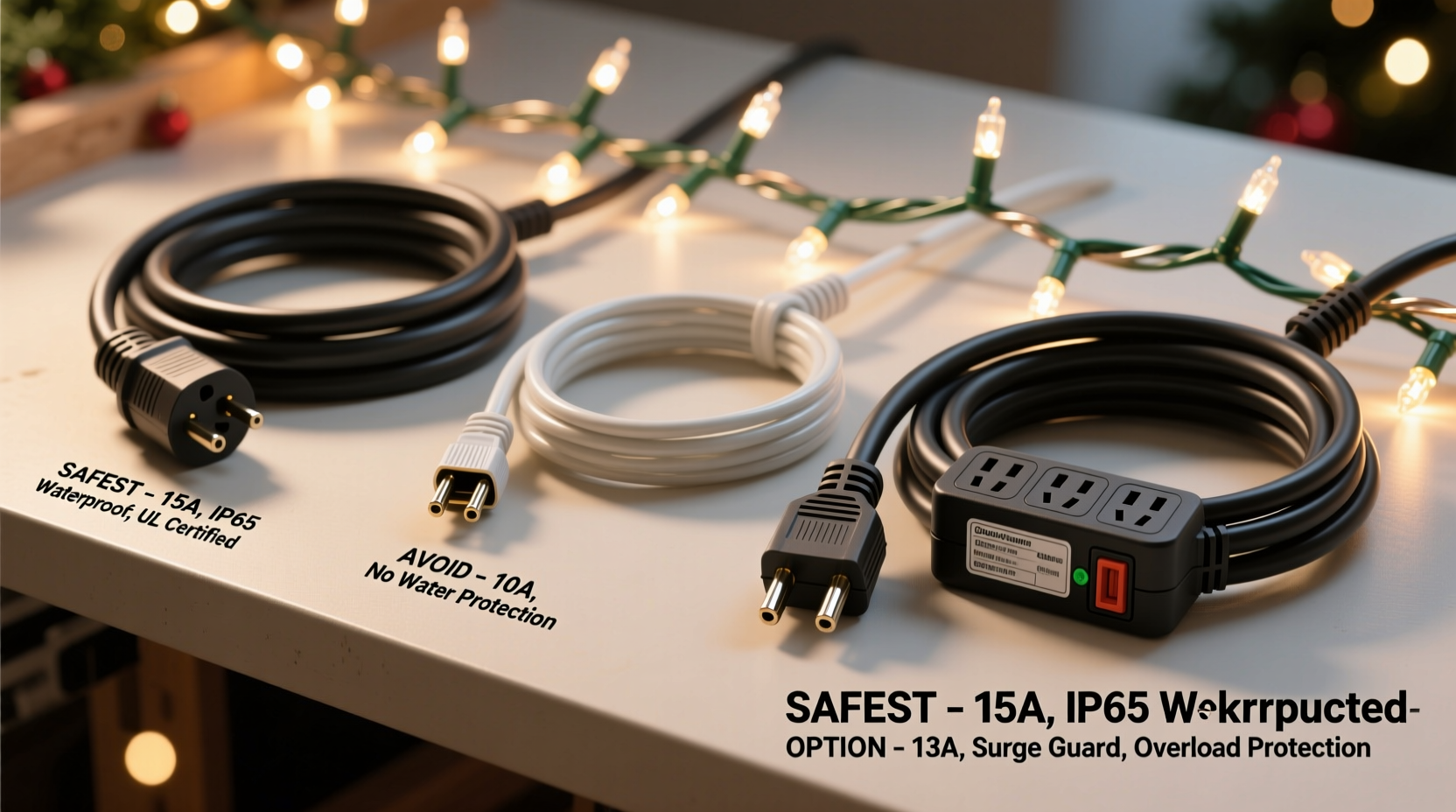
Before plugging in the first strand, it’s crucial to understand how electricity flows through extension cords and what happens when demand exceeds capacity. Every light strand draws power, measured in watts or amps. When multiple strands are connected, their combined draw increases. If the extension cord can’t handle that load, it overheats—sometimes silently, before any visible signs appear.
Extension cords are rated by three primary factors:
- Gauge (AWG): Indicates wire thickness. Lower numbers mean thicker wires and higher current capacity. For Christmas lights, 16-gauge is acceptable for short runs indoors; 14- or 12-gauge is safer for longer outdoor runs or multiple strands.
- Ampacity: The maximum current a cord can safely carry. Most household circuits support 15 amps. Exceeding this—even briefly—trips breakers or risks fire.
- Length: Longer cords increase resistance, reducing efficiency and increasing heat. A 50-foot cord carries more voltage drop than a 25-footer, especially if undersized.
The National Fire Protection Association (NFPA) reports that between 2014 and 2018, U.S. fire departments responded to an average of 160 home fires per year caused by decorative lighting. Many were linked to improper wiring or overloaded cords.
“Using the wrong extension cord for Christmas lights is like putting bicycle tires on a truck. It might roll at first, but under load, it fails catastrophically.” — Carlos Mendez, Master Electrician and NFPA Safety Consultant
Outdoor vs. Indoor Cords: Why It Matters
One of the most common mistakes is using indoor-rated extension cords outside. Indoor cords lack weather-resistant insulation and are not designed to withstand moisture, temperature swings, or UV exposure. Even temporary outdoor use during wet or snowy conditions can lead to short circuits or electrocution.
Outdoor extension cords are labeled as such and typically feature:
- Rubber or thermoplastic jackets resistant to cracking in cold temperatures
- Water-resistant connectors (often with a rubber gasket)
- Grounded plugs (three-prong design)
- UV protection to prevent sun damage
Look for cords marked “W-A” or “WA” on the packaging—this indicates they’re rated for outdoor use by UL (Underwriters Laboratories). Never substitute an indoor cord just because it fits the outlet.
Selecting the Right Gauge and Length
The safest extension cord balances length and gauge to minimize resistance while delivering stable power. Here's a practical breakdown based on typical Christmas light setups:
| Light Type | Total Wattage (Est.) | Recommended Cord Gauge | Max Safe Length |
|---|---|---|---|
| Mini LED (100 bulbs) | 4–7 watts | 16 AWG | 25 ft |
| Multiple LED strands (up to 10) | 50–70 watts | 14 AWG | 50 ft |
| Incandescent mini-lights (older style) | 40–50 watts per strand | 12 AWG | 25 ft |
| Mega or C9 bulbs (outdoor) | 100+ watts total | 12 AWG | 25–30 ft |
As a rule of thumb, never exceed 80% of a circuit’s capacity. For a standard 15-amp circuit, that means no more than 1,440 watts (15A × 120V × 0.8). Add up the wattage of all connected devices—including other decorations or inflatables—to stay within limits.
For example, if you're connecting ten strands of incandescent mini-lights (50 watts each), that’s 500 watts—well under the limit. But add a motorized snowblower decoration drawing 300 watts and a heated sidewalk mat at 900 watts, and you’ve exceeded safe levels.
Why Daisy-Chaining Is Dangerous
Daisy-chaining—plugging one extension cord into another—is a leading cause of holiday electrical fires. Each connection point introduces resistance and potential failure. Even if both cords are rated for outdoor use, the cumulative voltage drop and heat buildup can be hazardous.
Instead of chaining, choose a single cord long enough to reach from outlet to endpoint. If necessary, use a heavy-duty 12-gauge cord up to 100 feet, which maintains better voltage stability. Alternatively, power different sections from separate outlets to distribute the load.
Step-by-Step Guide to Setting Up a Safe Light Display
Follow this timeline to ensure your Christmas light installation is both festive and fire-safe:
- Week Before Setup: Inspect all light strands for damaged sockets, exposed wires, or flickering bulbs. Discard or repair faulty sets.
- Day of Installation: Calculate total wattage of all strands to be connected. Use manufacturer specs or a wattage meter for accuracy.
- Select Cord: Choose an outdoor-rated, grounded extension cord with appropriate gauge and length. Avoid storing cords tightly coiled—unroll completely before use to prevent heat retention.
- Route Safely: Keep cords away from walkways to prevent tripping. Use insulated cord covers on driveways or sidewalks. Do not nail or staple cords to surfaces.
- Connect & Test: Plug in lights and let them run for 15 minutes. Check the cord, plug, and outlet for warmth. If any component feels hot, disconnect immediately and reassess the setup.
- Monitor Daily: During peak usage (e.g., evening display), visually confirm cords aren’t overheating, especially after rain or snow.
- Take Down: After the holidays, unplug and allow cords to dry before storage. Coil loosely and store in a dry, rodent-free area.
Real Example: How One Family Avoided Disaster
In December 2022, the Thompson family in Minnesota decorated their two-story home with over 2,000 lights. They used a mix of older incandescent strands and new LEDs. Initially, they plugged everything into a single 16-gauge indoor cord extended via a second cord—a classic daisy chain.
On the third night, the porch outlet began emitting a burning smell. Neighbors alerted them, and upon inspection, the junction between the two cords was charred and partially melted. A local electrician later explained that the combined load (over 1,200 watts) had overwhelmed the thin-gauge cords, especially given the sub-zero temperatures that made insulation brittle.
The fix? They replaced the setup with two dedicated 12-gauge outdoor cords, each powering a separate section of lights from different garage outlets. They also installed a smart timer to limit daily runtime. Since then, their display has run safely for three seasons.
This case underscores a critical truth: safety isn’t just about compliance—it’s about anticipating real-world conditions like temperature, moisture, and cumulative load.
Safety Checklist for Holiday Lighting
Use this checklist before turning on your display:
- ✅ All extension cords are outdoor-rated (look for “W” or “WA” label)
- ✅ Cord gauge matches expected load (14 AWG or lower for multiple strands)
- ✅ No daisy-chaining of extension cords
- ✅ Total wattage stays under 80% of circuit capacity
- ✅ Plugs and outlets are dry and undamaged
- ✅ Cords are elevated or covered where vehicles or foot traffic pass
- ✅ GFCI-protected outlet is used outdoors (prevents shock in wet conditions)
- ✅ Lights are UL-listed and in good condition
“GFCI outlets are non-negotiable for outdoor holiday setups. They cut power in milliseconds if a ground fault is detected—potentially saving lives.” — Sarah Lin, Electrical Safety Engineer at Consumer Technology Association
Frequently Asked Questions
Can I use a power strip with Christmas lights?
Only if it’s specifically rated for outdoor use and equipped with surge protection and a weatherproof cover. Standard indoor power strips are not safe for outdoor lighting setups due to moisture exposure and overload risks. Even outdoor-rated strips should not replace proper extension cords for long-distance runs.
How many light strands can I connect together?
This depends on the type of lights. Most LED mini-light manufacturers allow 40–50 strands to be chained end-to-end, thanks to low wattage. Incandescent strands usually max out at 3–5 connected together. Always check the label on the first strand for “maximum connected load” specifications. Exceeding this limit can overheat the first plug and create a fire hazard.
Is it safe to leave Christmas lights on overnight?
If installed correctly—with proper cords, no overloads, and no damaged components—it is generally safe. However, using a timer to turn lights off after 6–8 hours reduces risk and energy use. Never leave lights on when no one is home or while sleeping unless they are part of a professionally inspected display.
Final Recommendations and Next Steps
The safest extension cord for connecting multiple Christmas light strands is a heavy-duty, outdoor-rated, grounded model with a 12- or 14-gauge wire, matched to your total load and distance requirements. Prioritize quality over cost—spending $25 on a reliable cord is far cheaper than dealing with fire damage or injury.
Invest in UL-certified products, avoid makeshift solutions, and respect the physics of electrical flow. Your holiday display should inspire joy—not endanger your home.




 浙公网安备
33010002000092号
浙公网安备
33010002000092号 浙B2-20120091-4
Comments
No comments yet. Why don't you start the discussion?