
Celery is often dismissed as a low-calorie filler, more associated with crunch than nutrition. Yet beneath its crisp, fibrous stalks lies a surprisingly rich profile of bioactive compounds and essential micronutrients. Understanding what nutrients are found in celery reveals its role not just as a culinary garnish but as a functional food with antioxidant, anti-inflammatory, and cardiovascular-supportive properties. While it won’t replace leafy greens as a primary source of iron or calcium, celery contributes meaningful amounts of vitamin K, potassium, and phytonutrients that support long-term health. For home cooks, wellness-focused eaters, and culinary professionals alike, recognizing celery’s nutritional value enhances how it's used—from raw crudités to slow-simmered stocks.
Definition & Overview
Celery (Apium graveolens) is a marshland plant species native to the Mediterranean region, cultivated for thousands of years for both culinary and medicinal purposes. It belongs to the Apiaceae family, which includes carrots, parsley, fennel, and cilantro. The most commonly consumed part is the leafy green stem (petiole), though seeds and leaves are also used—especially in spice blends and herbal medicine.
In modern Western cuisine, celery is prized for its high water content, crisp texture, and subtle, slightly bitter flavor with herbal undertones. It serves as a foundational aromatic in mirepoix (with onions and carrots) and is frequently eaten raw in salads, vegetable platters, and smoothies. Despite being 95% water, celery contains a range of vitamins, minerals, and unique plant compounds such as apigenin and luteolin, which have been studied for their potential protective effects against chronic diseases.
Key Characteristics
| Attribute | Description |
|---|---|
| Flavor Profile | Mildly bitter, herbaceous, slightly salty, with fresh green notes |
| Aroma | Clean, vegetal, faintly peppery when crushed |
| Color/Form | Pale to bright green rigid stalks; feathery dark green leaves |
| Texture | Crisp, fibrous, juicy when fresh |
| Caloric Density | Very low: ~16 kcal per 100g raw |
| Culinary Function | Aromatic base, textural component, hydration booster, detox ingredient |
| Shelf Life (Refrigerated) | 1–2 weeks whole; up to 5 days chopped |
Primary Nutrients Found in Celery
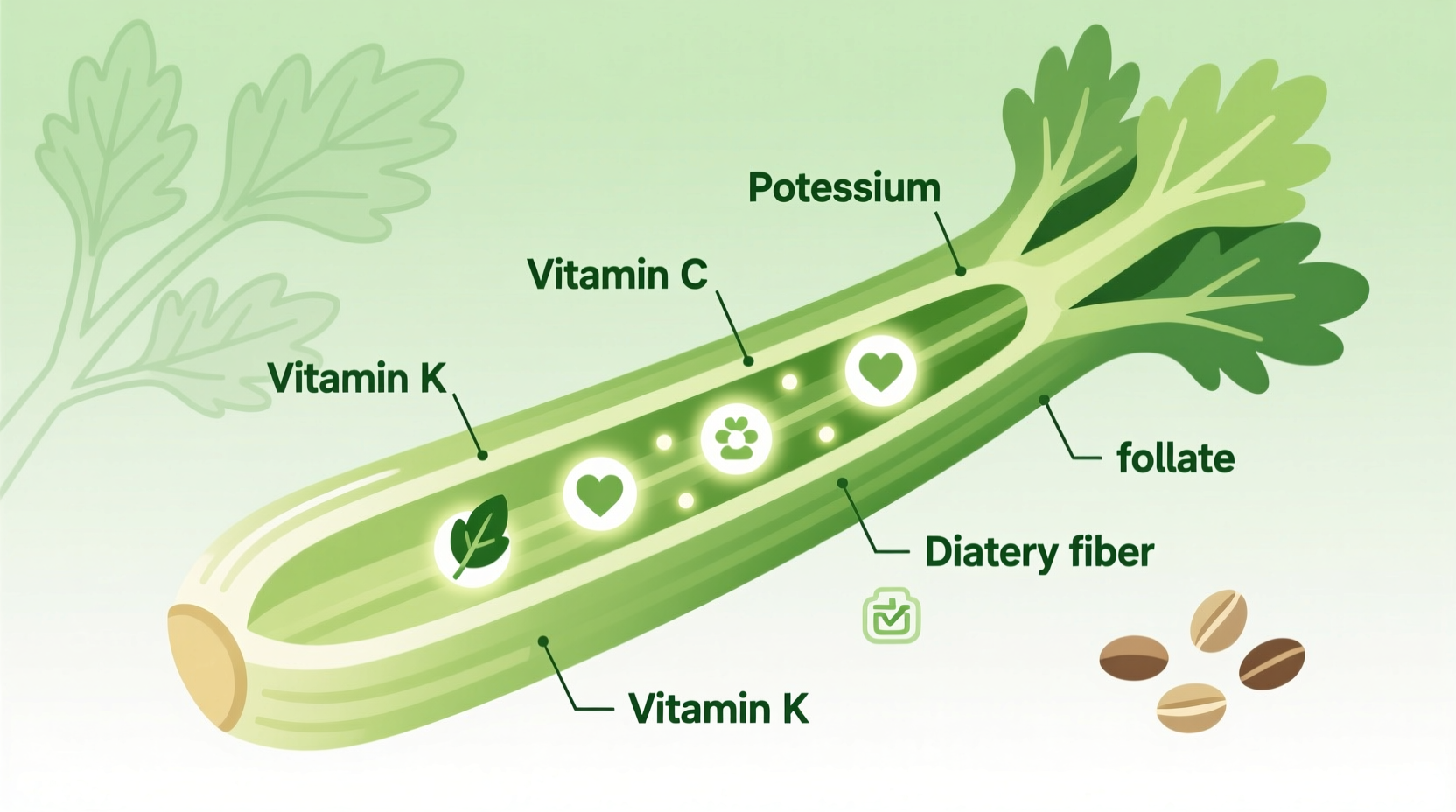
While celery is not calorie-dense, it delivers an impressive array of micronutrients relative to its energy content. A 100-gram serving (approximately one medium stalk) provides:
- Vitamin K: 29.3 µg (37% of Daily Value) – critical for blood clotting and bone metabolism
- Potassium: 300 mg (9% DV) – supports heart rhythm, fluid balance, and nerve signaling
- Vitamin C: 3.1 mg (5% DV) – antioxidant involved in collagen synthesis and immune function
- Folate (B9): 36 µg (9% DV) – essential for DNA synthesis and red blood cell formation
- Magnesium: 11 mg (3% DV) – involved in over 300 enzymatic reactions, including muscle and nerve function
- Calcium: 40 mg (4% DV) – contributes to bone integrity and cellular signaling
- Dietary Fiber: 1.6 g (6% DV) – promotes digestive regularity and gut microbiome health
Additionally, celery contains trace amounts of iron, phosphorus, zinc, and B-complex vitamins like B6 and niacin. Though these appear minor on paper, consistent inclusion in daily meals contributes to overall nutrient adequacy—especially in plant-forward diets where cumulative micronutrient intake matters.
Phytonutrients and Bioactive Compounds
Beyond standard vitamins and minerals, celery’s true nutritional distinction lies in its phytochemical composition. These naturally occurring compounds exhibit antioxidant and anti-inflammatory activity, influencing metabolic and neurological health.
Apigenin
A flavonoid abundant in celery, apigenin has been extensively studied for its neuroprotective and anticancer potential. Research suggests apigenin may induce apoptosis (programmed cell death) in certain cancer cells while sparing healthy ones. It also crosses the blood-brain barrier and shows promise in reducing neuroinflammation linked to Alzheimer’s disease and anxiety disorders.
Luteolin
Another potent flavone, luteolin modulates immune responses and inhibits pro-inflammatory cytokines. Animal studies indicate luteolin may improve insulin sensitivity and reduce adipose tissue inflammation, making it relevant in managing metabolic syndrome.
Phthalides
These organic compounds give celery its characteristic aroma and are responsible for some of its cardiovascular benefits. The most notable phthalide, 3-n-butylphthalide (NBP), has demonstrated blood pressure-lowering effects in clinical trials. NBP relaxes smooth muscle in arterial walls, improving vasodilation and reducing peripheral resistance.
“Celery isn’t just water and fiber—it’s a delivery system for underappreciated phytonutrients. Apigenin alone makes it worth including regularly, especially given its impact on brain health.” — Dr. Elena Torres, Phytochemistry Research Fellow, University of California, Davis
Practical Usage in Cooking and Wellness
Celery’s versatility extends far beyond crudité trays. Its mild bitterness balances rich flavors, while its fibrous structure holds up well in cooking. Here’s how to maximize its nutritional and culinary potential:
Raw Applications
- Snacking with nut butter: Fill celery stalks with almond or peanut butter and top with raisins (“ants on a log”) for a balanced snack combining protein, healthy fats, and fiber.
- Juicing: Combine celery with cucumber, green apple, lemon, and ginger for a hydrating, alkalizing juice. One cup of celery juice (~240ml) contains concentrated levels of sodium cluster salts believed by some to support gastric lining repair (though clinical evidence remains limited).
- Salads and slaws: Thinly slice or julienne celery into grain bowls, tuna salad, or cabbage slaw for added crunch and mineral content.
Cooked Applications
- Mirepoix foundation: Sauté equal parts diced celery, onion, and carrot in olive oil or butter as the aromatic base for soups, stews, sauces, and braises. This trio releases volatile compounds that build depth of flavor.
- Stocks and broths: Simmer celery trimmings (ends, leaves, peels) with bones or vegetables to extract minerals and umami-rich compounds. Strain before use to avoid cloudiness.
- Stir-fries and sautés: Add sliced celery during the last few minutes of cooking to retain crispness and preserve heat-sensitive nutrients like vitamin C.
Pro Tip: Never discard celery leaves. They contain higher concentrations of flavonoids and vitamin E than the stalks. Chop finely and use as a garnish on soups, omelets, or roasted meats—similar to parsley.
Variants & Types of Celery
While Pascal celery dominates supermarket shelves, several forms offer different textures, intensities, and uses:
| Type | Description | Best Uses |
|---|---|---|
| Pascal (Green) Celery | The standard variety—thick, pale green stalks with strong ribs | Raw eating, mirepoix, juicing, stuffing |
| Golden Celery | Grown covered from sunlight; paler, more tender, less fibrous | Delicate salads, gourmet plating, sensitive palates |
| Celeriac (Celery Root) | Same species, grown for its bulbous root; earthy, celery-parsley flavor | Roasting, mashing, gratins, remoulade |
| Wild Celery (Smallage) | Bitter, intensely flavored, smaller stalks; ancestor of cultivated types | Herbal infusions, tinctures, robust stews |
| Celery Seeds | Tiny brown seeds with concentrated flavor and essential oils | Spice blends (e.g., Old Bay), pickling, rubs |
Celeriac deserves special attention: though botanically related, it behaves more like a root vegetable. It contains similar phytonutrients but offers more starch and calories (~42 kcal/100g), along with elevated levels of phosphorus and vitamin B6.
Comparison with Similar Ingredients
Celery is often confused with other crunchy vegetables. Understanding differences ensures proper substitution and optimal nutrition.
| Ingredient | How It Differs from Celery | Substitution Advice |
|---|---|---|
| Bok Choy | Sweeter, less fibrous; richer in calcium and beta-carotene | Use in stir-fries; not ideal for raw snacking due to softer texture |
| Fennel Bulb | Anise/licorice flavor; higher in fiber and selenium | Excellent raw substitute; pairs better with citrus and seafood |
| Cucumber | Higher water content, neutral taste, no bitterness | Good texture match but lacks celery’s mineral density and savory note |
| Cardoon | Related to artichoke; thicker stalks, more bitter, requires blanching | Use in place of celery in braises; needs longer cooking |
When substituting, consider whether you need celery for texture, flavor, or nutrition. For mirepoix, parsnip or fennel can mimic sweetness and body, but nothing replicates celery’s unique phthalide profile.
Practical Tips & FAQs
How should I store celery to maximize freshness?
Wrap celery tightly in aluminum foil or place in a sealed container with a damp paper towel. Stored this way in the crisper drawer, it stays crisp for up to two weeks. Avoid plastic bags, which trap ethylene gas and accelerate spoilage.
Is celery juice worth the hype?
While celebrity-endorsed claims about celery juice curing autoimmune conditions lack rigorous scientific backing, it does deliver concentrated electrolytes and antioxidants. Drinking 16 oz daily may support hydration and provide anti-inflammatory compounds—but it should complement, not replace, whole fruits and vegetables.
Can I freeze celery?
Yes, but only for cooking. Blanch stalks for 2–3 minutes, cool, and freeze for up to 6 months. Texture degrades, so it’s unsuitable for raw use but excellent in soups and sauces.
Are there pesticide concerns with celery?
Celery consistently ranks high on the Environmental Working Group’s “Dirty Dozen” list due to thin skin and frequent spraying. Whenever possible, choose organic celery—especially if consuming raw or juicing.
How much celery should I eat daily?
No official recommendation exists, but including 1–2 stalks (50–100g) daily contributes meaningfully to micronutrient intake without caloric excess. For therapeutic phytonutrient intake (e.g., apigenin), larger quantities—such as those in extracts or supplements—are typically required.
Can celery cause allergic reactions?
Yes, though rare. Celery allergy is more common in Europe and often linked to pollen-food syndrome (oral allergy syndrome). Symptoms include itching lips or throat after raw consumption. Cooking usually denatures the allergenic proteins, making cooked celery safer for sensitive individuals.
Storage Checklist:
- Trim ends before storing
- Keep whole until ready to use
- Store vertically (like a bouquet) in water for extra crispness
- Revive limp celery by soaking in ice water for 30 minutes
Summary & Key Takeaways
Celery is far more than a diet food. It delivers essential nutrients including vitamin K, potassium, folate, and dietary fiber, all within a low-calorie framework. Its real distinction lies in phytonutrients like apigenin, luteolin, and phthalides, which contribute antioxidant, anti-inflammatory, and cardiovascular benefits supported by emerging research.
To leverage its full potential:
- Use both stalks and leaves—don’t discard the nutrient-rich greens.
- Incorporate into mirepoix, juices, salads, and slow-cooked dishes.
- Choose organic when possible to minimize pesticide exposure.
- Explore celeriac and celery seeds for expanded culinary applications.
- Store properly to maintain crispness and nutrient retention.
Whether you're building flavor foundations in the kitchen or seeking plant-based sources of protective compounds, celery earns its place in a health-conscious pantry. Treat it not as a passive ingredient but as an active contributor to long-term wellness—one crisp bite at a time.
Next time you reach for celery, consider how you might elevate it: roast celeriac with rosemary, infuse olive oil with celery seeds, or blend leaves into pesto. Small changes unlock big nutritional rewards.




 浙公网安备
33010002000092号
浙公网安备
33010002000092号 浙B2-20120091-4
Comments
No comments yet. Why don't you start the discussion?