
Walk into any grocery store, and you’ll find peanuts grouped with almonds, walnuts, and cashews in the “nuts” aisle. At snack time, they’re tossed into mixed nut blends without hesitation. But despite their name and culinary use, peanuts are not nuts at all — at least not in the scientific sense. This common misconception affects more than just trivia night; it influences how we understand food allergies, nutrition, and agriculture. Understanding why a peanut isn’t a nut reveals fascinating insights into plant biology and helps clarify confusion in both dietary choices and medical contexts.
The Botanical Definition of a Nut
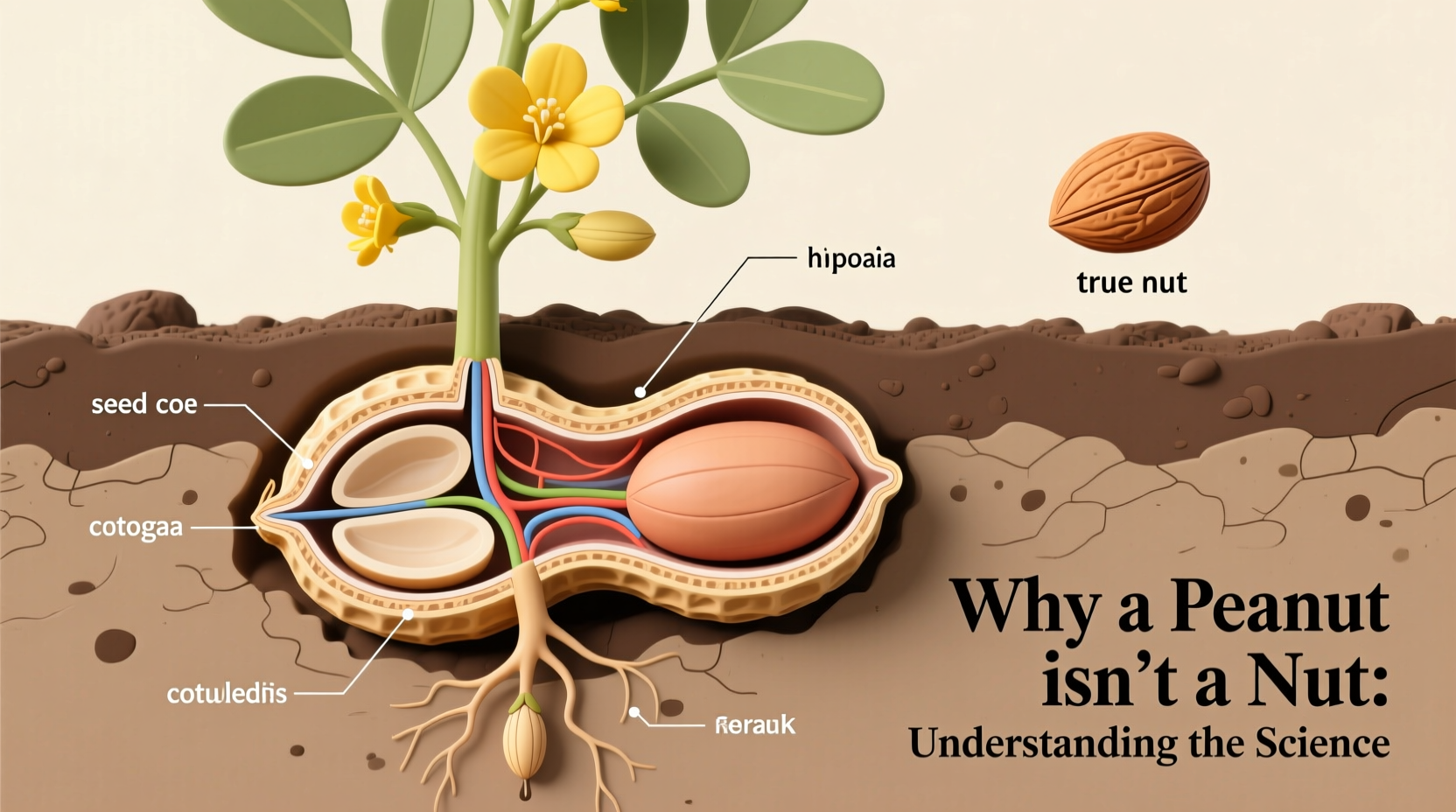
In botany, a true nut is a hard-shelled fruit that does not split open to release its seed. Examples include hazelnuts, chestnuts, and acorns. These develop from a single ovary and have a tough outer wall (pericarp) that remains closed when mature, protecting the seed inside. True nuts are indehiscent — meaning they don’t naturally dehisce, or burst open, to disperse seeds.
Peanuts, by contrast, belong to a completely different category: they are legumes. Like beans, lentils, and peas, peanuts grow underground and develop in pods that split open when ripe. This fundamental difference in growth and structure places them far from true nuts on the plant family tree.
“Peanuts are legumes, not nuts, which means they share more biological traits with green beans than with walnuts.” — Dr. Rebecca Liu, Plant Biologist, University of California
How Peanuts Grow: The Underground Mystery
One of the most unusual aspects of peanut cultivation is their unique growth cycle, known as geocarpy. After pollination, the flower stalks of the peanut plant elongate and bend downward, pushing the developing ovary into the soil. Once buried, the pod matures underground — a rare trait among edible plants.
This subterranean development supports their classification as legumes. Most legumes form pods above ground, but the peanut’s method of growing beneath the surface doesn’t change its taxonomic identity. It still produces seeds within a pod that splits open when dry — a hallmark of leguminous plants.
Legumes vs. Tree Nuts: A Comparative Breakdown
To better understand the distinction, consider the key differences between peanuts and true tree nuts:
| Feature | Peanuts (Legumes) | Tree Nuts (True Nuts) |
|---|---|---|
| Plant Family | Fabaceae (bean family) | Various (e.g., Fagaceae, Juglandaceae) |
| Growth Habit | Underground pods | Above-ground trees or shrubs |
| Pod Behavior | Dehiscent (splits open) | Indehiscent (remains closed) |
| Seed Structure | Two cotyledons, often separated | Single seed enclosed in hard shell |
| Nutritional Profile | Higher in protein and folate | Higher in vitamin E and certain fats |
| Allergen Classification | Legume allergen (Ara h proteins) | Tree nut allergens (e.g., Jug r, Cor a) |
While peanuts resemble nuts in flavor, fat content, and culinary use, their genetic lineage aligns them with other legumes. This has real-world implications, especially for individuals managing food sensitivities.
Allergy Implications: Why Classification Matters
One of the most critical reasons to distinguish peanuts from tree nuts lies in allergy science. Peanut allergies are among the most common and severe food allergies, often lifelong and potentially life-threatening. However, being allergic to peanuts does not automatically mean someone is allergic to tree nuts — and vice versa.
The proteins that trigger peanut allergies (such as Ara h 1, Ara h 2) are structurally different from those in almonds, cashews, or walnuts. Cross-reactivity can occur in some cases, but many people safely consume tree nuts despite a peanut allergy. Mislabeling peanuts as nuts can lead to unnecessary dietary restrictions or, worse, false assumptions about safety.
In clinical settings, allergists emphasize accurate labeling and testing. A patient reacting to peanut extract may undergo further tests to determine if tree nut proteins also provoke a response — a process rooted in precise biological classification.
“Calling peanuts ‘nuts’ blurs important medical distinctions. Accurate terminology saves lives in allergy management.” — Dr. Naomi Patel, Pediatric Allergist, Boston Children’s Hospital
Real Example: Emma’s School Lunch Dilemma
Emma, a 7-year-old student, was diagnosed with a peanut allergy after experiencing anaphylaxis from a peanut butter cookie. Her parents assumed all “nuts” were off-limits and banned almonds, walnuts, and cashews from her diet. Months later, during a follow-up allergist visit, specific IgE testing showed no reaction to tree nut proteins. Under medical supervision, Emma gradually introduced almond butter into her meals — safely expanding her nutrition and reducing mealtime stress.
This case illustrates how misunderstanding the science behind food categories can lead to overly restrictive diets. Correct classification enabled safer, more informed choices.
Nutrition: Similarities That Fuel the Confusion
The reason peanuts are so often mistaken for nuts lies in their nutritional profile. They are rich in healthy fats, protein, fiber, niacin, and vitamin E — nutrients commonly associated with tree nuts. A one-ounce serving of peanuts contains about 7 grams of protein, comparable to almonds and higher than most tree nuts.
They also contain resveratrol, an antioxidant found in grapes and red wine, which contributes to heart health. These overlapping benefits make peanuts a popular substitute in plant-based diets and vegan recipes.
However, peanuts are typically higher in omega-6 fatty acids than most tree nuts. While beneficial in moderation, excessive omega-6 intake without balancing omega-3s may promote inflammation. This subtle difference underscores the importance of treating peanuts as a distinct food group rather than a direct nut equivalent.
Step-by-Step Guide to Classifying Foods Like a Scientist
You don’t need a lab coat to think like a botanist. Use this simple framework to classify foods based on biological criteria:
- Observe where the food grows: Above ground on trees (tree nuts), underground (peanuts), or on vines (beans).
- Examine the seed casing: Does the pod split open (dehiscent) or stay closed (indehiscent)?
- Check the plant family: Use reliable sources to identify whether it belongs to Fabaceae (legumes) or another family.
- Analyze protein structure: In allergy contexts, refer to immunoglobulin testing for specific protein reactions.
- Consult scientific databases: Resources like USDA Plants Database or peer-reviewed journals provide authoritative classifications.
Common Misconceptions About Peanuts
- Misconception: “Peanuts grow on trees.”
Reality: They grow underground from creeping stems called pegs. - Misconception: “If you’re allergic to peanuts, you must avoid all nuts.”
Reality: Many people tolerate tree nuts despite peanut allergies — but always consult an allergist. - Misconception: “Peanuts are bad because they’re ‘fake’ nuts.”
Reality: Their legume status doesn’t make them less nutritious; they offer unique health benefits.
FAQ
Are roasted peanuts still legumes?
Yes. Roasting changes texture and flavor but not botanical classification. Roasted peanuts remain legumes, just as cooked green beans do.
Can someone allergic to legumes eat peanuts?
Not necessarily. While peanuts are legumes, most people with legume sensitivities (like to beans or lentils) can tolerate peanuts. However, cross-reactivity is possible, so medical guidance is essential.
Why are peanuts called nuts if they aren’t?
The term “nut” in everyday language refers to any large, oily seed with a hard shell. This culinary definition prioritizes function over biology, leading to misclassification.
Conclusion: Rethinking Labels for Better Health
Recognizing that a peanut isn’t a nut isn’t just a botanical quirk — it’s a step toward smarter eating, safer allergy management, and more accurate communication. Whether you're navigating dietary restrictions, planning meals, or simply curious about your food, understanding the science behind classification empowers better decisions.




 浙公网安备
33010002000092号
浙公网安备
33010002000092号 浙B2-20120091-4
Comments
No comments yet. Why don't you start the discussion?