
Many of us have paused at some point and asked, “Why am I like this?” The question often arises during moments of emotional reaction, self-doubt, or confusion about our patterns in relationships, decision-making, or habits. While therapy and introspection are valuable tools, one surprisingly powerful method for gaining clarity is reading—specifically, reading books that reflect, explain, and illuminate the human psyche. When approached with intention, reading becomes more than entertainment; it transforms into a mirror for self-discovery.
Books allow us to step outside ourselves while simultaneously diving deeper into who we are. They offer frameworks for understanding emotions, behaviors, and subconscious motivations. Whether it’s a memoir that echoes your childhood experience or a psychology text that names a pattern you’ve repeated for years, the right book at the right time can feel like a key turning in a long-locked door.
The Psychology Behind Self-Understanding Through Reading
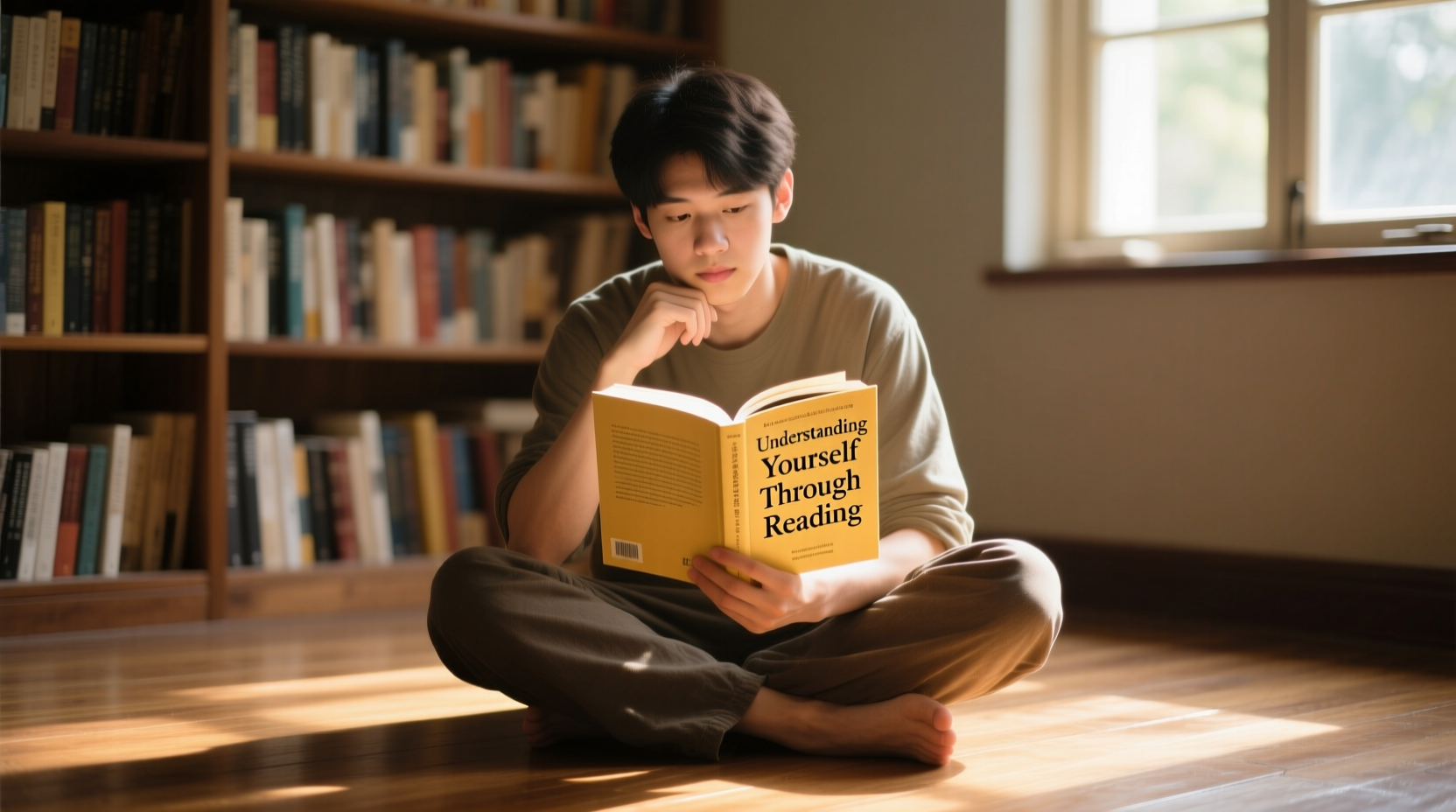
Reading activates what psychologists call “theory of mind”—the ability to understand others’ thoughts, feelings, and intentions. When we read narratives, especially first-person accounts or deeply character-driven stories, our brains simulate the experiences as if they were our own. This mental simulation fosters empathy, not just for characters, but for parts of ourselves we may have judged or ignored.
Neuroscience supports this. Functional MRI studies show that when people read emotionally charged scenes, the same regions of the brain activate as when experiencing similar real-life events. This means that reading about anxiety, grief, or joy can help us process those emotions in a safe, reflective space.
“Stories are equipment for living.” — Kenneth Burke, literary theorist
This idea extends beyond fiction. Nonfiction works on trauma, attachment, cognitive biases, or personality types provide language for internal experiences that may have previously felt chaotic or inexplicable. Once you can name a behavior—such as “avoidant attachment” or “catastrophic thinking”—you gain distance from it, making it easier to examine and change.
How Books Serve as Mirrors and Maps
Books function in two essential ways on the path to self-understanding: as mirrors and as maps.
- Mirrors reflect your inner world back to you. A character’s indecision might remind you of your own hesitation in relationships. A poet’s description of loneliness might articulate a feeling you’ve carried silently for years.
- Maps offer structure and direction. Psychology books, philosophical texts, or guided workbooks help you navigate your internal landscape with tools and models.
The combination is transformative. Without the map, reflection can become circular. Without the mirror, knowledge remains abstract. Together, they create insight.
Choosing the Right Books for Self-Discovery
Not all books lead to self-understanding. The most effective ones meet three criteria: relevance, depth, and resonance.
| Criteria | Description | Example Genres/Types |
|---|---|---|
| Relevance | Addresses issues you’re currently facing or questions you’re asking | Books on anxiety, identity, grief, or relationship dynamics |
| Depth | Offers more than surface-level advice; includes research, narrative complexity, or psychological insight | Clinical psychology, memoirs with analysis, philosophical essays |
| Resonance | Feels personally meaningful—emotionally or intellectually stirring | Literature, poetry, spiritual texts, or autobiographies |
Avoid books that promote quick fixes or shame-based narratives. If a book makes you feel worse about yourself without offering compassionate context, it may not be the right tool for exploration.
Mini Case Study: Sarah’s Journey With Self-Awareness
Sarah, a 34-year-old project manager, often found herself overwhelmed by anger in meetings. She didn’t understand why she reacted so strongly to minor disagreements. After a therapist suggested exploring her emotional triggers through reading, she picked up *The Body Keeps the Score* by Bessel van der Kolk. As she read about how early stress shapes adult reactivity, she recognized her own upbringing in the descriptions of hypervigilance and emotional flashbacks.
This wasn’t an instant fix, but it gave her language. Instead of thinking, “I’m too sensitive,” she began to say, “My nervous system is responding to perceived threat.” That shift allowed her to pause, breathe, and respond differently. Over months, she combined insights from the book with mindfulness practices and therapy. Reading didn’t solve everything—but it started the conversation she’d been avoiding for years.
Step-by-Step Guide: Using Books to Understand Yourself
Self-exploration through reading works best when structured intentionally. Follow these steps to maximize insight:
- Identify a recurring challenge – Is it difficulty setting boundaries? Fear of failure? Feeling disconnected?
- Research books related to that theme – Look for titles recommended by trusted sources, therapists, or experts.
- Choose one book to start – Don’t overwhelm yourself. Begin with something accessible but substantive.
- Read actively – Underline passages, take notes, pause to reflect. Ask: “Does this describe me? When have I felt this way?”
- Journal your reactions – Write freely about what surfaces. You may uncover hidden beliefs or memories.
- Discuss or apply insights – Share with a therapist, friend, or support group. Try one small behavioral change based on what you learned.
- Repeat with new themes – As old patterns clarify, new questions will arise. Let your reading evolve with you.
“Reading is to the mind what exercise is to the body.” — Joseph Addison
Checklist: Building a Self-Understanding Reading Practice
- ☐ Identify one personal question you want to explore (e.g., “Why do I avoid conflict?”)
- ☐ Find 2–3 books related to that question
- ☐ Select one to begin with (prioritize readability and credibility)
- ☐ Set aside 20 minutes daily or every other day for focused reading
- ☐ Keep a notebook or digital doc for reflections
- ☐ After finishing, summarize three insights that resonated most
- ☐ Decide on one small action to integrate a lesson (e.g., pausing before reacting)
Frequently Asked Questions
Can fiction really help me understand myself?
Absolutely. Fiction engages the imagination and emotions in ways that nonfiction often cannot. Characters’ struggles with identity, morality, love, or fear can mirror your own internal conflicts. Reading fiction builds empathy for yourself by helping you see your emotions as part of a shared human experience.
What if I don’t know where to start?
Begin with a question, not a book. Ask yourself: What behavior or feeling keeps coming up? Then search for books that address it. For example, “Why do I feel guilty when I say no?” could lead you to books on boundaries, such as *Set Boundaries, Find Peace* by Nedra Glover Tawwab.
Do I need to read self-help books specifically?
No. While self-help and psychology books are direct tools, literature, poetry, philosophy, and memoirs can be equally revealing. Sometimes a single line in a novel or poem articulates a truth you’ve lived but never named.
Conclusion: Turn the Page Toward Insight
Asking “Why am I like this?” is not a sign of weakness—it’s an act of courage. It means you’re willing to look inward, to seek understanding over judgment. Books won’t give you final answers, but they will accompany you on the journey. They offer perspectives, language, and companionship. They help you realize you’re not broken, just human—shaped by history, biology, and experience, but capable of awareness and change.
Pick up a book that speaks to your question. Read slowly. Reflect honestly. Let the pages hold space for your complexity. The person you’ve been wondering about—yourself—is worth getting to know.




 浙公网安备
33010002000092号
浙公网安备
33010002000092号 浙B2-20120091-4
Comments
No comments yet. Why don't you start the discussion?