
Feeling unlovable is one of the most painful emotional experiences a person can endure. It doesn’t always stem from current circumstances — often, it’s rooted in past experiences, internalized beliefs, or patterns developed over years. This feeling can distort your self-perception, damage relationships, and make even small interactions feel overwhelming. But here’s the truth: you are not unlovable. What you’re experiencing is a deeply human response to emotional pain, not an objective fact about your worth.
This article explores the psychological roots of feeling unlovable, offers science-backed coping strategies, and provides a roadmap for healing and reclaiming your sense of belonging and self-worth.
Understanding Why You Feel Unlovable
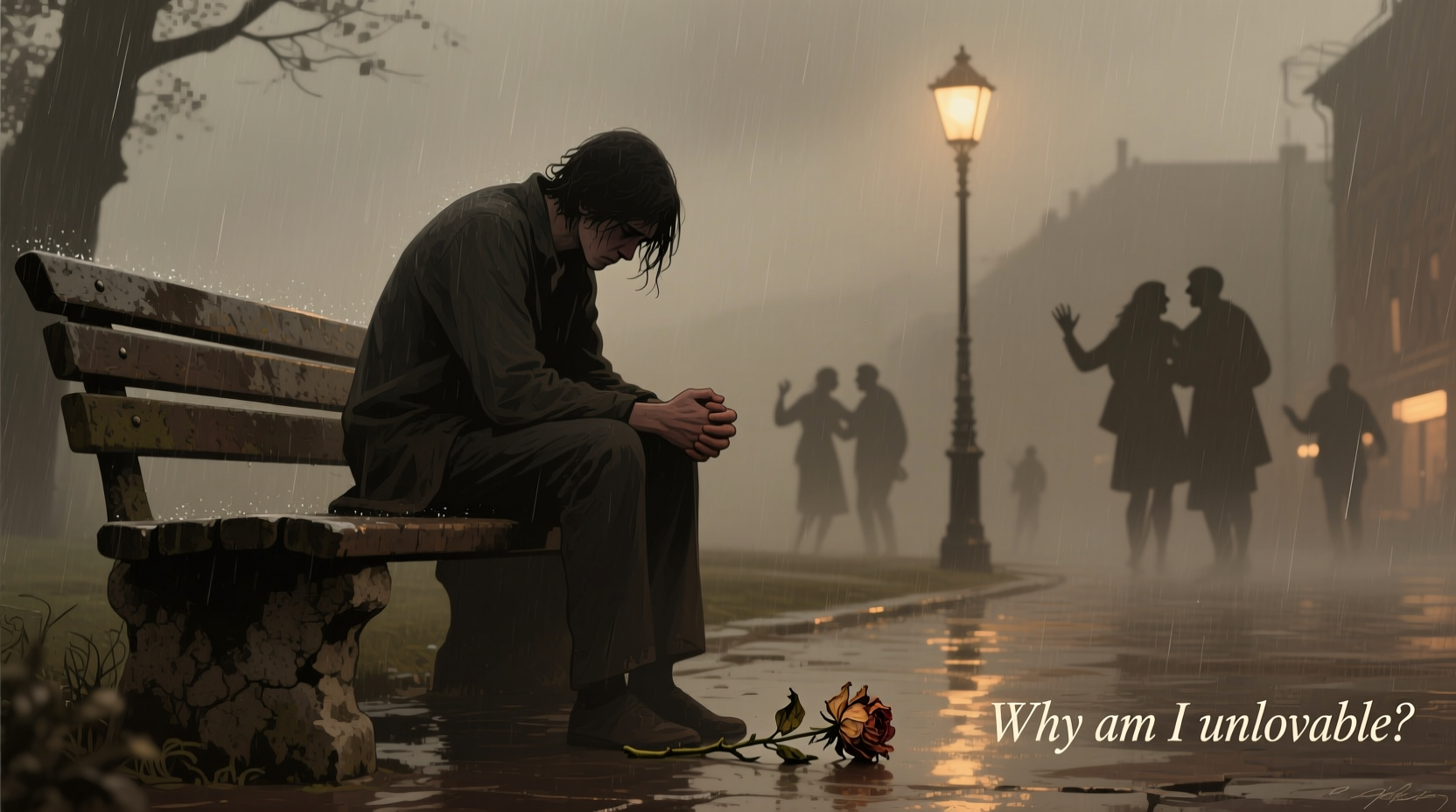
The belief that you are unlovable rarely appears out of nowhere. It typically forms as a protective mechanism during childhood or after significant emotional trauma. When caregivers are inconsistent, emotionally unavailable, or critical, children may internalize the idea that they are “too much” or “not enough.” These early messages become core beliefs — unconscious rules we live by as adults.
Other common sources include:
- Repeated relationship rejection – Whether romantic, platonic, or familial, repeated breakups or abandonment can reinforce the idea that connection is impossible.
- Living with chronic shame – Shame tells you that you are flawed at your core, not just that you made a mistake.
- Mental health conditions – Depression, anxiety, and personality disorders often amplify negative self-beliefs.
- Societal comparisons – Constant exposure to curated lives on social media can create unrealistic standards of worthiness.
It’s important to recognize that feeling unlovable is not evidence of being unlovable — it’s evidence of having been hurt.
“Self-worth isn’t something you find. It’s something you rebuild, piece by piece, through self-compassion and honest reflection.” — Dr. Lena Torres, Clinical Psychologist
How These Beliefs Impact Daily Life
When you believe you are unlovable, it affects every area of life:
| Area of Life | Impact of Feeling Unlovable |
|---|---|
| Relationships | Avoidance of intimacy, fear of vulnerability, clinging to unhealthy partners, or sabotaging connections before they deepen. |
| Work & Goals | Undermining achievements, avoiding leadership roles, or overworking to prove worth. |
| Mental Health | Increased risk of depression, anxiety, self-isolation, and suicidal ideation. |
| Physical Health | Neglecting self-care, poor sleep, substance use, or disordered eating as coping mechanisms. |
These behaviors are not signs of weakness — they are survival strategies. Your mind is trying to protect you from further pain by keeping others at a distance or minimizing expectations.
Step-by-Step Guide to Coping and Healing
Healing from the belief that you are unlovable is not a quick fix, but a gradual process of retraining your mind and rebuilding trust in yourself. Here’s a practical, step-by-step approach:
- Identify the origin – Reflect on when you first remember feeling unworthy. Was it a parent’s criticism? A peer’s rejection? Journaling can help uncover patterns.
- Challenge negative self-talk – Notice automatic thoughts like “No one could ever love me.” Ask: Is this thought based on facts or feelings? What evidence contradicts it?
- Practice self-compassion – Treat yourself with the same kindness you’d offer a friend. Use phrases like: “This is hard right now, and I’m doing my best.”
- Build small connections – Start with low-stakes interactions: a kind word to a barista, joining an online group, or attending a community event.
- Seek professional support – Therapy, especially modalities like Cognitive Behavioral Therapy (CBT) or Internal Family Systems (IFS), can help reframe deep-seated beliefs.
- Reframe “loveability” – Shift focus from “Am I lovable?” to “What parts of myself do I need to learn to accept?”
Mini Case Study: Maria’s Journey
Maria, 34, grew up with a mother who was emotionally distant and frequently compared her to her siblings. As an adult, she found herself in relationships where she felt invisible or criticized. After a breakup, she spiraled into the belief that she was “too needy” and “unlovable.”
She began therapy and started tracking her self-talk. She noticed that every time someone didn’t reply to a text, she assumed rejection. With her therapist’s help, she practiced alternative interpretations: “They might be busy,” or “Their silence doesn’t define my worth.”
She also joined a weekly art class, where she slowly built friendships without romantic pressure. Over six months, Maria began to see herself differently — not as broken, but as someone learning to heal. The turning point came when she told a new friend, “I used to think no one could really love me.” The friend replied, “I’m glad you’re here. I’d miss you if you weren’t.” That moment didn’t erase her pain, but it planted a new belief: maybe she was worthy of connection after all.
Practical Checklist for Immediate Relief
If you're struggling today, here are five actions you can take right now to begin shifting your mindset:
- ✅ Write down three things you appreciate about yourself — not achievements, but qualities (e.g., “I’m thoughtful,” “I listen well”).
- ✅ Text or call someone you trust, even if just to say, “Thinking of you.”
- ✅ Avoid isolating — spend 15 minutes in a public space (café, park, library).
- ✅ Replace one harsh self-judgment with a compassionate reframe (“I’m not a failure; I’m learning.”).
- ✅ Schedule a therapy consultation or mental health screening.
Frequently Asked Questions
Can someone truly be unlovable?
No. “Unlovability” is not a real trait. It’s a distorted belief shaped by pain, not a universal truth. Every person has inherent worth, regardless of their past, appearance, or relationship status.
Why do I push people away even when I want connection?
This is often a defense mechanism. If you expect rejection, pushing others away first feels safer than risking abandonment. It’s not about not wanting love — it’s about protecting yourself from anticipated pain.
How long does it take to feel lovable again?
There’s no timeline. For some, shifts happen in weeks; for others, it takes years. Progress isn’t linear. Small moments of self-acceptance accumulate into lasting change.
Conclusion: You Are Worthy of Love
Feeling unlovable doesn’t mean you are. It means you’ve carried pain that needs acknowledgment, not judgment. The very fact that you’re seeking answers shows courage — a sign of strength, not deficiency.
Healing begins not with grand gestures, but with small acts of self-kindness: speaking gently to yourself, reaching out despite fear, and choosing to believe that change is possible. You don’t have to feel worthy to start acting from worth. Sometimes, the bravest thing you can do is sit with the discomfort and say, “I’m still here. I matter.”




 浙公网安备
33010002000092号
浙公网安备
33010002000092号 浙B2-20120091-4
Comments
No comments yet. Why don't you start the discussion?