
Ball pythons (Python regius) have earned a reputation as one of the most approachable and calm snake species in the world of reptile keeping. Their gentle nature makes them a favorite among beginners and experienced herpetologists alike. But what lies behind this remarkable docility? Is it instinct, environment, or something deeper rooted in their biology? Understanding why ball pythons are so docile requires exploring their evolutionary background, natural behaviors, and the role of proper care in shaping their demeanor.
The Evolutionary Roots of Calm Behavior
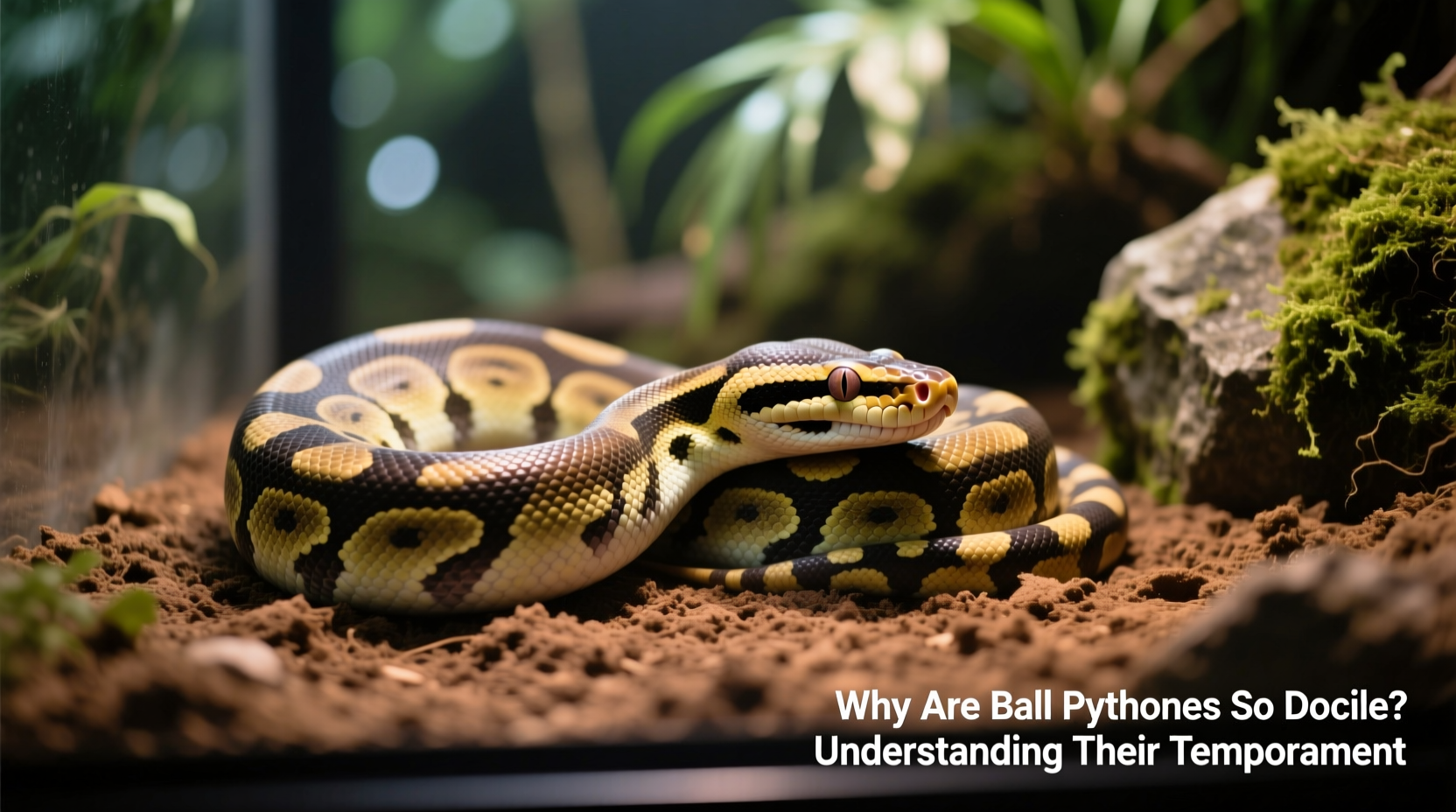
Originating from the grasslands and savannas of West and Central Africa, ball pythons evolved under conditions that favored stealth and energy conservation over aggression. Unlike more active or defensive species, ball pythons are ambush predators. They spend much of their time hidden, waiting for prey rather than chasing it. This low-energy lifestyle naturally selects for animals that avoid unnecessary confrontation.
In the wild, a ball python’s best defense isn’t striking—it’s disappearing. When threatened, they typically coil into a tight ball, tucking their head in the center. This behavior, which gives them their name, is a passive survival strategy. Rather than risk injury through combat, they rely on concealment and stillness. Over generations, this preference for avoidance has shaped a genetic predisposition toward calmness.
“Ball pythons aren’t just tame by accident—they’ve evolved to be non-confrontational. Their survival depends on minimizing risk, not escalating conflict.” — Dr. Laura Thompson, Herpetologist and Reptile Behavior Researcher
Natural Temperament vs. Captive Influence
While genetics play a foundational role, captivity significantly influences a ball python’s temperament. Snakes raised in stable, low-stress environments from birth tend to be more relaxed around humans. Frequent, gentle handling during their early months helps them become accustomed to human scent and movement without perceiving it as a threat.
It's important to note that docility doesn't mean indifference. A calm ball python isn’t necessarily \"friendly\" in the way a dog might be. Instead, it reflects an absence of fear-driven reactions when properly acclimated. Stressors such as loud noises, irregular feeding, or improper housing can cause even the most placid individual to become reclusive or defensive.
Biological and Physiological Factors
Beyond behavior, several physiological traits contribute to the ball python’s docile nature:
- Slow metabolism: These snakes digest food slowly and remain inactive for days after eating, reducing overall agitation.
- Low aggression threshold: They lack the quick strike reflex seen in more defensive species like king snakes or rat snakes.
- Sensory adaptation: Ball pythons rely heavily on heat-sensing pits and ground vibrations, making sudden movements less startling if approached calmly.
Their physical build also supports a sedentary lifestyle. With a relatively small head and short teeth, they are ill-equipped for prolonged fights. Evolution has favored individuals who conserve energy and avoid danger—traits that translate directly into the calm demeanor observed in captivity.
Comparative Temperament: How Ball Pythons Stack Up
To appreciate just how docile ball pythons are, it helps to compare them with other commonly kept snake species. The table below outlines key behavioral differences:
| Species | Temperament | Handling Suitability | Defensive Behaviors |
|---|---|---|---|
| Ball Python | Very docile, shy | Ideal for beginners | Coiling into a ball, hissing rarely |
| corn Snake | Gentle, curious | Excellent for handling | Rarely bites; may vibrate tail |
| Kingsnake | Generally calm but feisty if startled | Good for intermediate keepers | Musking, tail rattling, occasional biting |
| Rat Snake | Active and alert; some individuals are nervous | Requires experience | Hissing, striking, musking |
This comparison highlights that while many snakes can become accustomed to handling, ball pythons stand out for their consistent lack of resistance—even when moved slowly and confidently by a handler.
Building Trust: A Step-by-Step Guide to Handling
Even naturally docile animals require respectful interaction. Here’s a proven method to build trust with a new ball python:
- Wait 5–7 days after arrival: Allow your snake time to adjust to its enclosure before any handling.
- Observe feeding patterns: Ensure the snake eats at least two to three times successfully before initiating contact.
- Start with short sessions: Begin with 5–10 minutes of handling once a week, increasing duration gradually.
- Support the body fully: Never dangle or grab the snake; use both hands to support its weight evenly.
- Watch for stress signals: Tight coiling, rapid breathing, or attempts to hide indicate discomfort. Return the snake to its enclosure calmly.
- Be consistent: Regular, predictable handling builds familiarity and reduces anxiety over time.
A Real-Life Example: From Fearful to Friendly
Consider the case of “Nala,” a wild-caught ball python imported at two years old. Initially, she refused to eat for months and would immediately ball up whenever her enclosure was opened. Her owner followed a strict no-handling policy for six weeks, focusing instead on perfecting temperature gradients, humidity, and hiding spots. Once Nala began feeding reliably on frozen-thawed mice, gentle hand-feeding with tongs helped her associate human presence with food. After three months, brief handling sessions began—just five minutes twice a week. Within six months, Nala allowed full-body handling without retreating into a ball. Today, she moves calmly across her owner’s arms during routine checkups.
This transformation wasn’t due to training in the traditional sense, but to patience, environmental stability, and respect for natural instincts. It illustrates that docility can be nurtured, even in initially stressed individuals.
Common Misconceptions About Docility
Many assume that because ball pythons are docile, they don’t need enrichment or careful husbandry. This is false. A snake’s calm demeanor should never be mistaken for low maintenance. In fact, poor care often manifests subtly—through refusal to eat, chronic hiding, or weakened immune function—rather than dramatic displays of aggression.
Another myth is that all ball pythons are identical in temperament. While the species trend toward calmness, individual personalities vary. Some are curious and exploratory; others prefer solitude. Age, sex, health, and early life experiences all influence behavior.
Frequently Asked Questions
Do ball pythons ever bite?
Yes, but rarely. Bites usually occur during feeding confusion—such as when a handler smells like prey—or if the snake feels threatened. Most bites are quick defensive reactions, not sustained attacks, and result in minor scratches rather than serious injury.
Can you make a ball python more social?
Snakes don’t form social bonds like mammals, but regular, gentle handling can increase tolerance for human interaction. The goal isn’t to make them “social” but to reduce stress during necessary care.
Why does my ball python stay in a ball when I pick it up?
This is a natural defense mechanism. If the behavior persists beyond initial handling, review your approach: ensure you’re moving slowly, supporting the body, and avoiding sudden motions. Over time, most captives uncoil once they recognize there’s no threat.
Final Thoughts and Call to Action
The docility of ball pythons is not an accident of nature, but the result of millions of years of evolutionary refinement combined with thoughtful captive care. Their calmness allows people to connect with reptiles in a meaningful way, breaking down fears and misconceptions about snakes. Yet this very trait demands responsibility: their quiet nature means they suffer in silence when needs go unmet.
If you're considering a ball python, commit not only to handling but to mastering their habitat, diet, and behavioral cues. Share your journey with others—whether through online forums, local clubs, or mentoring new keepers. By treating these animals with the respect their unique biology deserves, we preserve both their well-being and the trust they place in us.




 浙公网安备
33010002000092号
浙公网安备
33010002000092号 浙B2-20120091-4
Comments
No comments yet. Why don't you start the discussion?