
The sight of a Beefeater in full ceremonial dress—red and gold tunic, ruffled collar, and towering black hat—is one of the most enduring symbols of British tradition. Stationed at the Tower of London, these guards are more than just tourist attractions; they are living links to centuries of royal history. But why are they called \"Beefeaters\"? The term sounds odd, even humorous, to modern ears. It conjures images of men endlessly feasting on beef, but the truth behind the name is far more nuanced, steeped in linguistic evolution, royal privilege, and historical context.
The Origins of the Term \"Beefeater\"
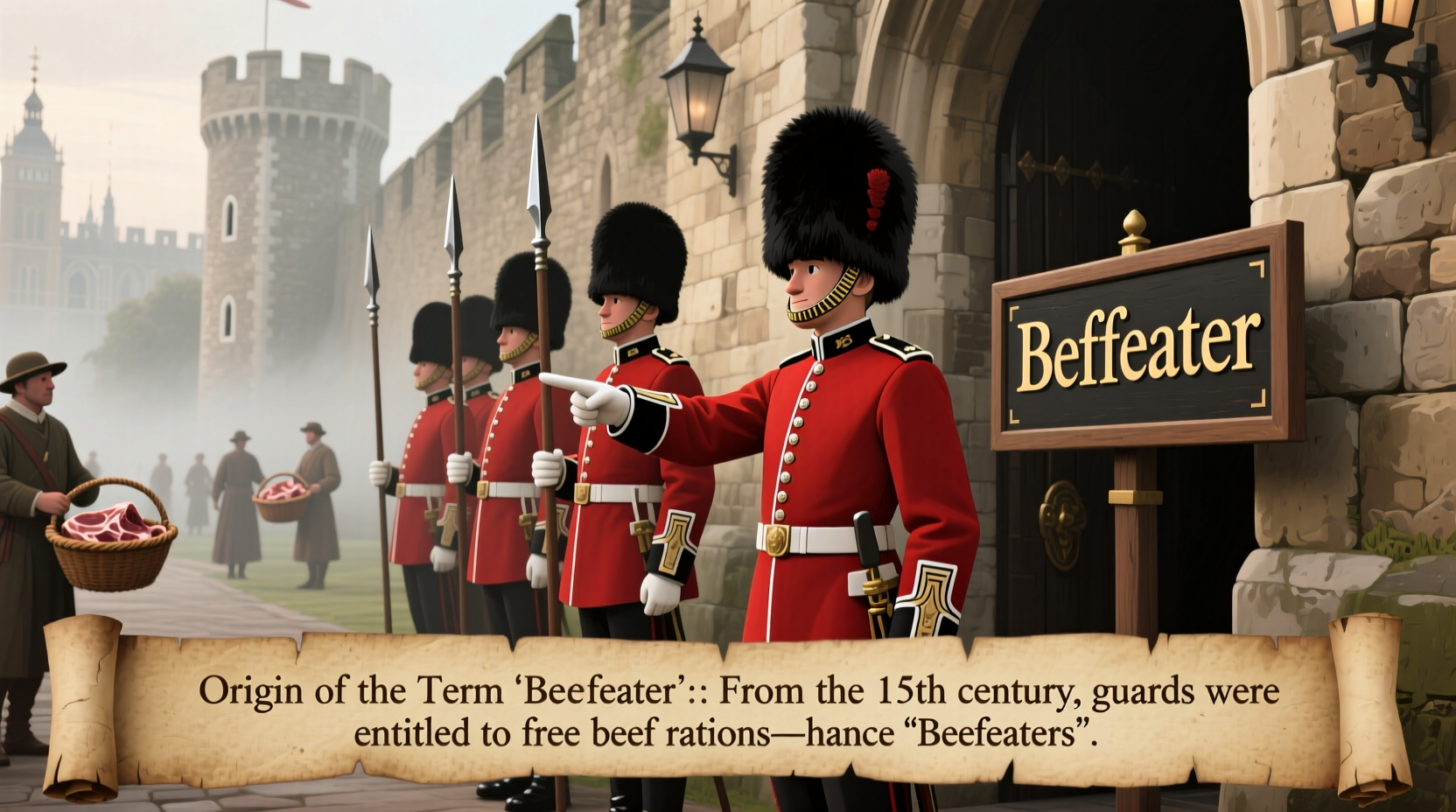
The earliest recorded use of the word \"Beaufetier\" dates back to the 15th century in France, where it referred to an officer responsible for the king’s food storage—the \"buffet\" or sideboard. In French, *bouche* means \"mouth,\" and *bouche du roi* was the royal household department that managed the king’s meals. The English adopted this title as \"Beaufetier,\" which eventually morphed into \"Beefeater.\" Over time, pronunciation shifted, spelling simplified, and what began as a formal court title became a colloquial nickname.
In England, the Yeomen Warders of His Majesty's Royal Palace and Fortress the Tower of London, and Members of Her Majesty's Body Guard of the Yeoman Guard Extraordinary (their official title), were commonly known by this informal moniker. Though never used in official documents, “Beefeater” stuck in popular culture and has been widely accepted—even embraced—by the warders themselves.
“While ‘Beefeater’ may sound whimsical, it reflects a deep historical connection to royal service and sustenance. These men were literally fed by the crown, a mark of honor in an era when food security was not guaranteed.” — Dr. Jonathan Hale, Historian of British Monarchy
A Historical Timeline: From Medieval Guards to Modern Icons
The role of the Beefeaters can be traced back to the late 1400s, during the reign of King Henry VII. After his victory at the Battle of Bosworth in 1485, Henry established the Yeomen of the Guard, a body of loyal soldiers tasked with protecting the monarch. A similar but distinct group—the Yeomen Warders—was assigned specifically to guard the Tower of London.
- 1485: Yeomen of the Guard formed under Henry VII.
- Early 1500s: First references to “Beef Eaters” appear in court records.
- 1660: Restoration of the monarchy; Beefeaters regain prominence after the Civil War.
- 1845: Formal distinction made between the Yeomen of the Guard (ceremonial) and Yeomen Warders (Tower guards).
- Today: Beefeaters serve as both ceremonial guardians and tour guides at the Tower.
Originally, their duties included guarding prisoners, protecting the Crown Jewels, and ensuring the security of the fortress. Over time, especially as the Tower transitioned from prison to museum, their role evolved into one of education and heritage preservation.
Did Beefeaters Really Eat More Beef?
One persistent myth is that the name comes from the guards’ generous meat rations. While not entirely false, it’s only part of the story. Historical records show that royal guards received higher-quality food than common soldiers, including daily portions of beef—a luxury in Tudor times. Being \"fed at the king’s table\" was a sign of trust and status.
This privileged diet distinguished them from regular troops and reinforced their elite position. So while they weren’t gluttonous meat-eaters, the name likely gained traction because people associated them with conspicuous consumption of beef—a visible symbol of royal favor.
Modern Role and Selection Criteria
Today’s Beefeaters are not merely costumed performers. They are retired members of the British Armed Forces with at least 22 years of service, holding the rank of warrant officer or senior non-commissioned officer. They must also have earned the Long Service and Good Conduct Medal. Competition for the roughly 37 positions is fierce, often drawing hundreds of applicants.
Once selected, they undergo extensive training in the history of the Tower, public speaking, and ceremonial protocol. Their responsibilities include conducting tours, participating in ceremonies like the Ceremony of the Keys, and maintaining the dignity of the institution.
| Critera | Requirement |
|---|---|
| Military Service | Minimum 22 years |
| Rank | Warrant Officer or Senior NCO |
| Honour | Long Service and Good Conduct Medal |
| Citizenship | British, Commonwealth, or EU national |
| Residency | Must live within walking distance of the Tower |
Mini Case Study: A Day in the Life of a Beefeater
Sergeant Major David Thompson served 26 years in the Royal Marines before becoming a Beefeater in 2018. His day begins at 7:30 a.m. with a check of the Tower grounds. By 10:00 a.m., he’s leading a tour for international visitors, weaving tales of Anne Boleyn, the Princes in the Tower, and the Crown Jewels with humor and precision. After lunch, he prepares for the Ceremony of the Keys—a nightly ritual unchanged since the 13th century. At exactly 10:00 p.m., he locks the gates, salutes the Chief Warder, and ensures the Tower is secure.
“People think we’re just here for show,” he says, “but we’re custodians of history. Every stone, every story—we protect it all.” His journey from military service to cultural ambassador illustrates how the role has evolved while retaining its gravitas.
Common Misconceptions About Beefeaters
Several myths surround the Beefeaters, often fueled by their striking appearance and unusual name. Here are some clarifications:
- Myth: Beefeaters are the same as the Queen’s Guard at Buckingham Palace.
Fact: The Queen’s Guard (in red coats and bearskin hats) are active-duty soldiers. Beefeaters are retired veterans serving in a ceremonial capacity at the Tower. - Myth: The name comes from eating large amounts of beef.
Fact: While they did receive beef rations, the term originates from the French *bouche*, meaning “mouth of the king.” - Myth: Beefeaters wear outdated costumes.
Fact: Their uniform is based on 15th-century Tudor design, but it’s carefully maintained and historically accurate.
Frequently Asked Questions
Are Beefeaters still armed guards?
Yes, though their primary role today is ceremonial and educational. They are trained in security procedures and play a key role in safeguarding the Tower of London and the Crown Jewels.
Can women be Beefeaters?
Yes. In 2017, Moira Cameron became the first female Beefeater, breaking a 500-year tradition. Since then, more women have joined the ranks, reflecting modern inclusivity while honoring historic roles.
Do Beefeaters live at the Tower?
Some do. While not required, many choose to reside in homes within the Tower complex. This tradition reinforces their constant presence and deep connection to the site.
Preserving Tradition: How You Can Support the Legacy
The Beefeaters are more than relics of the past—they are active preservers of British heritage. Visitors can support their work by:
- Attending official tours led by Beefeaters.
- Respecting the Tower’s rules and historical artifacts.
- Donating to conservation efforts through the Historic Royal Palaces charity.
- Learning and sharing the true history behind the Beefeater name.
- Encouraging schools and youth programs to explore Britain’s royal history.
Conclusion: Honoring a Living Tradition
The name \"Beefeater\" may have humble or even humorous origins, but the institution it represents is anything but trivial. These guardians embody centuries of loyalty, service, and cultural memory. Understanding why they’re called Beefeaters opens a window into the language, class structure, and royal customs of medieval and Tudor England. Far from being mere curiosities, they are respected veterans who continue to serve their country in a unique and meaningful way.
Next time you see a Beefeater standing tall in their vibrant uniform, remember: they are not just named after beef—they are named after duty, honor, and the enduring power of tradition.




 浙公网安备
33010002000092号
浙公网安备
33010002000092号 浙B2-20120091-4
Comments
No comments yet. Why don't you start the discussion?