
If you’ve ever watched a sparrow hop across a sidewalk or a robin scanning the grass for worms, you’ve likely noticed how abruptly they move—heads bobbing, bodies shifting, eyes darting. These sudden, jerky motions aren’t random quirks; they’re essential survival tools shaped by millions of years of evolution. Birds’ twitchiness is deeply tied to their physiology, sensory perception, and environmental awareness. Understanding this behavior reveals not just how birds see the world, but also how they stay alive in it.
The Evolutionary Advantage of Jerky Movements
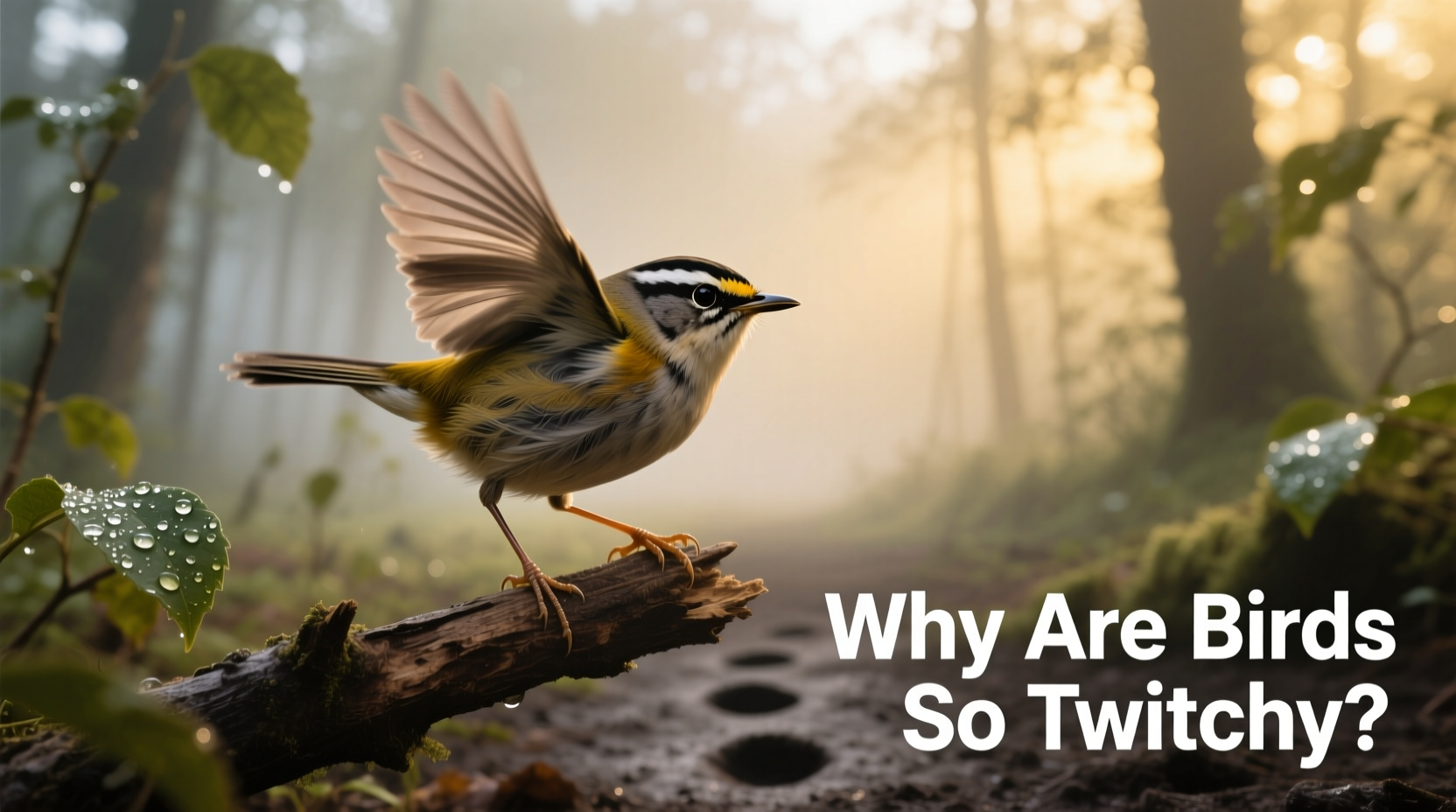
Birds live in a high-stakes environment where predators lurk in trees, skies, and shadows. Their twitchy behavior is an evolutionary adaptation that enhances vigilance. Unlike mammals that may rely on smell or stealth, most birds depend heavily on vision. But avian eyes have limitations: many species can’t move their eyes freely within their sockets. Instead, they compensate with rapid head movements to stabilize their gaze and scan surroundings.
This “head-bobbing” motion—common in pigeons, chickens, and songbirds—is actually a two-phase process: a thrust phase (quick forward movement) followed by a hold phase (where the head remains still while the body catches up). During the hold phase, the bird’s visual system captures a stable image, allowing it to detect even the slightest movement in its environment—like a snake stirring in the underbrush or a hawk circling above.
“Birds don’t just react to danger—they anticipate it. Their twitchiness is a continuous risk-assessment strategy.” — Dr. Lena Torres, Avian Behavioral Ecologist, University of Alberta
How Bird Vision Shapes Movement Patterns
To understand why birds move the way they do, one must first appreciate how they see. Most birds have monocular vision—each eye operates independently—giving them an exceptionally wide field of view, often exceeding 300 degrees. However, this comes at the cost of depth perception and smooth tracking. To compensate, birds use rapid head adjustments to create a series of static visual snapshots, which their brains assemble into a coherent picture of their surroundings.
For example, when a bird tilts its head sideways, it’s aligning one eye to focus directly on an object. This lateral head tilt is especially common in predatory birds like owls and hawks, but also in smaller species assessing potential threats or food sources. The result? A staccato, almost mechanical appearance of movement that seems erratic to human observers but is, in fact, highly calculated.
The Role of Reflexes and Nervous System Speed
Birds possess some of the fastest reflex arcs in the animal kingdom. Their nervous systems are optimized for speed over comfort. A chickadee detecting a swooping sparrowhawk may have less than a second to escape. In such scenarios, hesitation means death. This pressure has led to neuro-muscular adaptations that prioritize rapid response over fluid motion.
Studies using high-speed cameras show that small passerines can initiate escape responses in under 50 milliseconds. These reactions often manifest as abrupt hops, wing flicks, or head snaps—movements so fast they appear jittery to the human eye. Even at rest, birds remain in a state of “alert readiness,” with muscles primed and sensory inputs constantly monitored.
Do’s and Don’ts of Observing Twitchy Bird Behavior
| Do | Don't |
|---|---|
| Observe from a distance using binoculars | Approach too closely or make sudden gestures |
| Watch during early morning or late afternoon when birds are most active | Expect smooth, mammal-like motion patterns |
| Note frequency and direction of head movements | Assume twitching indicates distress or illness |
| Use slow, steady filming to capture natural behavior | Play recorded bird calls excessively, which can stress local populations |
Real Example: The Urban Sparrow’s Survival Strategy
In downtown Toronto, a population of house sparrows thrives amid traffic, pedestrians, and constant noise. Researchers from York University conducted a six-month study tracking their movement patterns using motion-triggered cameras. They found that sparrows in high-traffic zones exhibited significantly more frequent head twitches and shorter pause durations between movements than those in quieter parks.
One individual, nicknamed “Dash” by the research team, was observed scanning its environment an average of 17 times per minute—nearly twice the rate of rural counterparts. These micro-movements allowed Dash to detect approaching bicycles, falling debris, and competing birds before they became threats. Over time, Dash survived multiple close encounters with predators and outlived several peers. The study concluded that heightened twitchiness correlates with increased urban survival rates in small birds.
Common Misconceptions About Bird Twitching
Many people assume that a bird’s jerky movements indicate fear, neurological issues, or poor health. While extreme tremors can signal illness, typical twitchiness is normal and healthy. Another misconception is that birds are “nervous” by nature. In reality, their behavior reflects efficiency, not anxiety. Each movement serves a purpose: gathering information, maintaining balance, or preparing for flight.
Even seemingly redundant motions—like tail flicking in warblers or wing flashing in flycatchers—can serve communicative or deceptive functions. Some scientists believe these actions startle insects into flight, making them easier to catch. Others suggest they signal fitness to mates or warn rivals. Either way, nothing in bird movement is truly wasted.
Checklist: What to Look for When Studying Bird Movements
- Frequency of head bobs or turns
- Symmetry in movement (asymmetry may indicate injury)
- Response time to environmental stimuli (e.g., passing shadow)
- Duration of stillness between motions
- Use of feet, wings, or tail in coordination with head movements
- Changes in behavior before and after feeding or calling
FAQ: Common Questions About Twitchy Bird Behavior
Is it normal for birds to twitch their heads constantly?
Yes. Head bobbing and twitching are normal behaviors in many bird species, especially ground feeders like pigeons and robins. These movements help stabilize vision and improve depth perception in environments with complex visual clutter.
Can twitching be a sign of illness?
Occasional jerking is normal, but persistent tremors, loss of balance, or uncoordinated movements may indicate disease (such as avian influenza or poisoning). If you observe multiple birds showing similar symptoms, contact a local wildlife rehabilitator.
Why don’t birds move smoothly like cats or dogs?
Birds evolved for rapid takeoff and aerial maneuverability, not terrestrial grace. Their musculoskeletal system prioritizes explosive power and sensory feedback over fluid motion. Additionally, their visual processing requires discrete visual fixations, leading to stop-start movement patterns.
Conclusion: Respecting the Rhythm of Avian Life
The twitchiness of birds isn’t a flaw—it’s a finely tuned survival mechanism. Every snap of the head, every flick of the tail, serves a purpose rooted in perception, protection, and precision. By learning to read these movements, we gain deeper insight into how birds experience the world: not as a continuous flow, but as a series of critical moments, each assessed and acted upon in milliseconds.
Next time you see a bird darting across a lawn or pausing mid-hop with its head cocked, resist the urge to label it as skittish. Instead, recognize it as a master of attention, navigating a world where stillness can be deadly and awareness is everything.




 浙公网安备
33010002000092号
浙公网安备
33010002000092号 浙B2-20120091-4
Comments
No comments yet. Why don't you start the discussion?