
Dachshunds are instantly recognizable — low to the ground, with elongated backs and short, sturdy legs. Often affectionately called \"wiener dogs,\" their unusual proportions stand out in the canine world. But this distinctive shape isn’t just a quirk of nature; it’s the result of deliberate breeding, evolutionary adaptation, and specific genetic traits. Understanding why dachshunds are so long reveals a fascinating story of function meeting form, shaped over centuries for a very particular purpose: hunting.
The Historical Purpose Behind the Dachshund’s Build
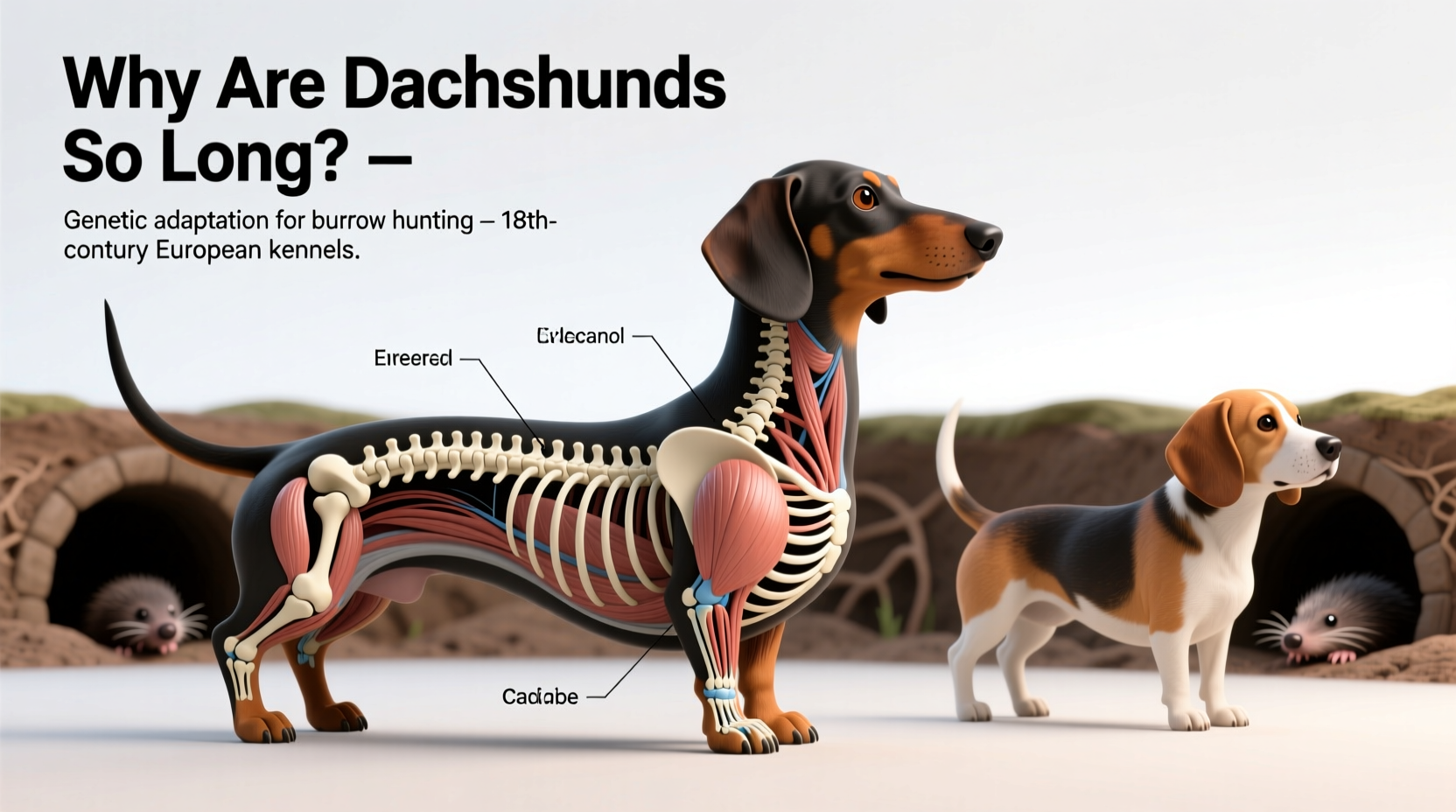
Bred in Germany as early as the 15th century, dachshunds were developed for one primary task: tracking, chasing, and flushing out burrowing animals like badgers, rabbits, and foxes. Their German name, “Dachshund,” literally means “badger dog” — a direct nod to their original role.
To succeed in this job, they needed a body built for tunneling. A long torso allowed them to wriggle deep into narrow underground dens, while strong front paws helped them dig through soil and roots. Their short legs kept their center of gravity low, providing stability during quick turns in tight spaces. Meanwhile, their loud bark and fearless temperament ensured they could hold their own against much larger prey until hunters arrived.
“Dachshunds were engineered by necessity. Their shape wasn’t an accident — it was precision breeding for underground warfare.” — Dr. Lena Hartmann, Canine Evolution Historian
This functional design explains why the breed standard still emphasizes length and muscular build. Even today’s companion dachshunds retain these physical traits, even if most will never see a badger hole.
Genetics of Chondrodysplasia: The Science of Short Legs and Long Spines
The dachshund’s exaggerated proportions stem from a condition known as **chondrodysplasia** — a form of disproportionate dwarfism common in several dog breeds, including corgis and basset hounds. In dachshunds, this genetic trait primarily affects bone development, resulting in shortened limbs while the spine continues to grow at a typical rate.
A 2007 study published in *Science* identified a key mutation in the **FGF4 (fibroblast growth factor 4) gene** on chromosome 18, responsible for this limb-shortening effect. This retrogene insertion disrupts normal cartilage-to-bone conversion during development, leading to the characteristic short legs seen in many small hunting breeds.
Interestingly, this same mutation is not harmful in isolation — it’s been naturally selected because it conferred a survival advantage in certain working roles. However, when combined with extreme body length, it increases the risk of spinal issues, particularly intervertebral disc disease (IVDD), which affects up to 25% of dachshunds in their lifetime.
How Breeding Standards Reinforced the Long Body
Over time, breeders refined the dachshund’s appearance to meet strict standards set by kennel clubs like the AKC and FCI. These standards specify ideal proportions — typically, a dachshund should be longer than it is tall, with a well-muscled back and balanced structure.
Breeds come in three coat types (smooth, longhaired, wirehaired) and two sizes (standard and miniature), but all share the same fundamental silhouette. Judges evaluate show dogs based on how closely they match the idealized version of the breed — a testament to how deeply ingrained the “long and low” aesthetic has become.
However, ethical concerns have grown as selective breeding has sometimes prioritized appearance over health. Some lines exhibit excessive length or poor musculature, increasing susceptibility to back injuries. Responsible breeders now emphasize health testing, including spinal X-rays and genetic screening, to produce dogs that are both typologically correct and physically sound.
Dachshund Proportions: Ideal vs. Risky Traits
| Feature | Ideal Trait | Risky Extremes |
|---|---|---|
| Body Length | Slightly longer than height at shoulder | Excessively elongated, weak loin |
| Leg Length | Short but strong, straight boning | Too short or bowed legs |
| Muscle Tone | Firm, athletic build | Underdeveloped core or rear |
| Gait | Smooth, reaching stride | Waddling or restricted movement |
Health Implications of the Dachshund’s Shape
While the dachshund’s shape is iconic, it comes with significant health trade-offs. The most serious concern is **intervertebral disc disease (IVDD)**, where discs in the spine degenerate prematurely and may rupture, pressing on the spinal cord. Symptoms range from mild discomfort to full paralysis.
Prevention starts with lifestyle management. Keeping a dachshund at a healthy weight reduces pressure on the spine. Regular, moderate exercise builds core strength without overstraining. Owners should also avoid high-impact activities like jumping from heights or rough play on hard surfaces.
Early detection is crucial. Signs of potential IVDD include reluctance to move, a hunched back, trembling, or difficulty walking. If noticed, immediate veterinary care can prevent permanent damage.
Step-by-Step Guide to Protecting Your Dachshund’s Back
- Maintain a lean body weight through portion-controlled feeding.
- Use harnesses instead of collars to reduce neck and spine strain during walks.
- Provide carpeted or padded stairs or ramps for accessing beds and couches.
- Encourage controlled exercise like leash walking or swimming.
- Schedule regular vet checkups with attention to neurological health.
Real-Life Example: Max the Rescue Dachshund
Max, a 5-year-old wirehaired dachshund, was adopted from a shelter after being surrendered due to recurring back pain. His owners hadn’t realized that allowing him to jump off the sofa daily had contributed to early disc degeneration. After diagnosis with mild IVDD, Max began a rehabilitation program involving hydrotherapy, anti-inflammatory medication, and strict activity modification.
His new owner installed pet ramps, switched to a supportive orthopedic bed, and enrolled him in a canine fitness class focused on core strengthening. Within four months, Max’s mobility improved dramatically. Today, he walks confidently and lives pain-free — a reminder that while the dachshund’s shape poses risks, informed care makes all the difference.
Frequently Asked Questions
Can you prevent IVDD in dachshunds?
While you can't eliminate genetic risk, you can significantly reduce the likelihood of IVDD through weight control, avoiding jumps, using harnesses, and ensuring regular low-impact exercise. Some breeders also screen breeding stock for spinal health.
Are all long-backed dogs prone to back problems?
No, but breeds with chondrodysplasia and elongated spines — like dachshunds, corgis, and basset hounds — are at higher risk. Proper conformation and muscle support help mitigate issues, but vigilance is essential.
Why do some dachshunds look shorter or stockier than others?
Variation exists between bloodlines and coat types. Working-line dachshunds, especially those used in hunting in Europe, often have slightly shorter backs and more robust builds compared to show-line dogs bred for exaggerated length.
Conclusion: Celebrating Form and Function Responsibly
The dachshund’s long, low-slung shape is more than a whimsical oddity — it’s a living artifact of functional design. Born from the demands of underground hunting, refined by centuries of breeding, and preserved by passionate enthusiasts, the “wiener dog” silhouette tells a story of purpose-driven evolution.
Yet with that legacy comes responsibility. Loving a dachshund means honoring not just their charm, but their physical needs. By understanding the origins of their shape, respecting its limitations, and taking proactive steps to protect their health, owners can ensure these bold little dogs live not only long but well.




 浙公网安备
33010002000092号
浙公网安备
33010002000092号 浙B2-20120091-4
Comments
No comments yet. Why don't you start the discussion?