
Flamingos are among the most visually striking birds on Earth, instantly recognizable by their vibrant pink feathers, long legs, and uniquely curved beaks. But despite their bold appearance, one common misconception persists: that flamingos are naturally pink. In reality, their color is not genetic but dietary—a direct result of what they eat. The science behind this phenomenon reveals a fascinating interplay between biology, chemistry, and ecology. Understanding why flamingos are pink offers insight into animal physiology, pigment metabolism, and even broader environmental health indicators.
The Origin of Pink: Carotenoids in the Diet
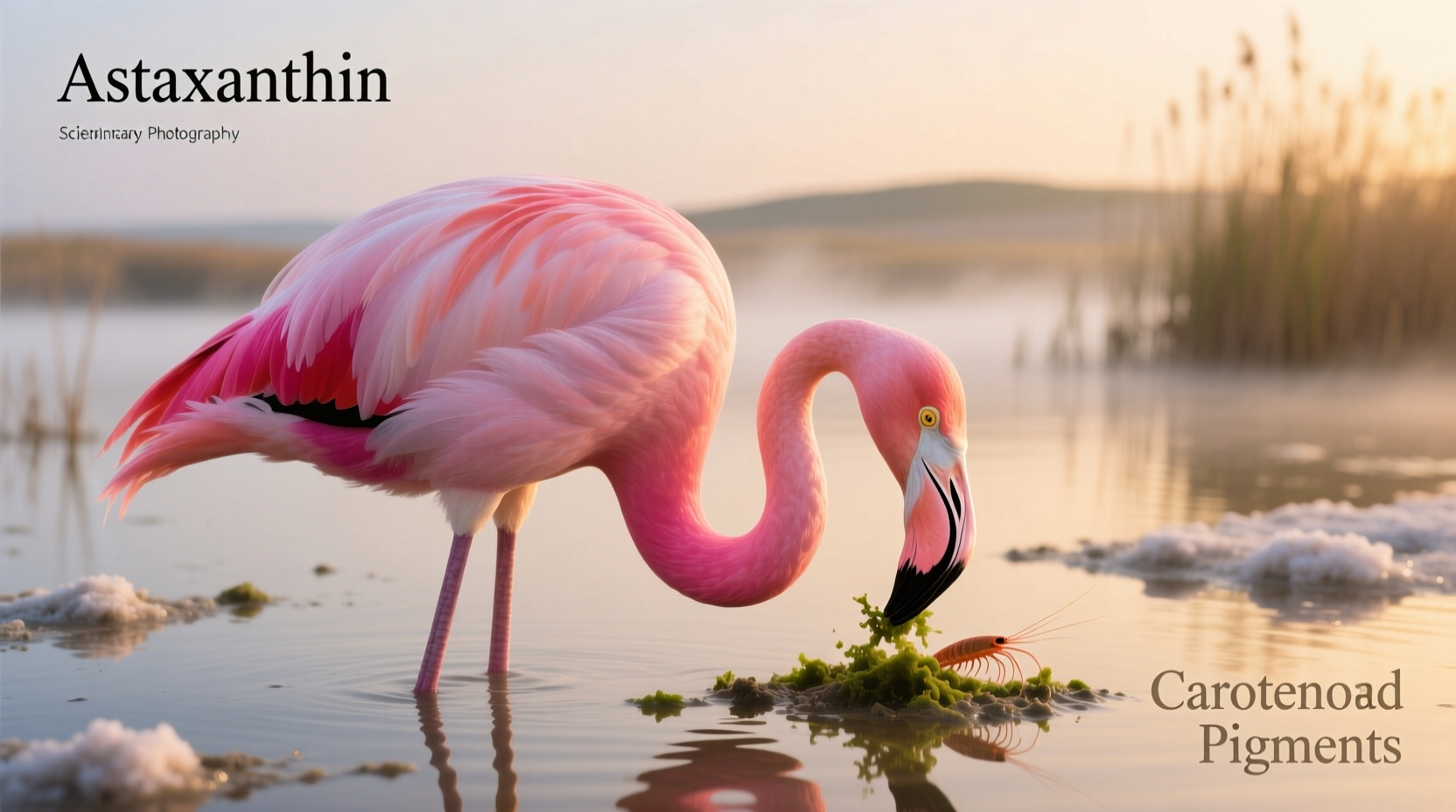
Flamingos begin life with dull gray or white feathers. Their iconic pink hue develops gradually as they mature, entirely dependent on their food sources. The key lies in organic pigments called carotenoids, which are naturally occurring compounds found in certain plants, algae, and microorganisms.
In the wild, flamingos feed primarily in shallow, alkaline lakes and lagoons rich in blue-green algae (like Spirulina platensis) and brine shrimp (Artemia salina). Both of these organisms consume carotenoid-producing microbes. When flamingos ingest them, they absorb these pigments through their digestive system.
The primary carotenoid responsible for the pink coloration is astaxanthin, a powerful antioxidant also found in salmon, lobster, and krill. Once consumed, astaxanthin is metabolized and deposited into growing feathers, skin, and even fat tissues. As new feathers grow during molting cycles, the accumulated pigments become visible, turning the bird progressively pinker over time.
How Pigmentation Works: From Gut to Feathers
The transformation from food to feather color involves several biological processes:
- Digestion: Carotenoids are released from food in the stomach and small intestine.
- Absorption: These pigments bind to lipoproteins in the gut and enter the bloodstream.
- Transport: Blood carries carotenoids to various tissues, including feather follicles.
- Deposition: During feather growth, pigments are integrated into keratin structures.
- Oxidation: Enzymes in the liver and skin may modify carotenoids, shifting hues from yellow-orange to deep pink-red.
This process isn't instantaneous. It can take months for a flamingo’s plumage to reflect changes in diet. Zookeepers often observe that captive flamingos start losing their vibrancy if their feed lacks sufficient carotenoids—proof that coloration is entirely diet-dependent.
Variation in Color Intensity
Not all flamingos are equally pink. The intensity of their color depends on several factors:
- Species: Greater flamingos tend to be paler than Chilean or Caribbean flamingos.
- Diet quality: Birds in nutrient-rich habitats appear brighter.
- Breeding condition: During mating season, hormonal changes increase pigment deposition, enhancing color to attract mates.
- Age: Juveniles are less colorful; full pigmentation develops after 2–3 years.
“Feather color in flamingos is an honest signal of health and nutritional status. Brighter birds typically have better access to high-quality food.” — Dr. Laura Pérez, Avian Physiologist, University of Granada
Captive Care and Artificial Diets
In zoos and wildlife parks, maintaining the bright pink appearance of flamingos requires careful dietary management. Without natural sources of astaxanthin, captive birds would gradually turn white or gray.
To prevent this, caretakers supplement their diets with synthetic or natural carotenoids. Common additives include:
- Canthaxanthin (a synthetic carotenoid)
- Beta-carotene (from carrots or algae)
- Natural astaxanthin (extracted from yeast or krill)
These are often mixed into specially formulated pellets designed to mimic the nutritional profile of their wild diet. Some facilities also introduce live brine shrimp or spirulina-enriched water to encourage natural feeding behaviors while ensuring pigment intake.
Do All Zoos Succeed?
Not always. A 2018 audit of European zoos found that nearly 25% of flamingo enclosures provided inadequate carotenoid levels, leading to visibly faded plumage. This doesn’t necessarily harm the birds’ health, but it can affect breeding success and public engagement.
| Habitat Type | Primary Food Source | Typical Feather Hue | Pigment Concentration (mg/kg) |
|---|---|---|---|
| Wild (East African Lakes) | Blue-green algae, brine shrimp | Bright pink to red | 8–12 |
| Captive (Enriched Diet) | Carotenoid-supplemented pellets + shrimp | Vibrant pink | 6–10 |
| Captive (Basic Diet) | Standard grain mix | Pale pink to white | 1–3 |
| Wild (High-Altitude Andes) | Algae, diatoms | Soft coral-pink | 4–7 |
Mini Case Study: Hatching Color at the San Diego Zoo
In 2021, the San Diego Zoo launched a study to assess the impact of dietary carotenoids on chick development. Researchers divided a group of hand-reared flamingo chicks into two cohorts:
- Group A: Fed a standard formula without added pigments.
- Group B: Given the same base diet, but enriched with 5 mg/kg of natural astaxanthin.
Over six months, both groups were monitored for growth, feather development, and behavior. By month four, Group B chicks began showing faint pink tinges in emerging wing feathers, while Group A remained gray-white. By month six, Group B displayed clear pink plumage, whereas Group A showed only minimal discoloration.
Interestingly, Group B also exhibited slightly faster feather growth and higher activity levels—suggesting that carotenoids may support more than just coloration, potentially boosting immune function and energy metabolism.
The findings reinforced the importance of early-life nutrition in long-term avian health and led the zoo to revise its flamingo chick protocol to include routine pigment supplementation.
Broader Implications: Flamingos as Environmental Indicators
Because flamingos rely so heavily on specific ecosystems rich in carotenoid-producing organisms, their presence—and color—can serve as a bioindicator of environmental health.
Lakes like Lake Natron in Tanzania or Lake Nakuru in Kenya host massive flamingo populations due to ideal conditions for Spirulina growth. However, when pollution, climate change, or human activity alters water pH, salinity, or temperature, algal blooms decline. This directly impacts flamingo diets, leading to reduced reproduction rates and paler plumage.
Conservationists now use aerial surveys combined with spectral imaging to assess flock coloration as a proxy for ecosystem vitality. A shift toward lighter hues across a population can signal ecological stress before other symptoms emerge.
“We’re treating flamingo color like a living barometer. If the birds start fading, we know something’s wrong with the lake long before chemical tests confirm contamination.” — Dr. Kwame Nsiah, East African Wetlands Project
Common Misconceptions About Flamingo Color
Despite widespread fascination, several myths persist about why flamingos are pink:
- Myth: Flamingos are born pink.
Reality: Chicks hatch with grayish down and develop color over time. - Myth: All flamingos are the same shade.
Reality: Species, location, age, and diet create wide variation—from pale blush to crimson. - Myth: They turn pink immediately after eating shrimp.
Reality: Pigment accumulation takes weeks to months and only affects new feather growth. - Myth: The color comes from blood or skin dyes.
Reality: It's entirely due to carotenoid distribution in keratinized tissues.
FAQ: Frequently Asked Questions
Can flamingos lose their color?
Yes. If a flamingo’s diet lacks carotenoids, its feathers will gradually fade during molting. New feathers grow in without pigment, resulting in a paler or even white appearance. This is reversible with proper nutrition.
Are there blue or green flamingos?
No. There are no known natural mechanisms for producing blue or green pigments in flamingo feathers. Any images of “colored” flamingos are either photo-edited or involve temporary dyes used in research tracking—not natural coloration.
Do flamingos eat only shrimp?
No. While brine shrimp are a major food source, flamingos also consume cyanobacteria (blue-green algae), diatoms, insect larvae, and small mollusks. Their specialized beaks filter food from water using fine lamellae, allowing them to extract microscopic organisms efficiently.
Actionable Checklist: Supporting Flamingo Health and Awareness
Whether you're a conservation enthusiast, educator, or simply curious, here’s how you can contribute to flamingo well-being and understanding:
- ✅ Learn to identify local flamingo species and their habitats.
- ✅ Support wetland conservation organizations working in Africa, South America, or the Caribbean.
- ✅ Advocate for sustainable water use and pollution control near alkaline lakes.
- ✅ Visit accredited zoos that prioritize naturalistic diets and habitat enrichment.
- ✅ Share accurate information about flamingo pigmentation to dispel myths.
- ✅ Participate in citizen science projects tracking bird migration and coloration.
Conclusion: Nature’s Palette, Powered by Diet
The pink of a flamingo is not mere ornamentation—it’s a living testament to the intricate connections between diet, biochemistry, and survival. Far from being artificially colored, these birds are walking manifestations of the ecosystems they inhabit. Their brilliance reflects the abundance of microscopic life in remote lakes, the precision of metabolic pathways, and the evolutionary advantage of honest signaling in mate selection.
Understanding the science behind their color deepens our appreciation for nature’s complexity and highlights the fragility of the environments that sustain such wonders. Every pink feather tells a story of algae, digestion, and adaptation—a reminder that even the most vivid beauty in the animal kingdom often has humble, edible origins.




 浙公网安备
33010002000092号
浙公网安备
33010002000092号 浙B2-20120091-4
Comments
No comments yet. Why don't you start the discussion?